Antelope are a type of large mammal native to Africa. They are found in a variety of habitats, from deserts to grasslands to open woodlands. Antelope are known for their swiftness and agility, and can reach speeds of up to 50 mph.
They are social animals and typically live in herds. Antelope are an important part of the African ecosystem, providing food for predators such as Lions, Cheetahs, and Hyenas. There are many different types of Antelope, including Gazelles and Impala.
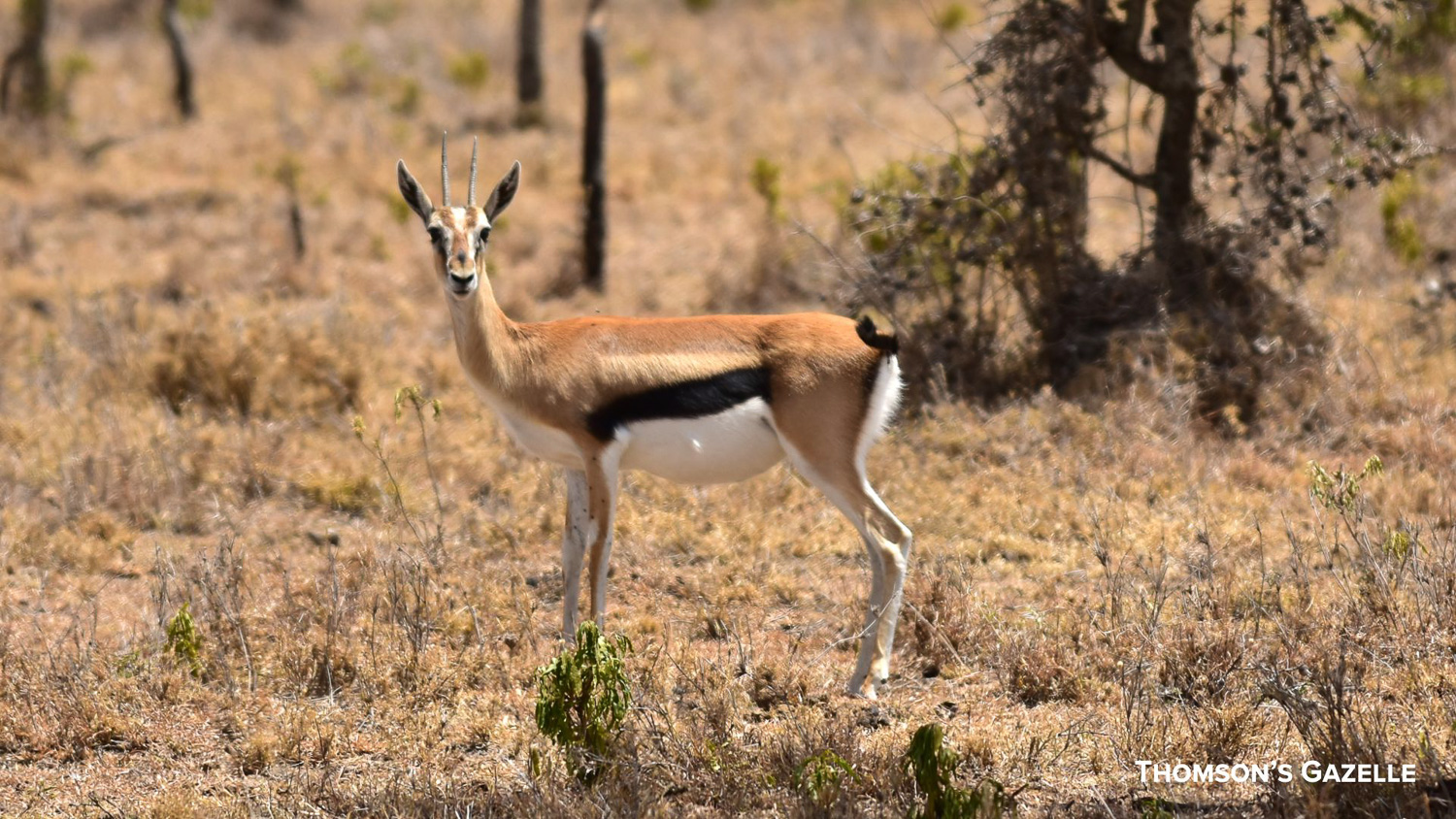 Thomson’s Gazelles – These small Gazelles have light-brown coats with dark stripes running down their sides, a white patch on their rumps extending underneath the tail, and ridged horns that curve backward. Females may have shorter, smoother, and slimmer horns than males or none at all. Grant’s gazelles are sometimes confused with the smaller Thomson’s.
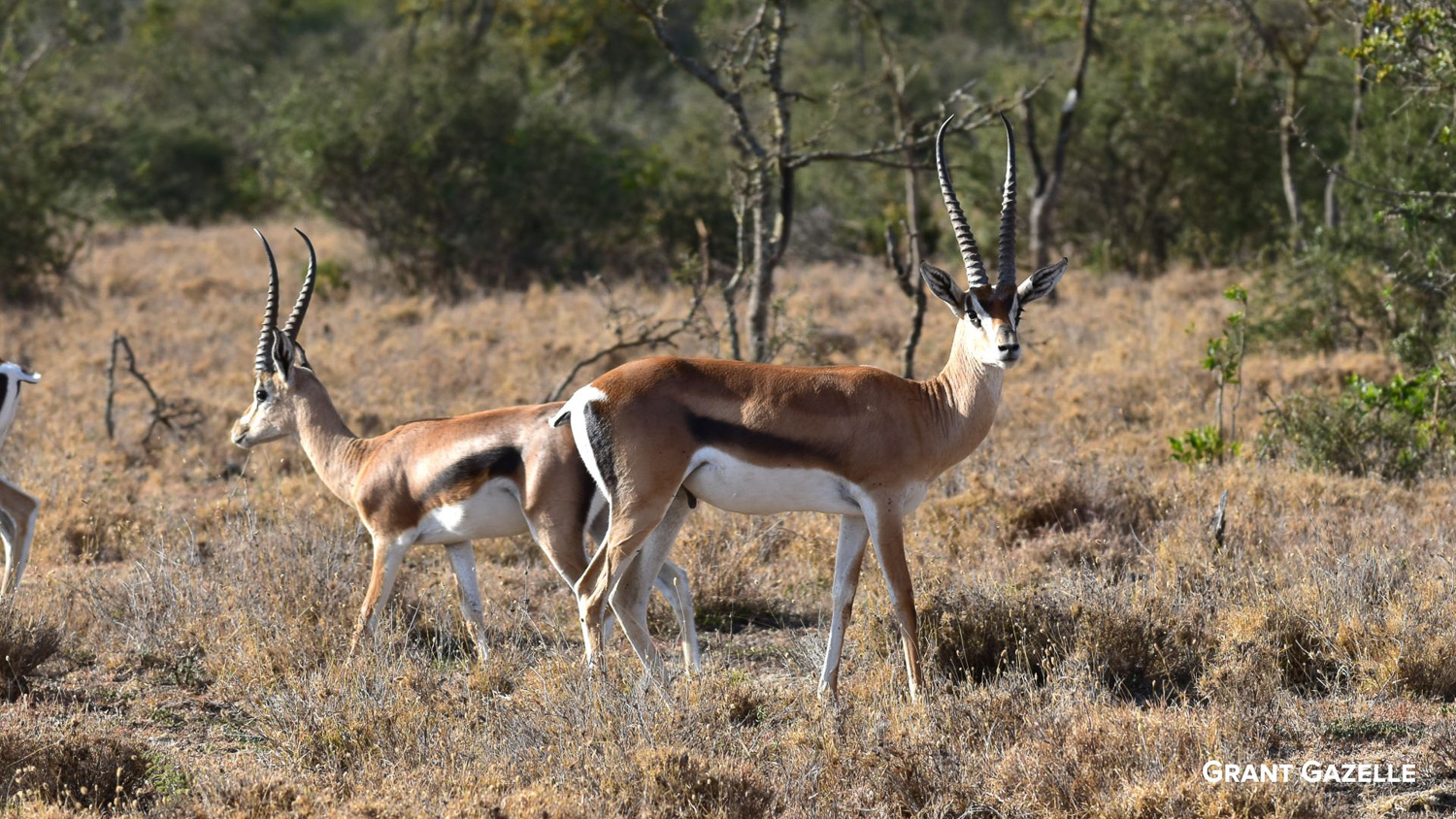 Grant’s Gazelles – This species of Gazelle are primarily browsers, rather than grazers, and a large part of their diet consists of leaves and stems; although, they will eat herbs, foliage, short grasses, and shoots. Grant’s Gazelles are not dependent on water and therefore migrate in the opposite direction to other migratory species such as the Wildebeest. With the ability to obtain the moisture needed from the food they avoid competition and can survive on vegetation found in semi-desert environments.
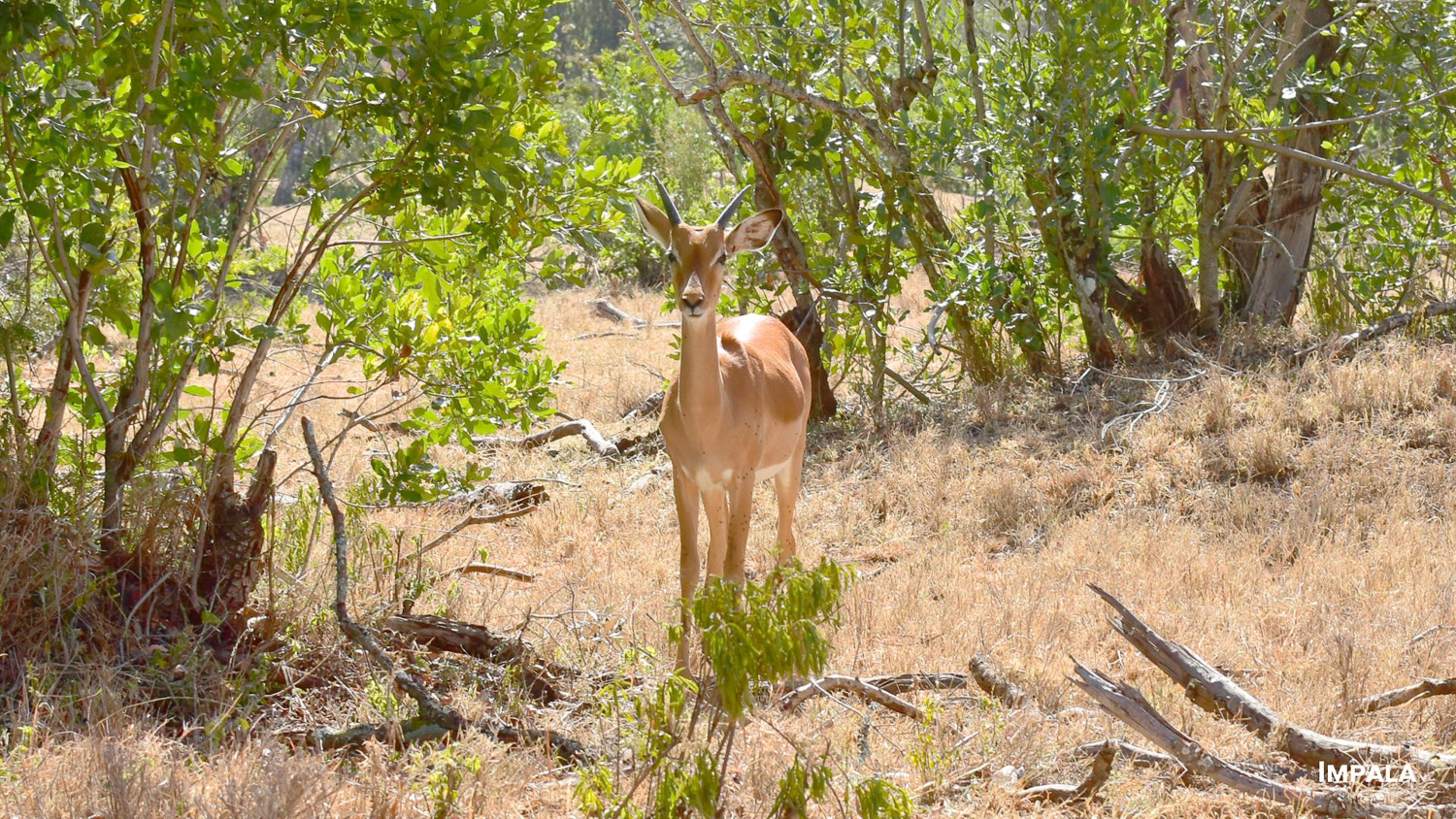 Impala – The Impala’s social organization allows it to adapt to environmental conditions. The average female herd is between 15 and 100 individuals. When food is plentiful, males become territorial, shepherding females about their land. In dry periods, territories are abandoned as herds must travel farther to find food and clans tend to overlap and intermix with each other.
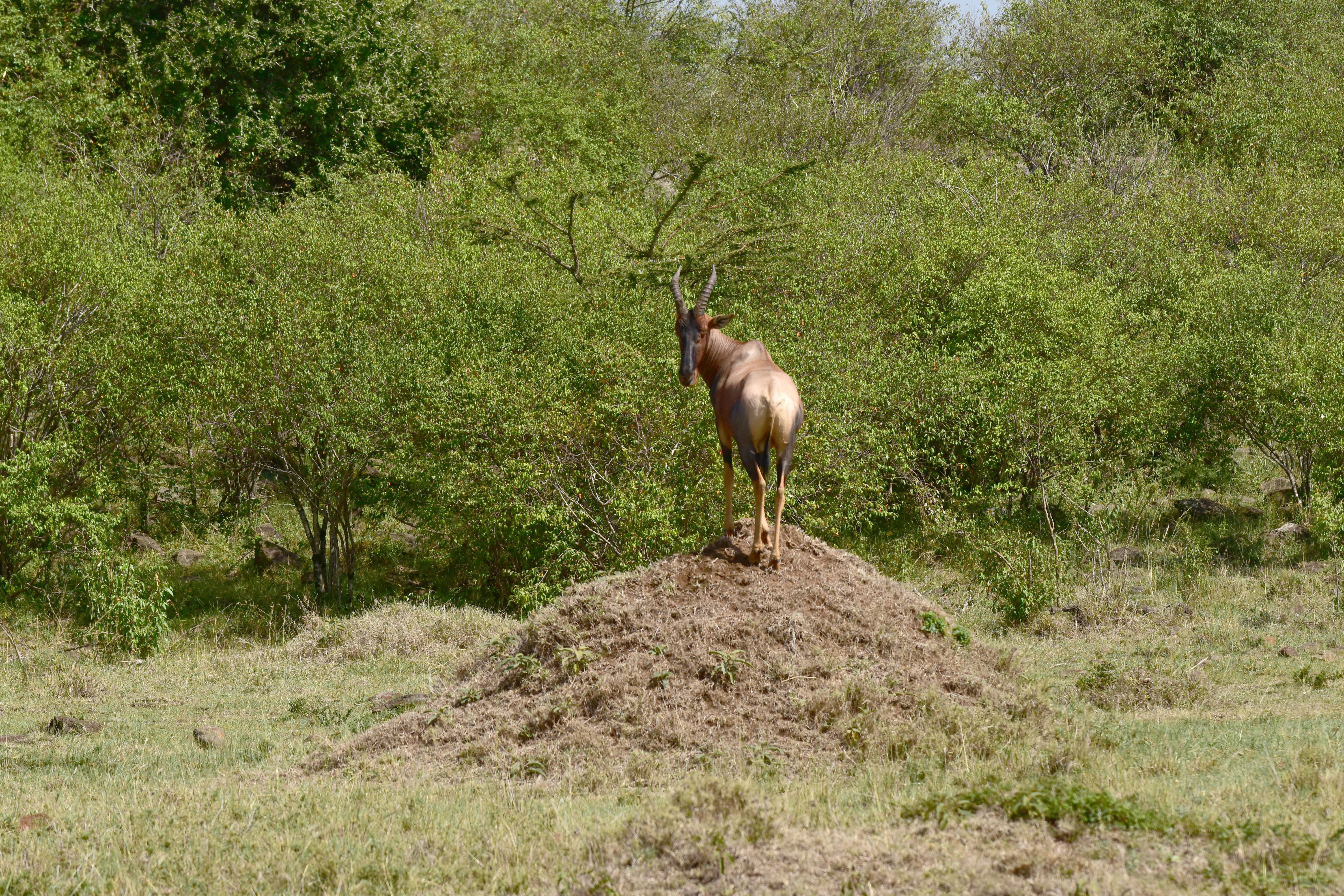 Topi are medium-sized Antelopes with a striking reddish-brown to purplish-red coat. Distinct dark blue patches appear on their face, their upper forelegs, and on their hips and thighs. To complete their singular appearance, the Topi’s yellowish-tan legs look like they are encased in stockings. Our guide Saruni described the Topi as wearing ‘blue jeans with yellow socks’ a very apt description.
Male Topis frequently stand on Termite mounds to announce their presence to any female and to warn other males that they were in the vicinity. This behaviour was often seen in the midday heat.
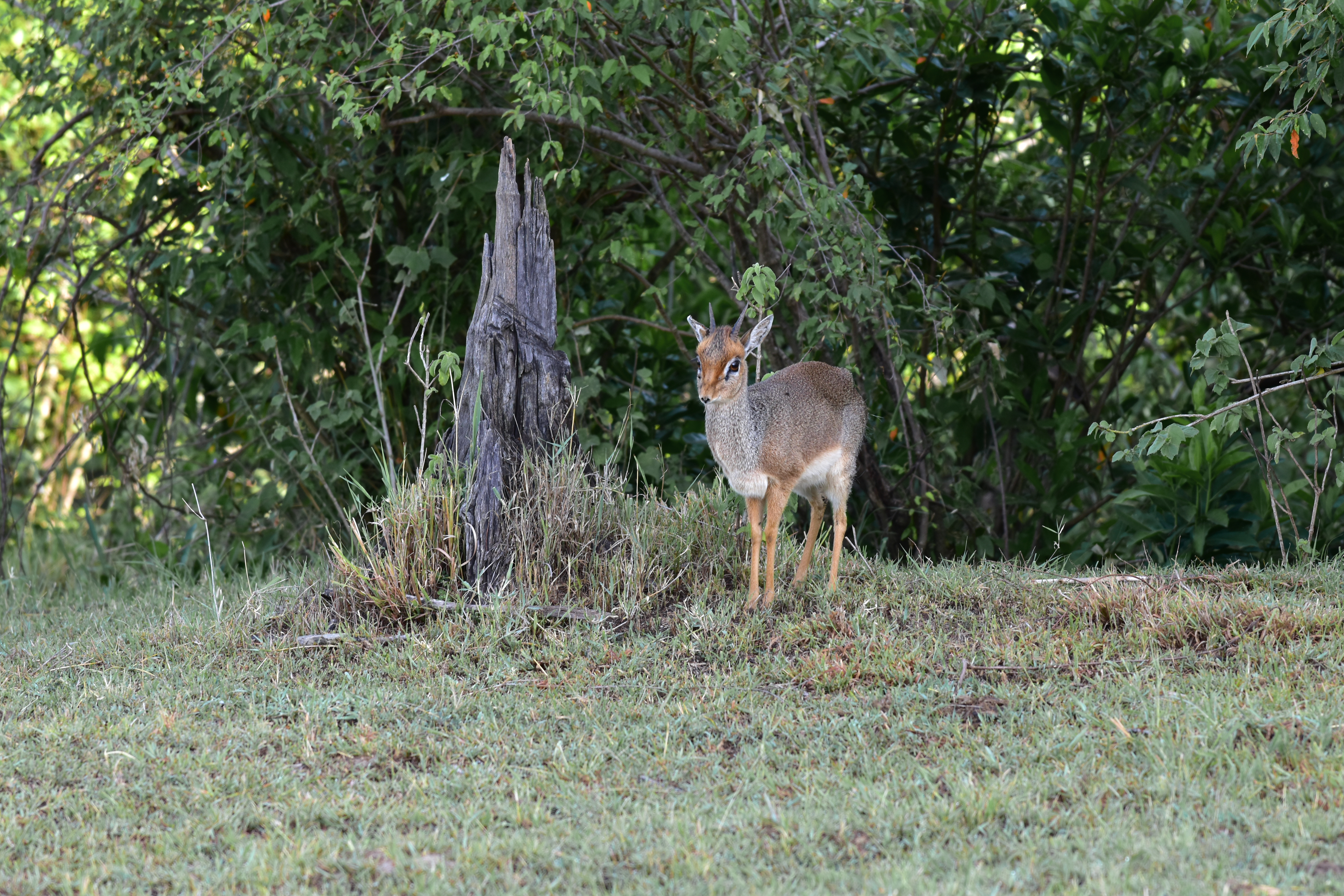 Dik-Dik – This tiny Antelope is shy and elusive, concealing themselves in brush most of the time. They have well-developed sight, scent, and hearing. When Dik-Diks feel they’re in danger or hear the alarm calls from other animals, they hide instead of fleeing from predators. When frightened or disturbed, they make a whistling sound through their nose that sounds like ‘zik-zik,’ which is probably how they got their name.
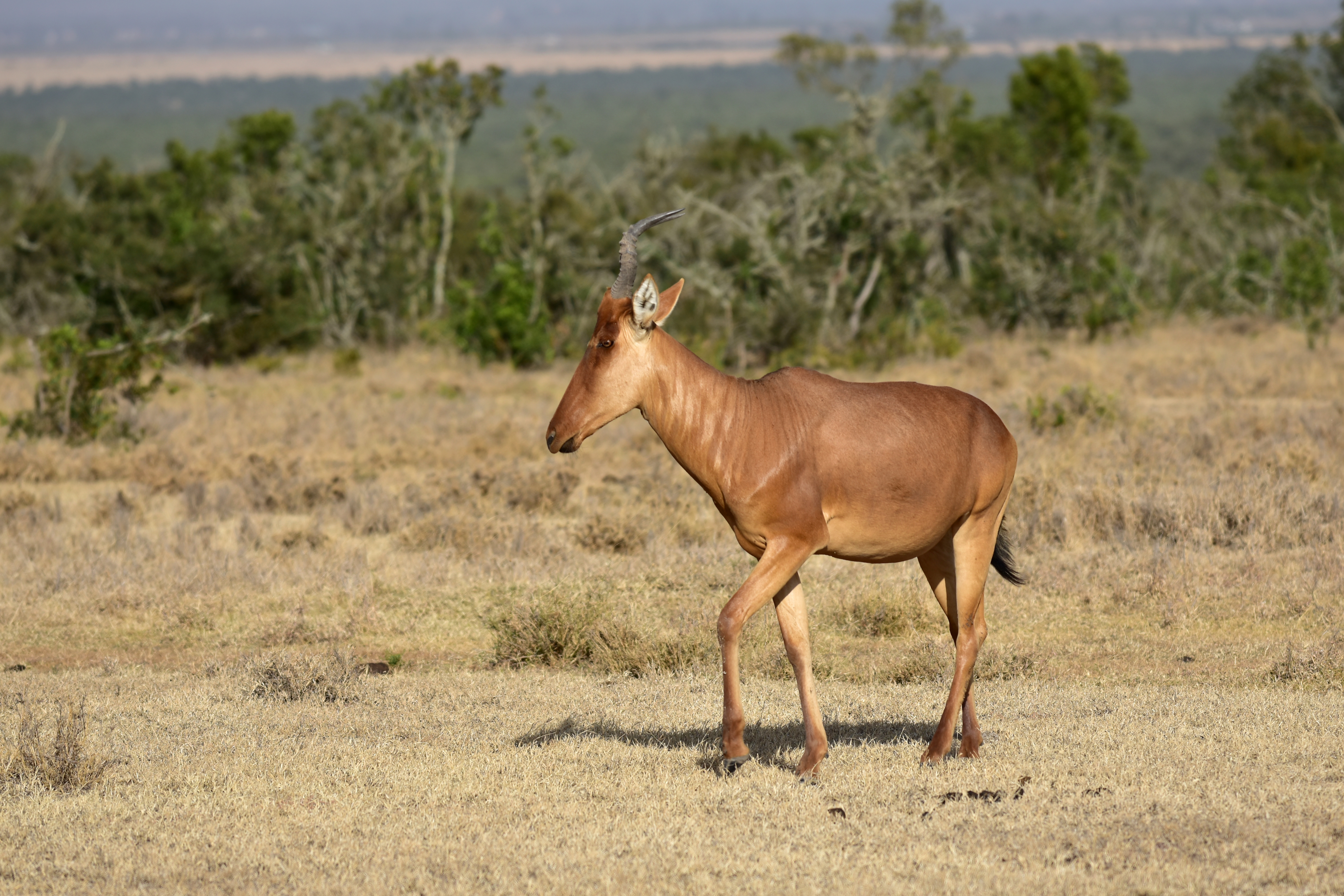 Jackson Hartebeest are found in small herds throughout the Ol Pejeta Conservancy. Their biggest threat is Lion predation. Plans are underway to create a ‘Lion free’ area within the conservancy as their numbers are declining.
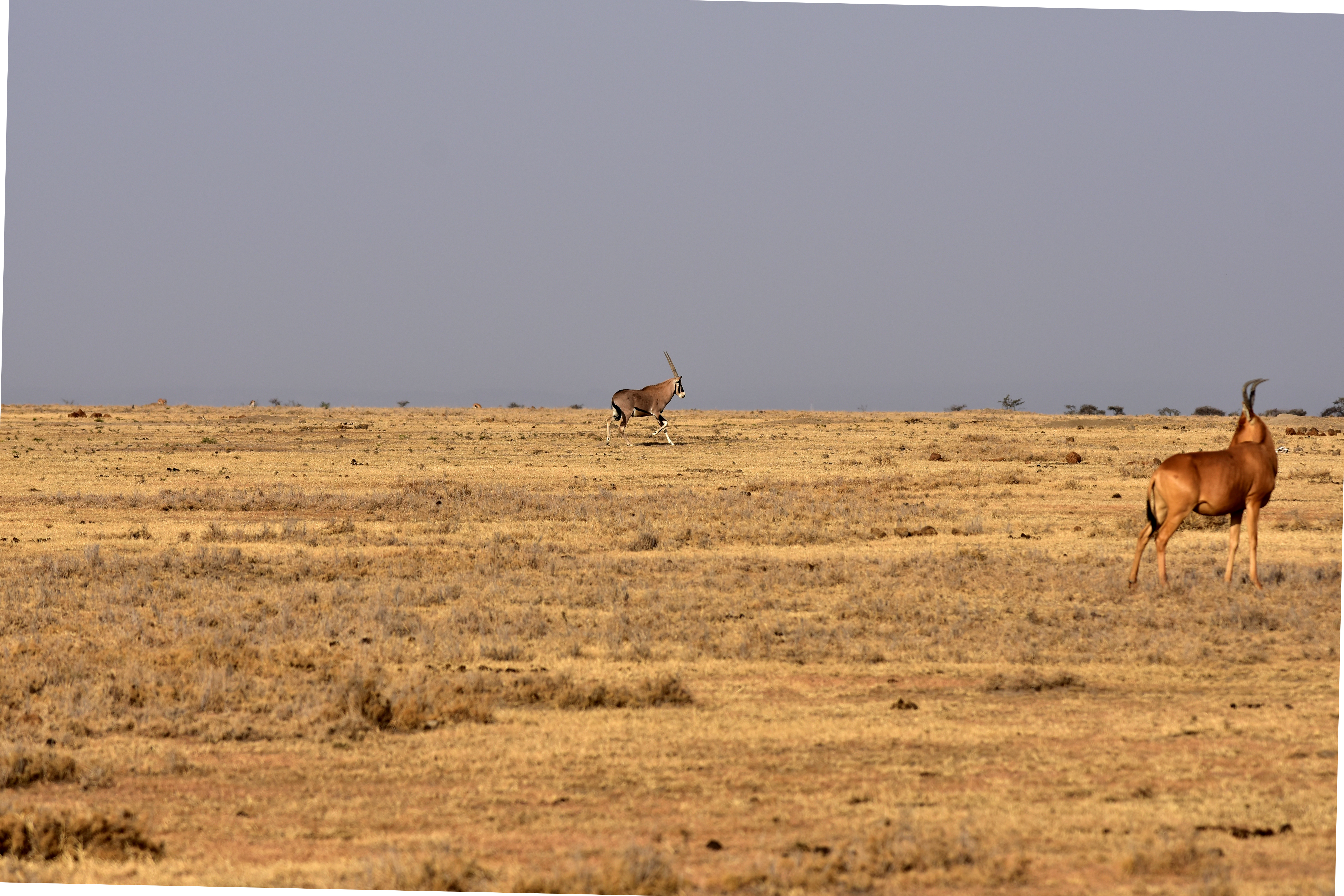 Oryx are a large species of Antelope which are rarely seen. They have a defined pattern of black markings which contrast with their white faces and fawn-coloured bodies. Oryx are hunted for their meat and hides, and in many cultures, their horns are sought after as charms.
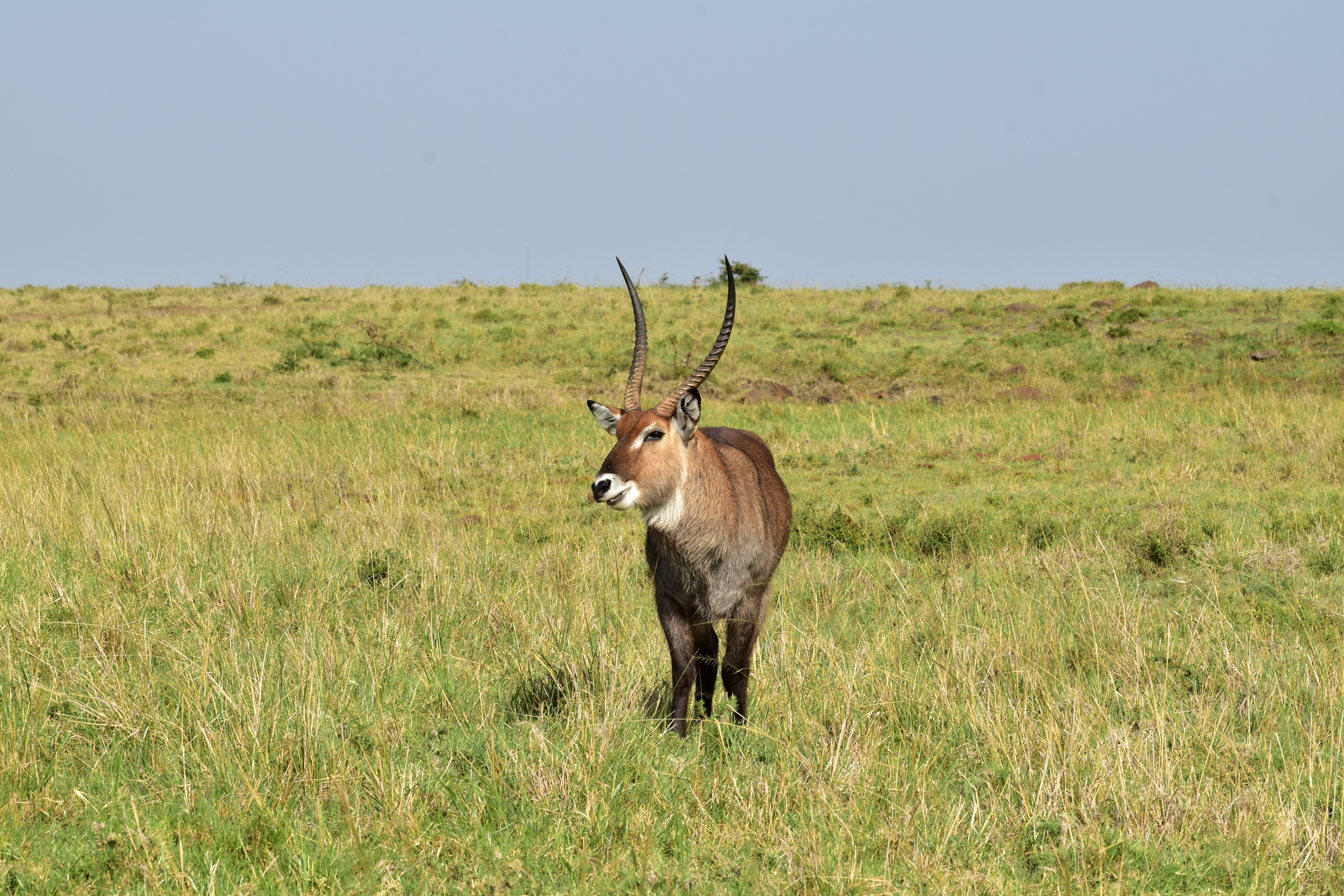 Waterbuck must remain close to a water source. However, this habitat furnishes these antelopes with a year-round source of food. Mainly grazers, they feed in the mornings and at night and rest and ruminate the remainder of the time. Males are larger than the females and have horns, which are prominently ringed and as long as 40 inches.
 Charlotte & Graham's Travels