 African Elephants are the largest land animals in the world, and they are a keystone species in the ecosystems of Kenya. Elephants play a vital role in the maintenance of grasslands, riparian habitats, and woodlands, and they are an important source of food and income for many rural communities in Kenya. African Elephants are social animals. They live in small family groups consisting of related females and their young. Adult males live on the fringes of these groups, occasionally joining them to mate. African Elephants feed on grasses, leaves, bark, roots, and fruit. They use their tusks to dig for edible roots and break branches off trees. African Elephants can consume up to 300 pounds of food in a single day.
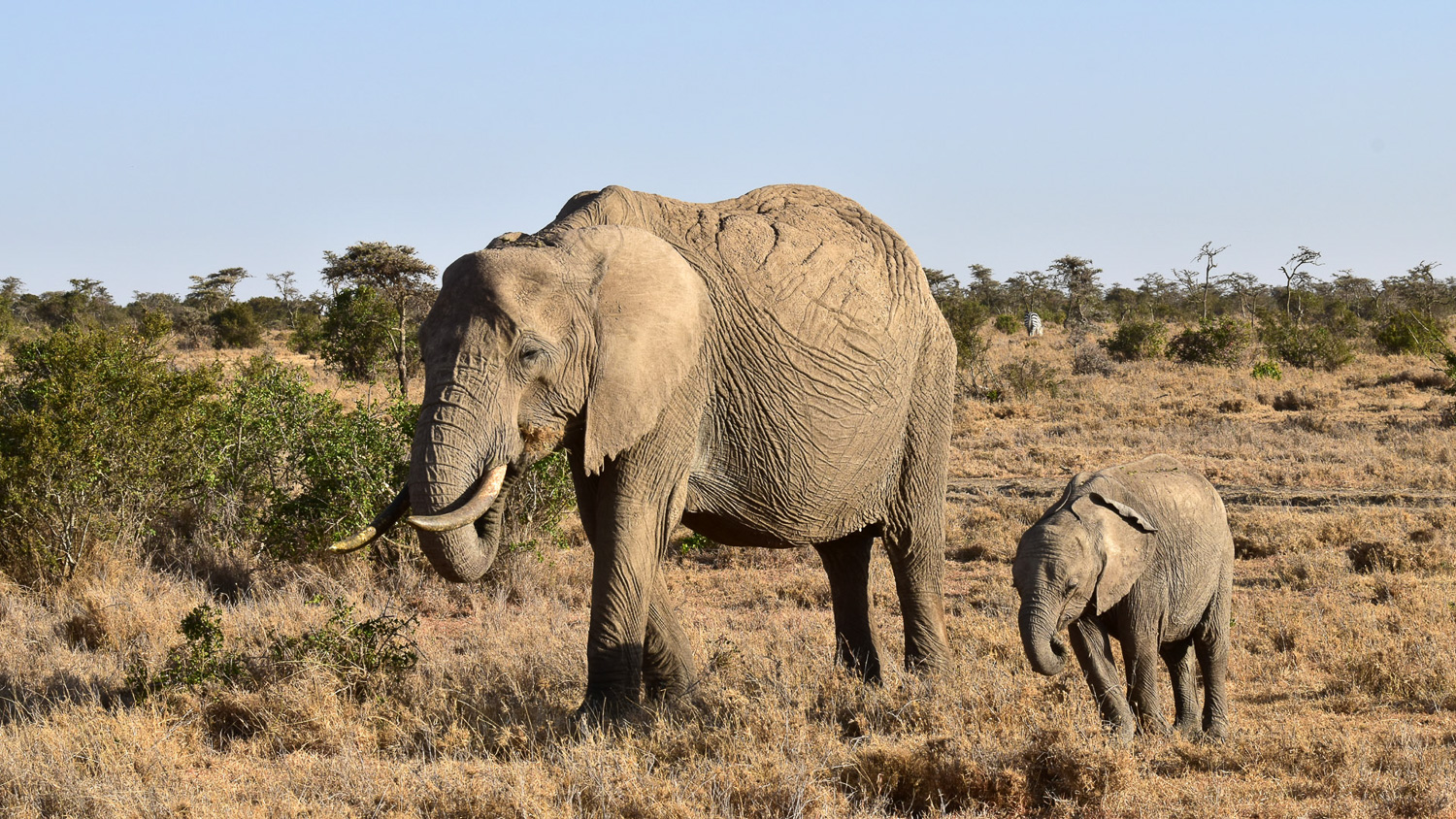 Mother with her one year old calf
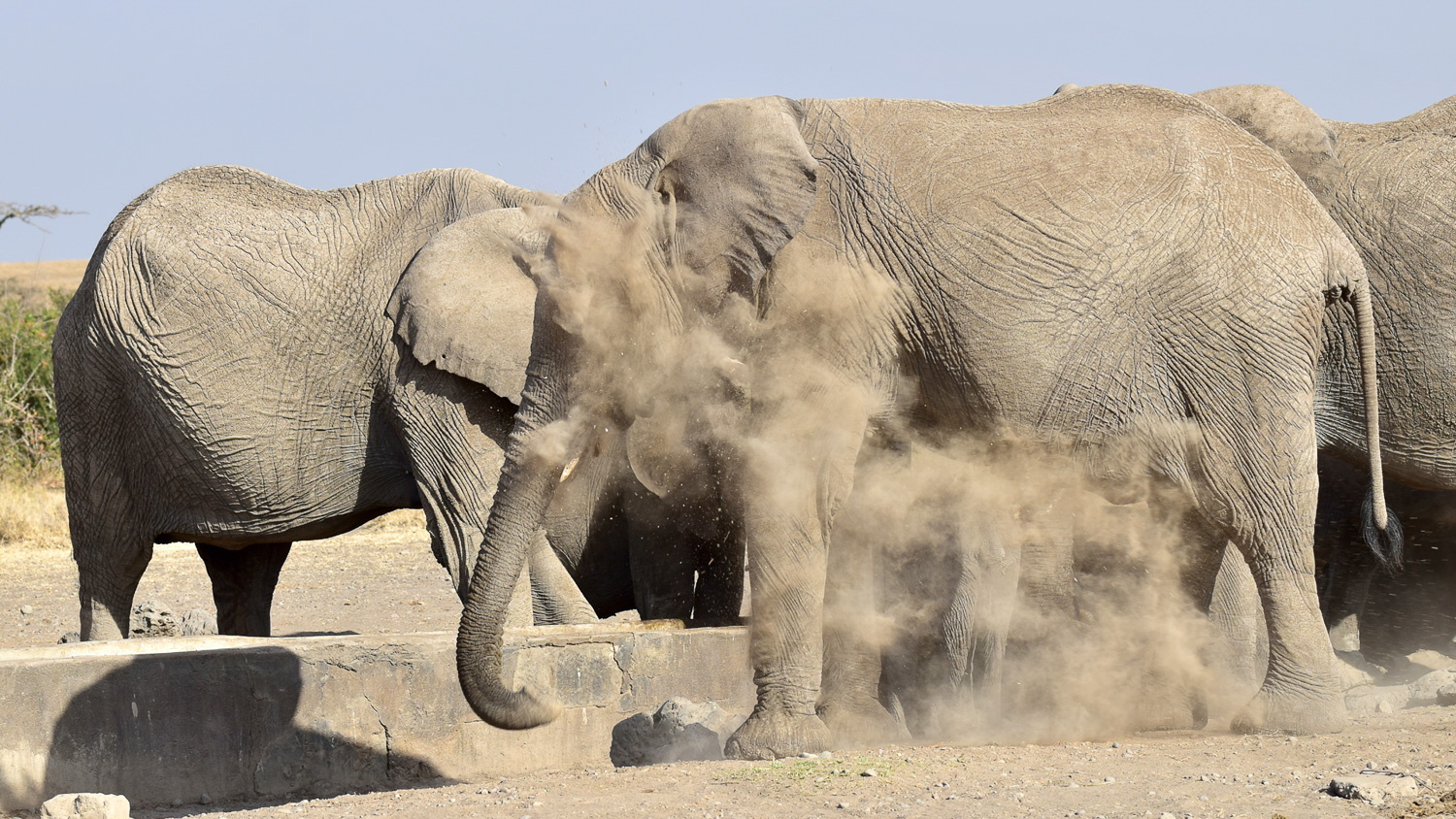 Enjoying a dust bath – Elephants cover themselves with dust to protect their skin from the harsh sunlight and to stay cool
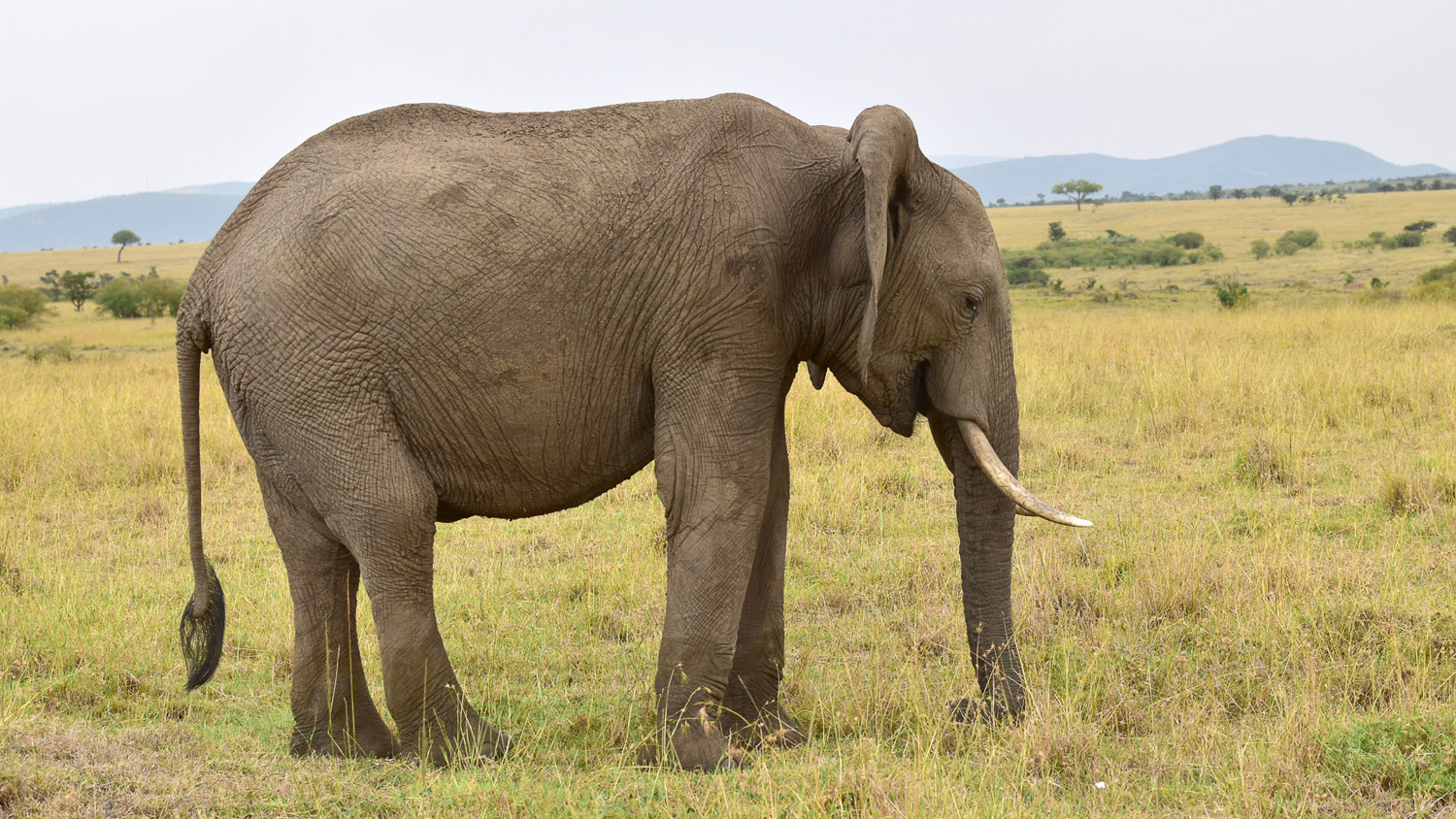 Bachelor – At around twenty years old, male Elephants reach sexual maturity and have to leave the family as the family does not want them mating with their sisters. These lone males form ‘bachelor pads’ where there is no dominant male. The term ‘Musth’ (or must) relates to a periodic condition in bull Elephants characterized by aggressive behaviour and accompanied by a large rise in reproductive hormones. Once a male is in Musth, he will then try and mate with any female who is ready. Musth is also a time when male Elephants are at their most aggressive due to hormonal changes. It is not uncommon for male Elephants to fight over a female.
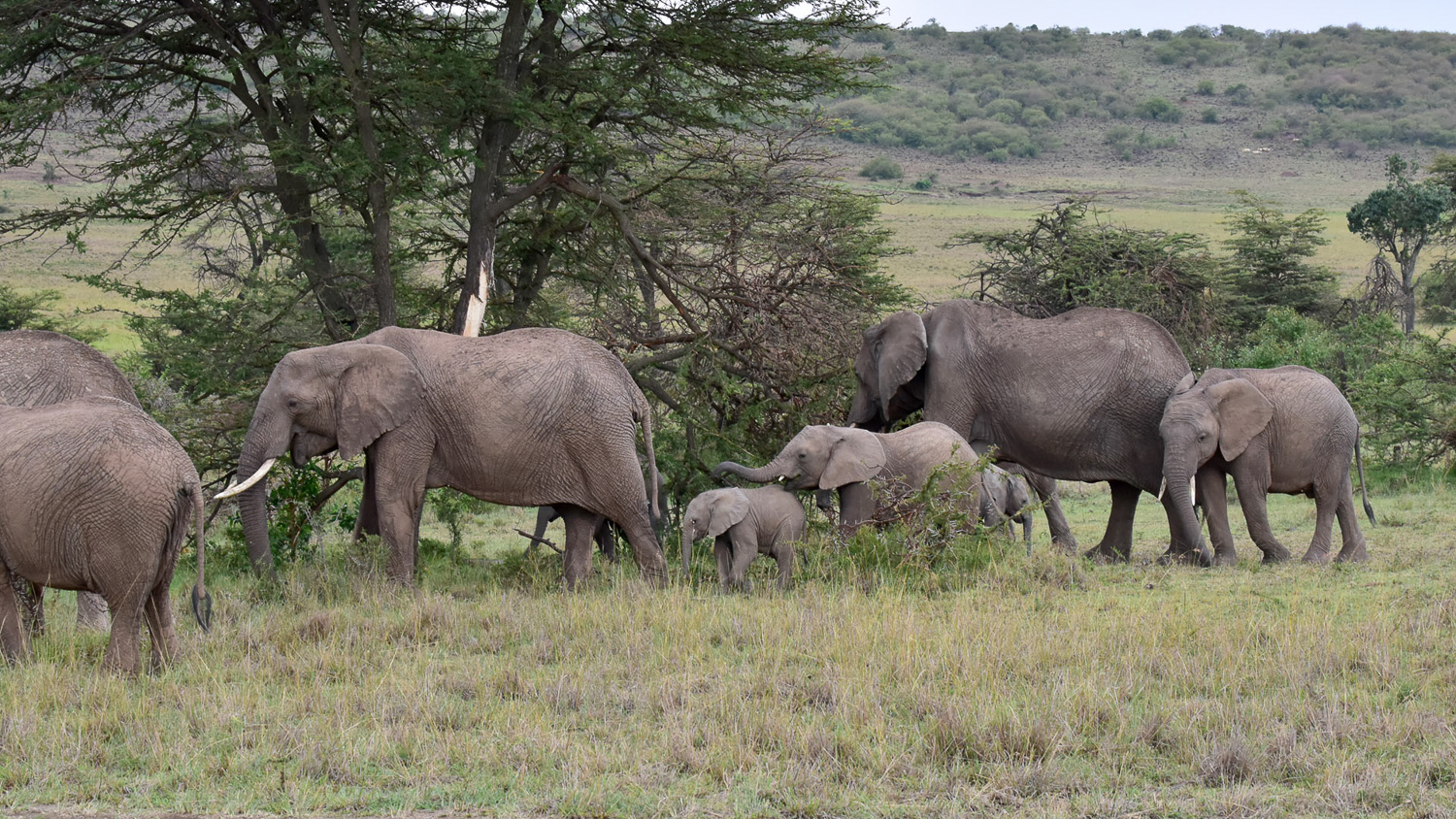 Part of a family of seventeen Elephants grazing on the grasses, trees and bushes
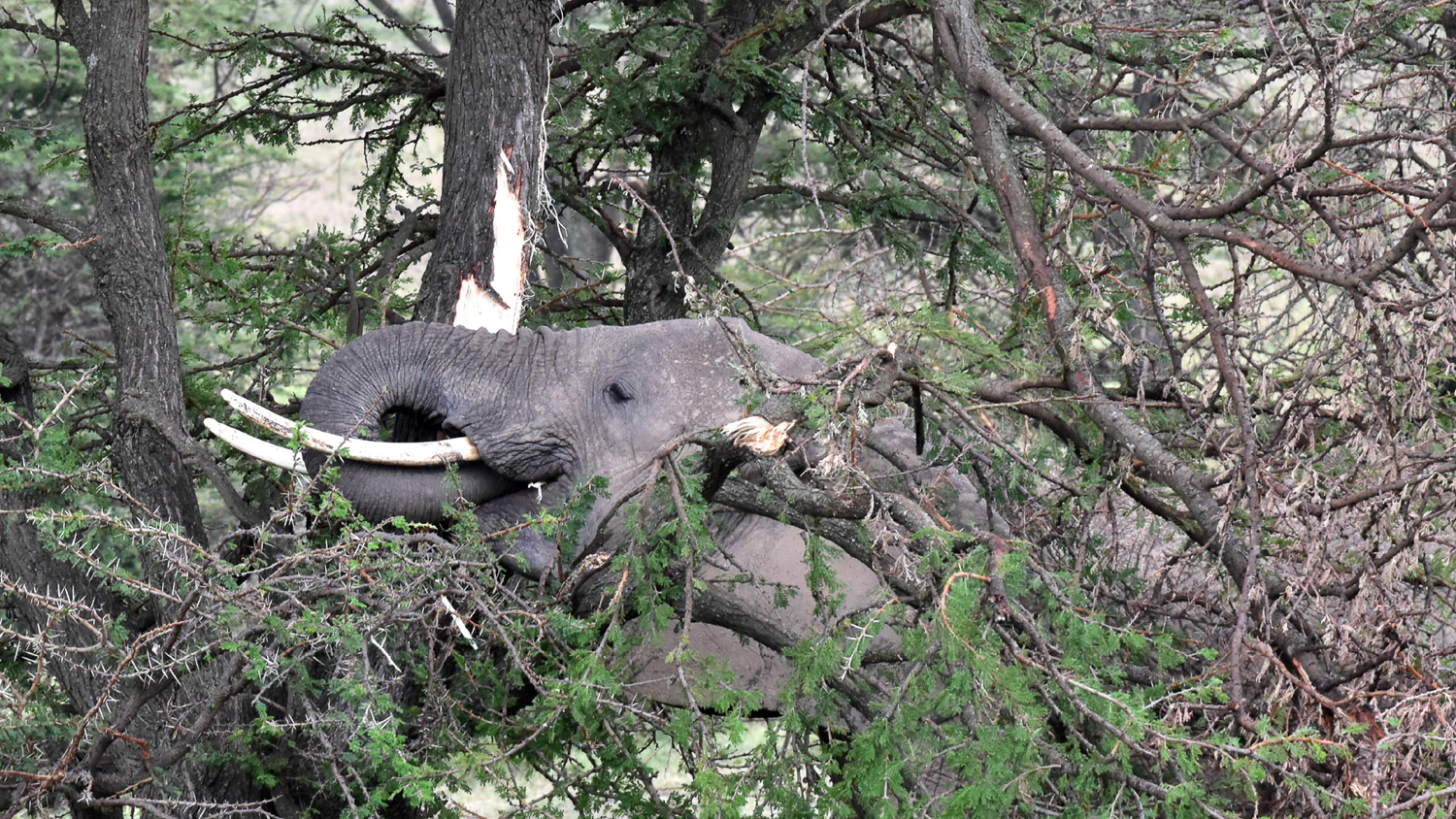 Stripping the soft bark of a Flat Top Acacia tree with their tusks. The branches are also soft to chew. We saw first hand the impact a family of elephants can cause; trees stripped of their bark and their branches torn away.
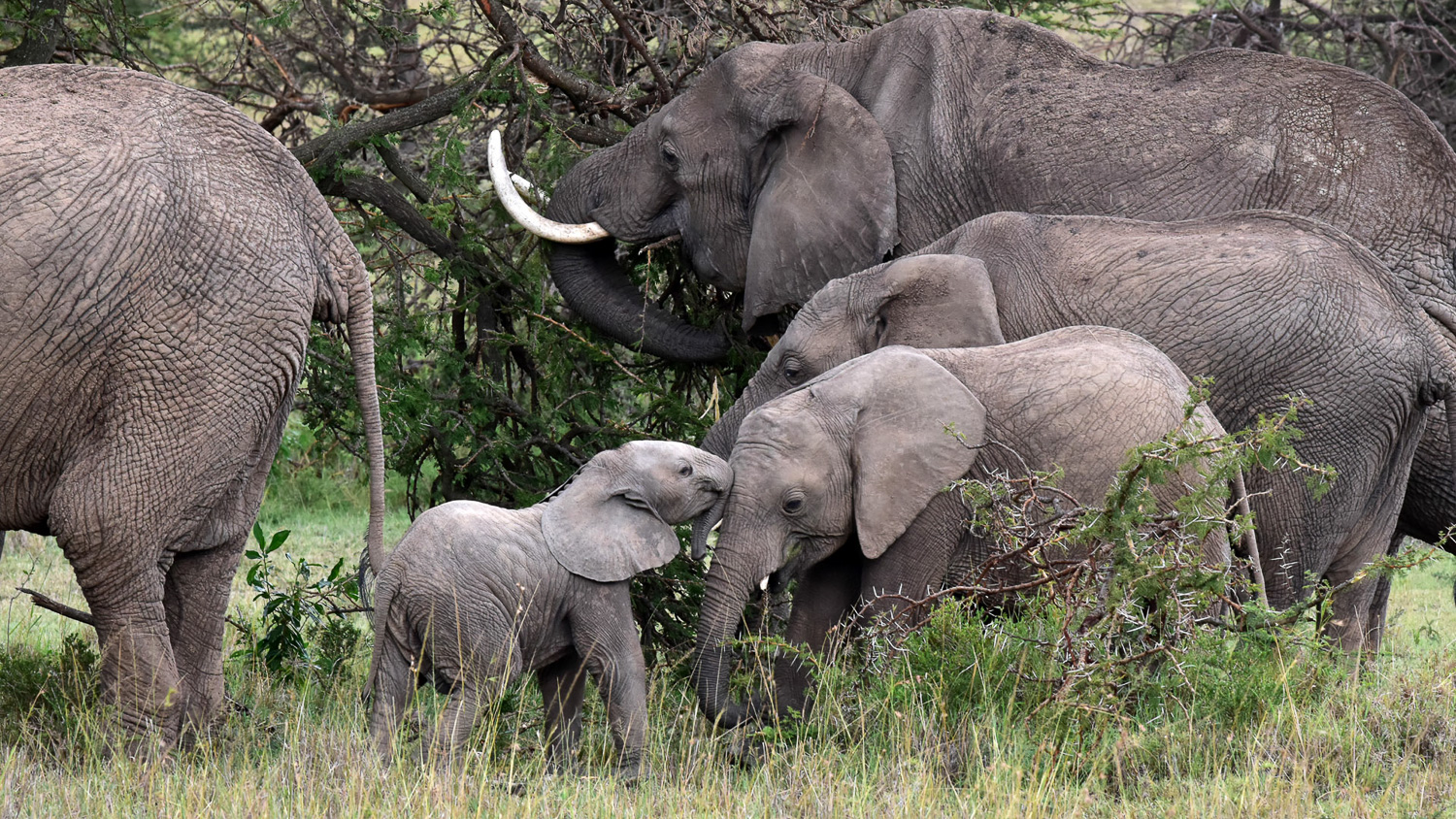 Whilst the adults are focussing on gathering food, this youngster is interested in making a new friend!
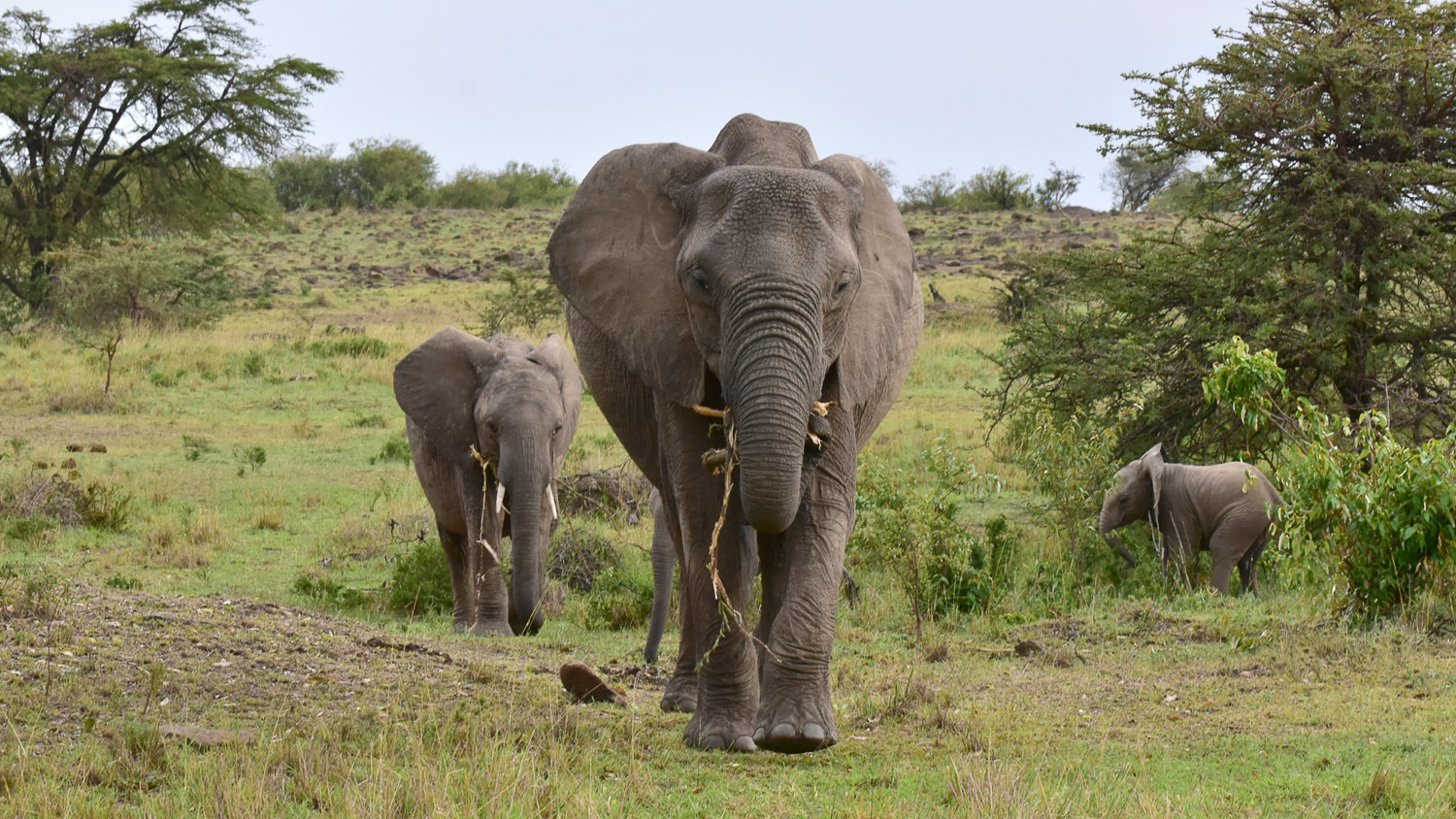 Enjoying a meal of stripped bark
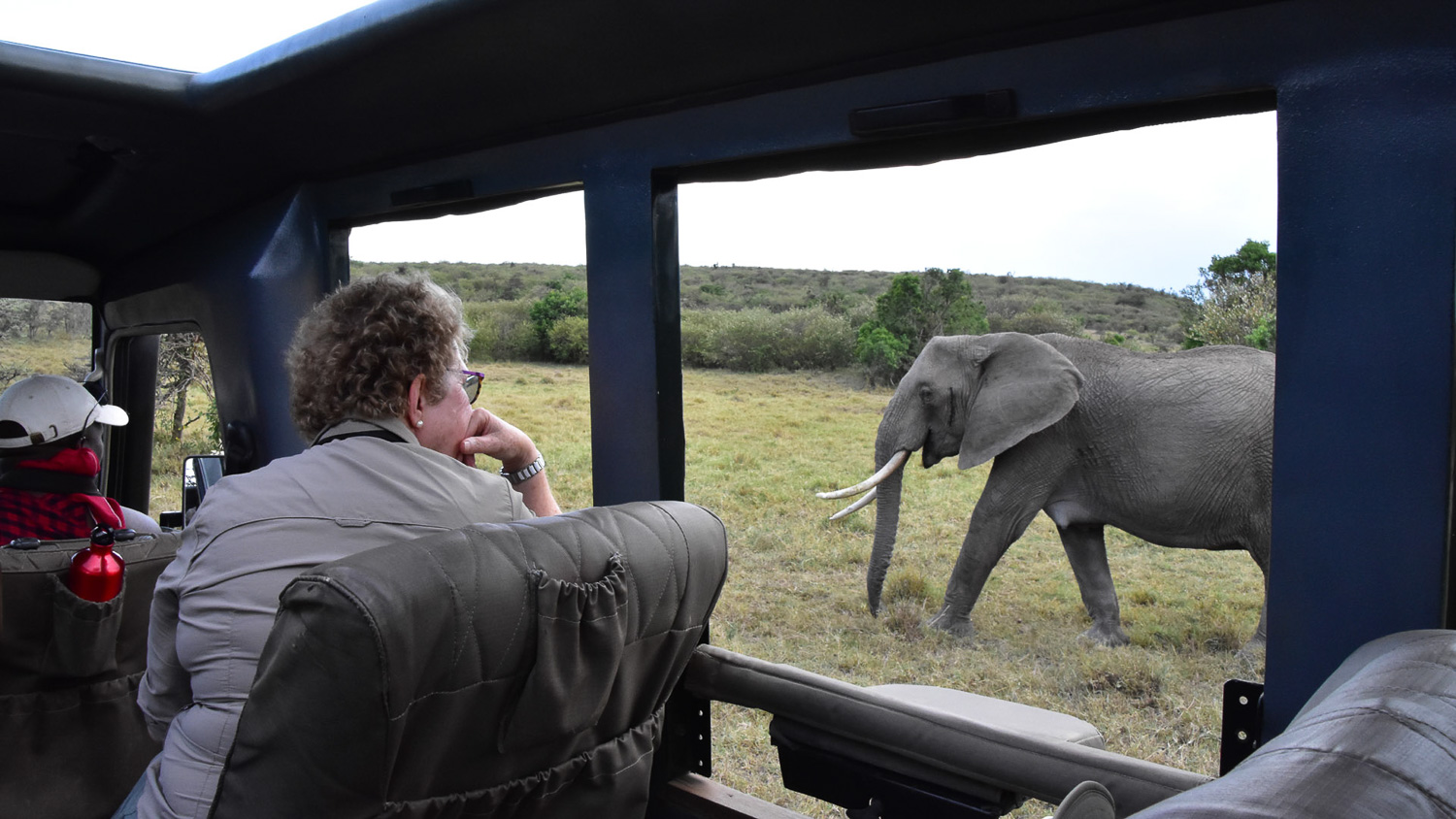 Tree Demolition – Due to their diet, an Elephant’s teeth wear out every ten years. In a lifetime, an elephant will grow six new sets of teeth. Ater sixty years of age however, an Elephant’s teeth are very worn. At this point, elephants tend to migrate to marshy areas where it is easier to find softer food.
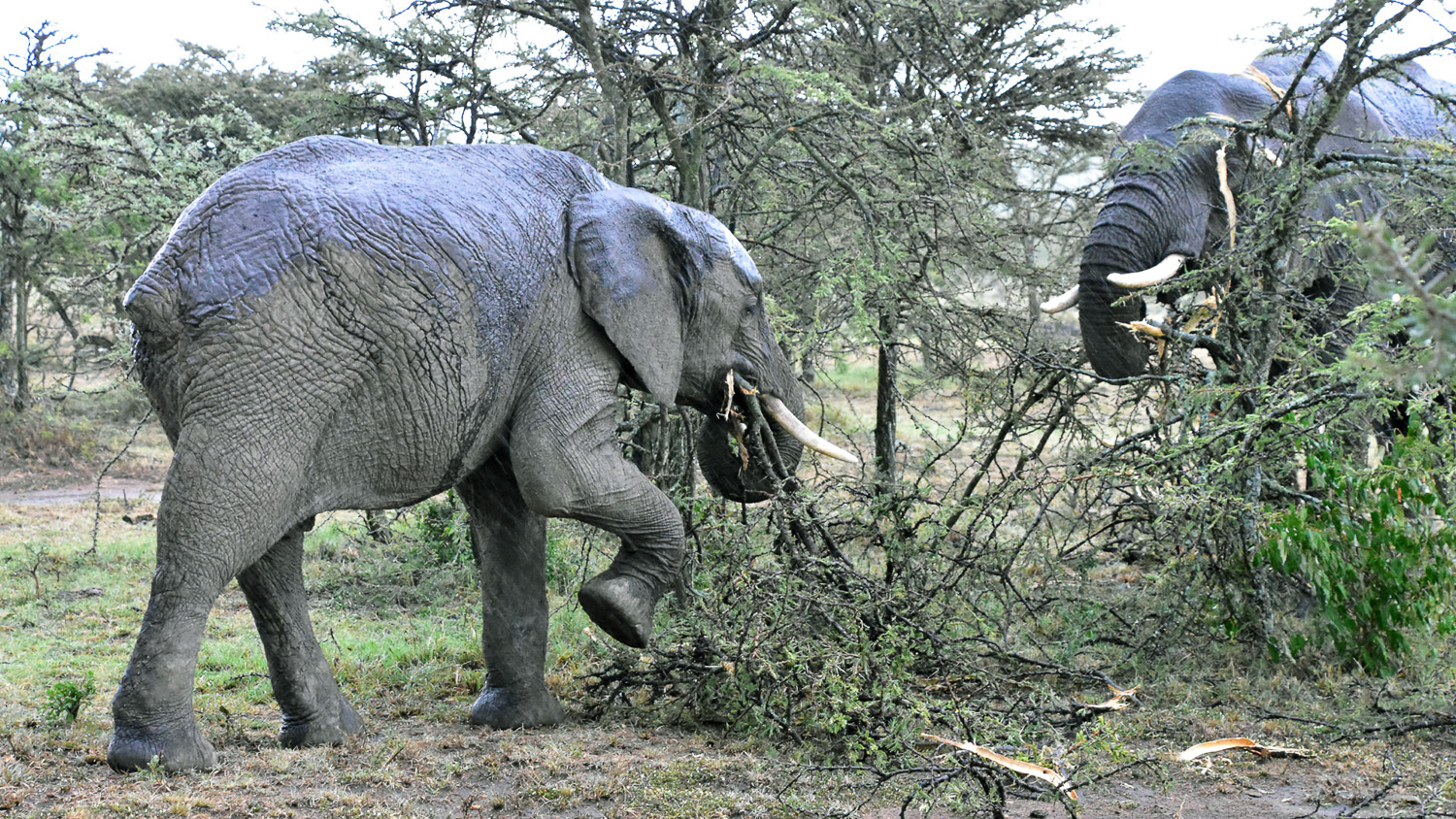 Youngster tackling rather a large branch – a case of ‘biting off more than you can chew’!
 Charlotte & Graham's Travels