Hippos are the most abundant large mammal in Kenya, with an estimated population of around 25,000. They are found mostly in the large rivers, lakes and swamps of the lowland areas in the north and east of the country. The largest concentration of Hippos is found in the Mara River. Hippos are mainly herbivores but they also consume small amounts of fish and other animals. Hippos spend about 16 hours a day in the water and can hold their breath for up to 5 minutes. The major threats to Hippos in Kenya are habitat destruction, poaching and illegal fishing.
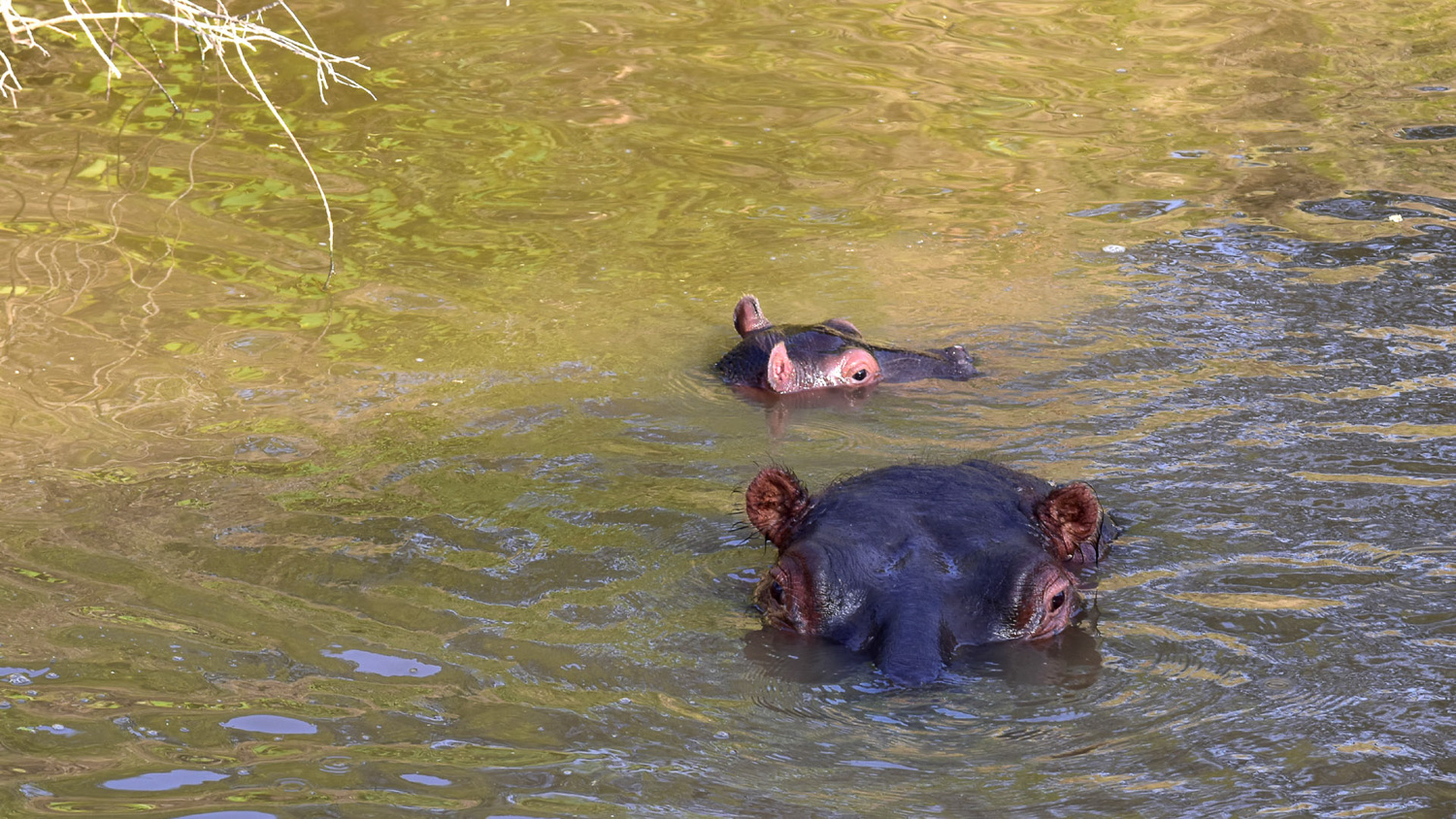 An adult with its calf in a Hippos favourite place; a shallow river
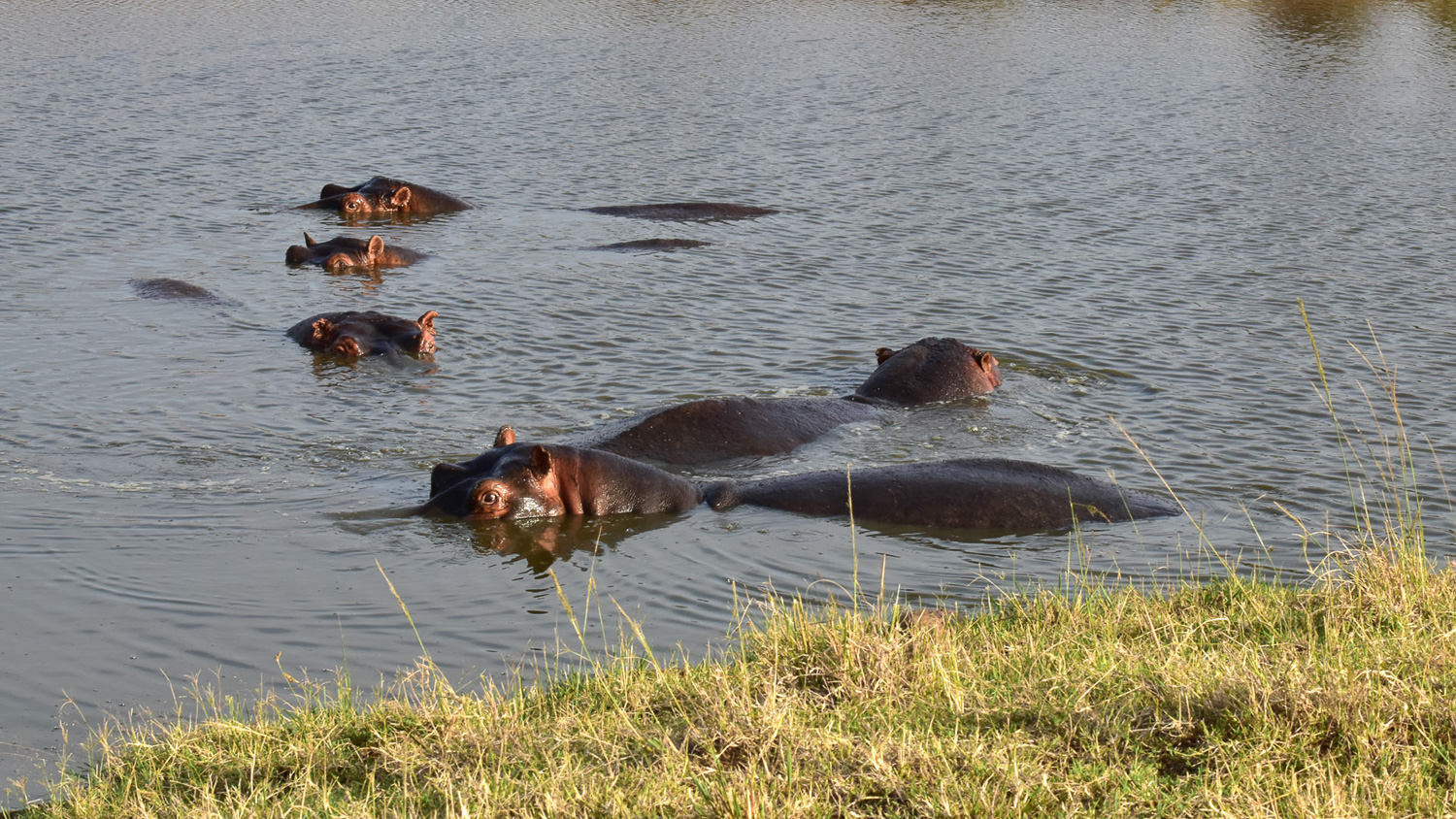 Hippos live in family groups; a group of Hippos is known as a ‘pop’ or ‘bloat’
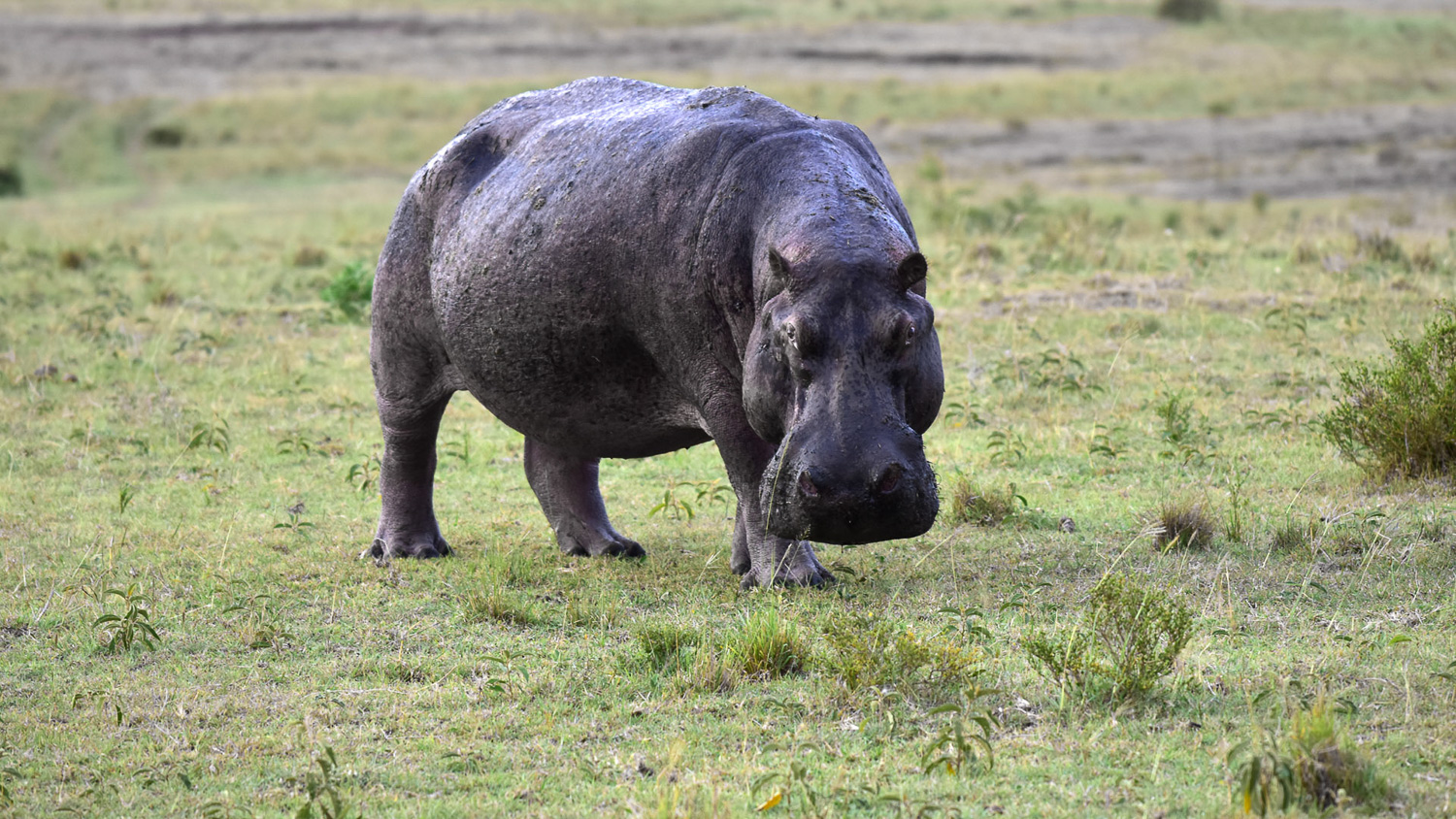 A rare sight; a hippo out of water, when they are their most dangerous
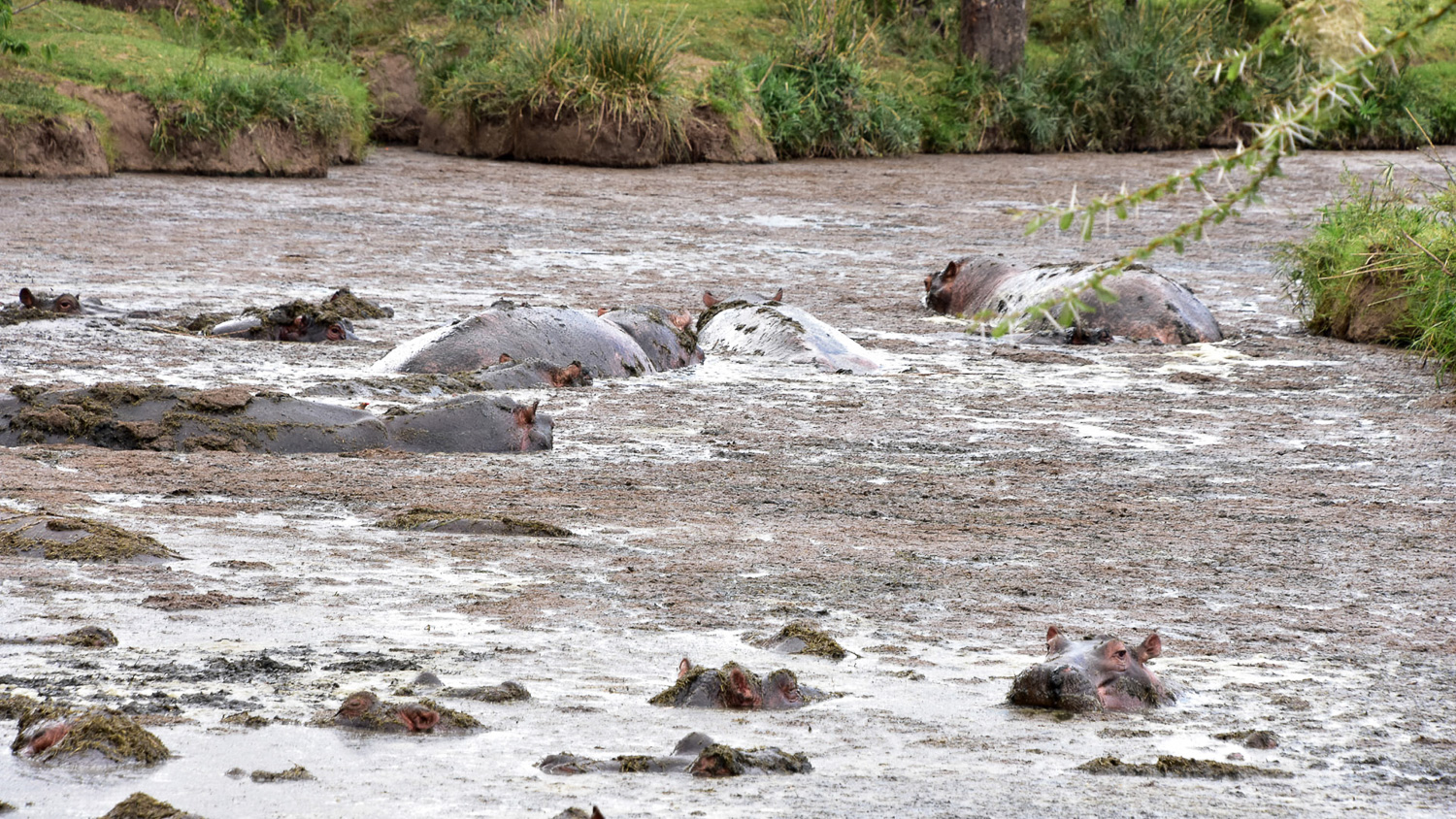 We saw a number of Hippo pods on safari; we always knew when we were approaching them because of the distinctive aroma around them. Hippos do most things in water including defecating. Their dung floats on the water surface providing the ideal protection against the harsh midday sun. For the rest of us however, the smell was extremely unpleasant
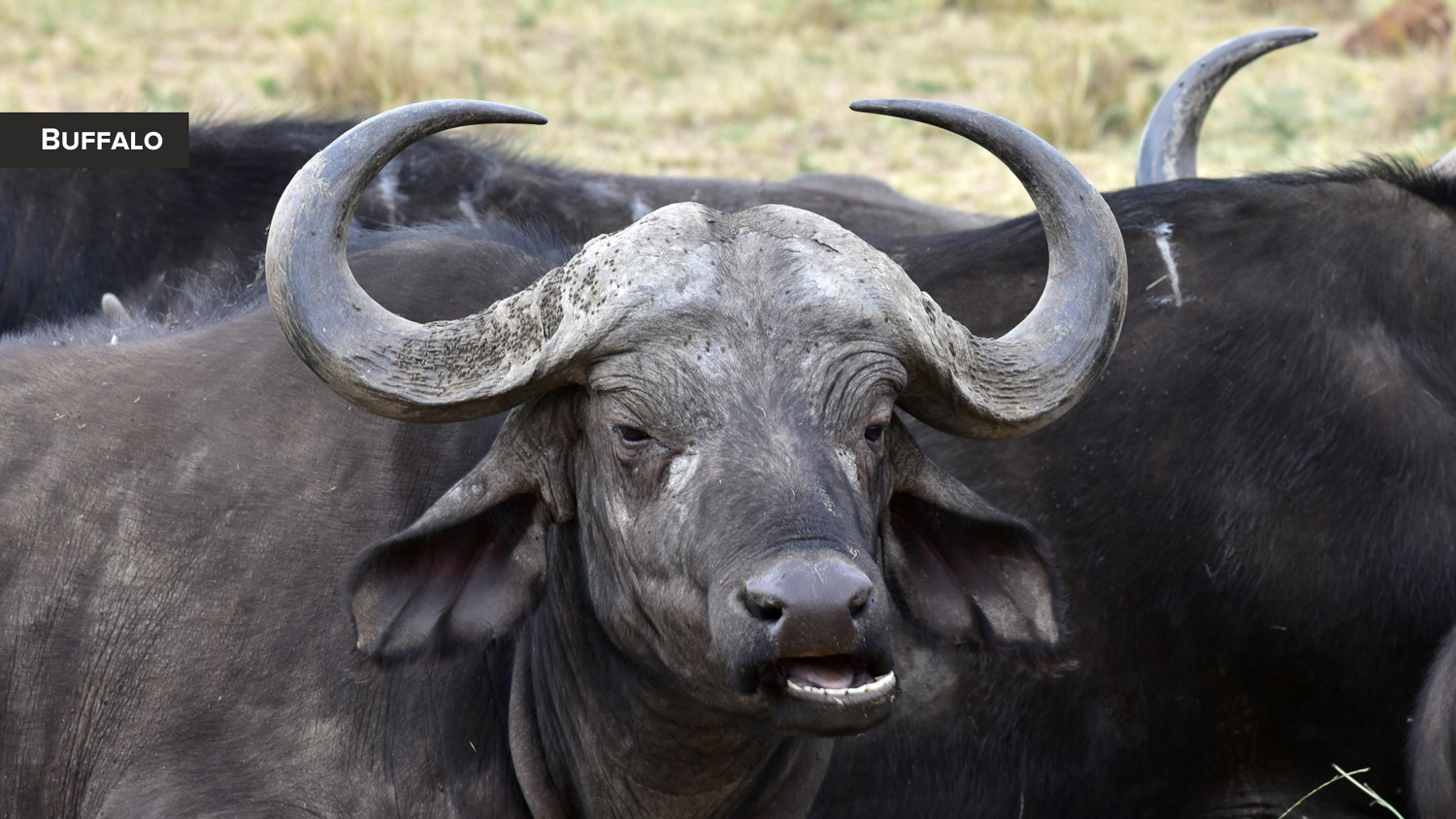
African Buffalo are very hardy and are able to live and flourish in many different habitats as long as they are close to a water source. Buffalo are often pictured covered in mud with a bird on their back. The mud helps the Buffalo get rid of ticks and parasites that latch onto their skin. Birds such as Oxpeckers or Egrets, ride on the back of the Buffalo and eat lice, fleas, and other parasites while getting a lift.
Buffalo spend most of the year in herds of anywhere between 50 and 500 animals. Gathering in such large groups helps dissuade predators like Lions, Leopards, Hyenas, and African wild dogs. Calves spend up to a year and a half suckling and are completely dependent on their mothers during this time.
Buffalo are considered one of the ‘Big Five,’ a term grouping them with Leopards, Rhinoceroses, Elephants, and Lions as the most dangerous animals to hunt in Africa. The African Buffalo are in the Big 5 ranking because of their size, moody behaviour and their ability to charge with no warning. They can also run up to 37 miles per hour.
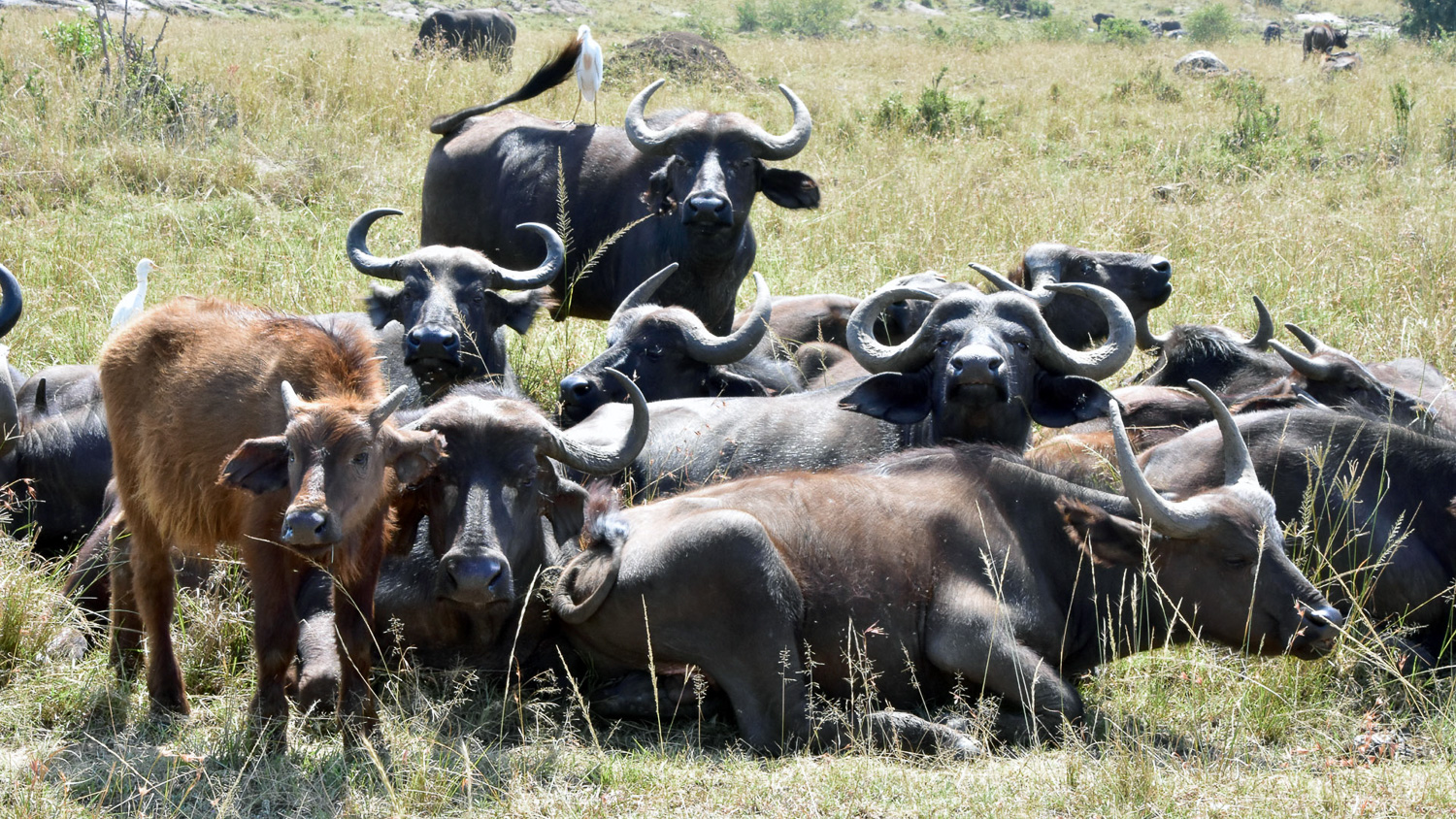 The herd taking a short rest in the midday heat
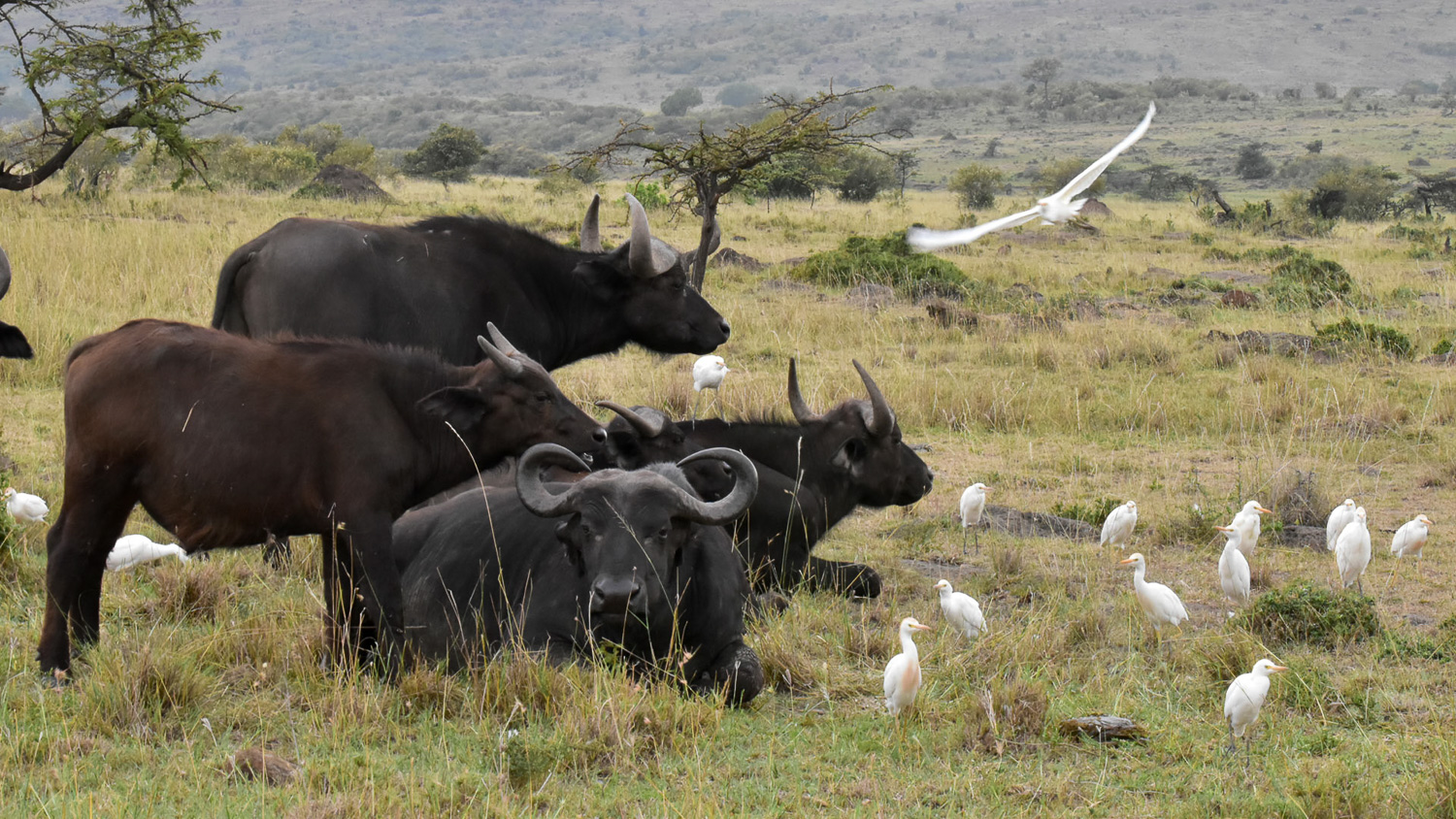 Buffalo with Egrets
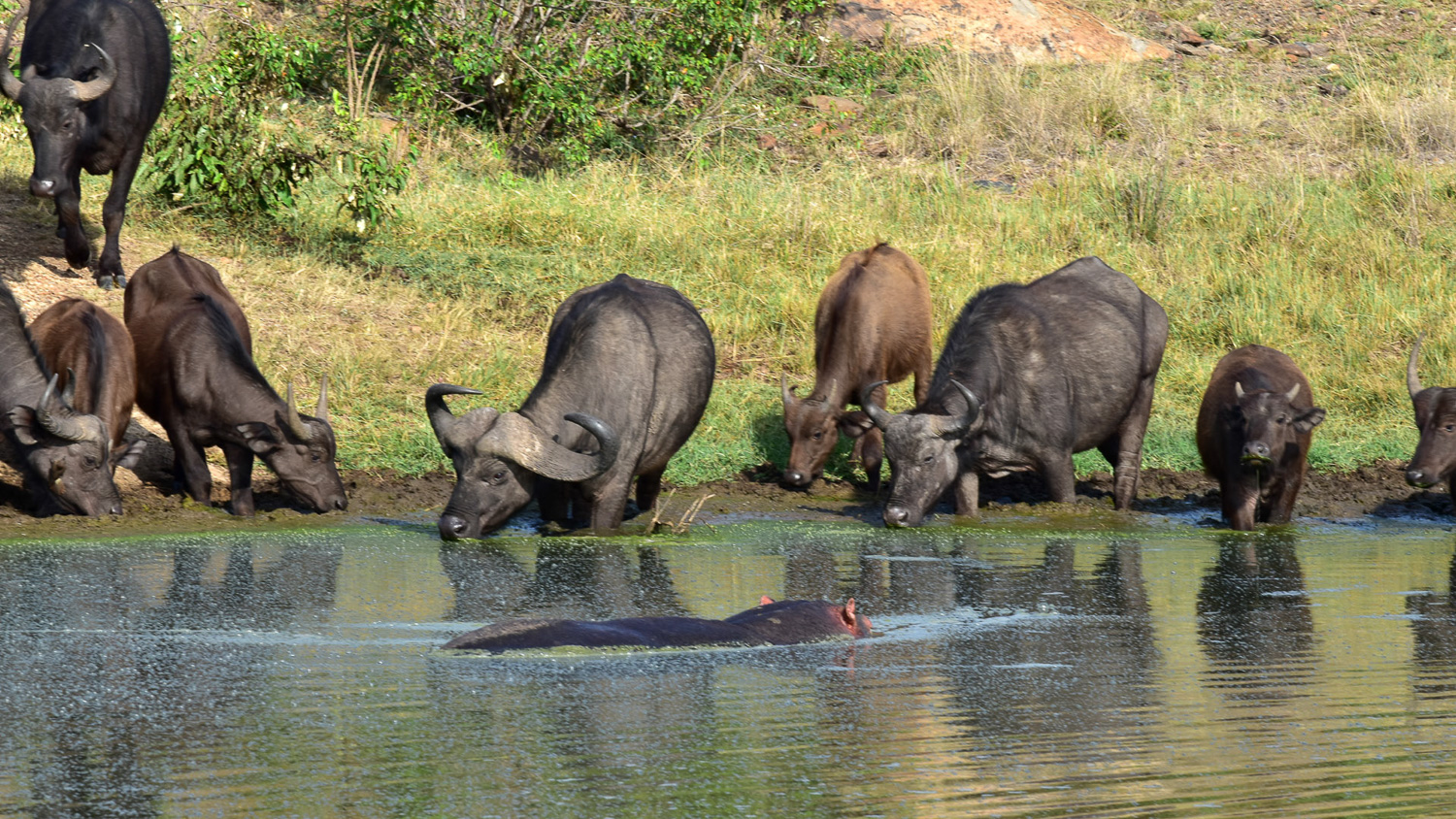 Buffalo drinking at a watering hole that is occupied by a wary Hippo!
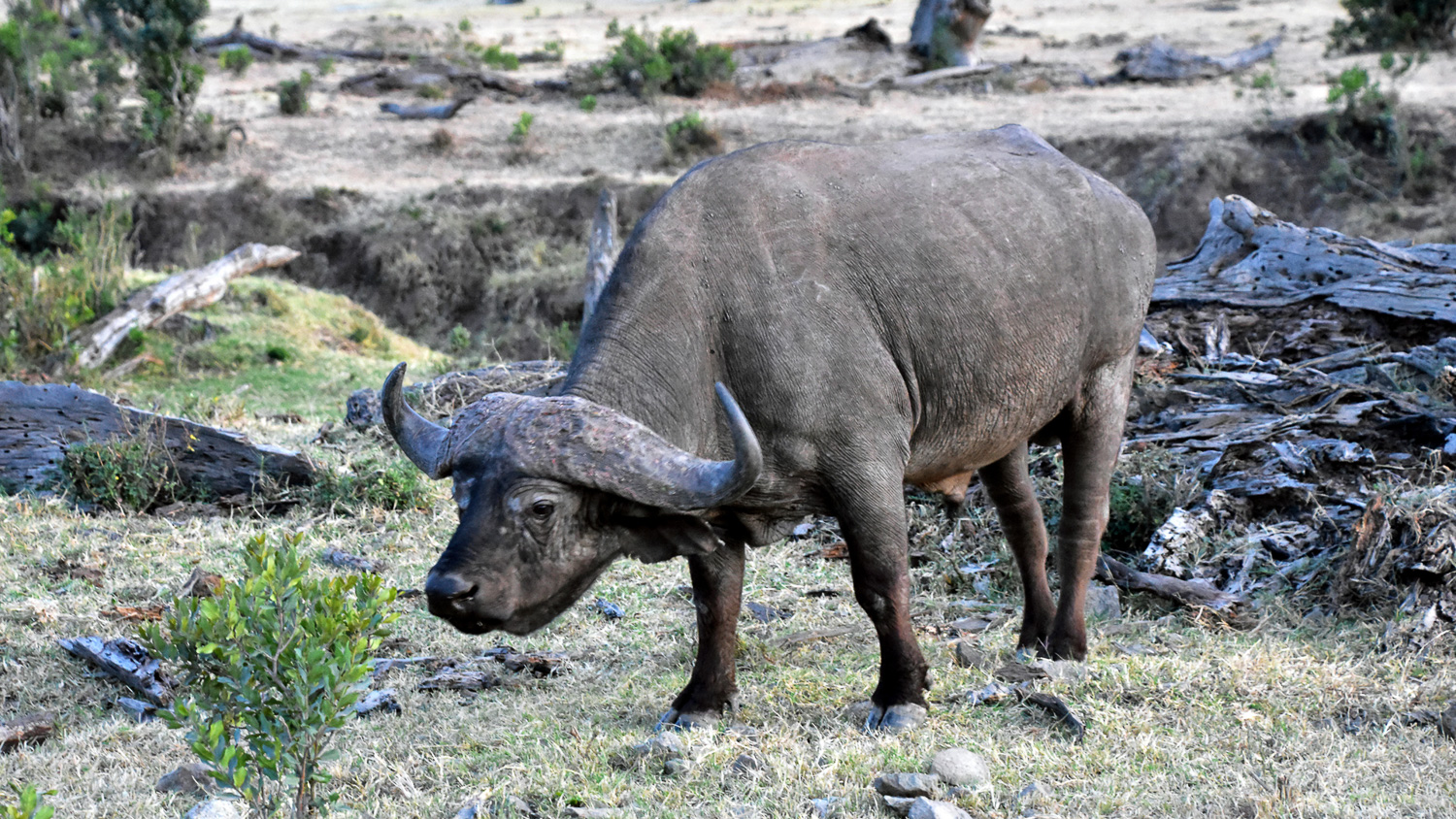 Retired General – As Buffalo get older and their reproduction peaks pass, males will often be chased from the larger herds and are found in small groups or on their own. These males are known as the Retired Generals.
 Charlotte & Graham's Travels