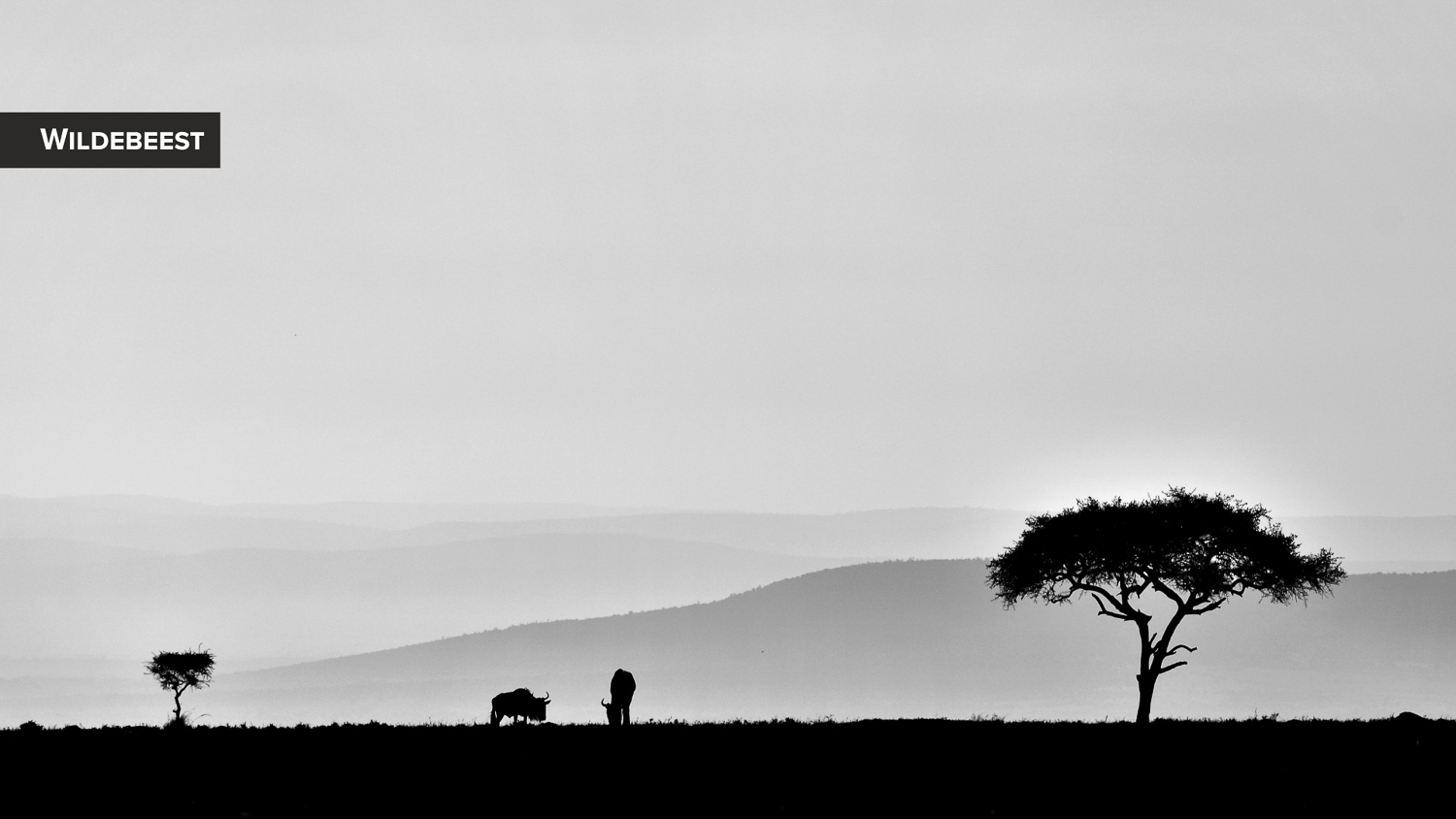
Wildebeest thrive in the dense bushlands, open grasslands and woodland floodplains of the southern savannah. They are strictly grazers and will follow herds of other grazers that eat dry, longer grasses. In addition to grasses, Wildebeest also eat succulent plants and browse on Karoo bushes. Wildebeests begin grazing soon after sunrise, rest briefly at midday, and continue feeding until sunset. They need water almost daily and constantly move around throughout the day and night, in search of water and preferred grasses. Wildebeest live in small herds of females and their calves. During rutting season competing males fight for control of these herds. The calves are born in February in time for the annual migration in July.
The Great Wildebeest Migration is the largest animal migration in the world. Every year, more than 2 million animals (Wildebeest, Zebra, and Gazelle) migrate in a clockwise direction across the ecosystems of the Serengeti (Tanzania) and the Masai Mara (Kenya). Between July and August, the Wildebeest move en masse into Kenya’s Masai Mara, crossing the Mara River in staggering numbers with the animals’ primal instincts guiding them towards greener pastures following the climatic rain fall patterns over the Serengeti-Masai Mara ecosystem.
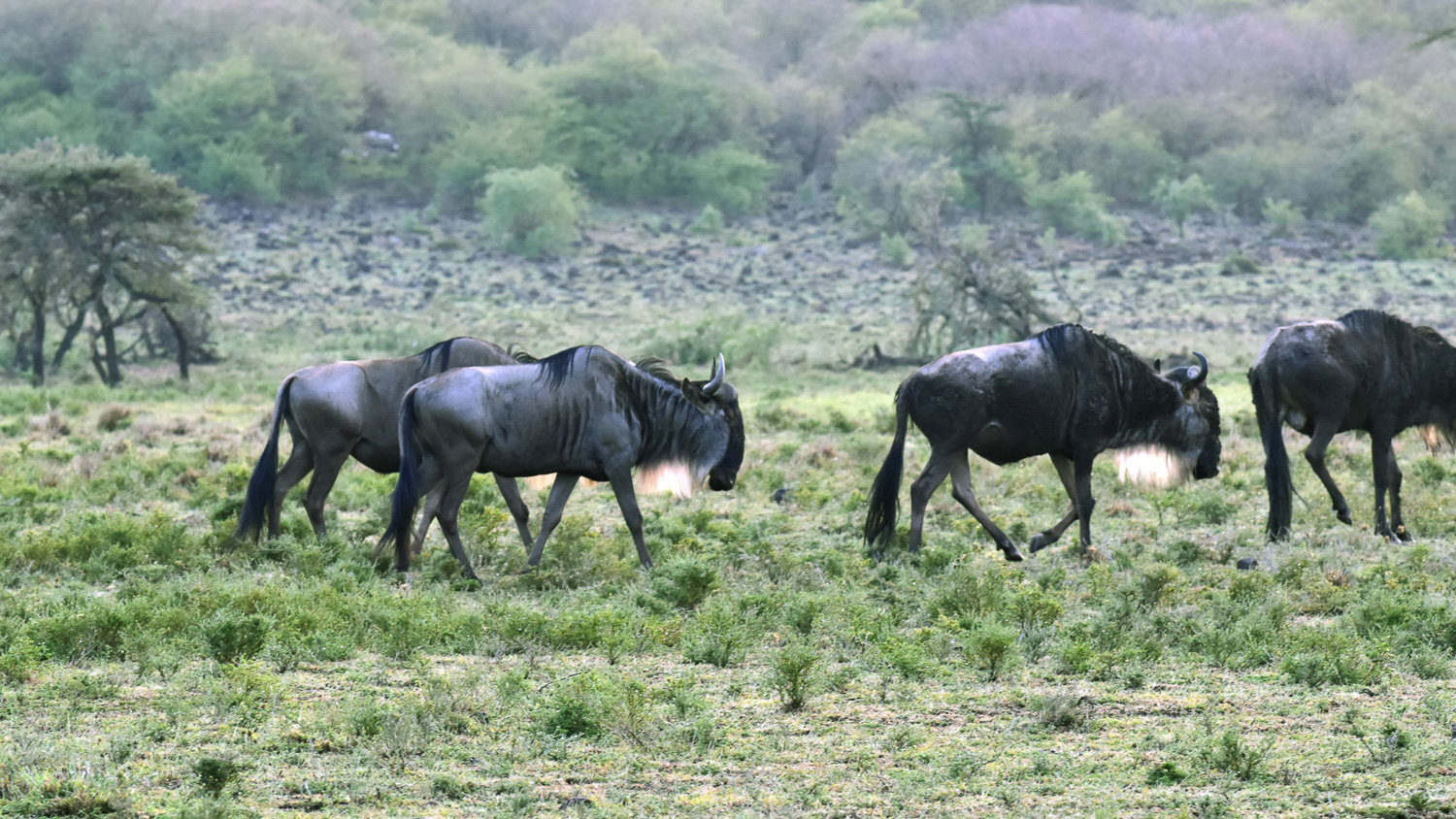 Wildebeest grazing at sunrise – they constantly move across the savannah in search of new grazing
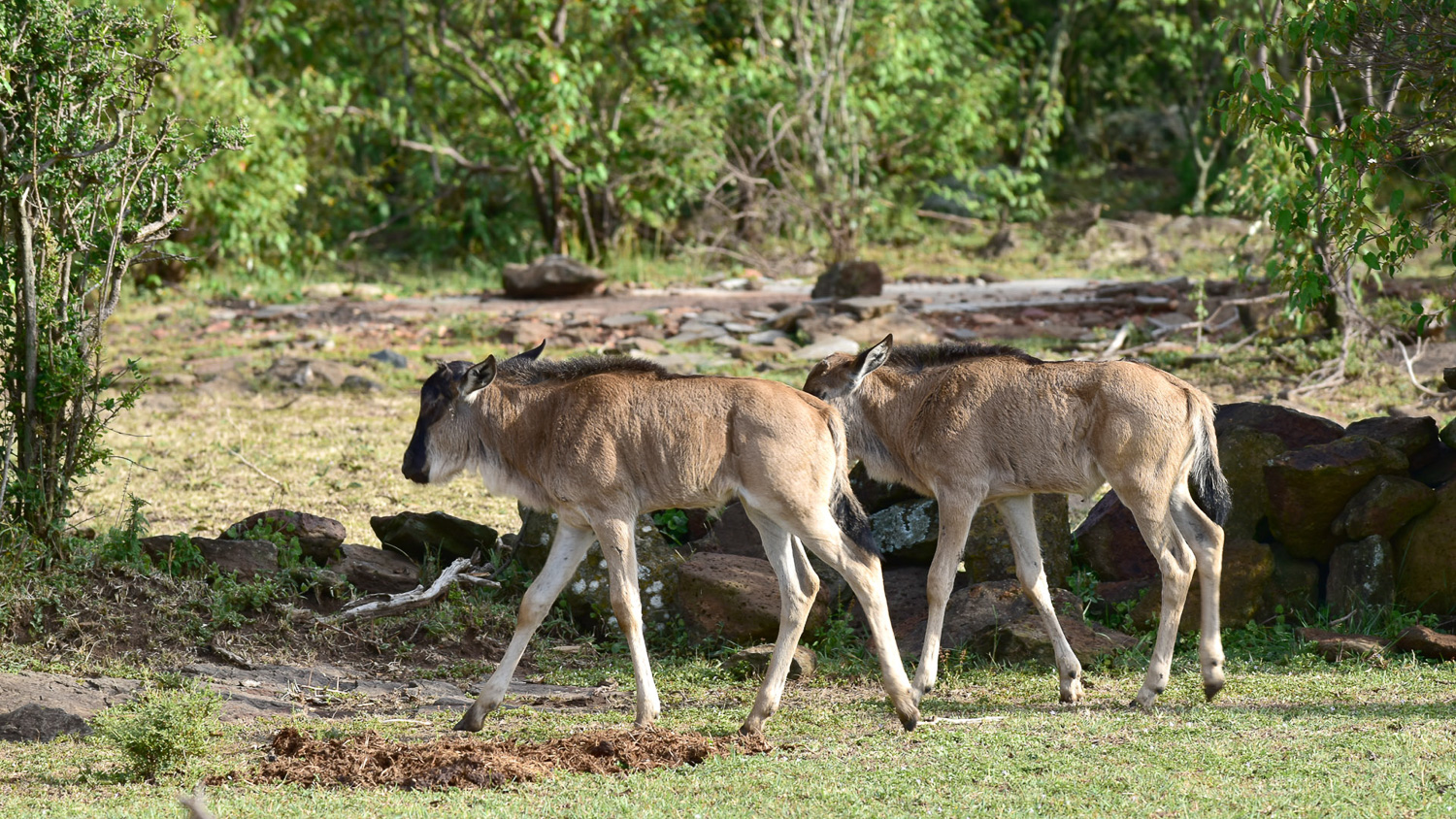 Two young calves – they are particularly vulnerable as Hyenas and Leopards actively hunt them
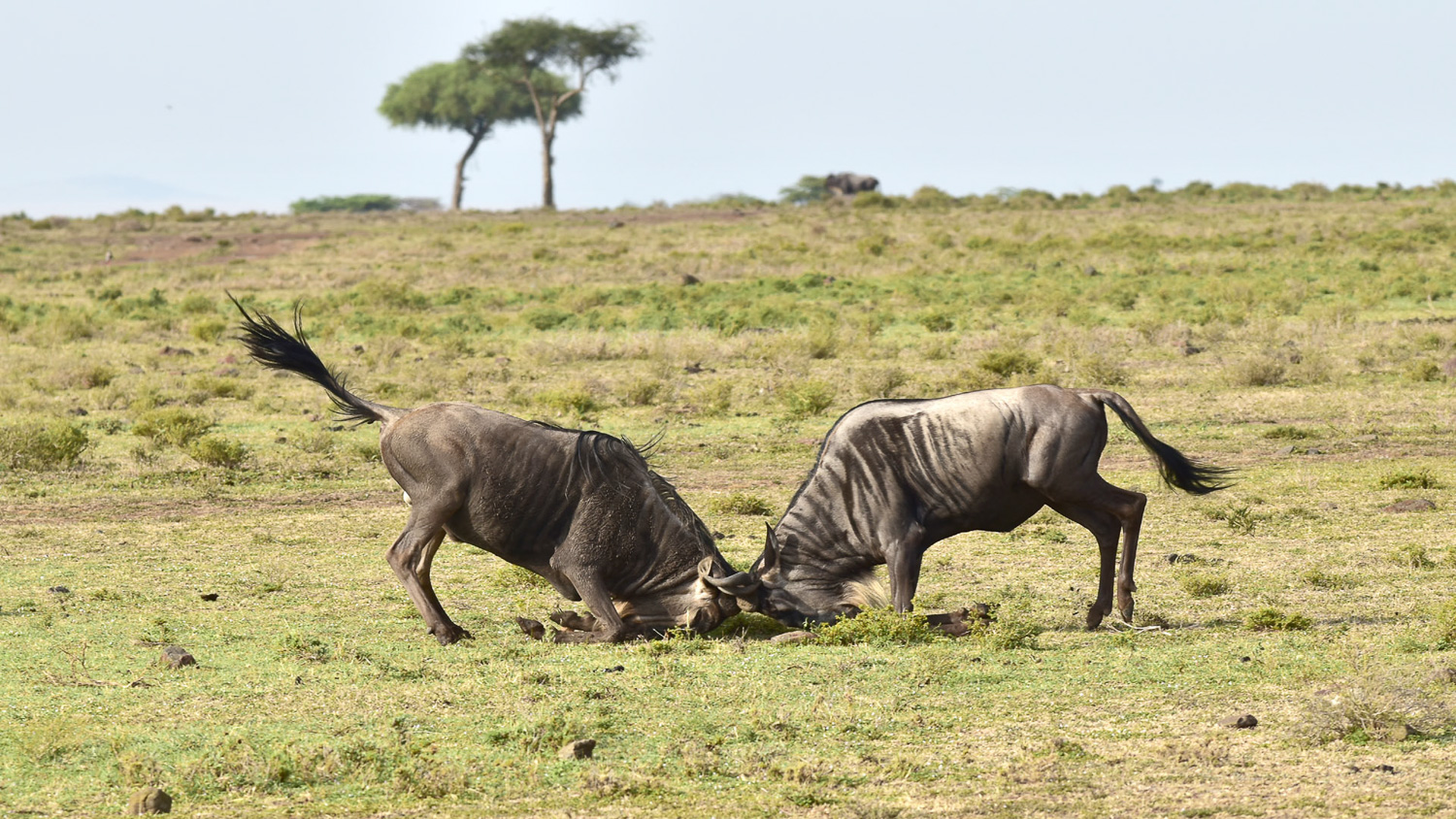 Two male Wildebeest fighting for control of the herd
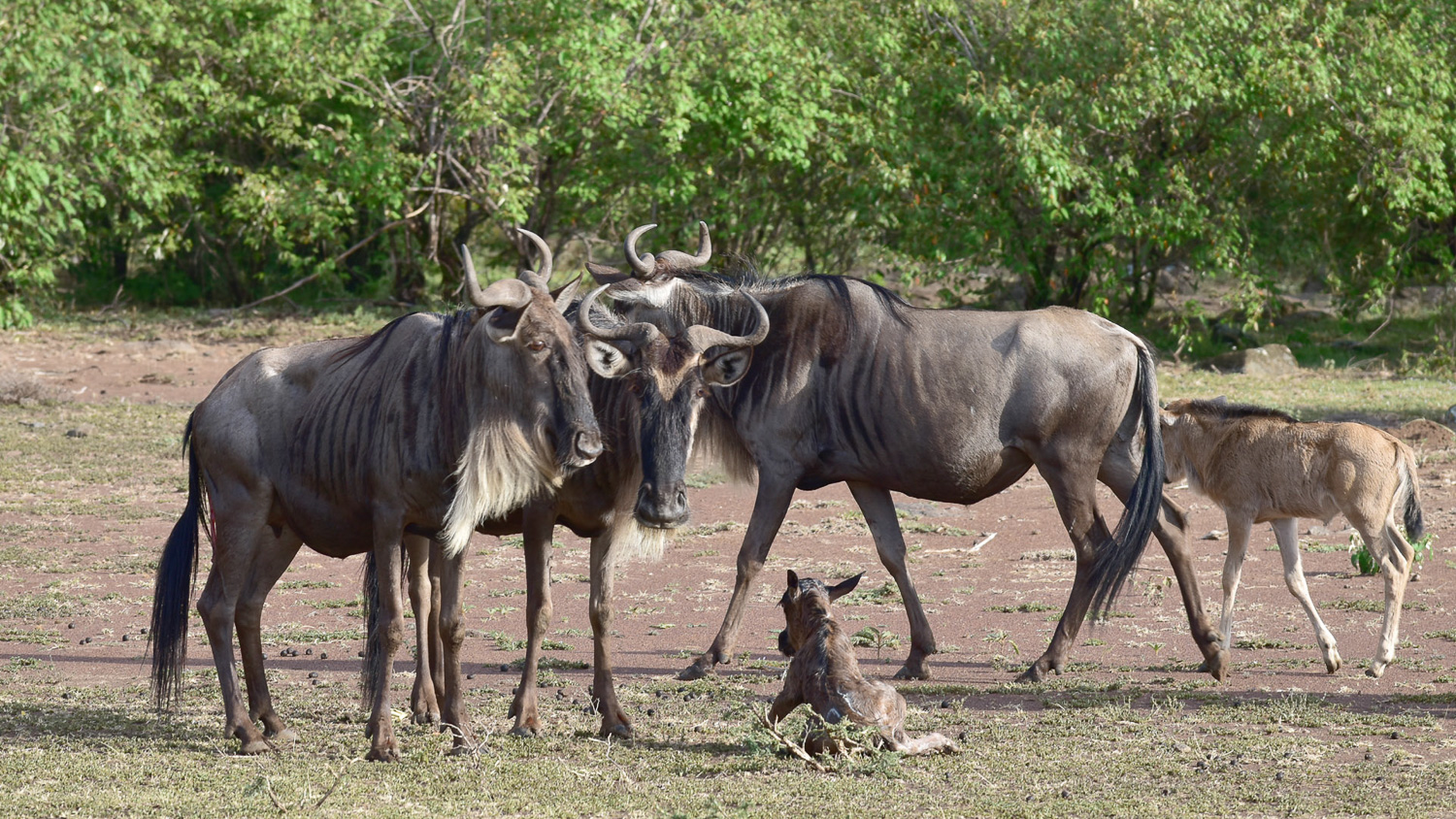 A female Wildebeest gave birth as we were watching the herd
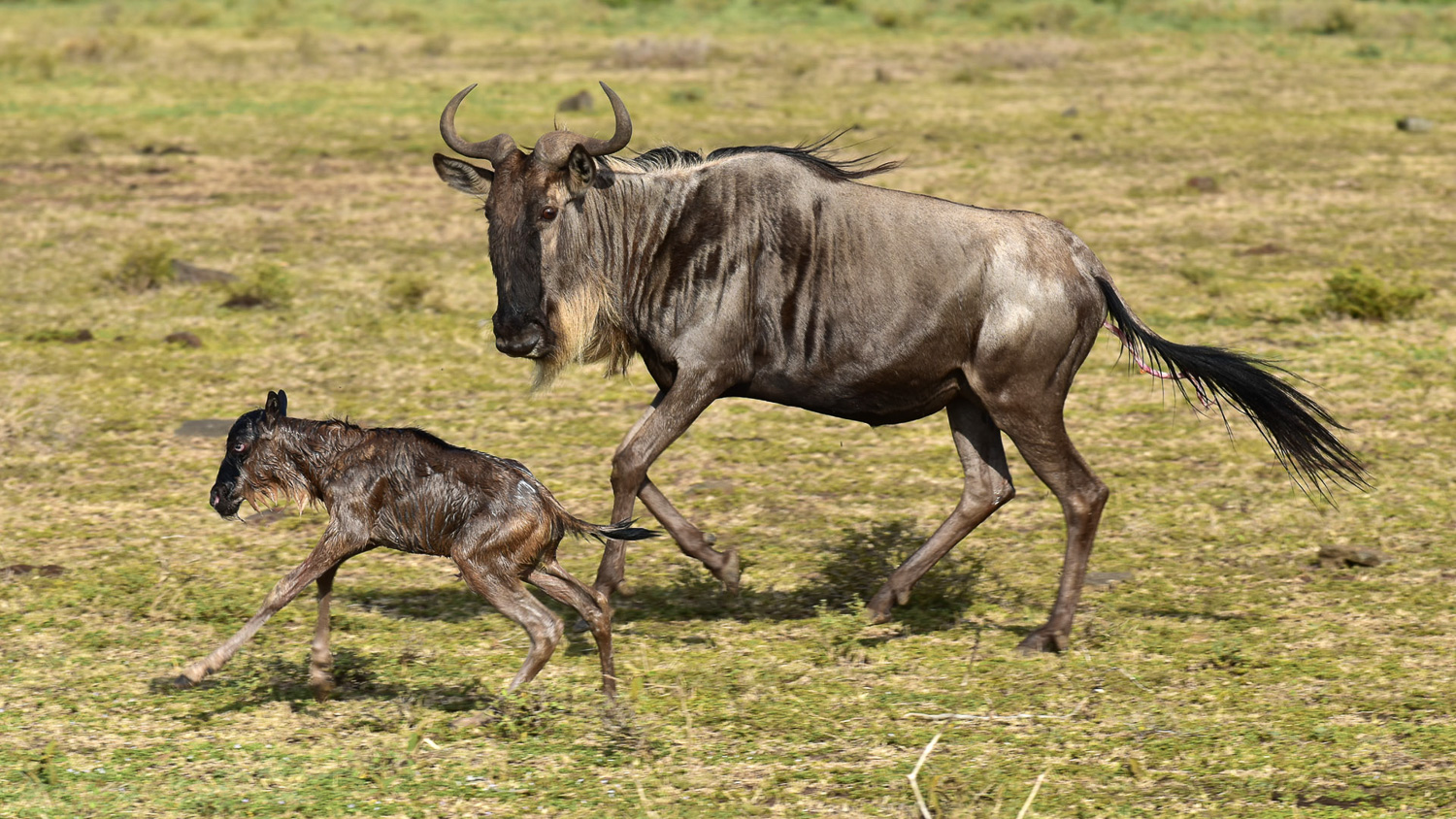 Within a couple minutes the calf is confidently running with Mum – the calf needs the protection of the herd as it is very vulnerable to predators.
 Charlotte & Graham's Travels