Cloud Forest
Perched above the pristine 2,000-acre Los Angeles Cloud Forest Reserve in central Costa Rica, Villa Blanca is a cloud forest hotel that transcends the ordinary. At 4,500 feet, it is a place where you can walk in the clouds, and feel the gentle swirl of mist and mystery surround you.
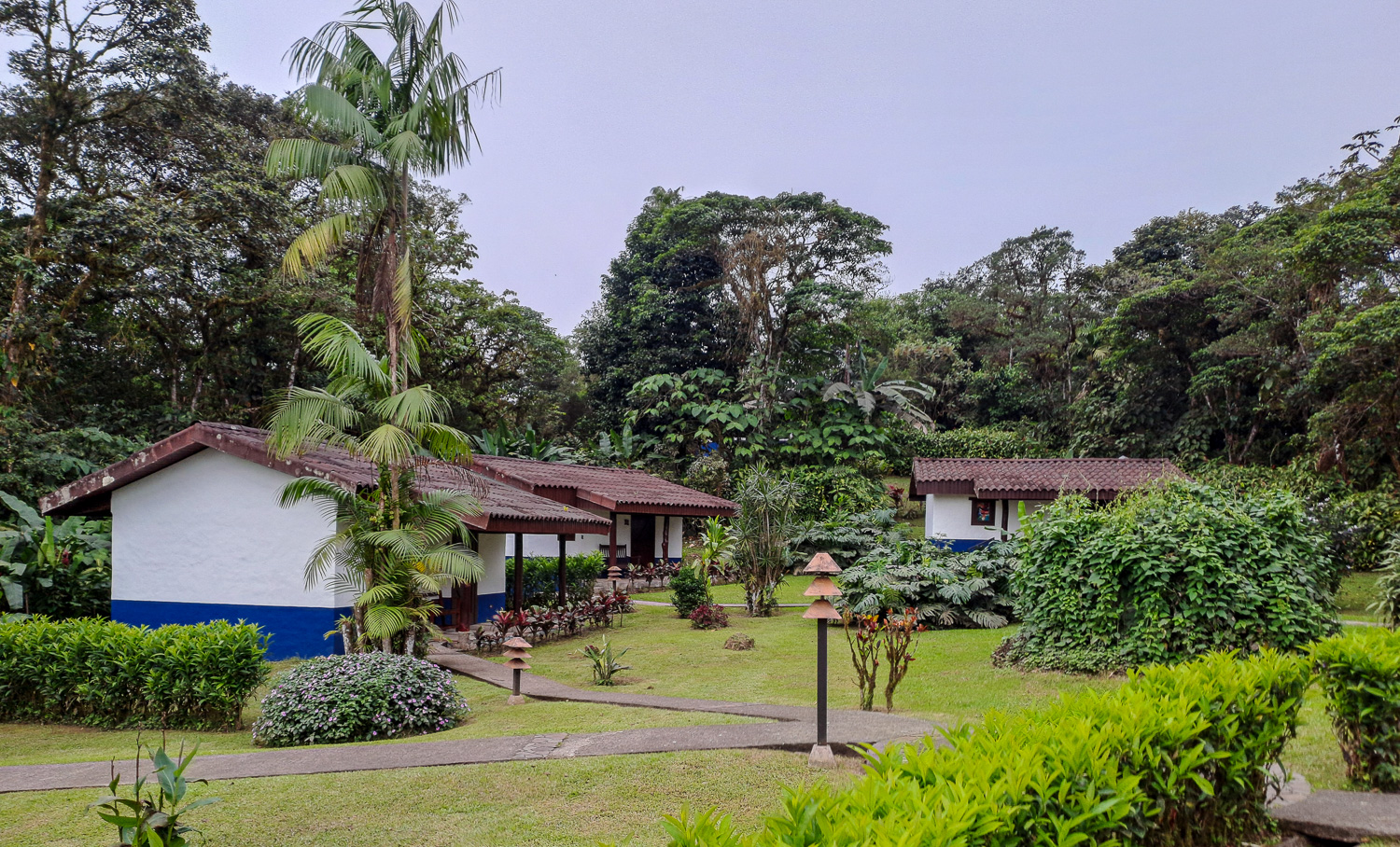 The individual chalet accommodation is spread out in the grounds of the hotel
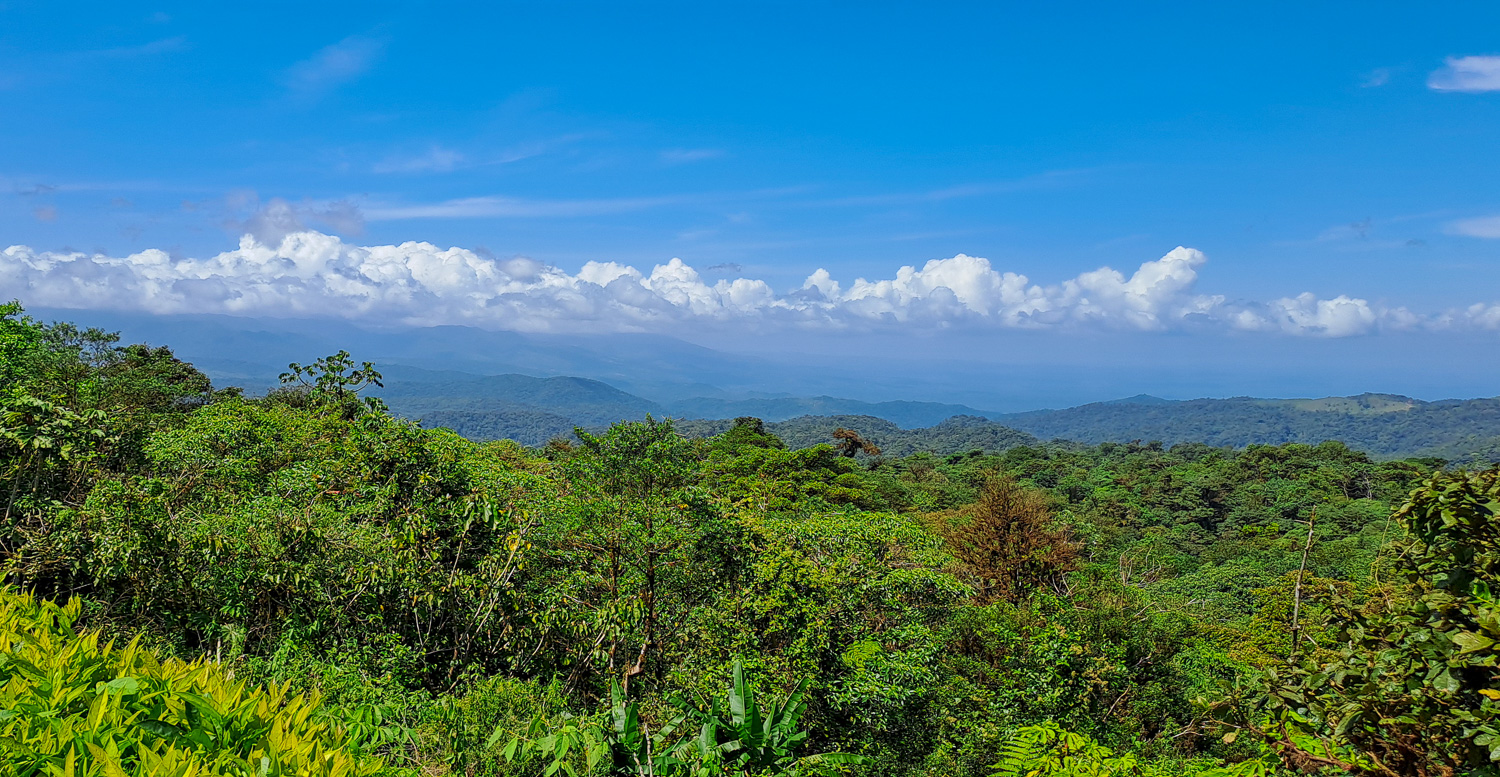 During the day there are dramatic views from the mountain top location of the hotel
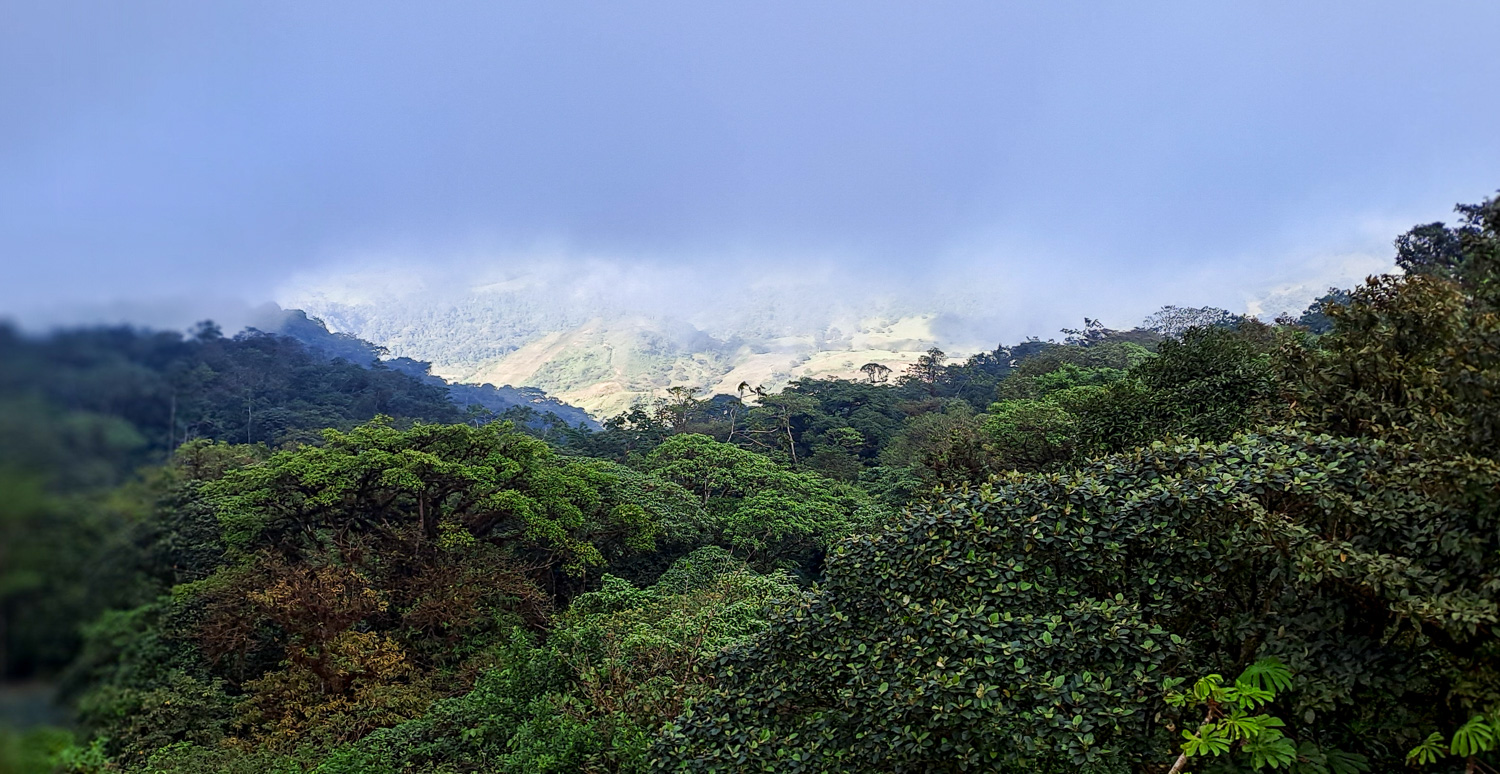 The cloud rolls in around the hills and mountains as the sun sets
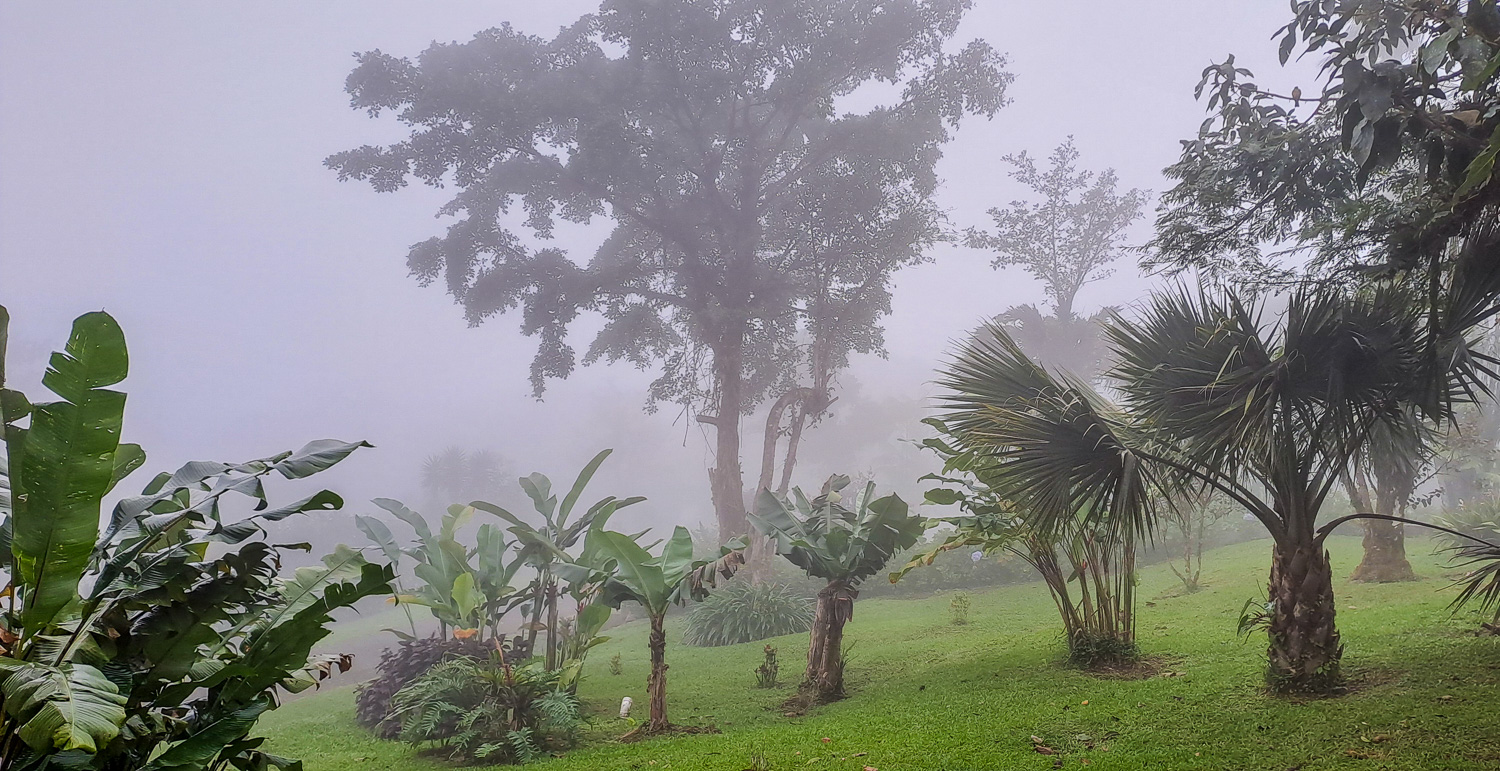 Eventually, the hotel grounds are covered in cloud as well
A completely different type of forest is found at this higher altitude, very different to the rainforests in the lowlands and along the coast. A series of walking paths wind through the cloud forest, on which we spent many hours exploring, with a guide and by ourselves.
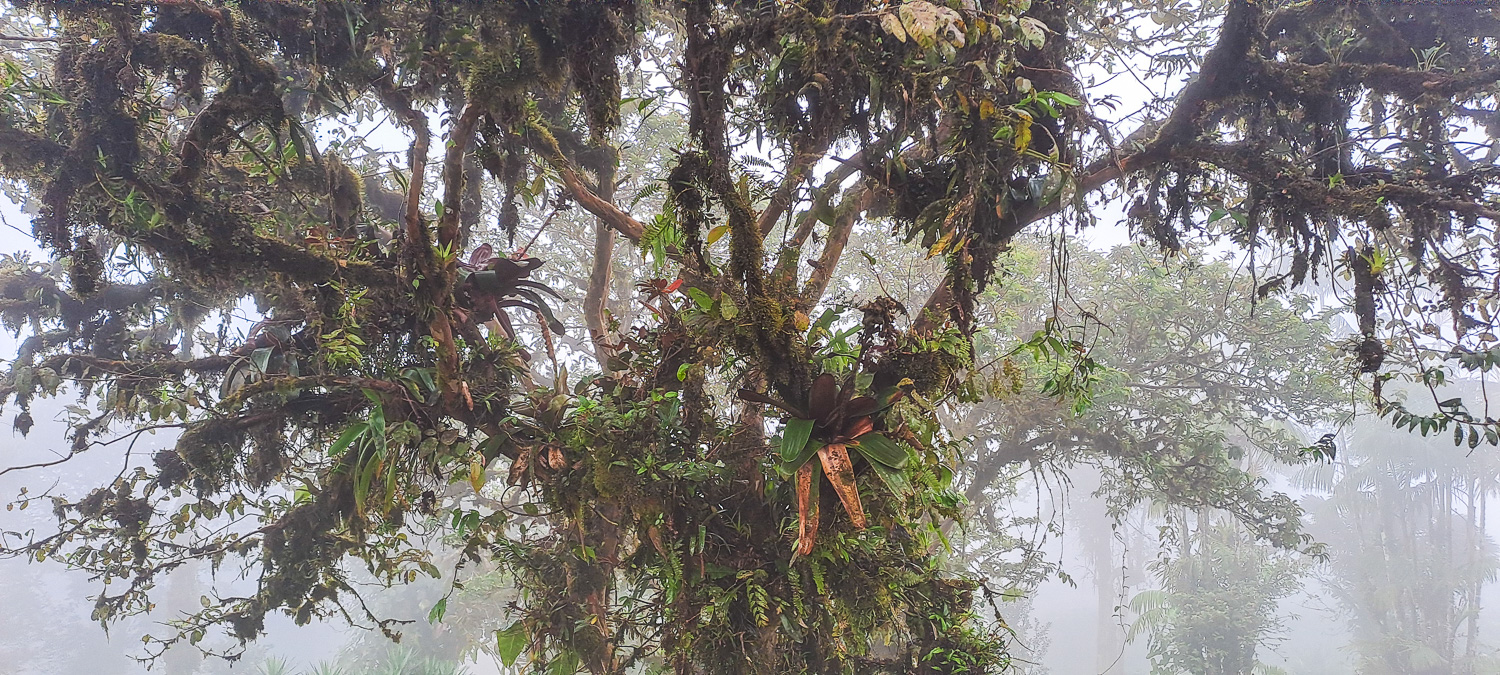 Fig Tree – Originally the fig plant grew along side its host tree. Over time the fig became dominant, killing its host. Now other trees and plants grow within the Fig tree, providing a variety of fruit and seeds for animals and birds. These trees and plants synchronise their fruit ripening in order to feed migrating birds. In the cloud forest, there are very few tall trees, as the weight of plants on the host trees causes the branches to break.
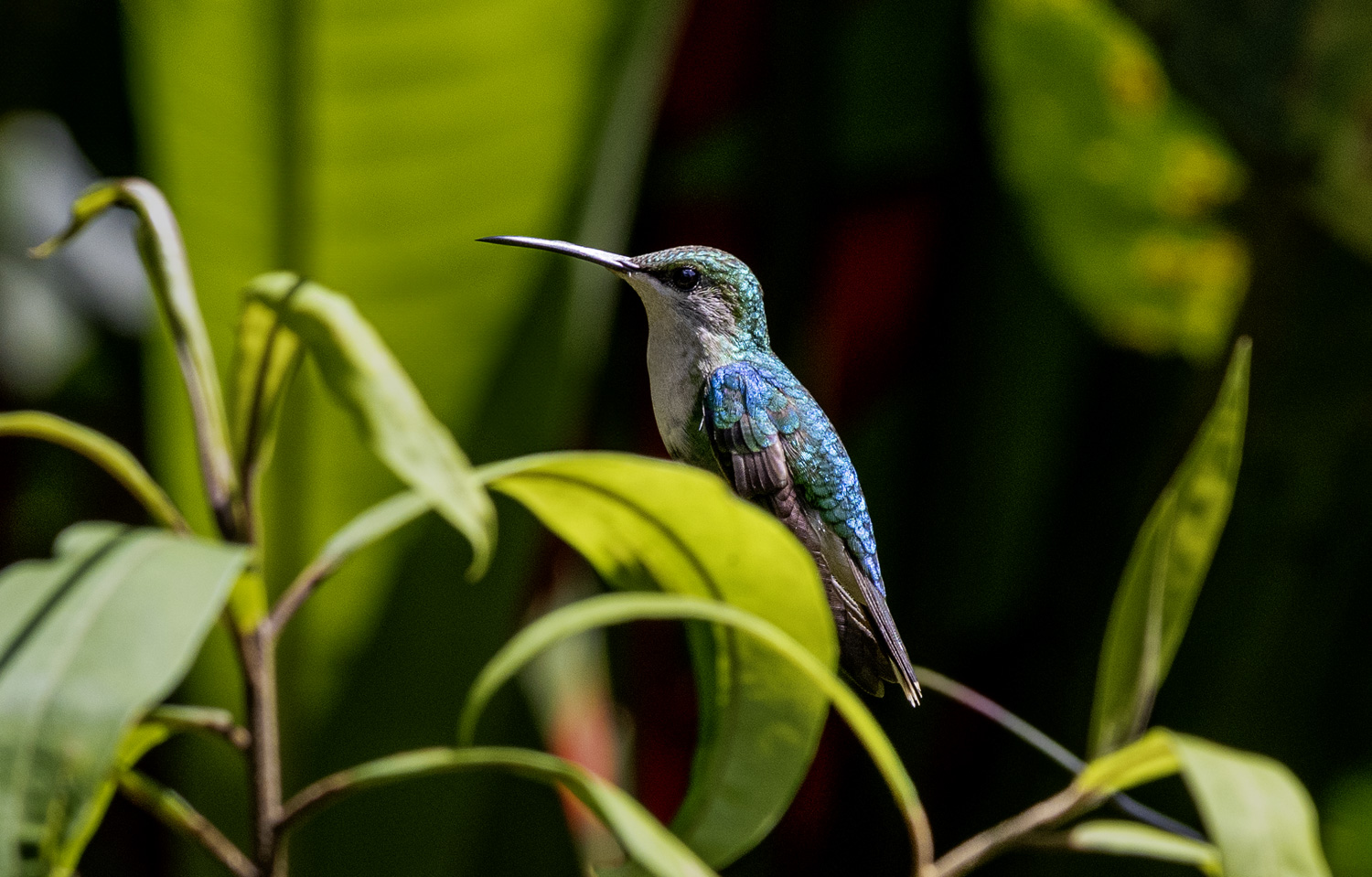 Hummingbirds are frequent visitors to the Cloud Forest. This fine example is a Green-crowned Brilliant Hummingbird.
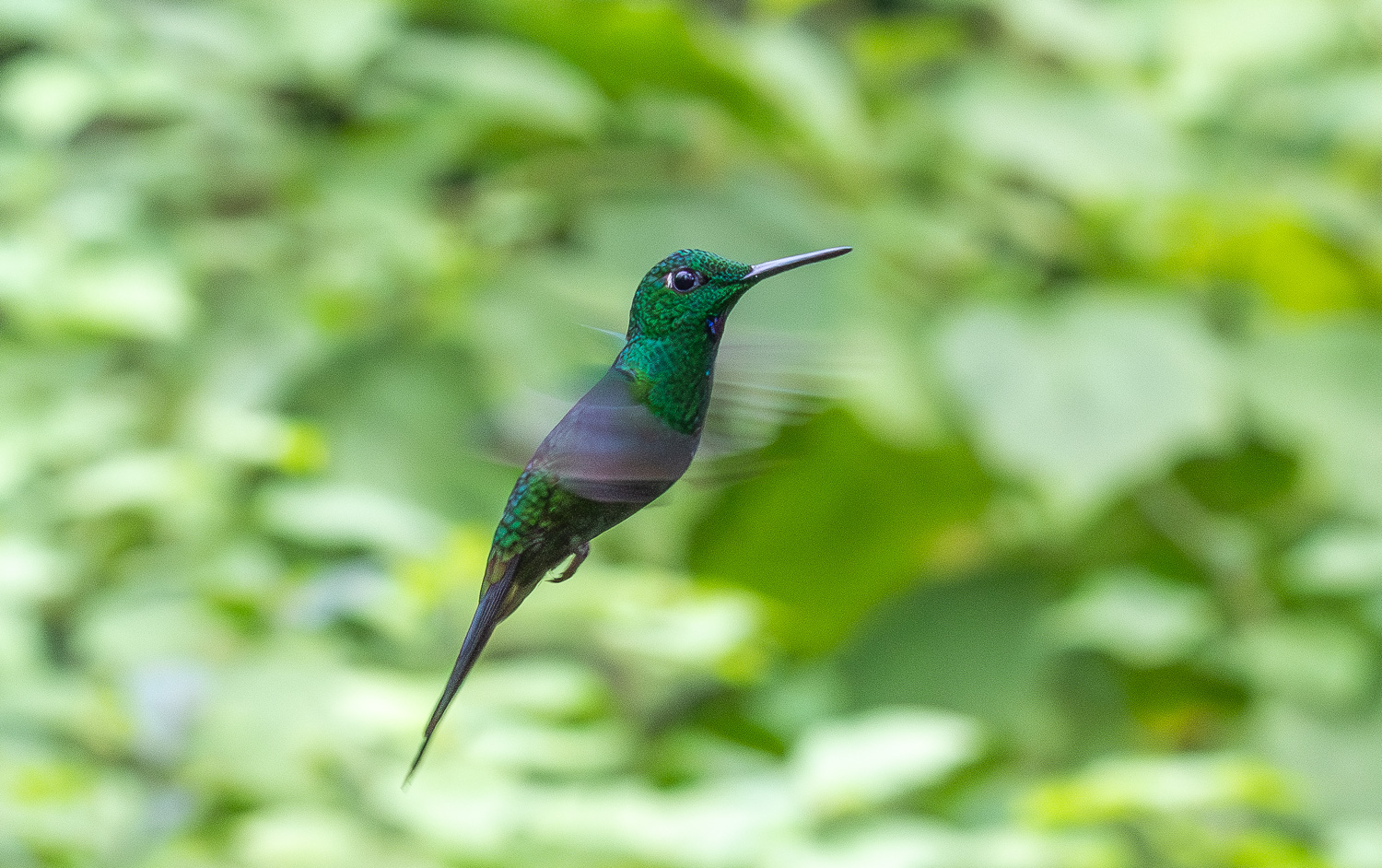 They are majestic when hovering
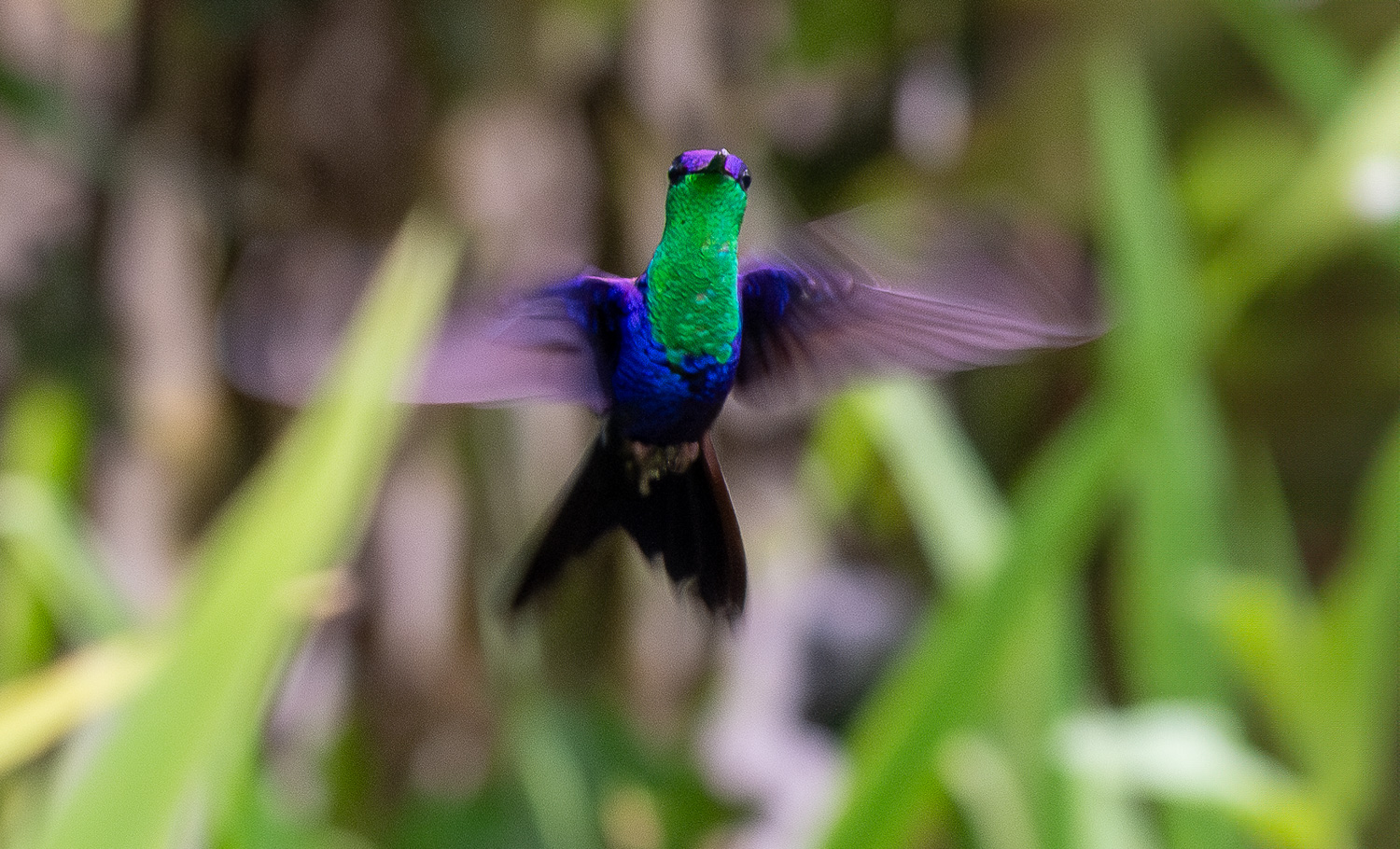 Crowned Woodnymph Hummimgbird
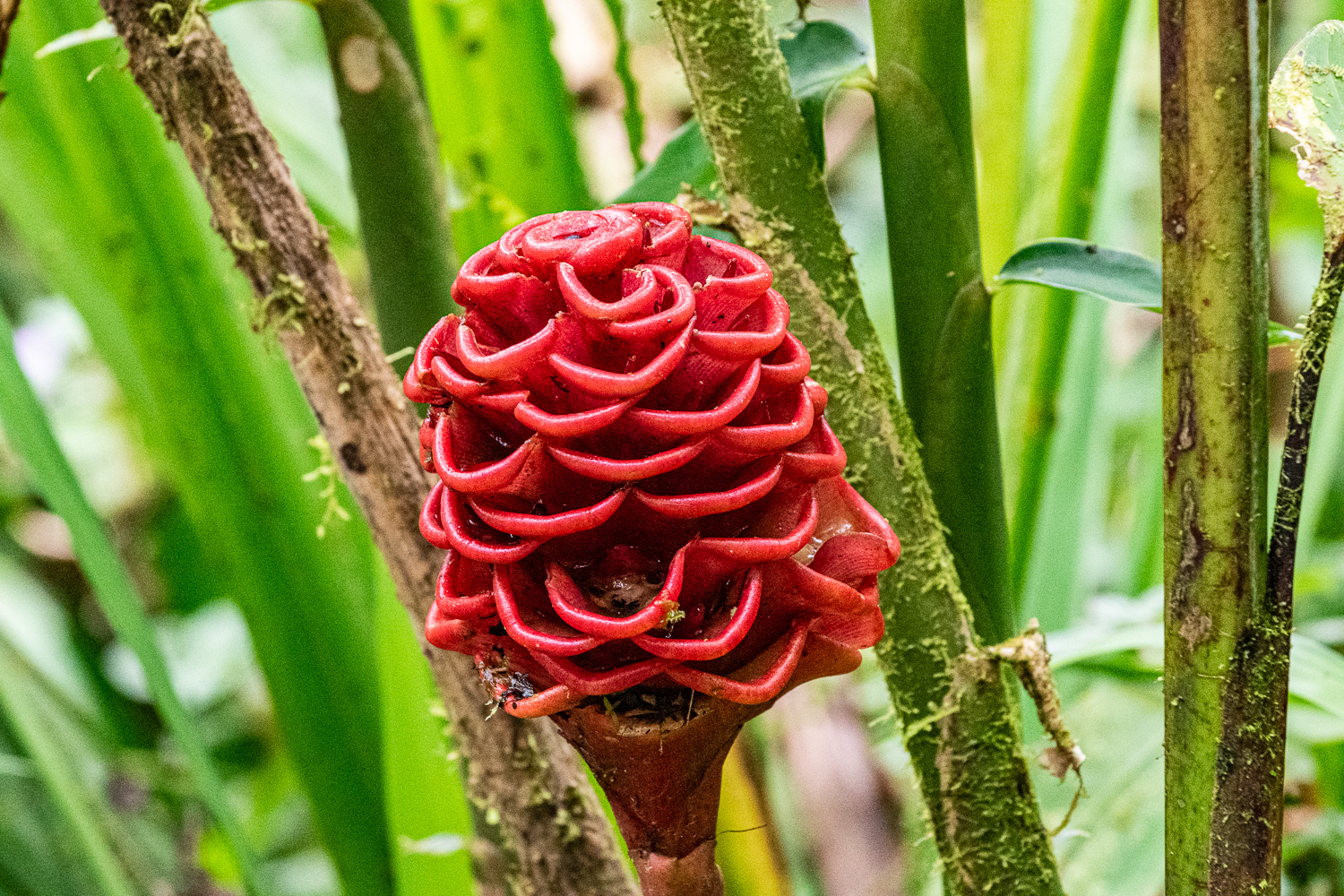 The Microphone plant, is part of the Ginger family
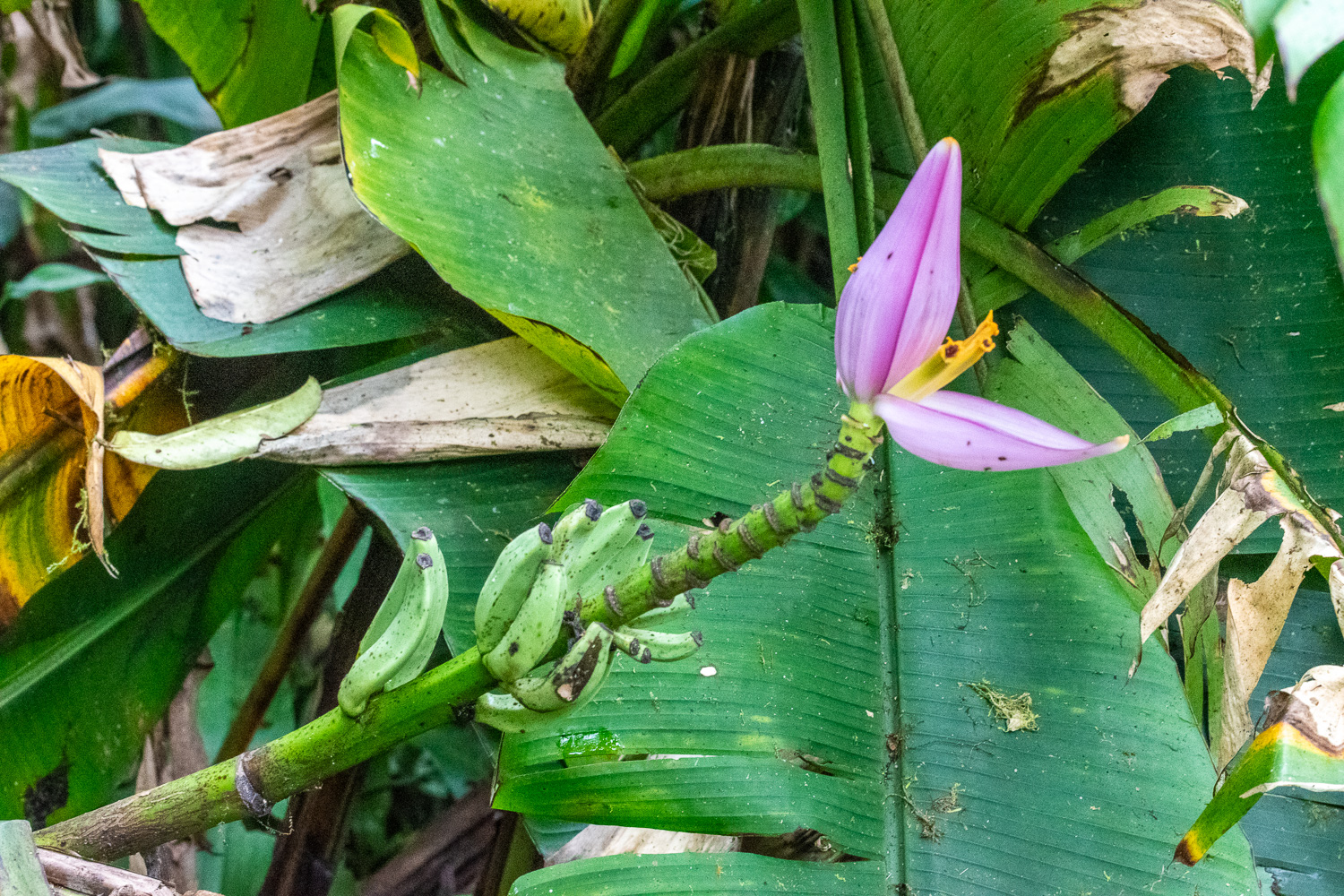 These bananas were only 1 inch long
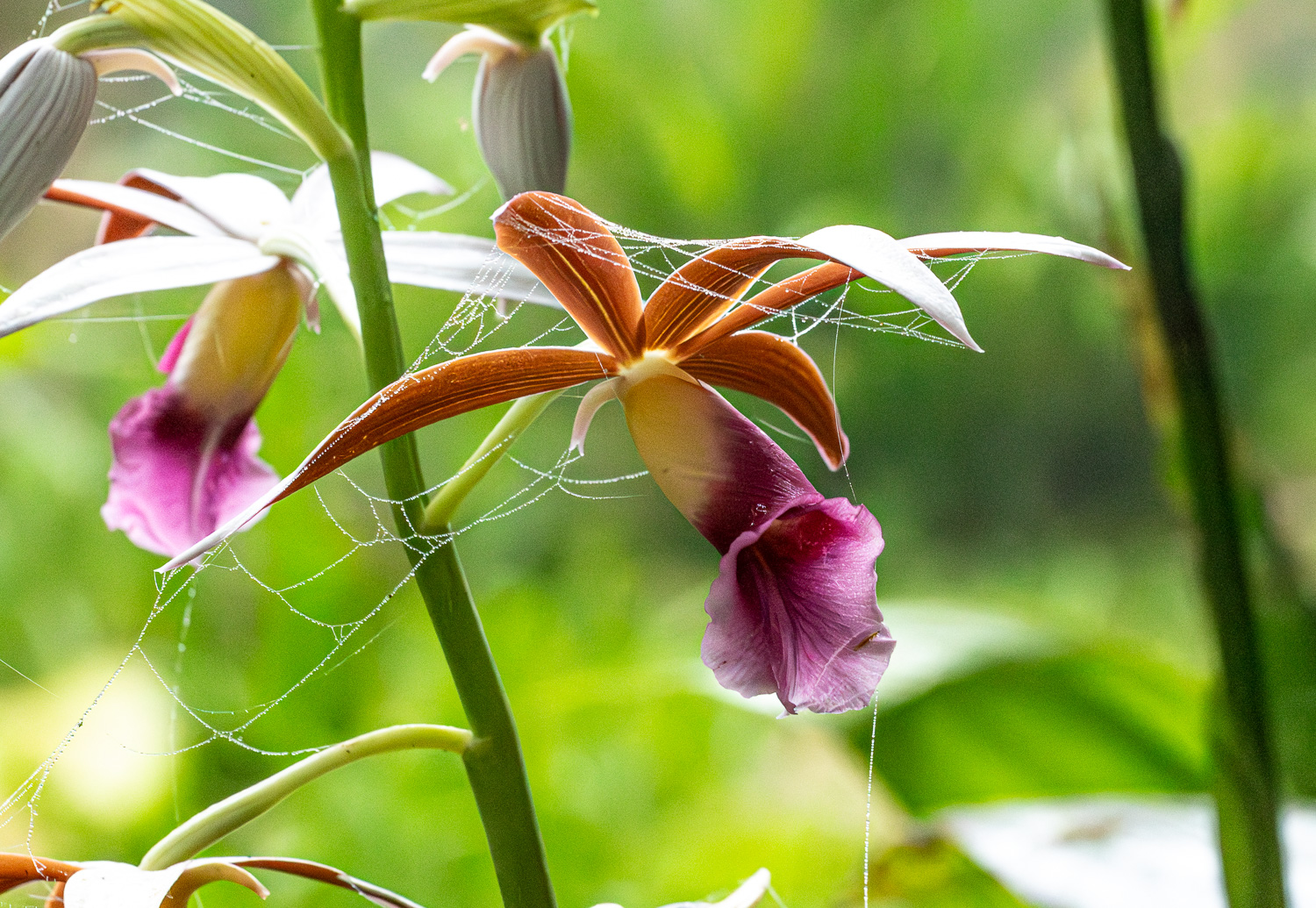 This Costa Rican orchid is covered in a dew-laden spider’s web
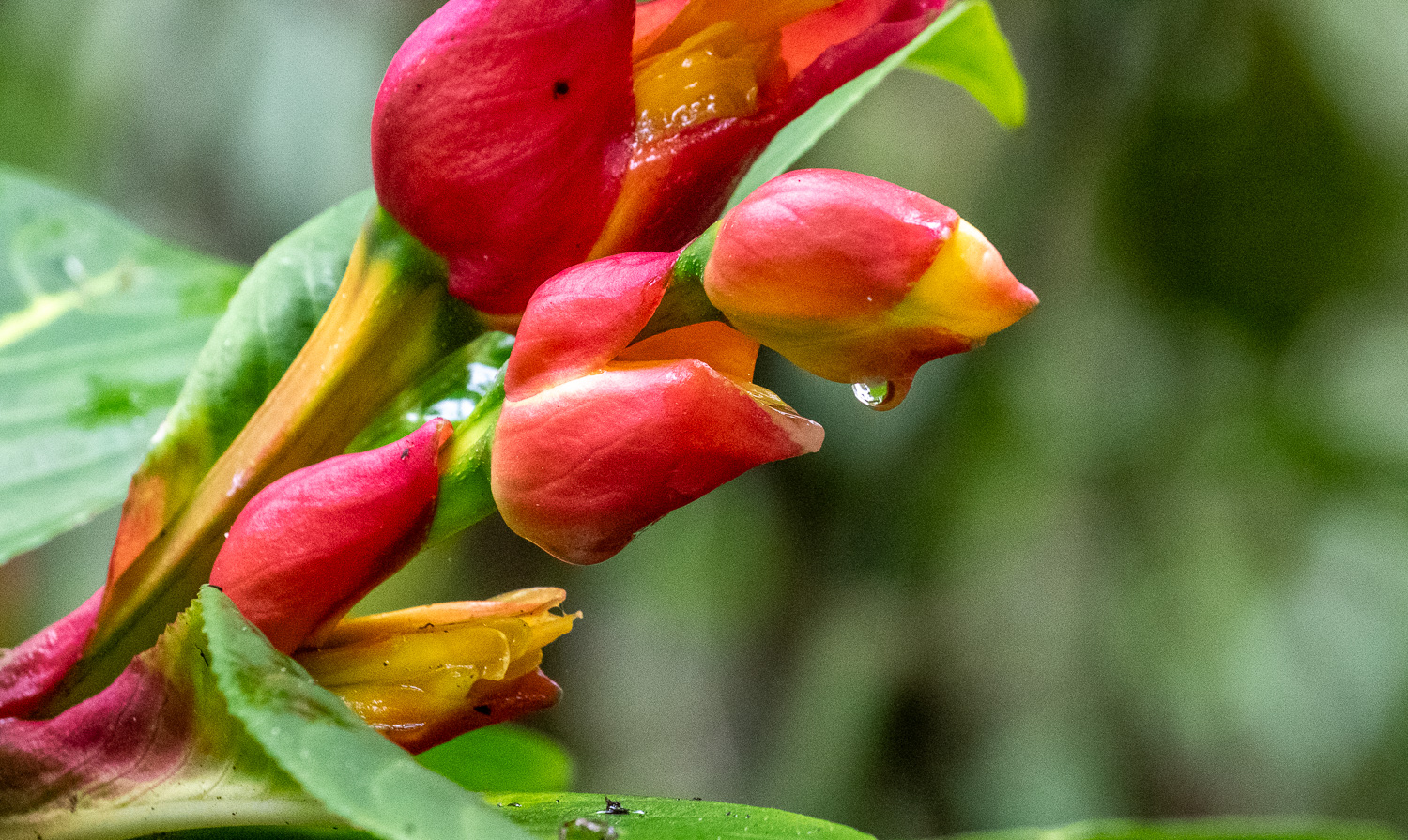 The Red Shrimp plant
Manuel Antonio
This is a popular resort near beaches and coastal jungle adjacent to the Manuel Antonio National Park.
Hotel Parador, our home for the next 3-nights, sits atop the Punta Quepos promontory, overlooking the Pacific Ocean and surrounded by 12 acres of wildlife-rich tropical rainforest, and the National Park. The grounds are home to many species of monkeys, sloths and a variety of birds.
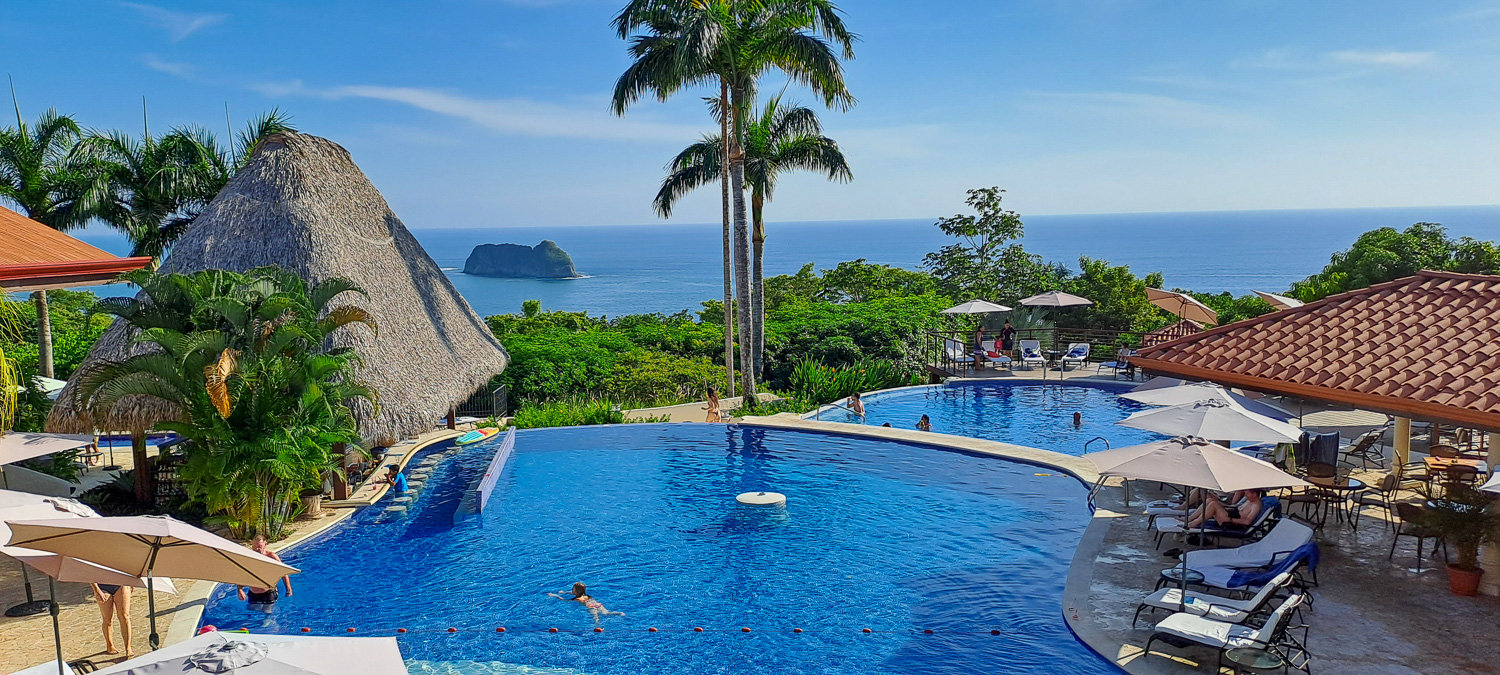 Main Swimming Pool with the Pacific Ocean as a backdrop
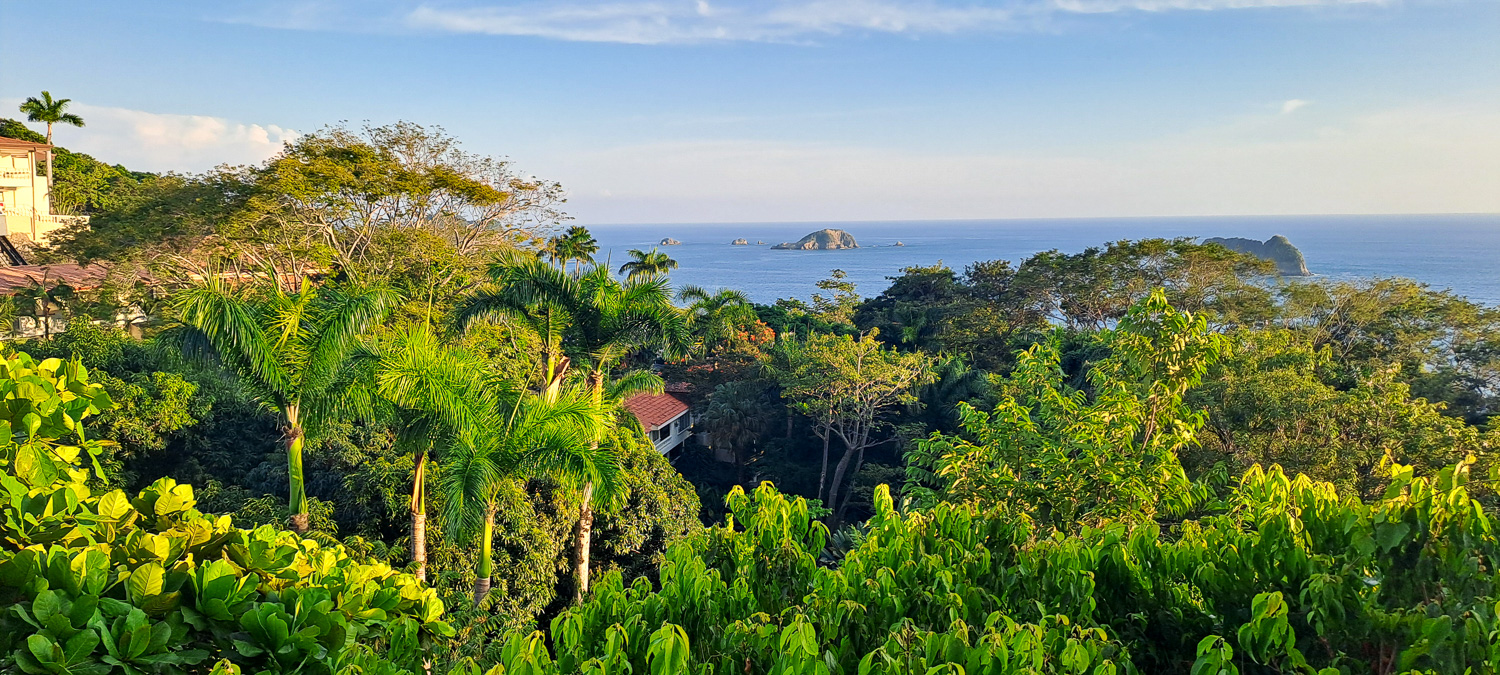 Early evening view from one of the restaurants across the promontory to the ocean.
Wildlife can be easily viewed around the hotel grounds, as some animals, in particular monkeys, seem to think they are guests of the Hotel!
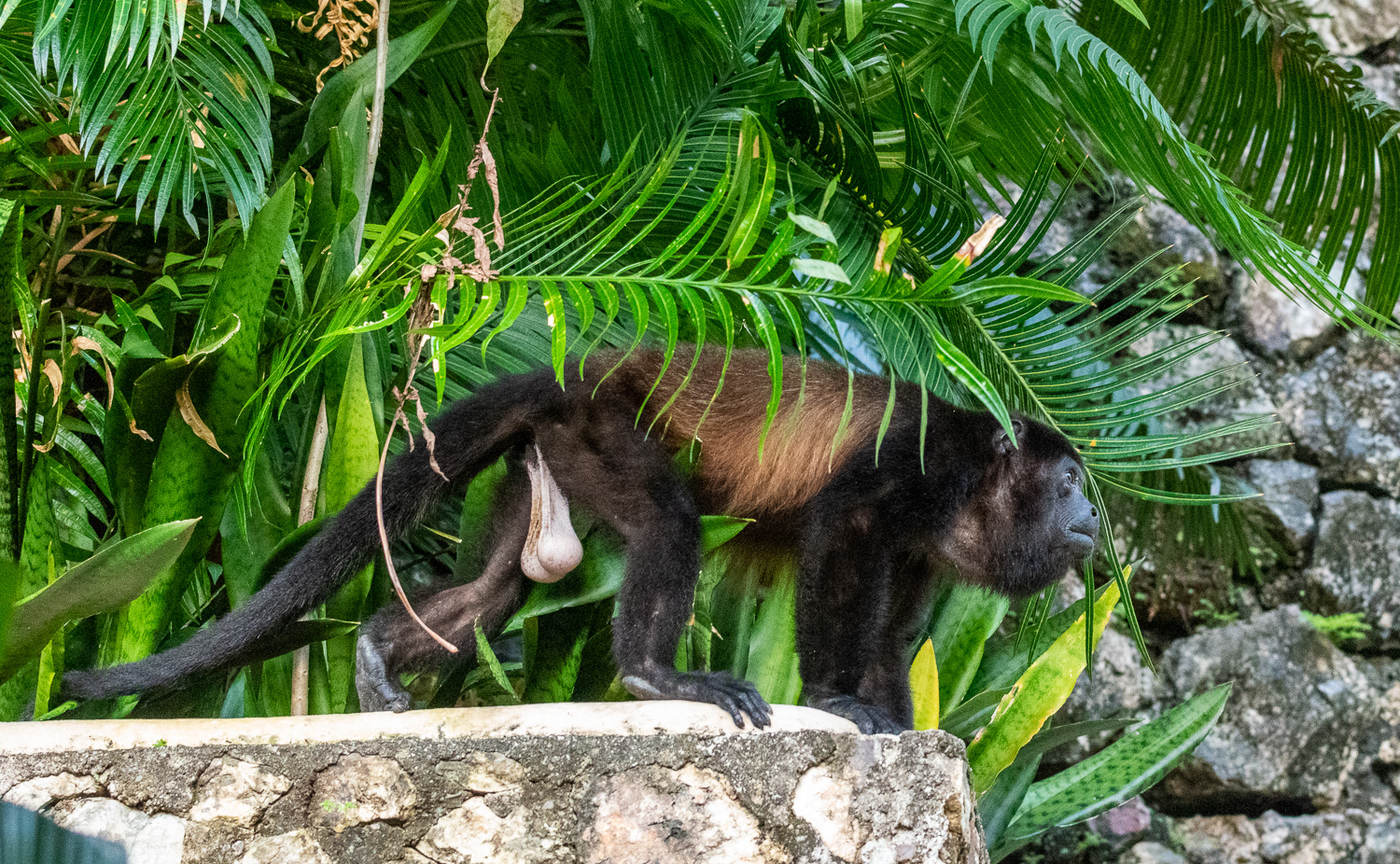 Large male Howler Monkey outside our room, making a racket!
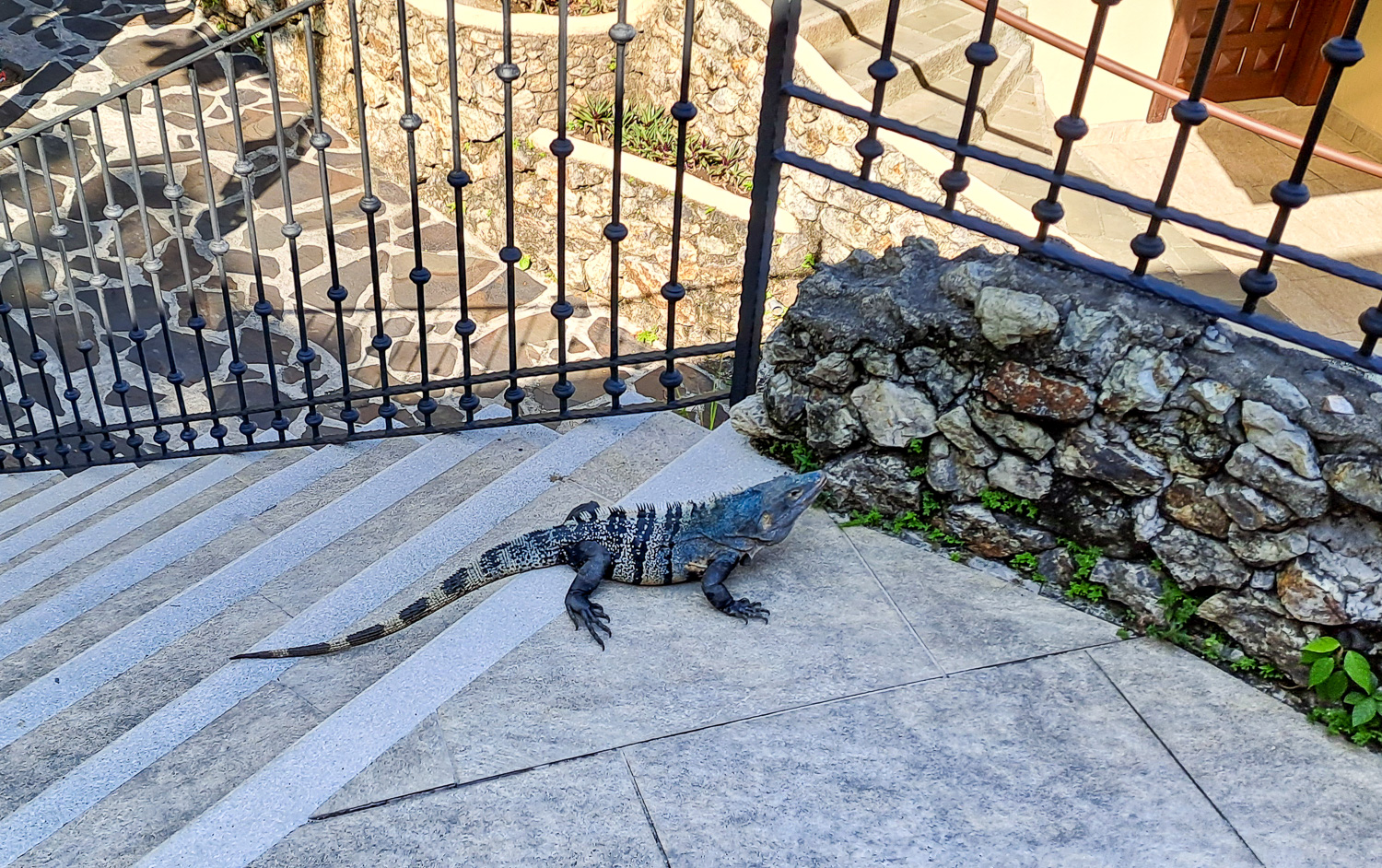 Outside our room is one of the hotel’s resident Iguana!
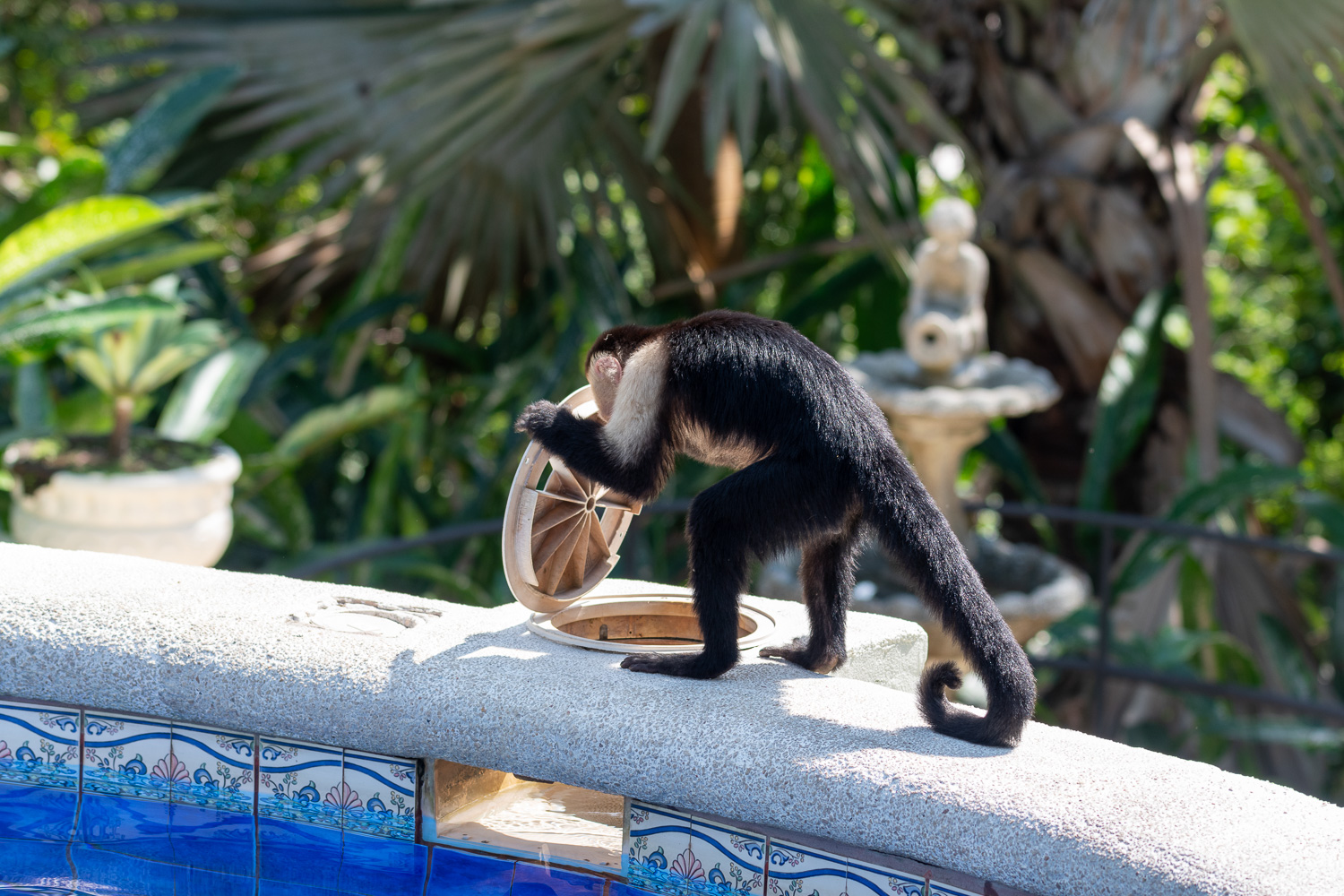 A Capuchin monkey undertaking pool maintenance, or more likely looking for food!
One unusual feature of this area is that the rainforest comes all the way down to the coast. So we made our way down to the local public beach on a busy Sunday morning to explore.
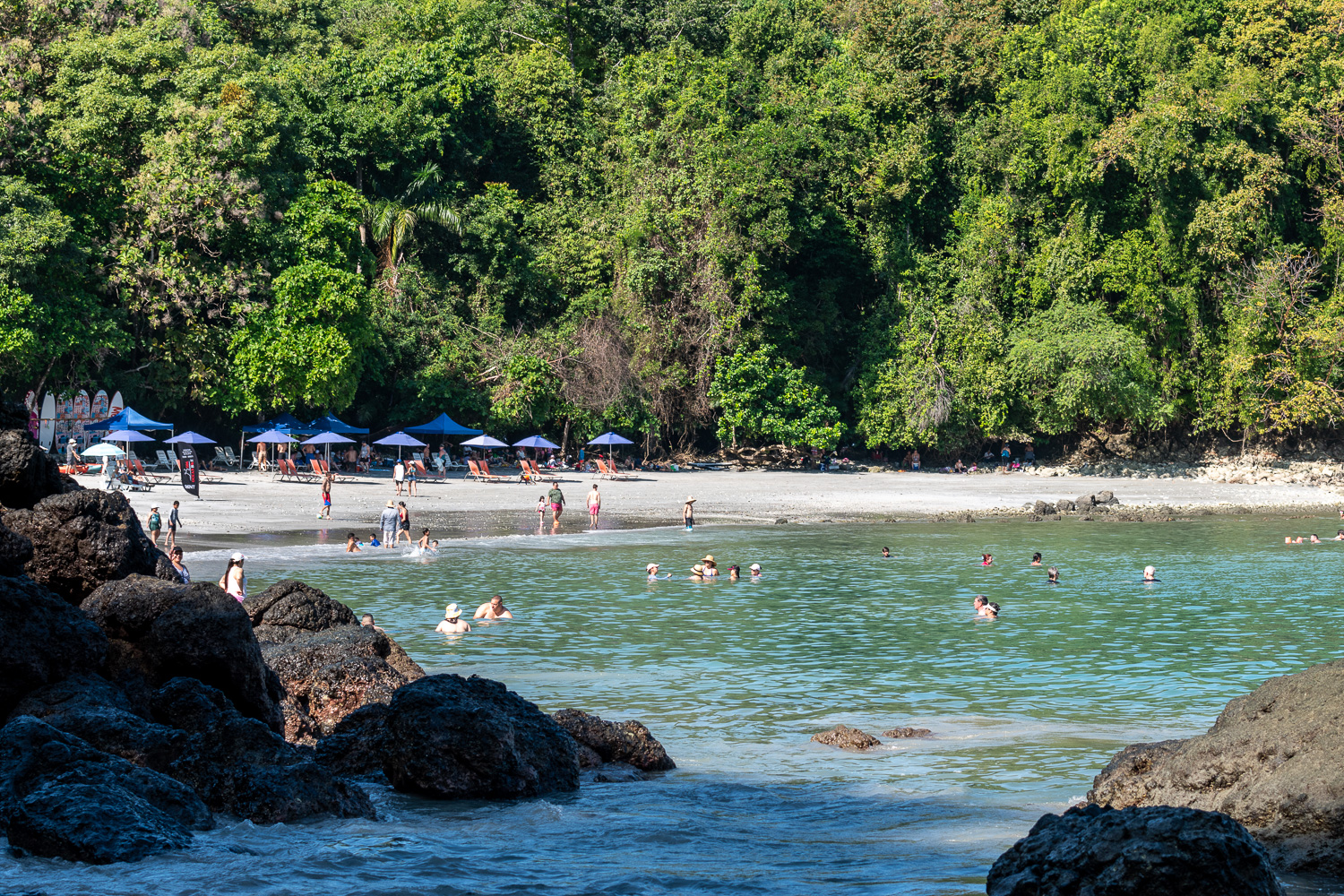 The rainforest provides a dramatic backdrop for the beach.
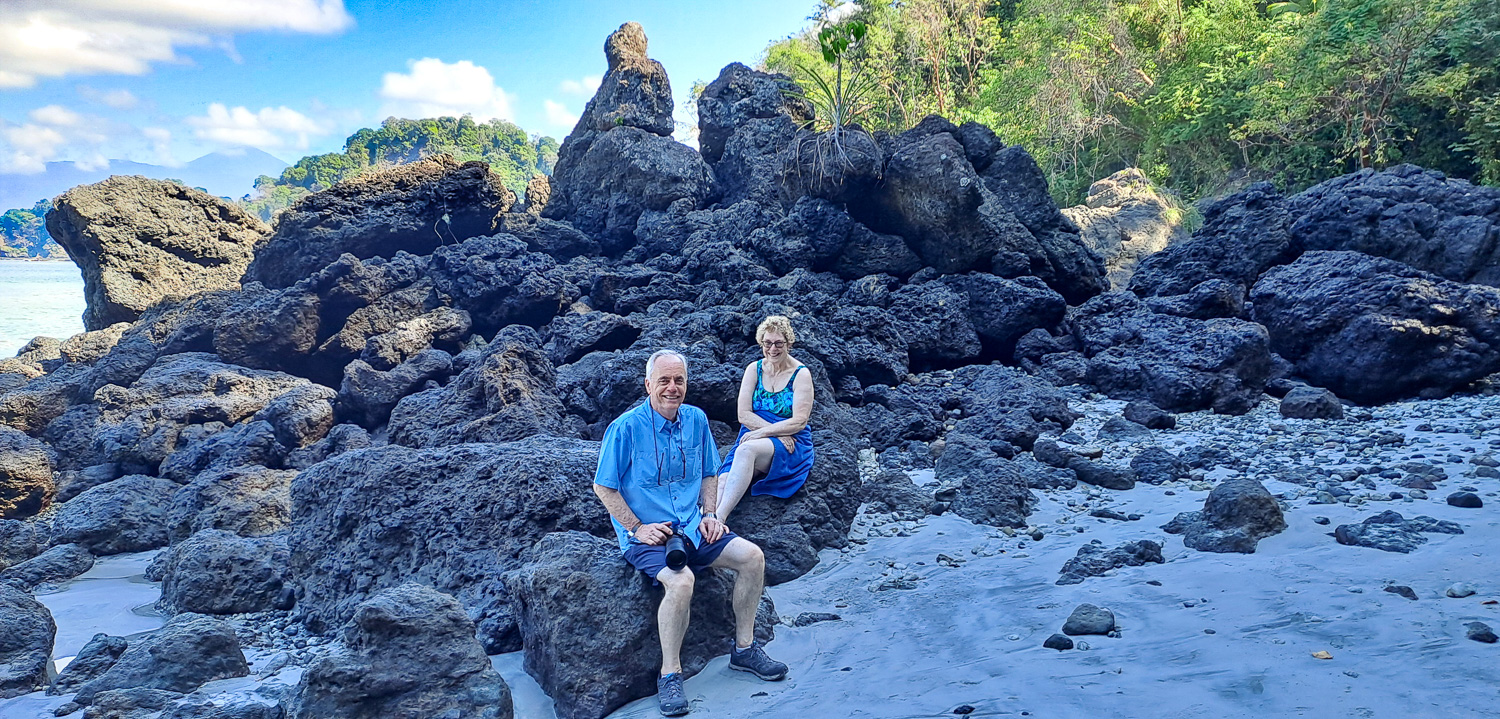 The intrepid explorers taking a break on some volcanic rocks that are strewn around the beach.
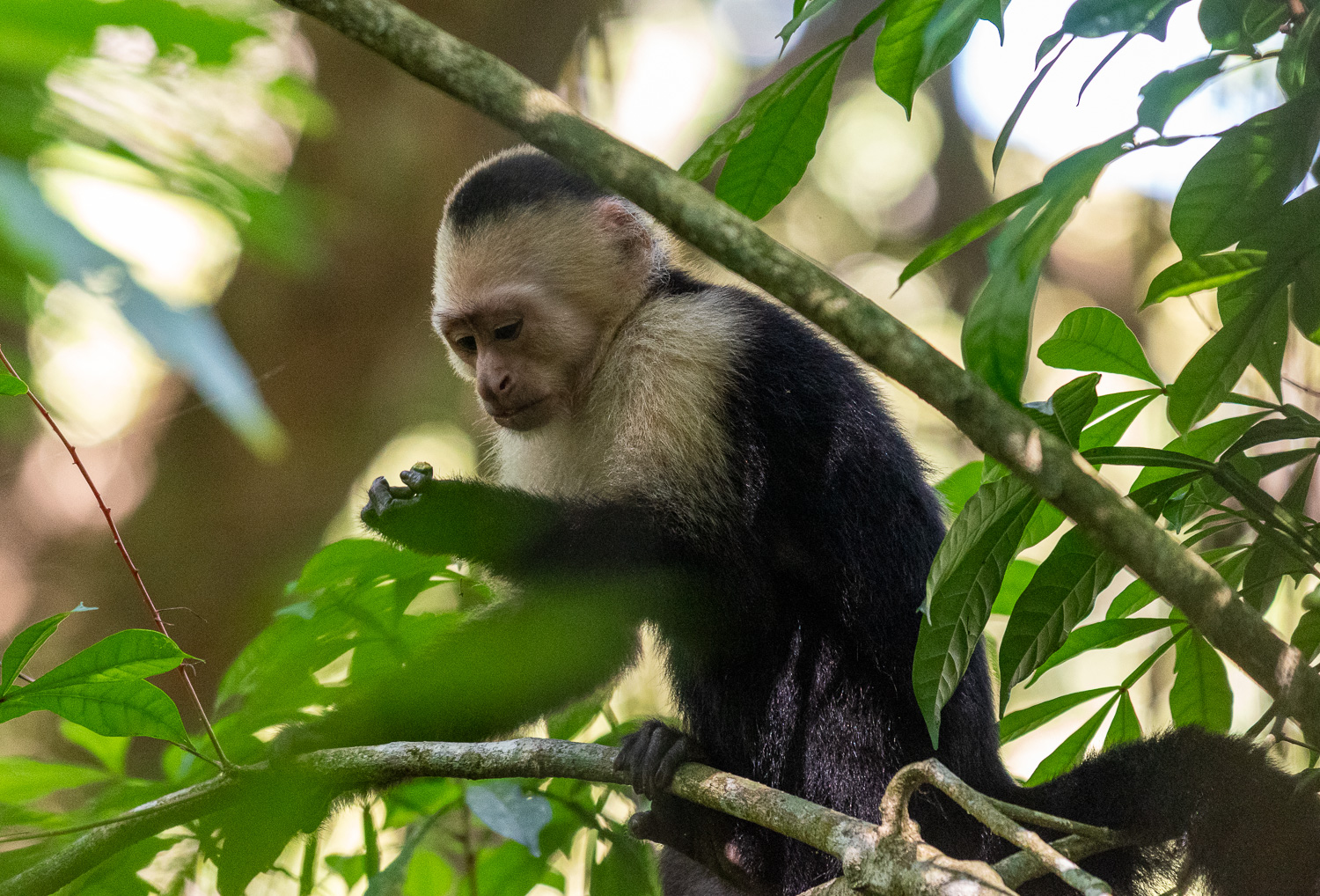 Capuchin monkeys were a common sight around the beach area – this one was eating some fruit
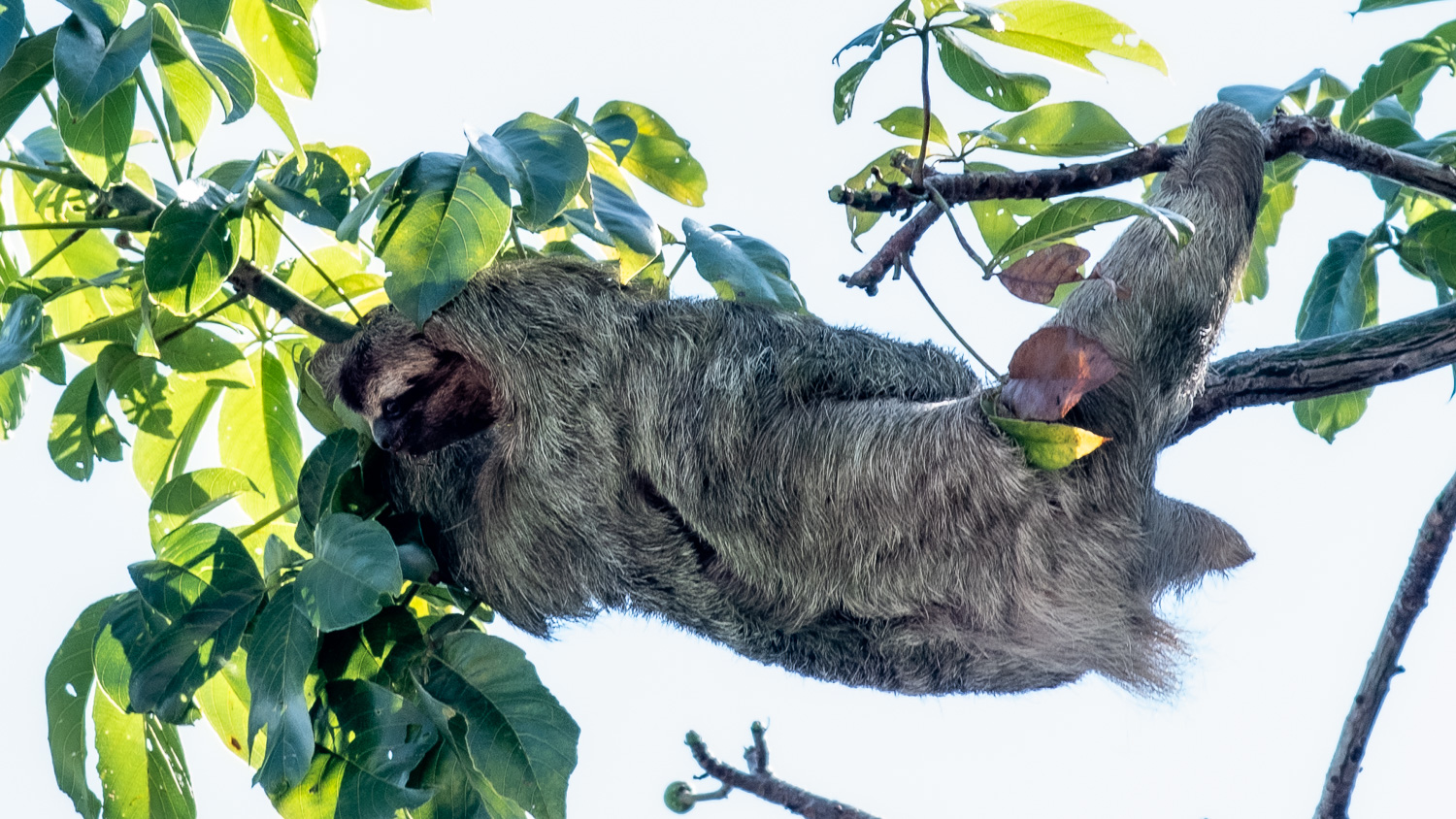 This three-toed Brown-throated Sloth was perched, high up in a tree overlooking the beach. This is the most common type of Sloth found in Costa Rica.
Here some of the flora and fauna we saw while walking through the hotel’s own rainforest trails
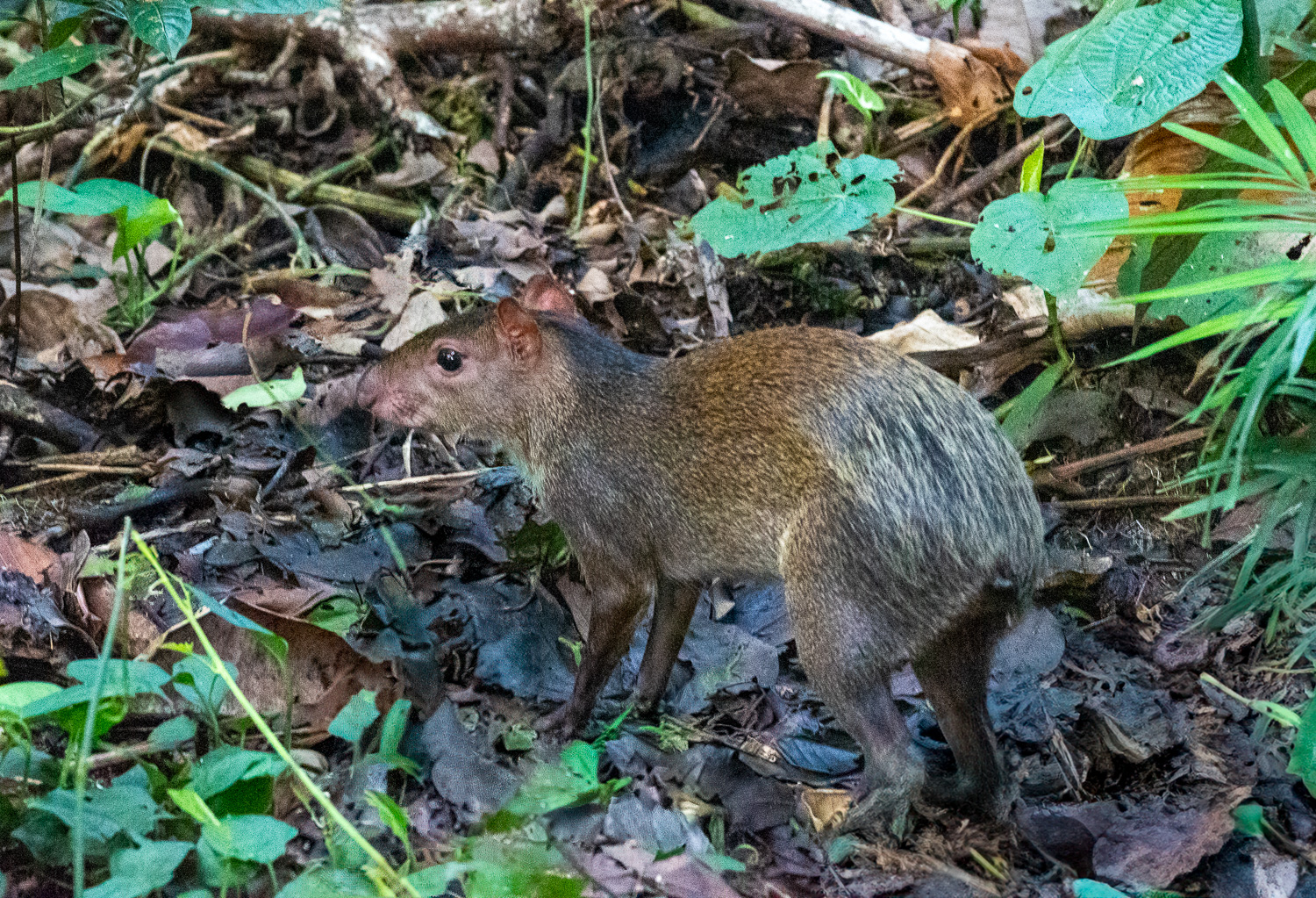 Agouti are related to Guinea Pigs and look quite similar, but they are larger and have longer legs
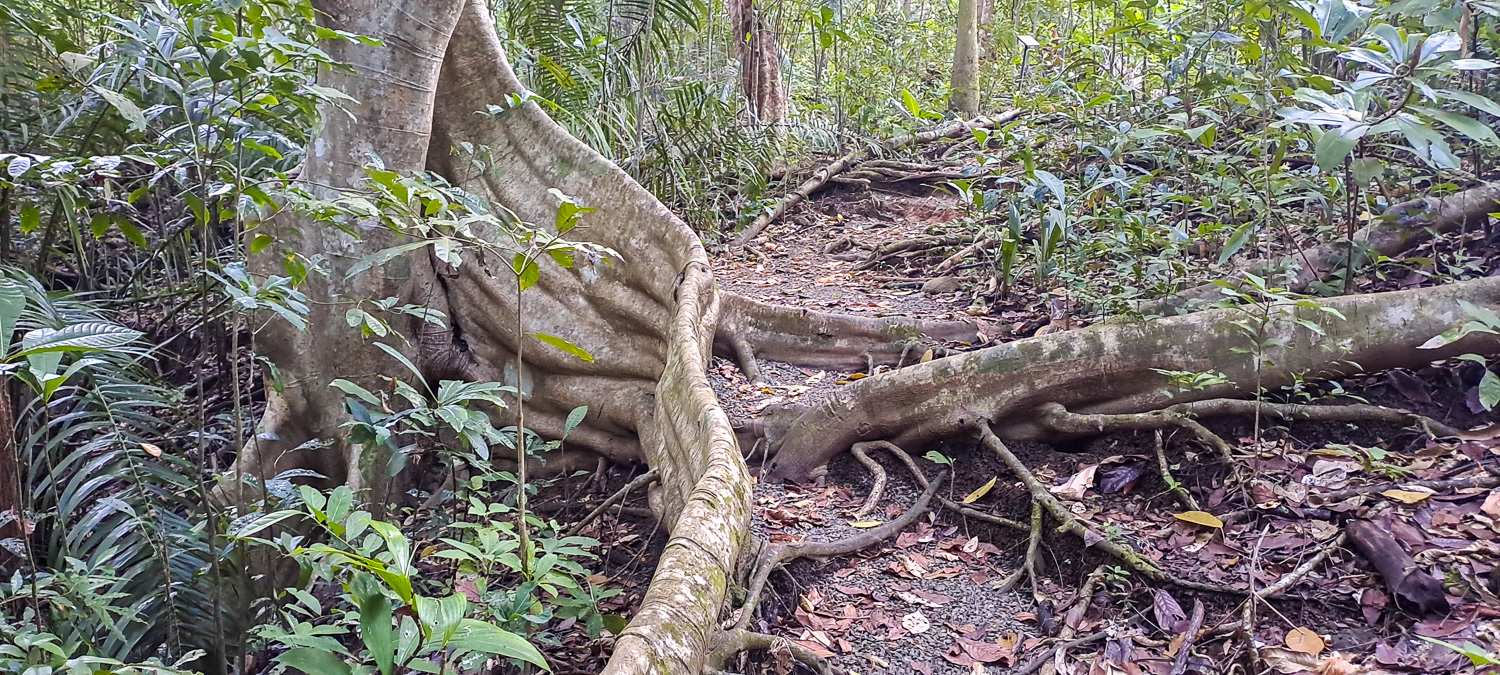 A large tree with Buttress Roots, which are sometimes called tripod trees – they give tall trees added support
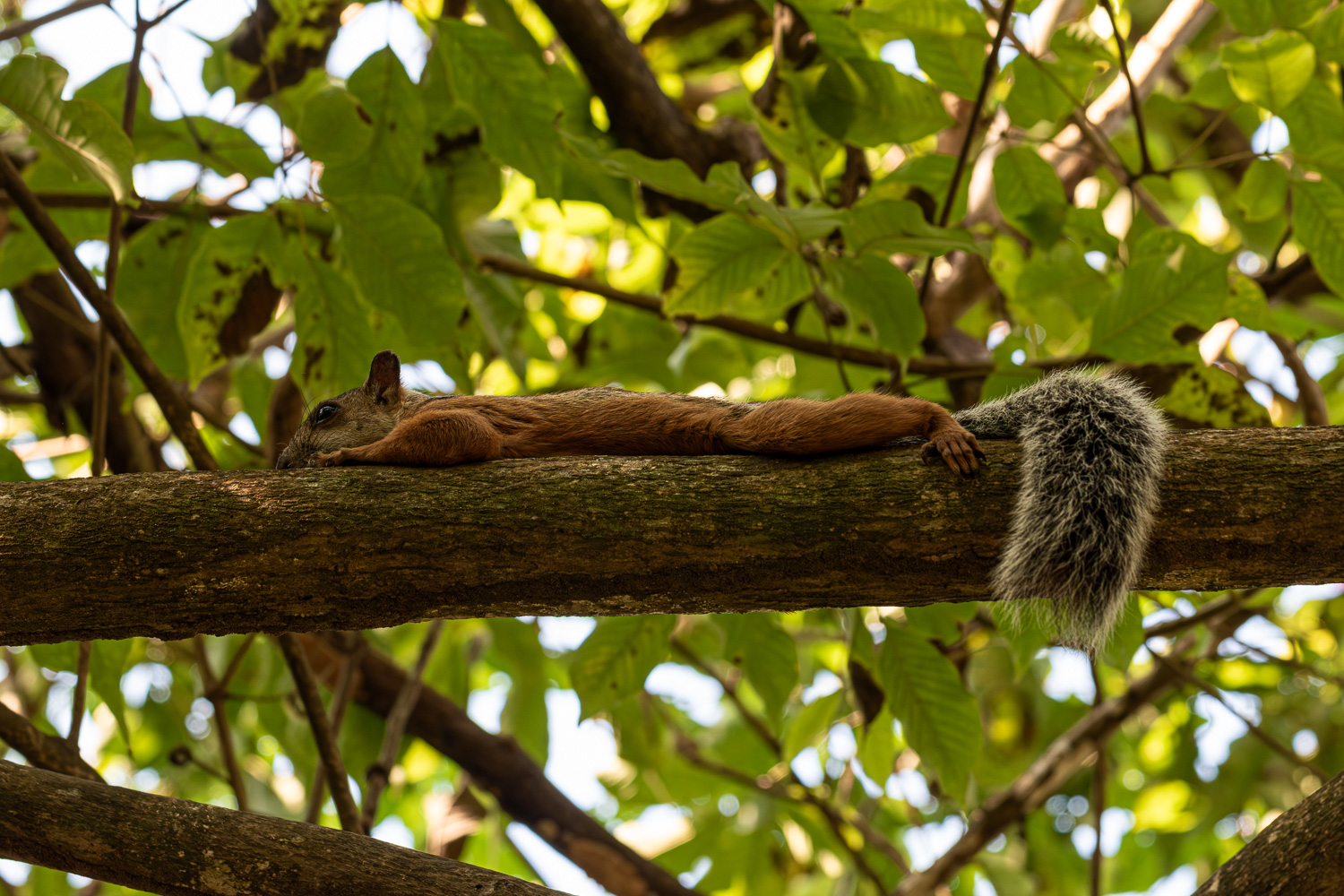 Laid back Squirrel!
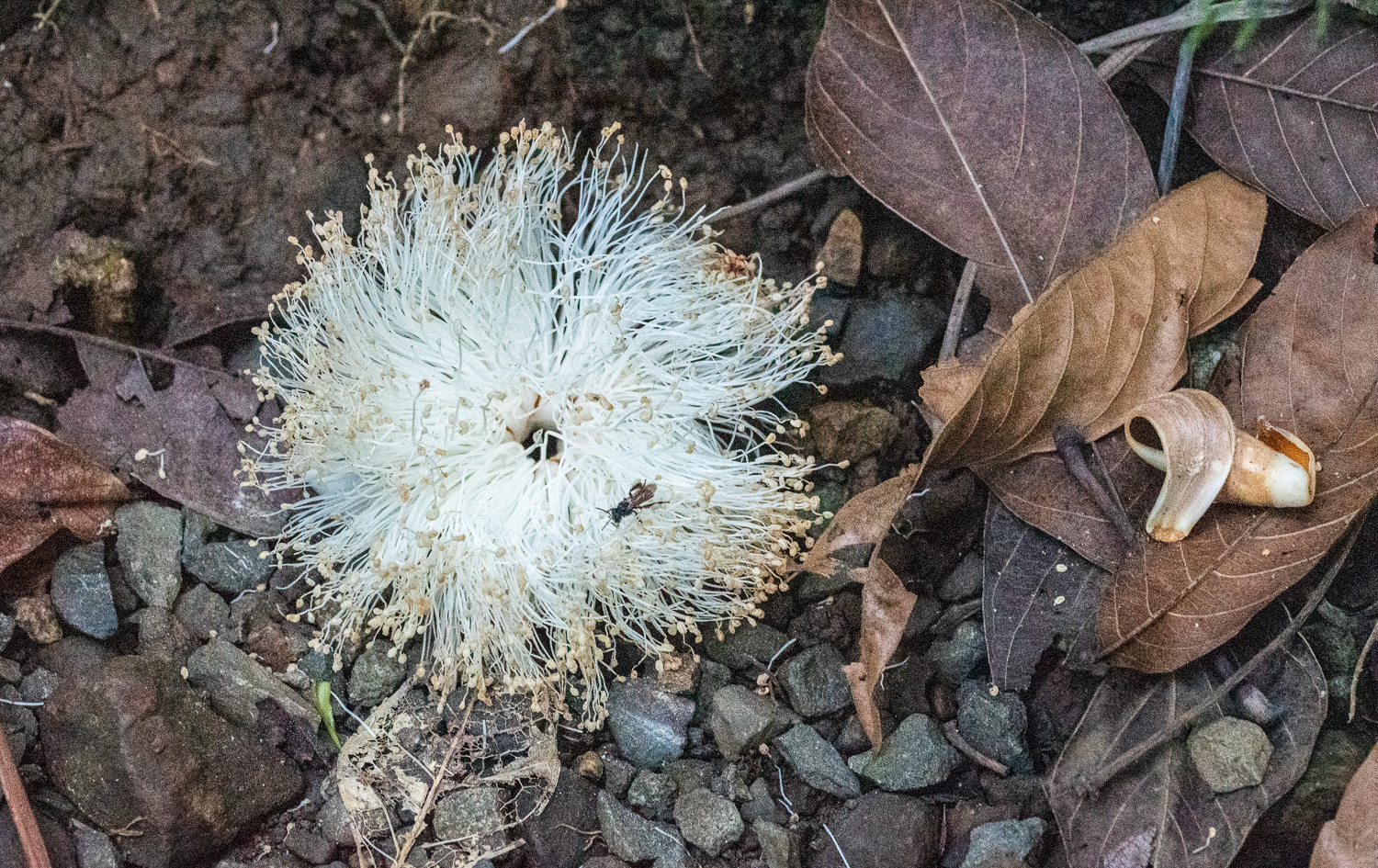 Flower from a White Powder Puff Tree
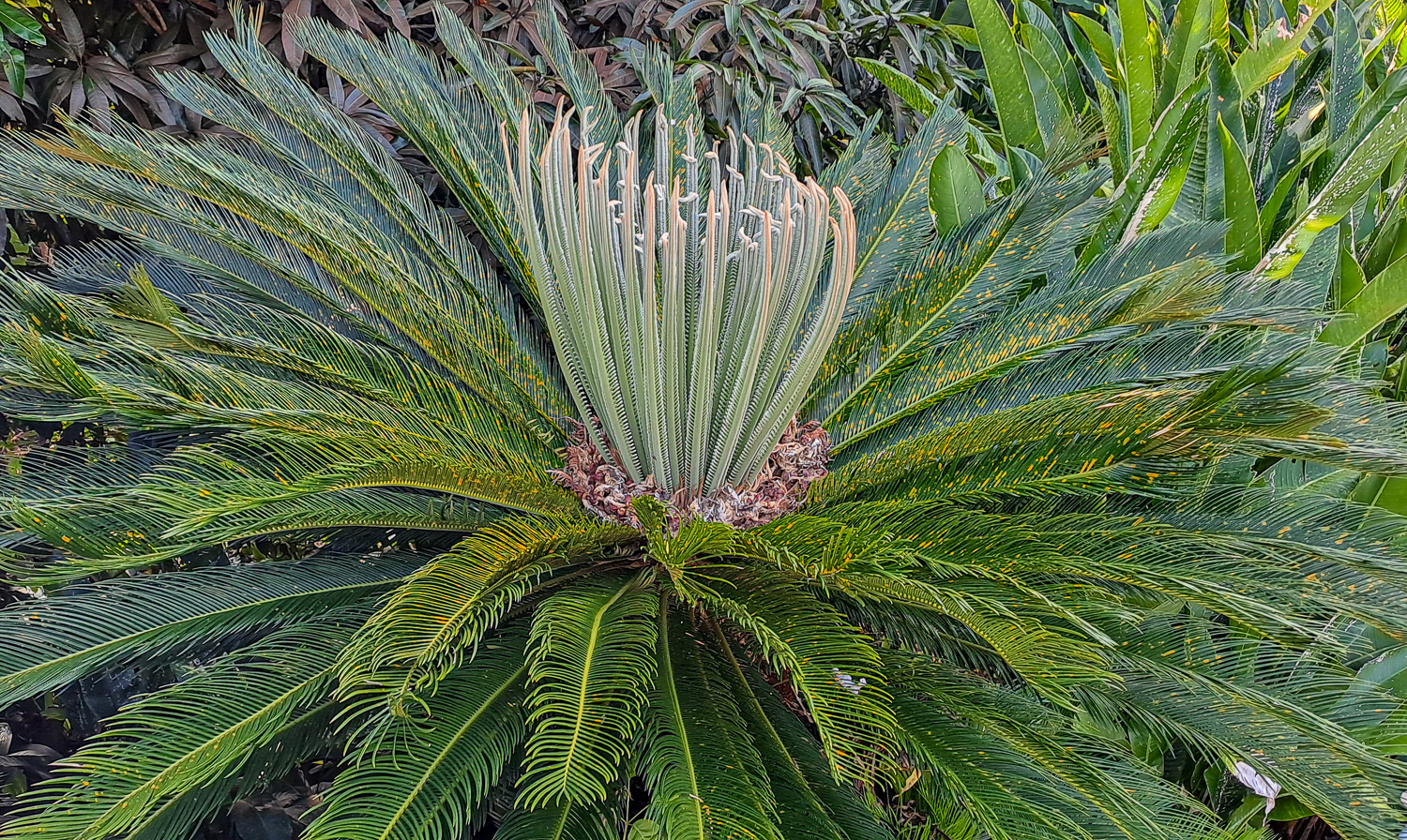 Sago Palm
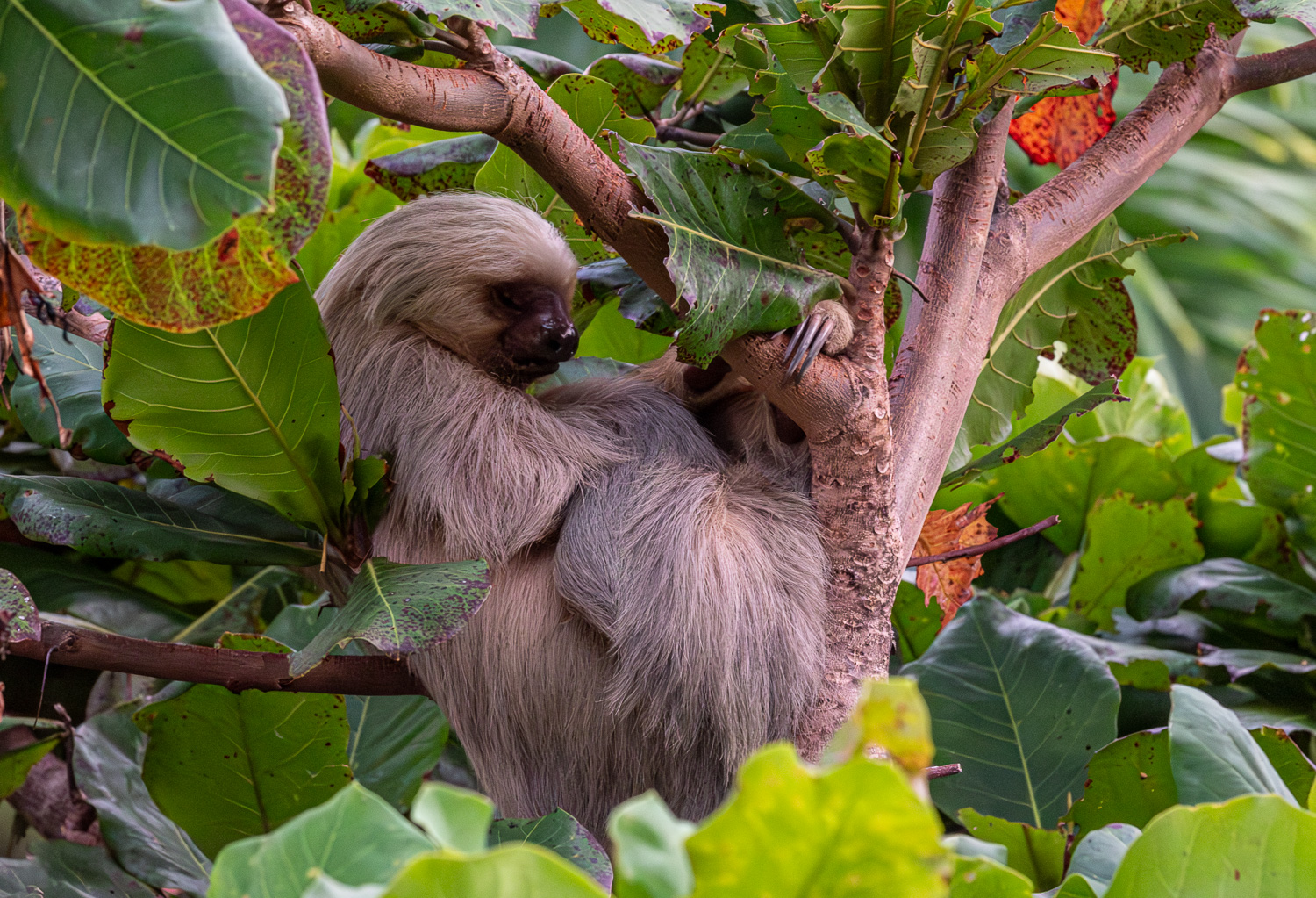 Hoffmann’s two-toed Sloth, has two toes on the front feet and three on the back feet and is the less common of the two species found in Costa Rica.
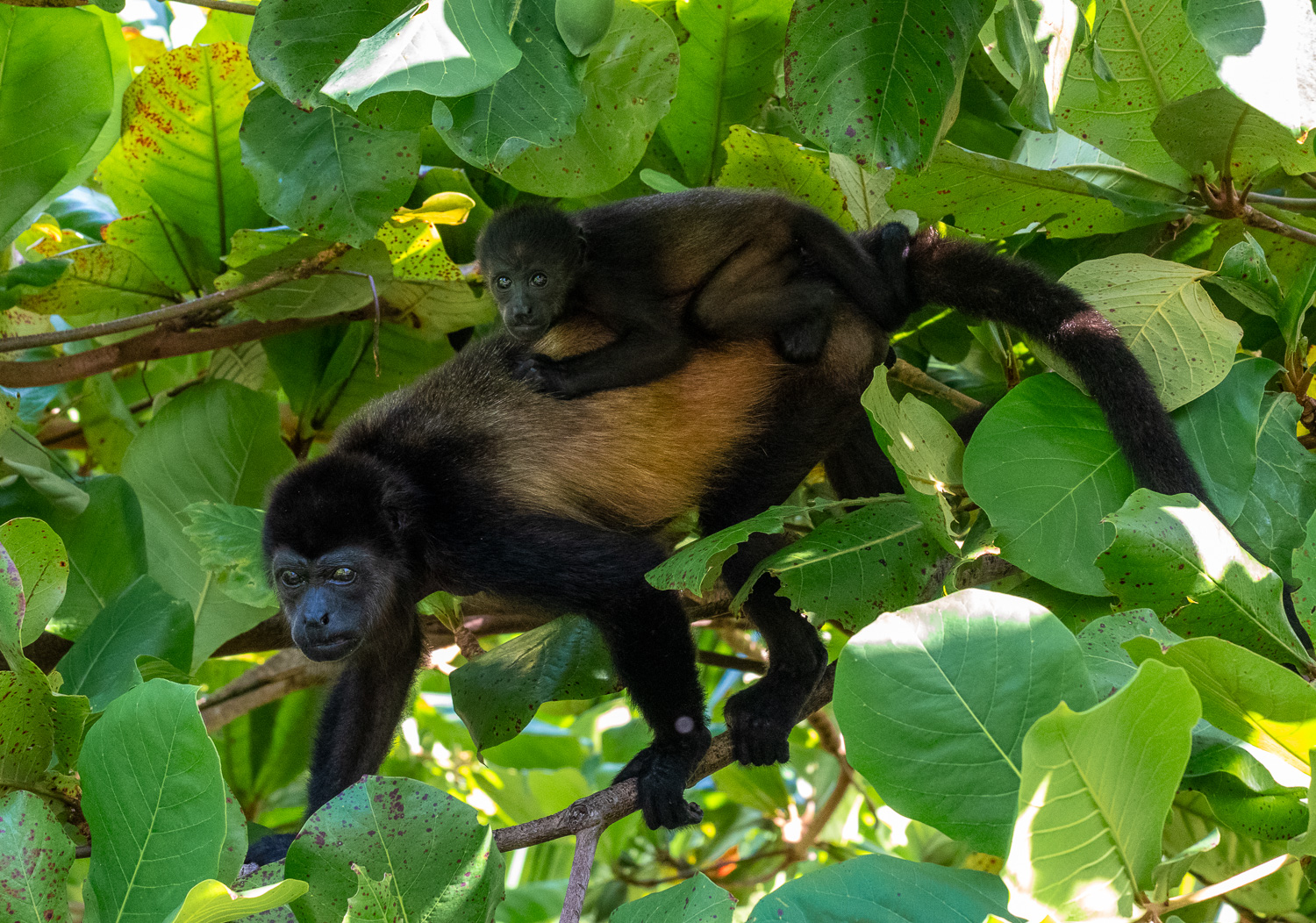 When Howler Monkey females move around the trees they carry their young underneath for about two weeks; after that the babies travel on their Mum’s back for a further two or three weeks. The youngsters then move on their own, following their mother as they travel together.
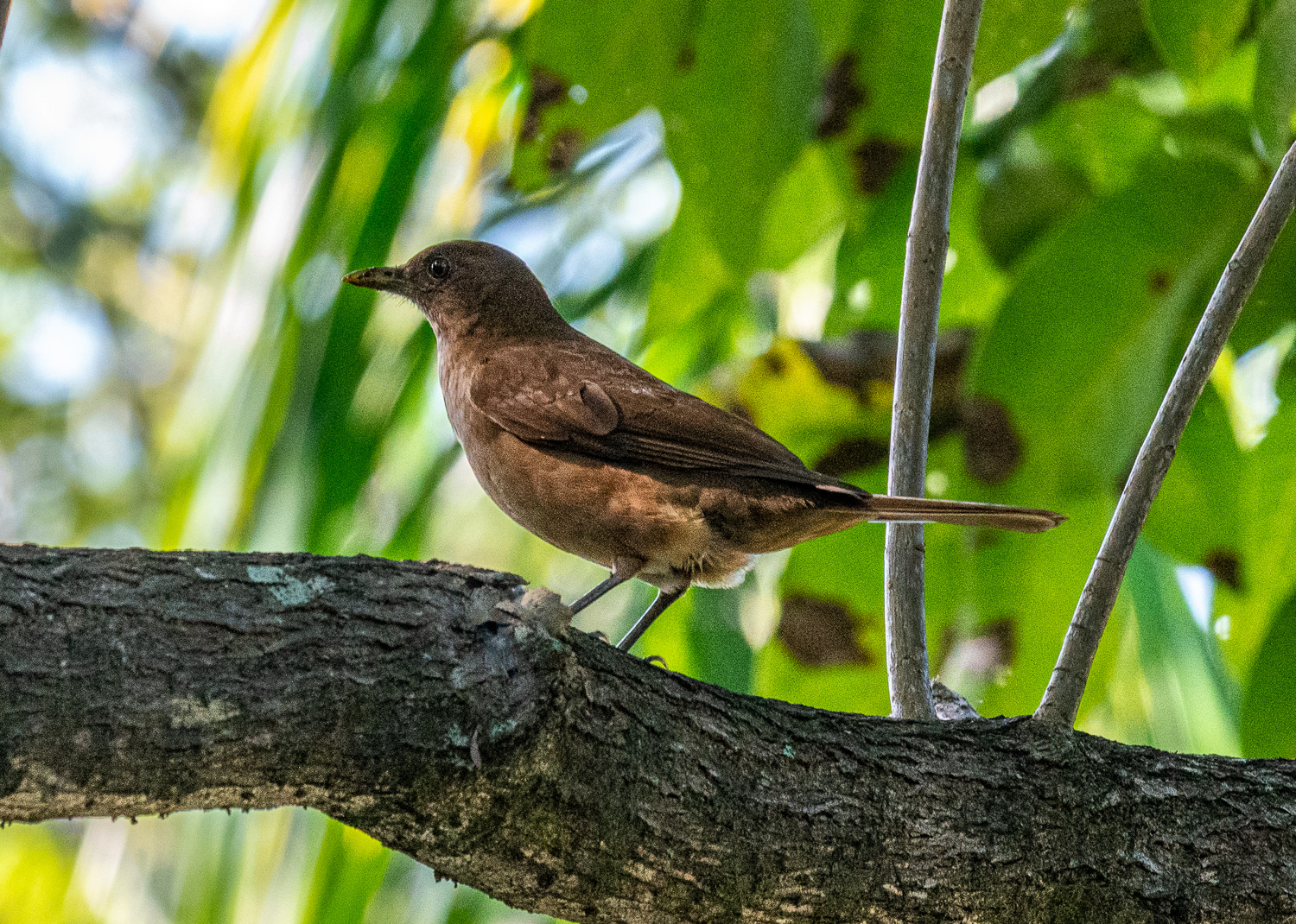 The Clay-coloured Thrush is Costa Rica’s National Bird – This rather ordinary, plain bird was chosen instead of a species that was more colourful or flamboyant, as it represented people from all walks of life.
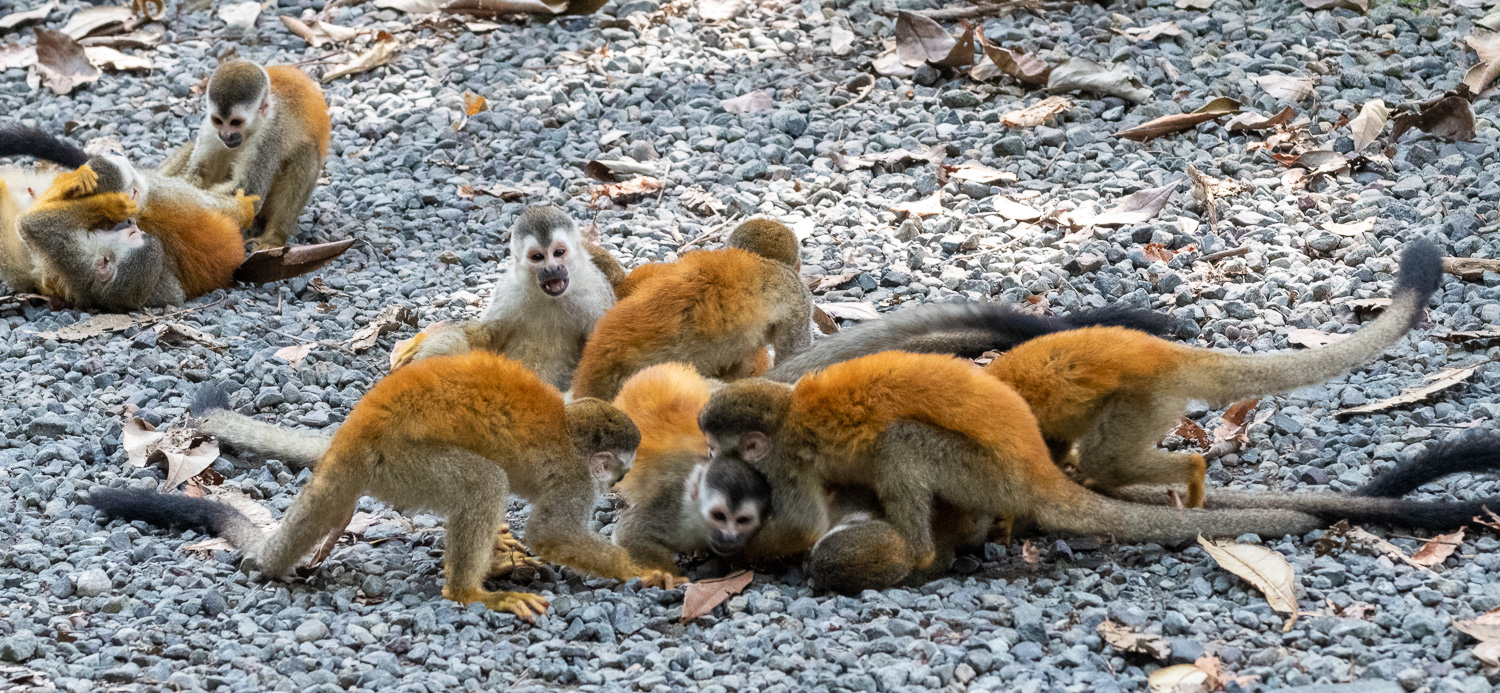 A large group of young Squirrel Monkeys play fighting – what fun!
Corcovado
Protecting 100,000 acres of shallow lagoons, marsh, mangrove swamps, rivers, wet forest and low-altitude cloud forest, as well as 28 miles of sandy beach, Corcovado National Park is one of Central America’s most unique ecosystems. It is located on the Osa Peninsula, in the south of Costa Rica on the Pacific Coast. Within its extensive territory, visitors can observe some 6,000 insects, 500 trees, 367 birds, 140 mammals, 117 amphibians and reptiles, and 40 freshwater fish species.
The Aguila de Osa Inn is located on the Osa peninsula, and was our home for the last 4 days in Costa Rica. Close to the National Park, the hotel stands on a cliff where the river Aguitas meets Drake Bay. It only has 13 rooms, which are situated higher up in the rainforest canopy. Drake Bay is named after Sir Francis Drake, who is believed to have anchored in the bay during his explorations of the area in the late 16th century.
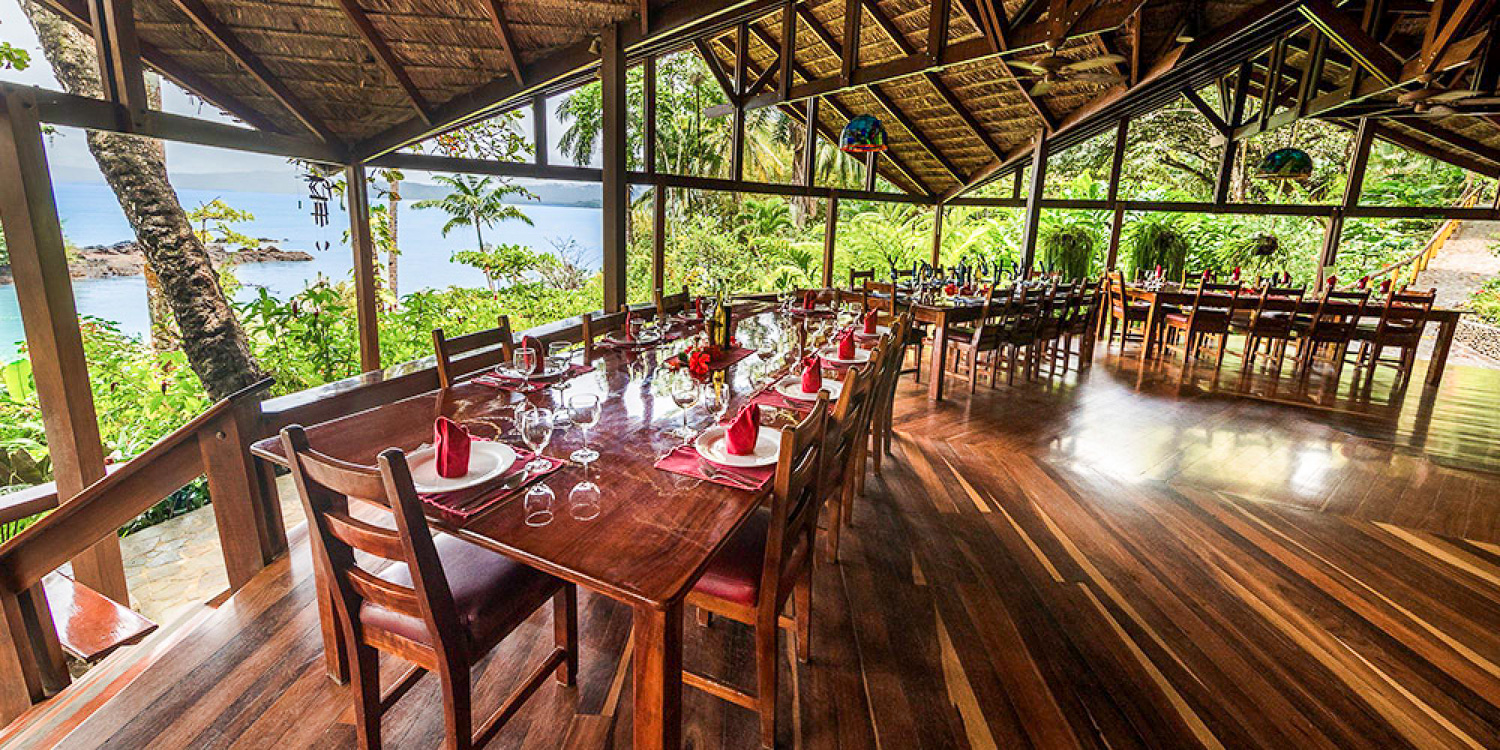 The hotel dining area offered great views of the bay and surrounding rainforest
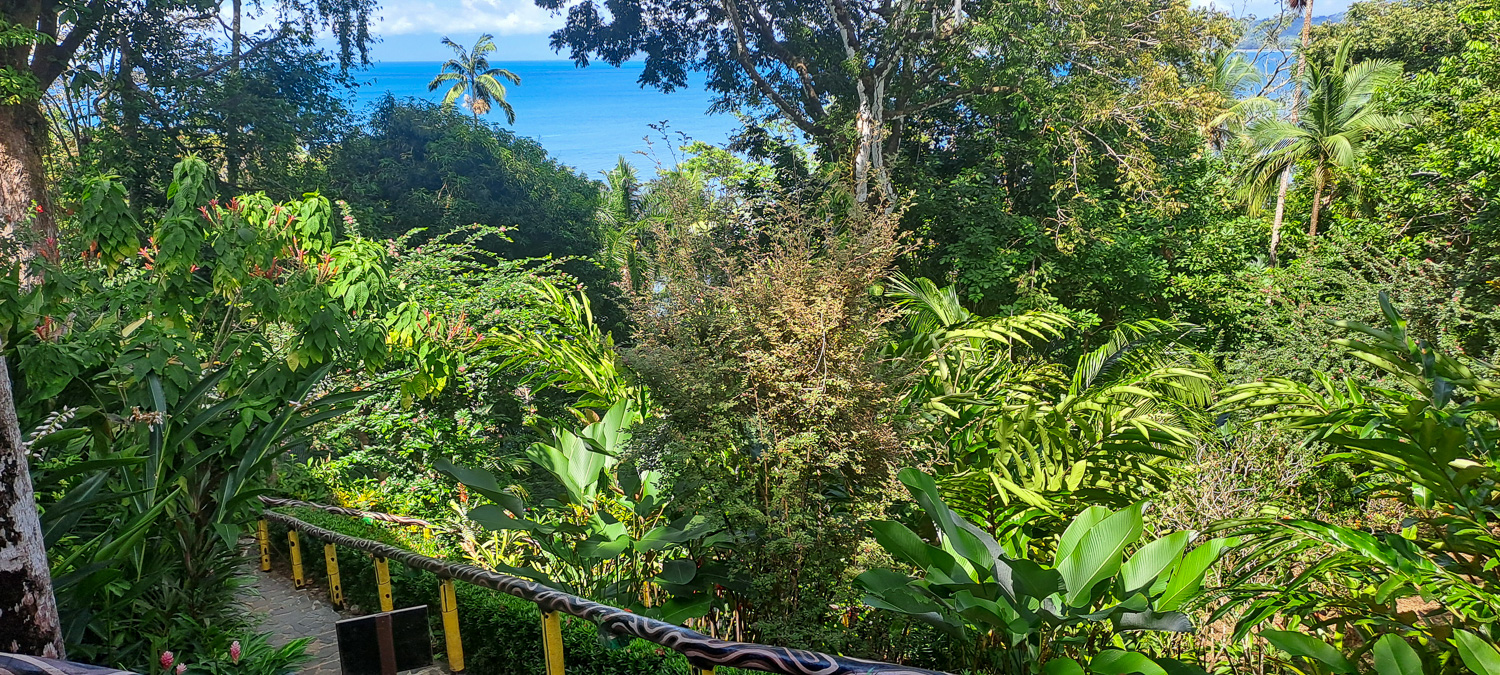 The view from outside our chalet atop the rainforest with Drake Bay in the background
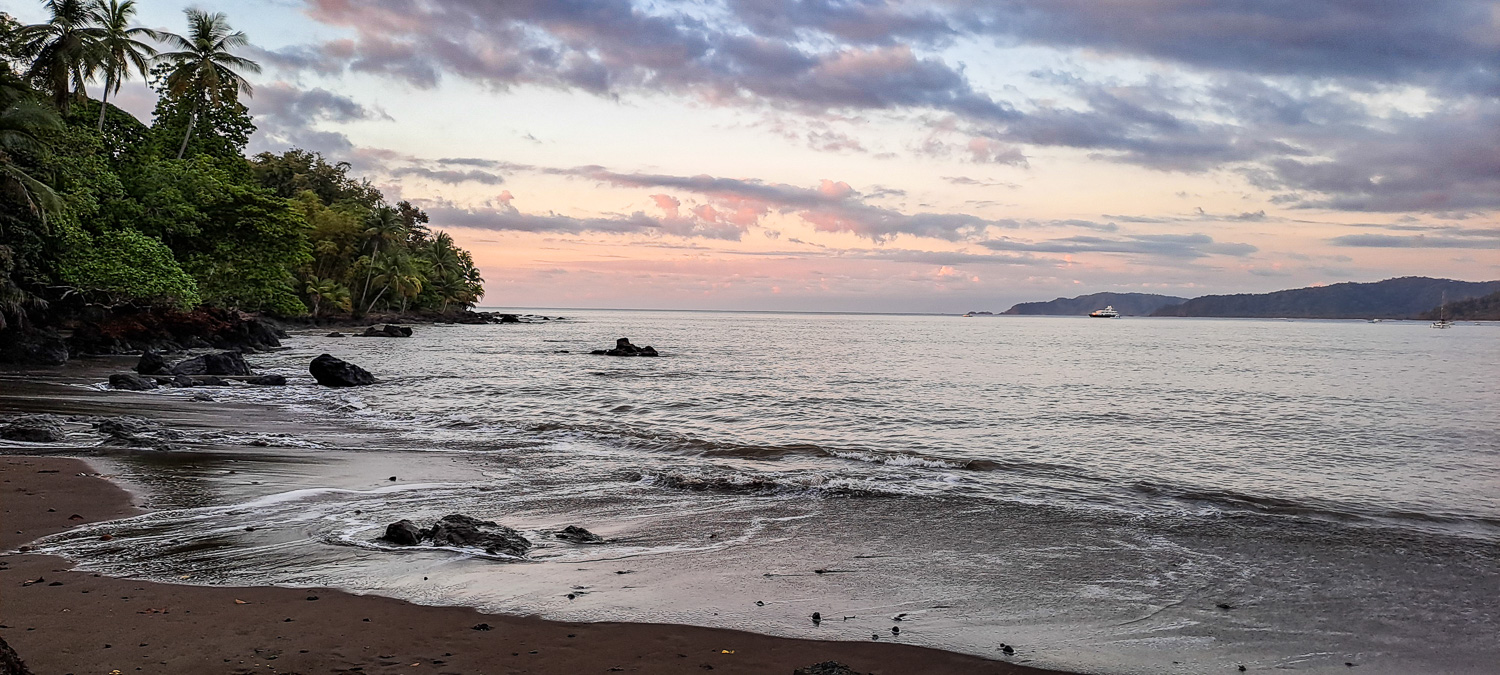 Drake Bay at Sunset
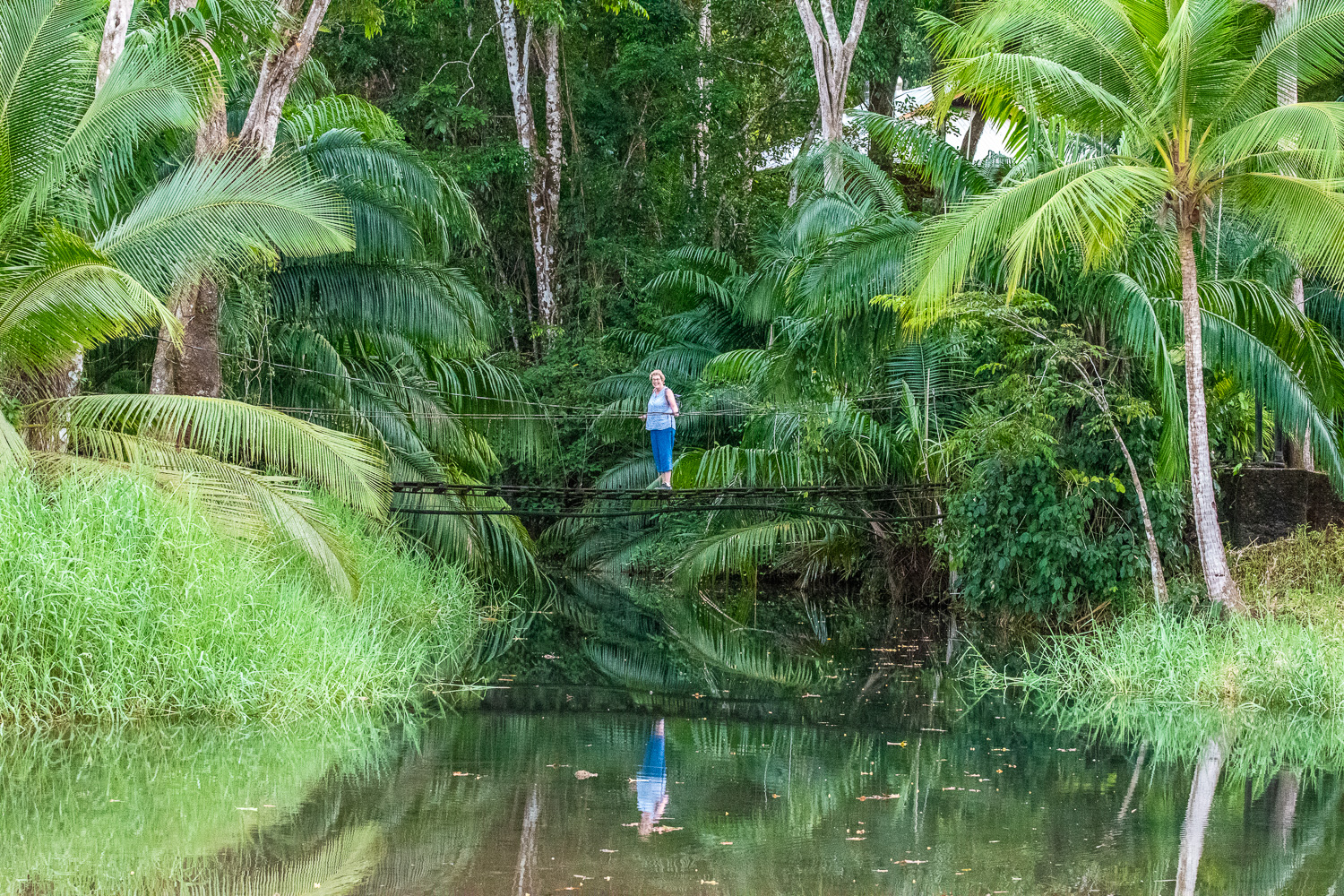 A short walk from the hotel is the village of Cocovado, which has a hanging bridge to cross the local river
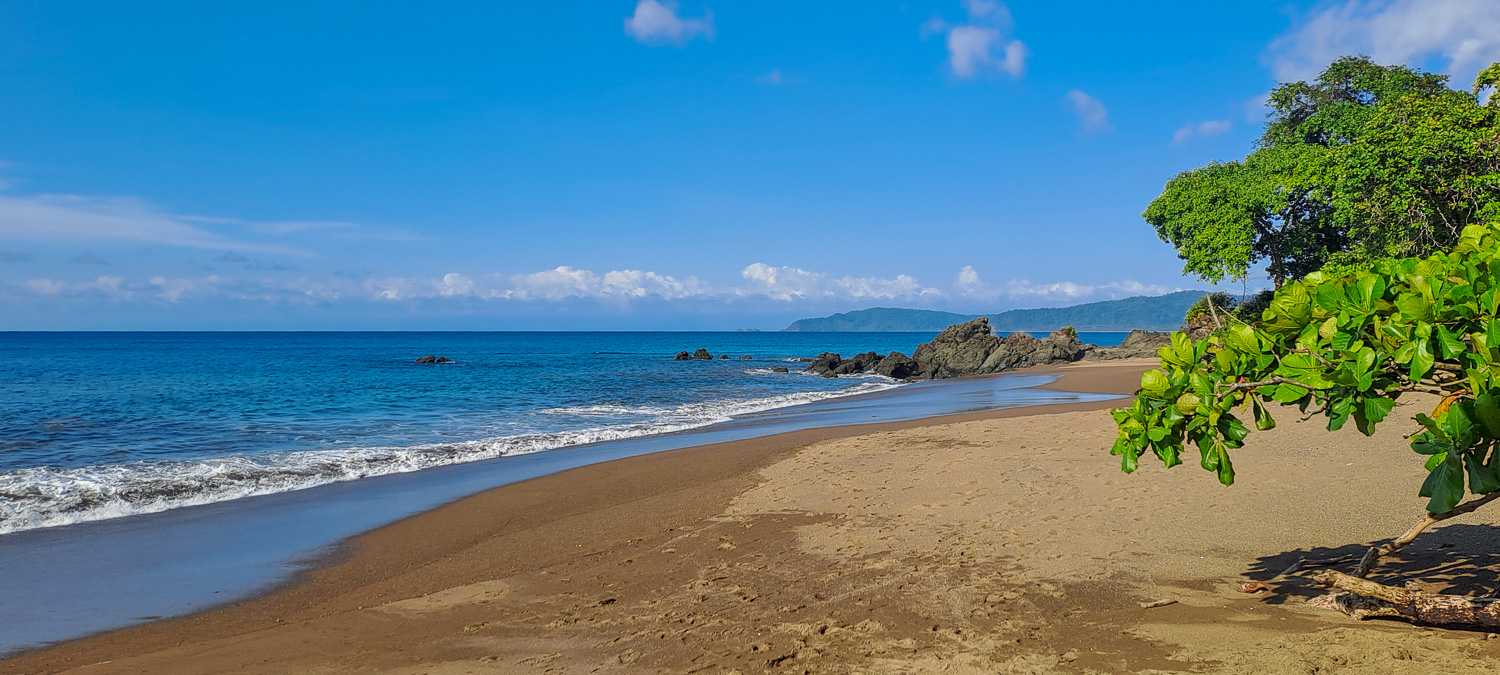 Cocalito Beach is the hotel’s local beach
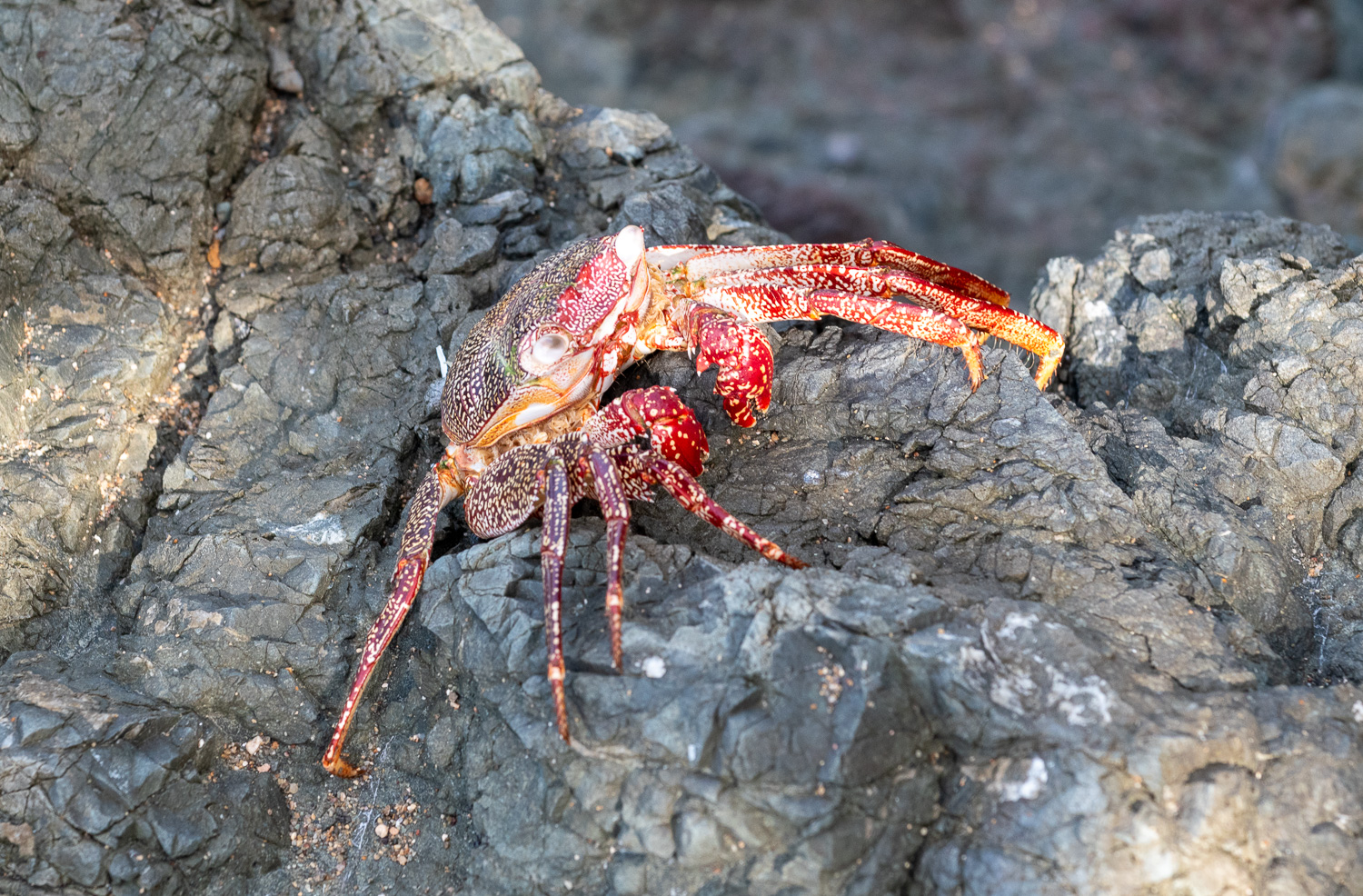 This colourful crab was one of the interesting inhabitants of the beach
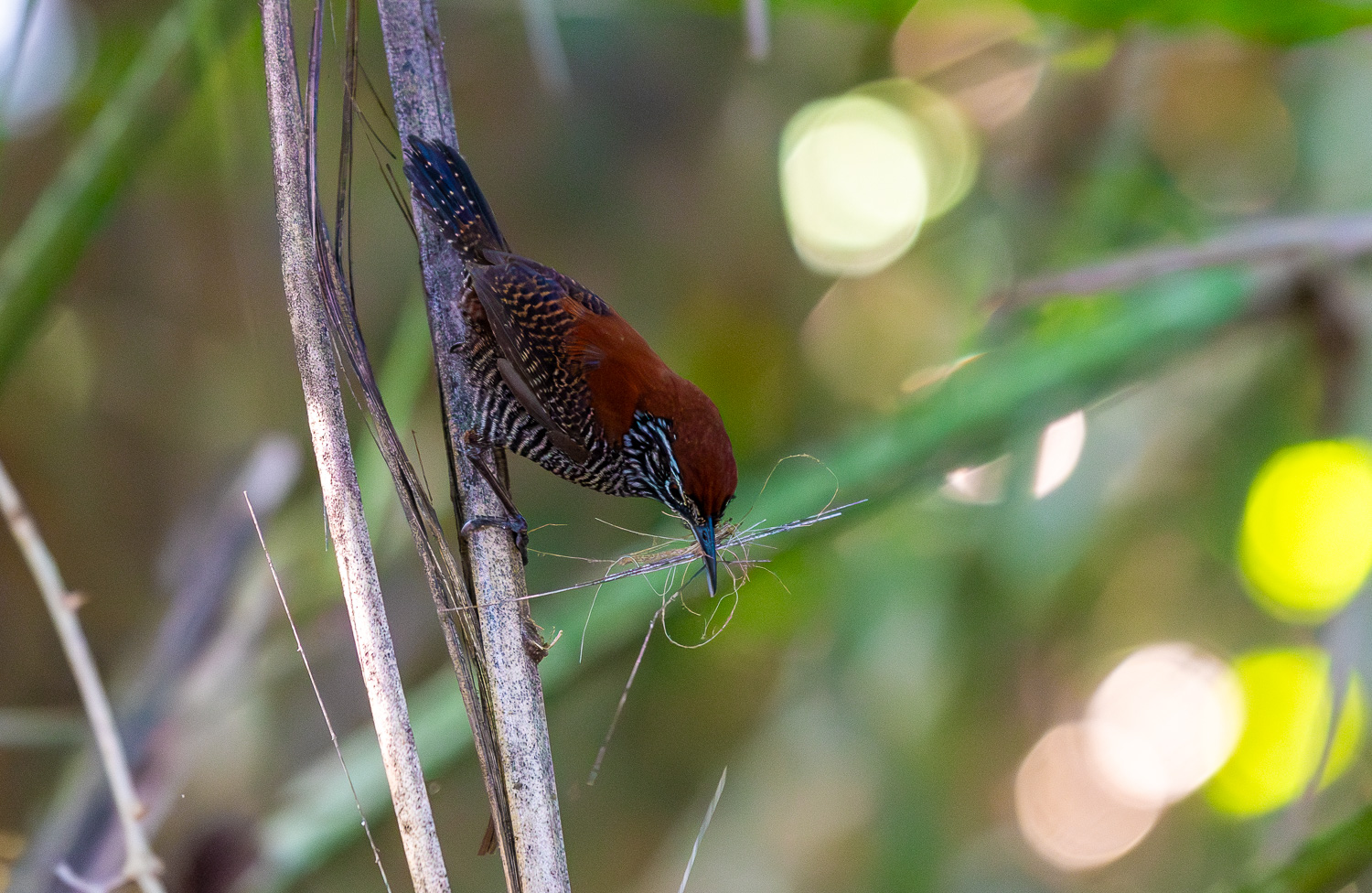 A Riverside Wren nest building near the beach
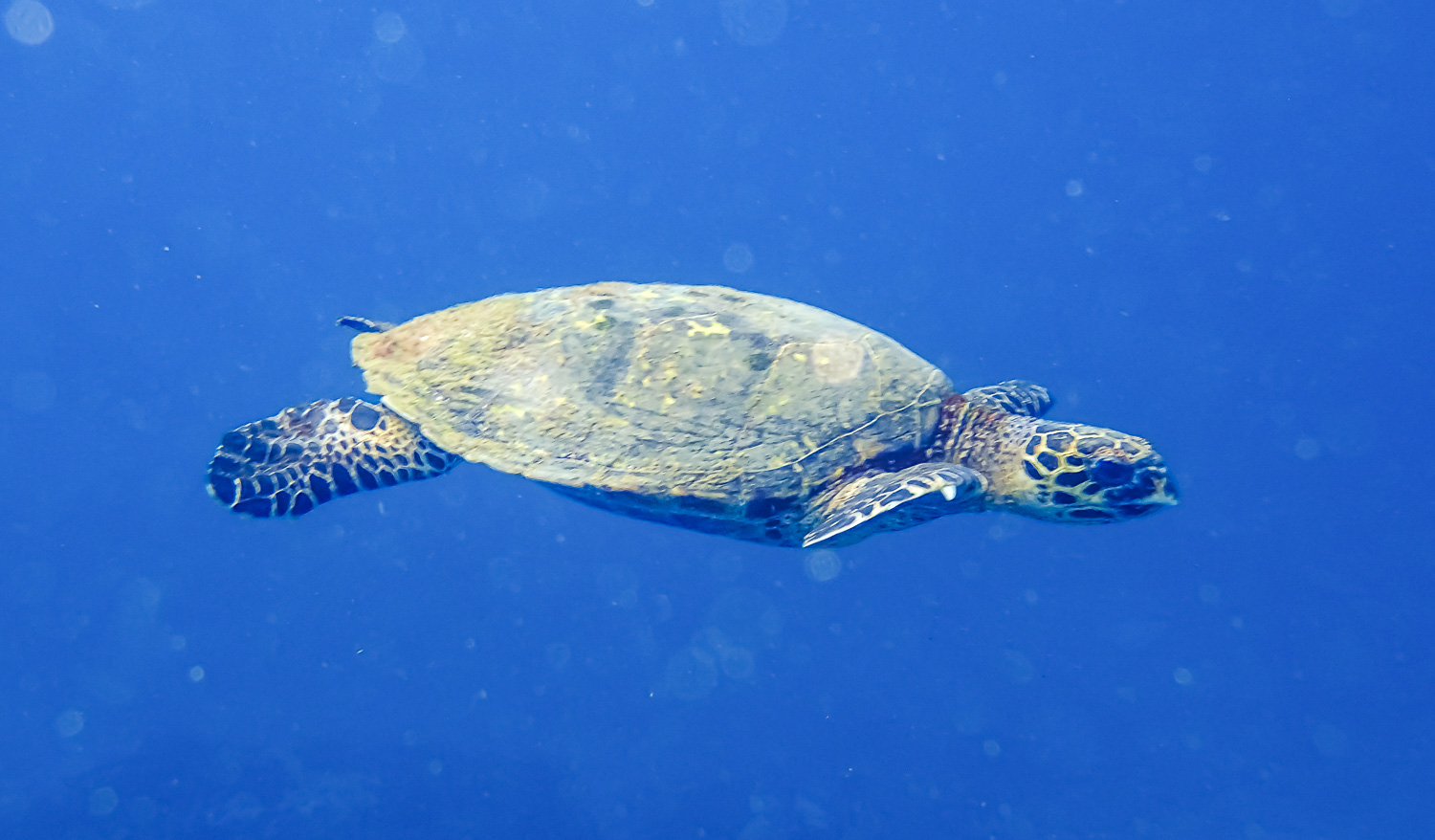 A snorkelling trip gave us the opportunity to swim close to this wonderful Hawksbill Sea Turtle, which is one of the 5 species of turtle found in Costa Rica
Corcovado National Park
Our visit to the park was via a boat and a wet beach landing at the park station at San Pedrillo. We then had a wonderful four-hour long guided hike through the jungle. Corcovado National Park is one of the few places in the world where tropical rainforest meets the sea. It was terrific being able to hike jungle trails that ran alongside the Pacific Ocean beach shoreline.
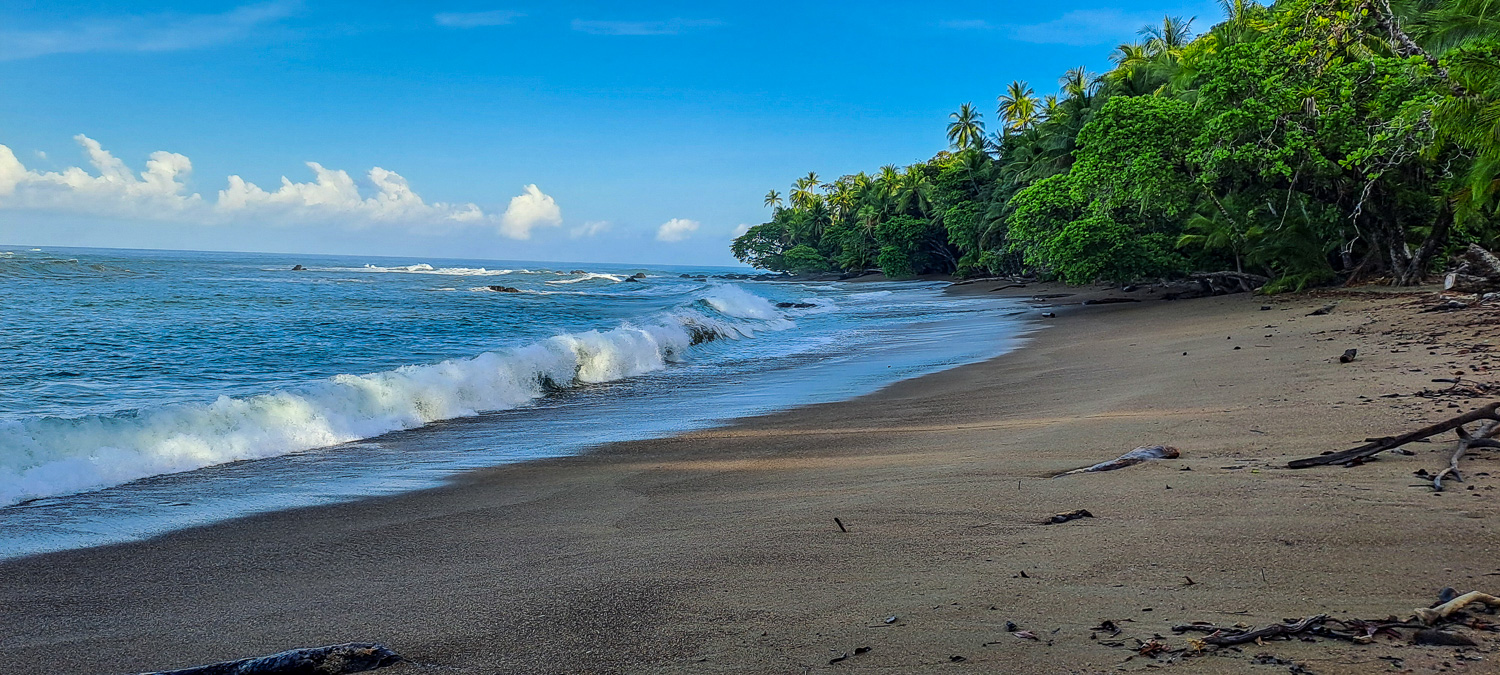 San Pedrillo beach
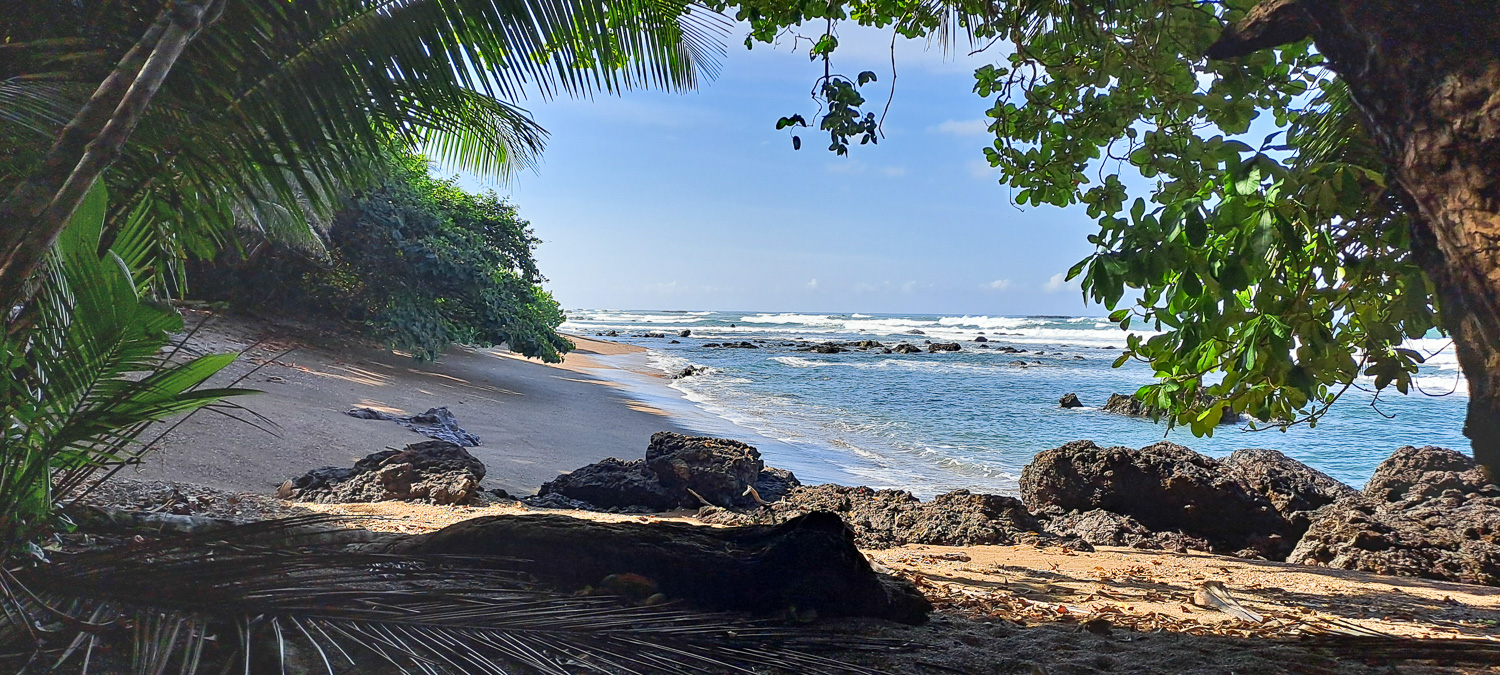 View of the Pacific coastline from the hiking trail within the forest
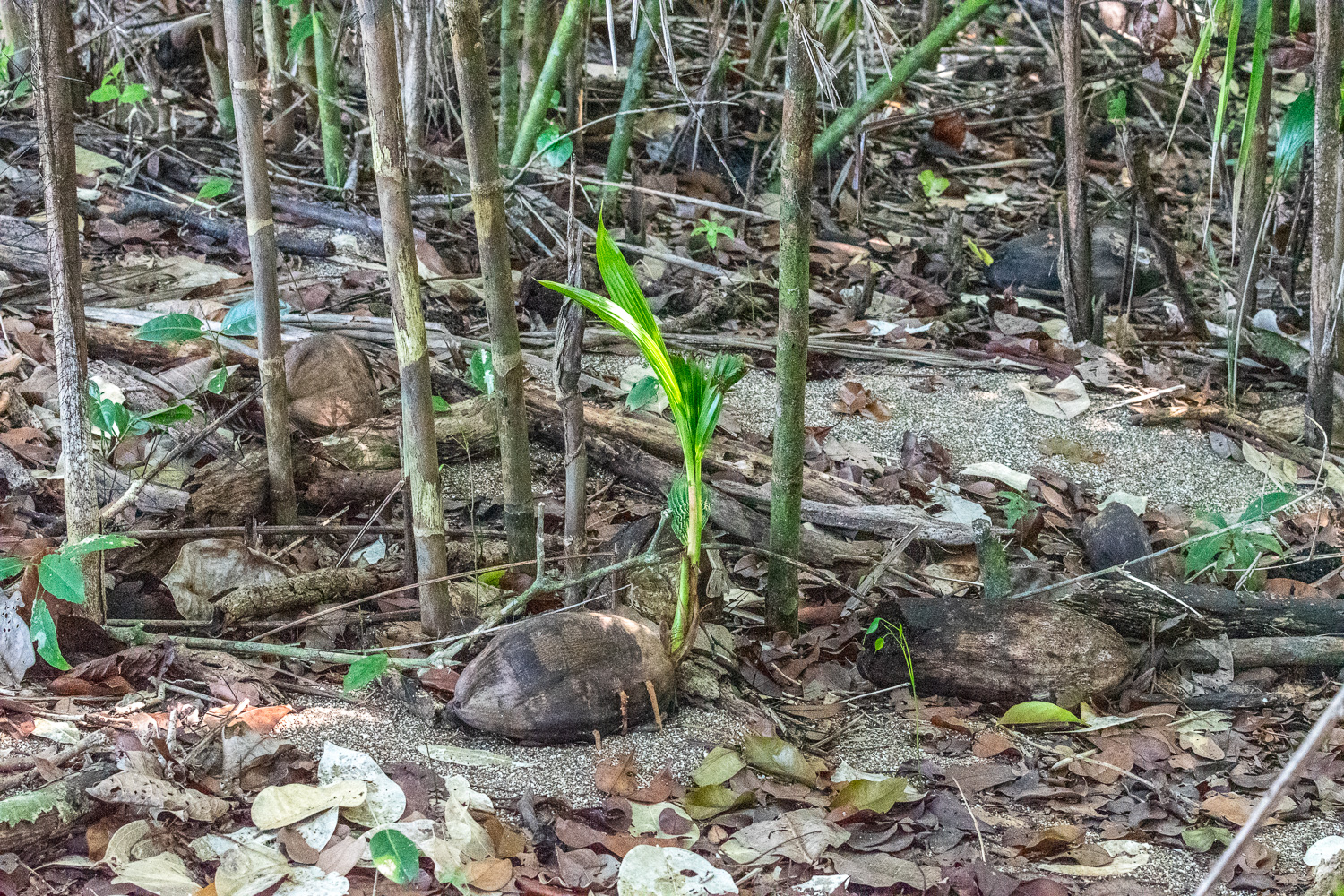 Coconuts are the tree’s seeds. They fall to the ground and as long as there is light and water they germinate, producing leaves and roots
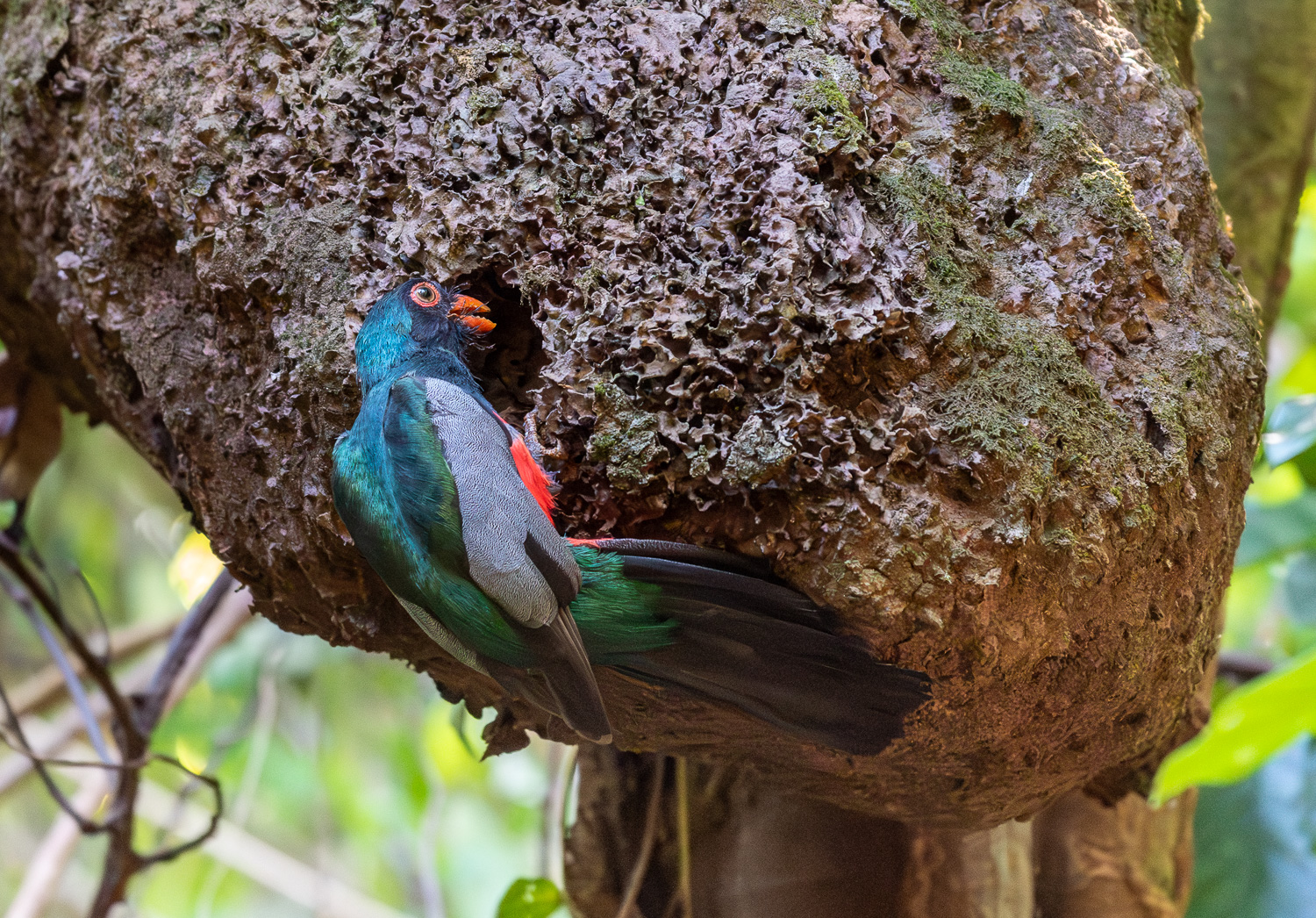 This male Slaty-tailed Trogon was busy making a nest in a vacated termite nest
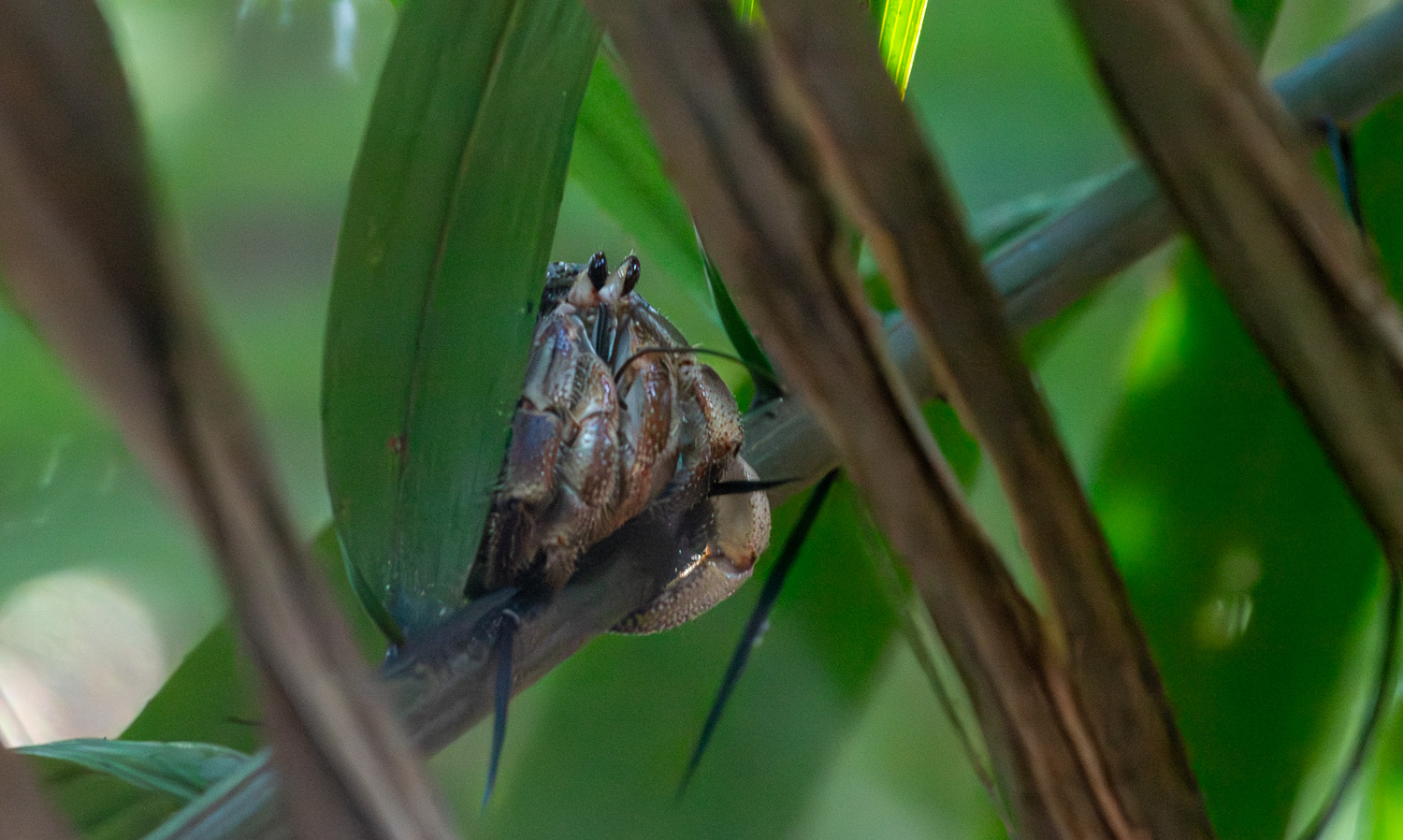 Hermit Crab climbing a tree looking for food; they are not just found on the beach!
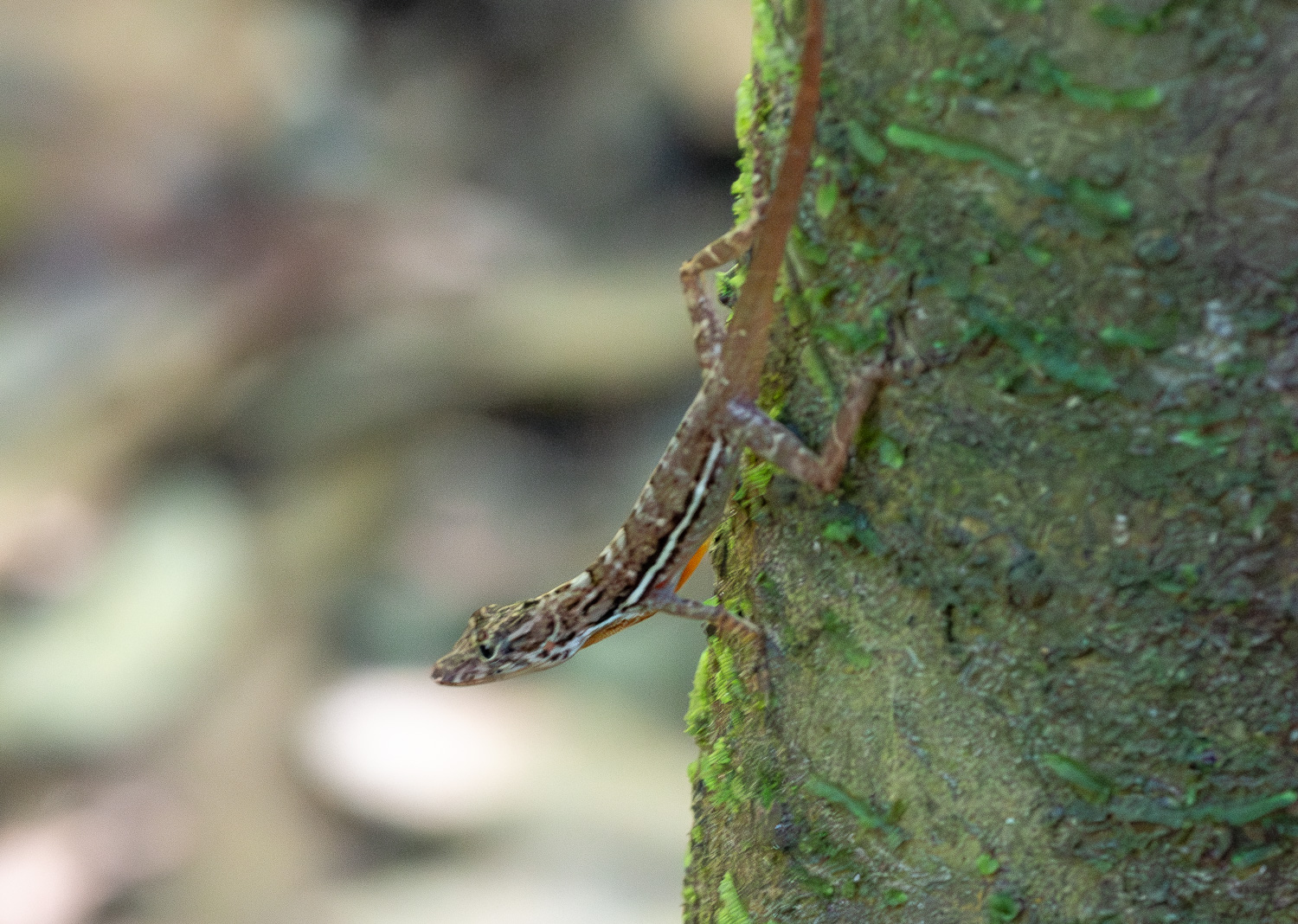 Water Anole; the male shows an orange throat when threatened
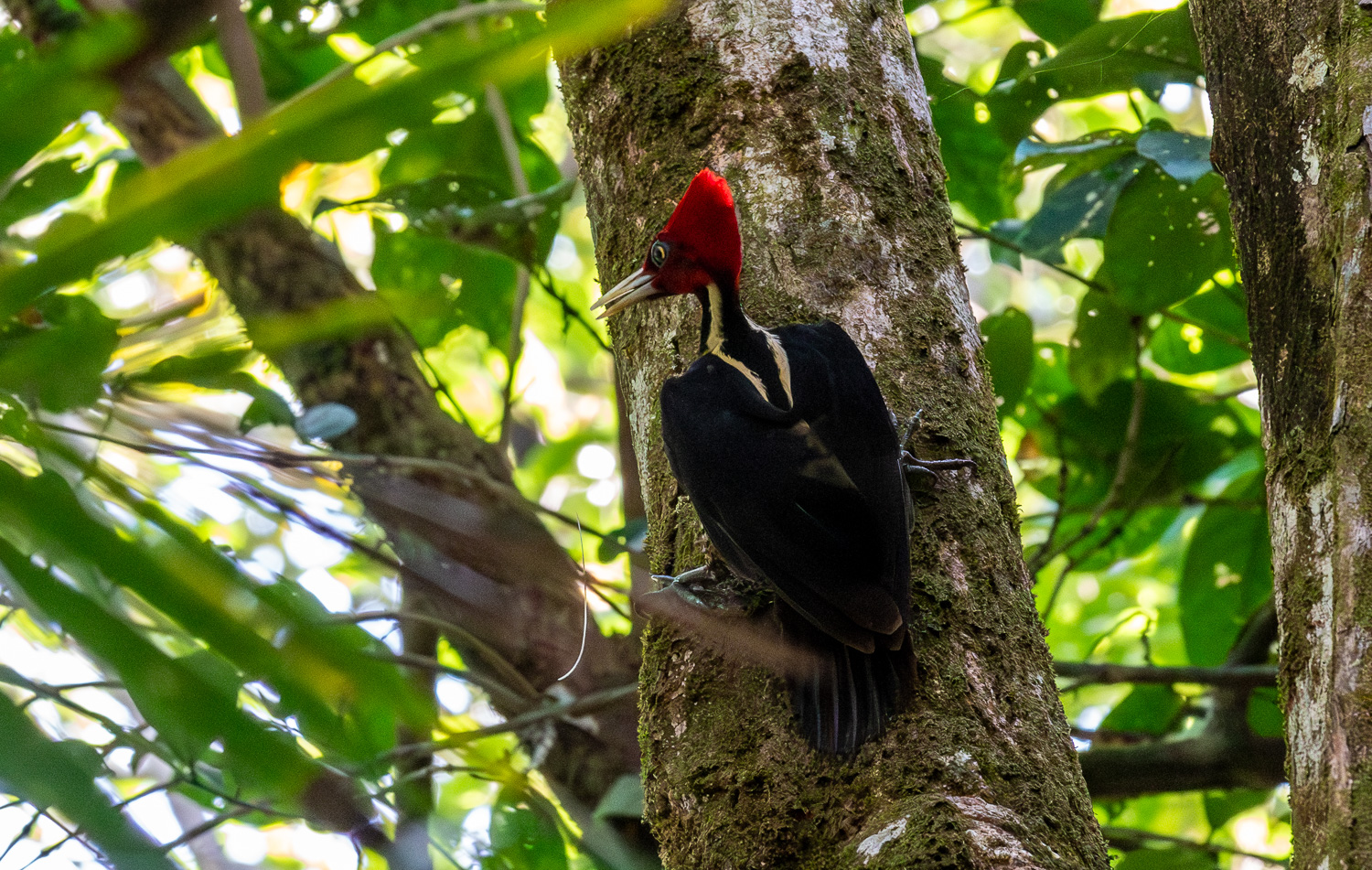 The Pale-billed Woodpecker, is Costa Rica’s largest woodpecker
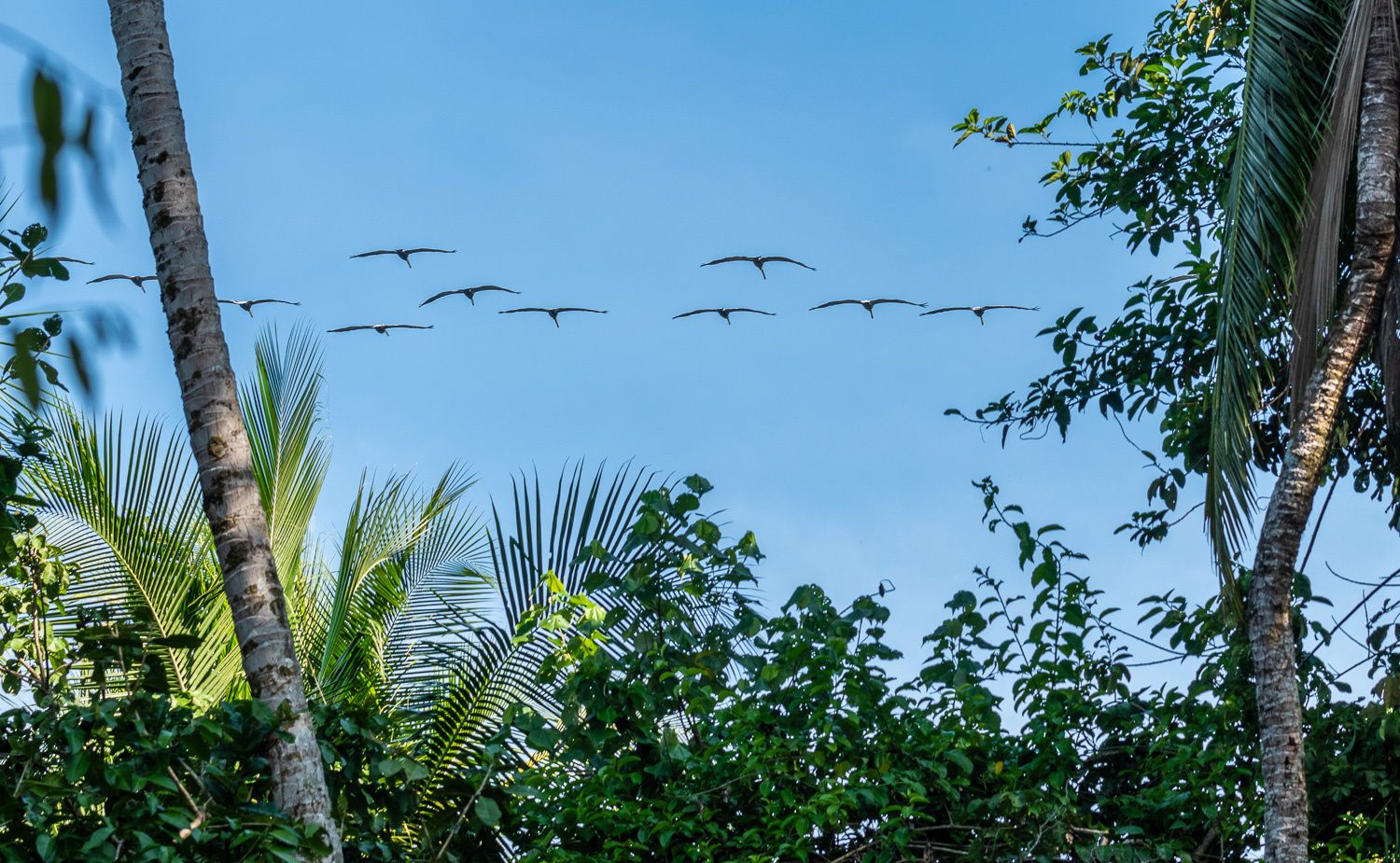 Flock of Brown Pelicans – After Costa Rica’s armed forces were disbanded in 1948, these birds are now fondly referred to as the Costa Rican Airforce!
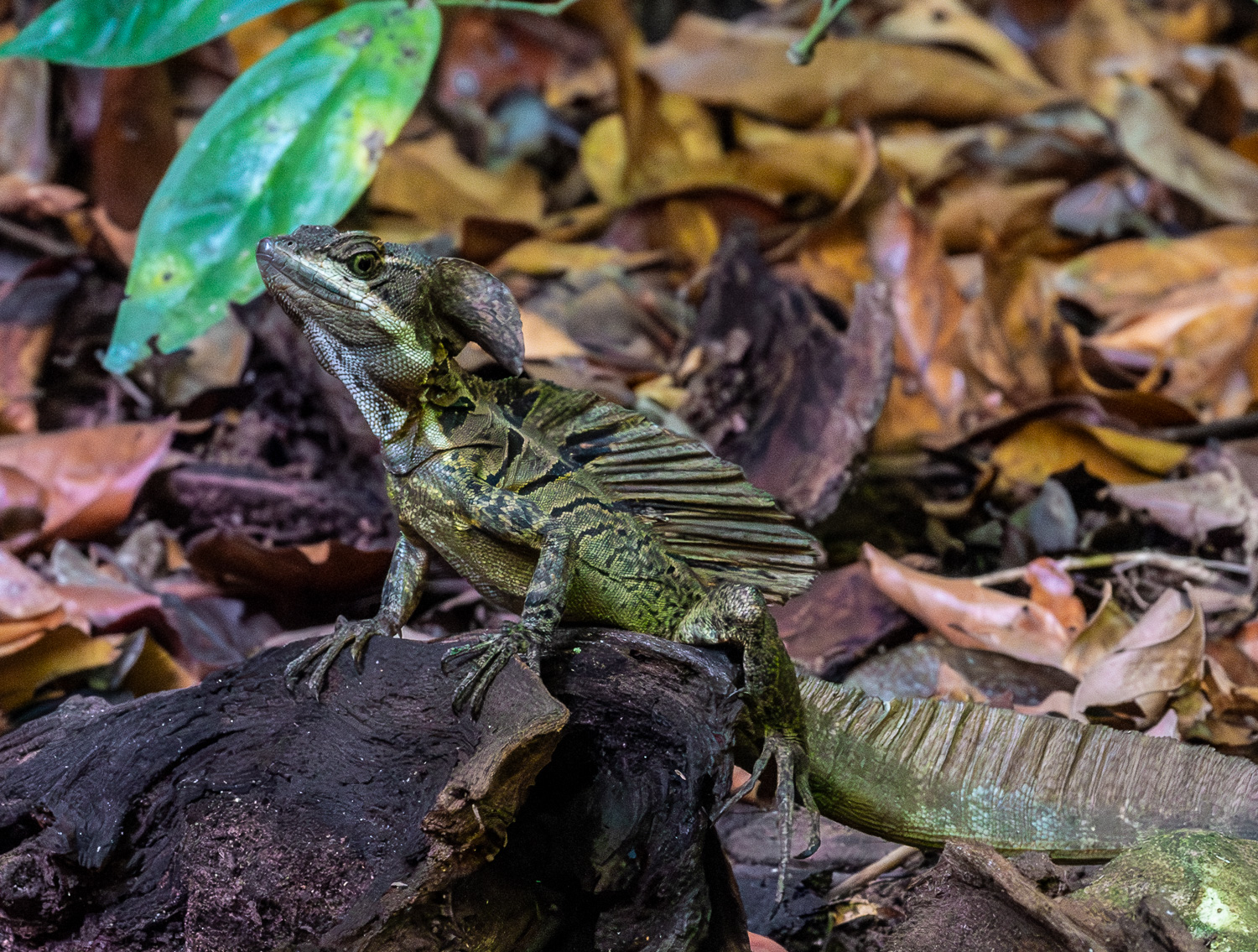 The Male Pacific Dark Basilisk Lizard (Jesus Christ Lizard) is approx 12 inches long
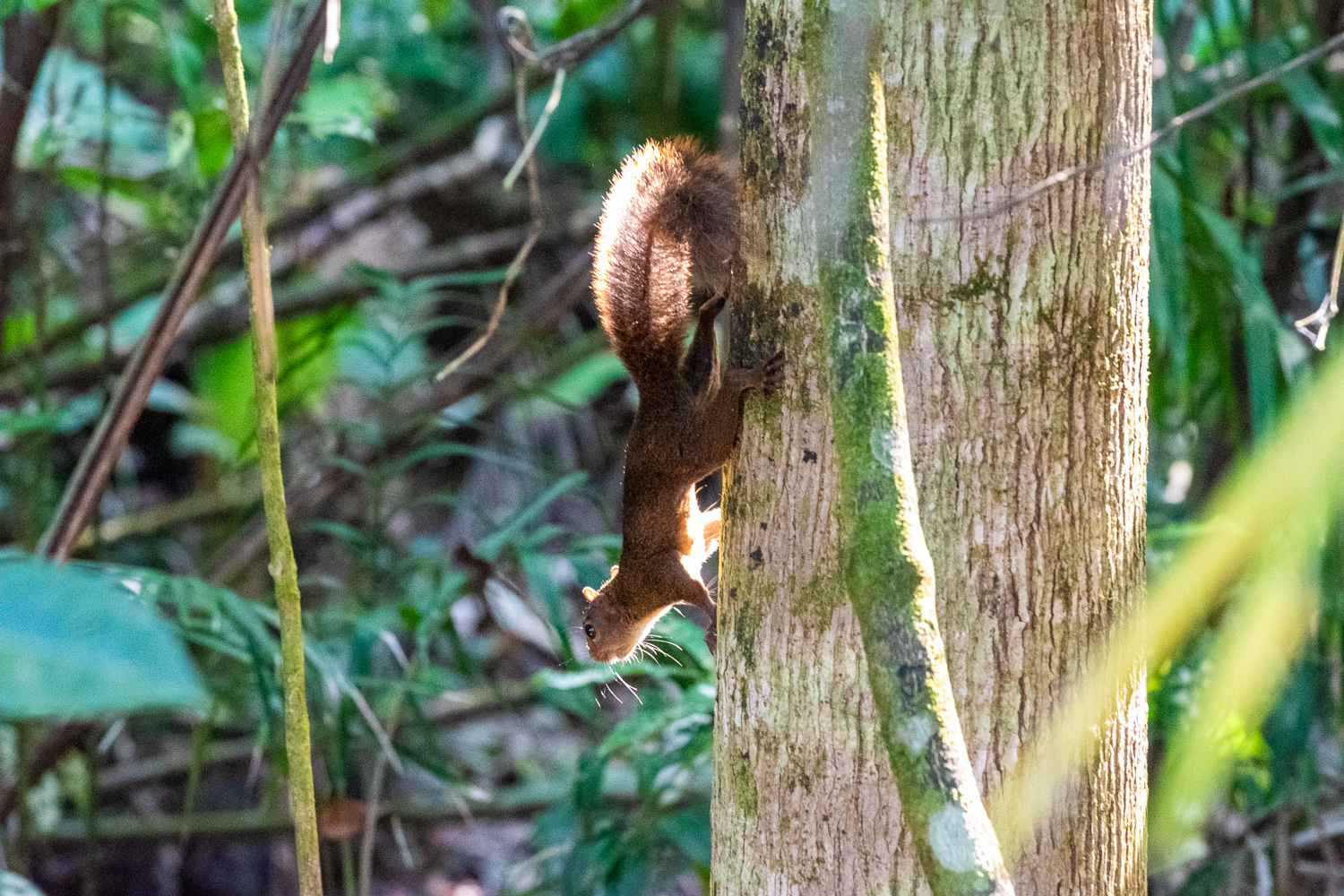 Red-tailed Squirrel
The Scarlet Macaw is a large yellow, red and blue tropical parrot native to the humid evergreen forests of Costa Rica. Together with the Toucan, the Scarlet Macaw is one of the iconic birds of this country. It was therefore fitting that we had our first real sighting of these large colourful birds on our last stop in Costa Rica.
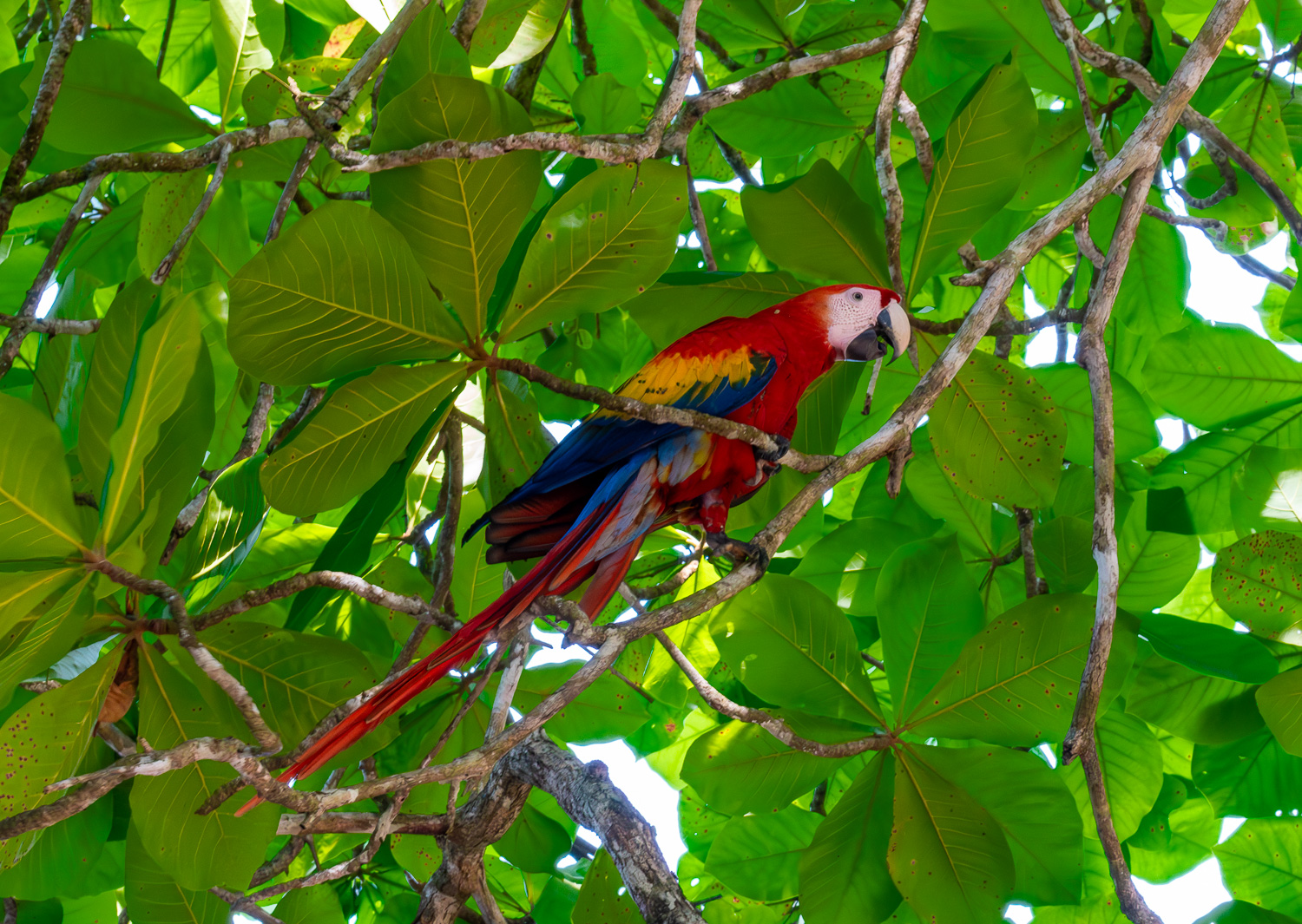 Perched in a Almond Tree, this Macaw is looking for one of it’s favourite nuts to eat
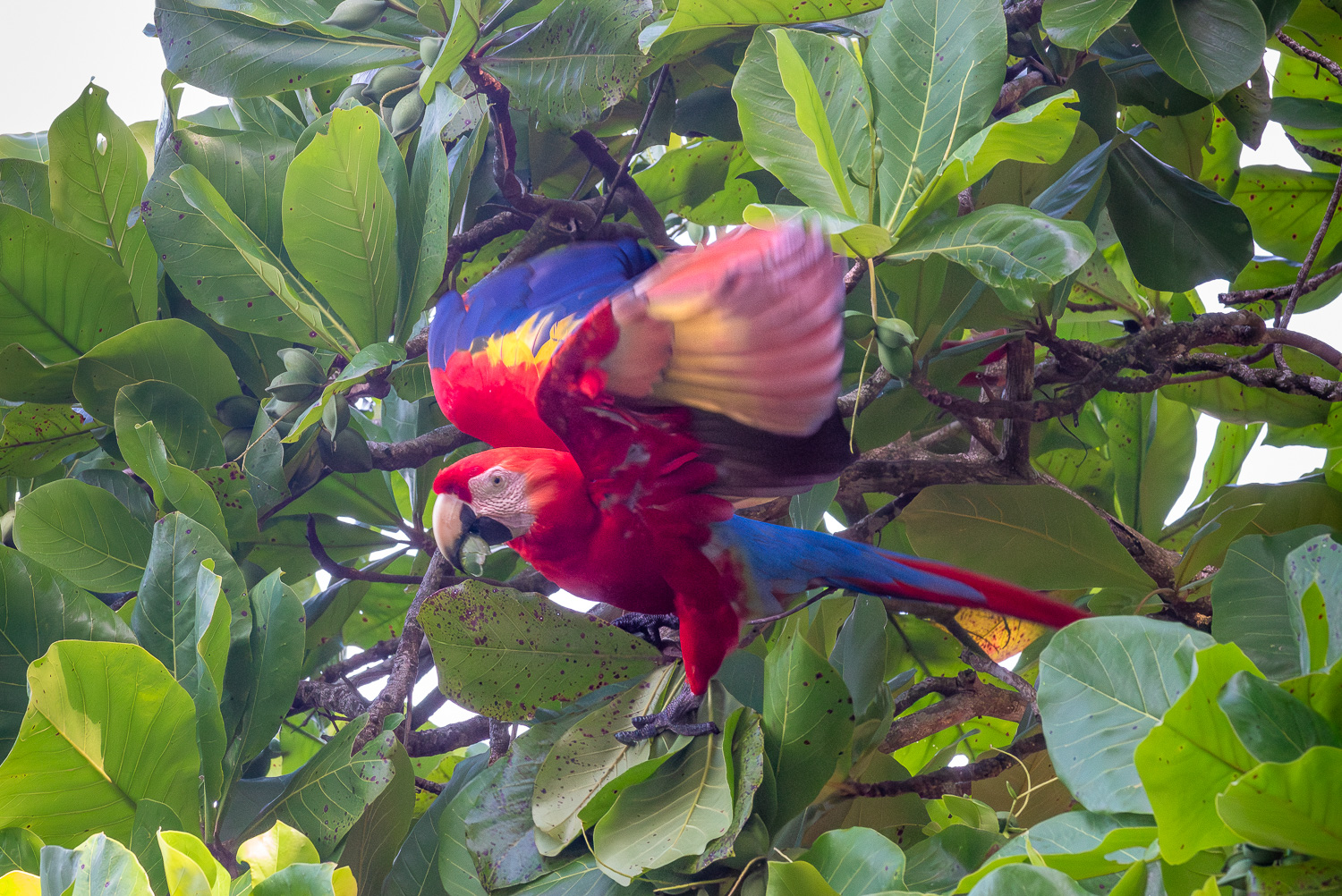 Taking flight with captured nut!
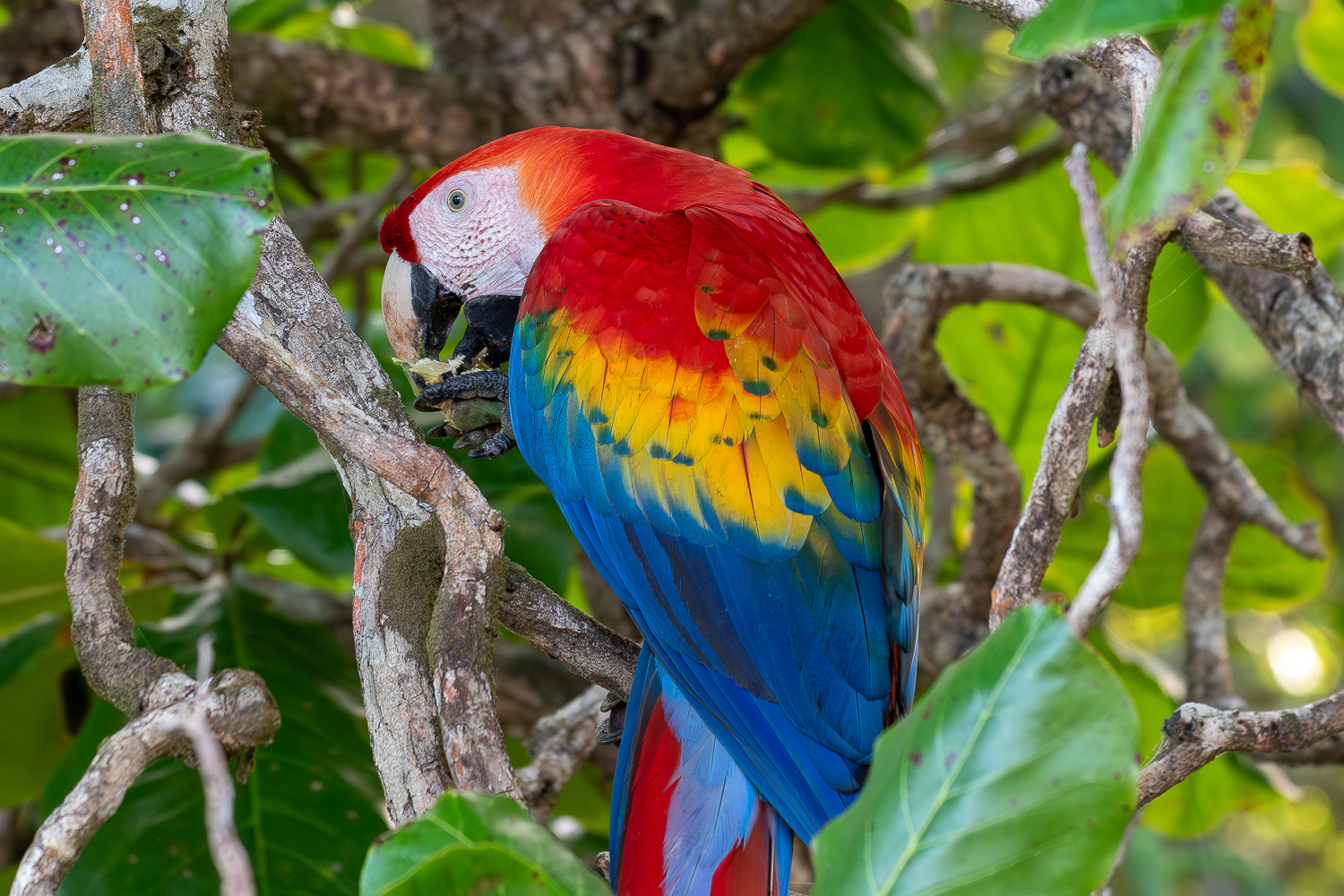 Breaking into the Almond for the tasty kernal

