We started our last 2 weeks in New Zealand’s South Island with a short stay in the small town of Franz Josef in the heart of Glacier Country. It is one of only two places in the world where you can view glaciers descending into temperate rainforest. The local area is dominated by the two largest mountains in New Zealand – Mt Cook and Mt Tasman (Mt Cook is over twice the height of Ben Nevis at nearly 9,000 ft). We made an early morning visit (Graham had us up at 6.00am!) to Lake Matheson, which is known as mirror lake and is famous for its reflected views of Mt Cook and Mt Tasman. The best views are first thing in the morning before the wind gets up and disturbs the water, hence the early start.
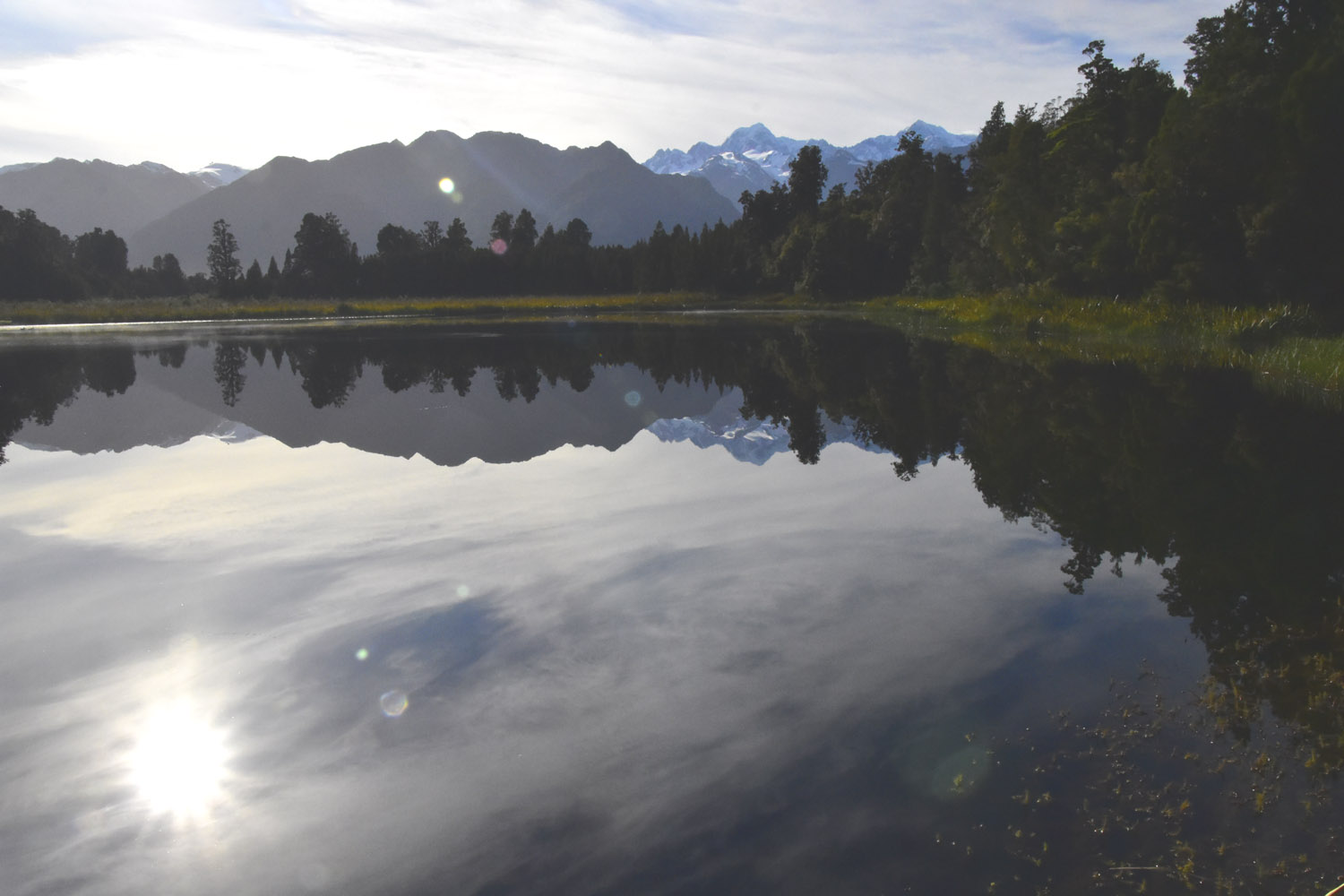 Lake Matheson – Early morning reflection of Mt Tasman & Mt Cook
We then hiked close to the face of the Franz Josef glacier – the scale of the surrounding geology and the glacier itself were fascinating. There were a number of other adventurous activities on offer at both Franz Josef Glacier and the nearby Fox Glacier, including paragliding (see photo below), but we gracefully declined and had a coffee instead!
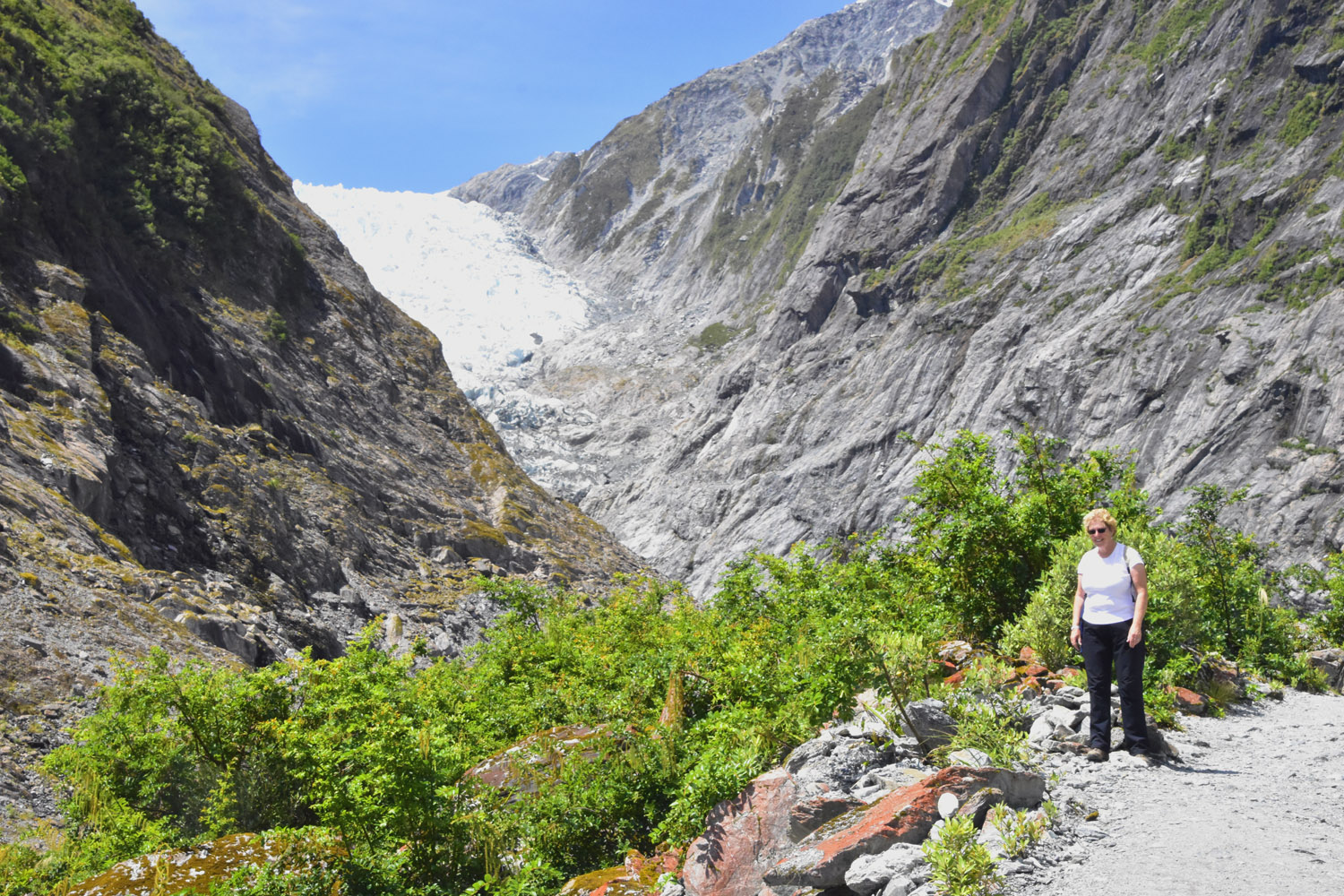 Franz Josef Glacier
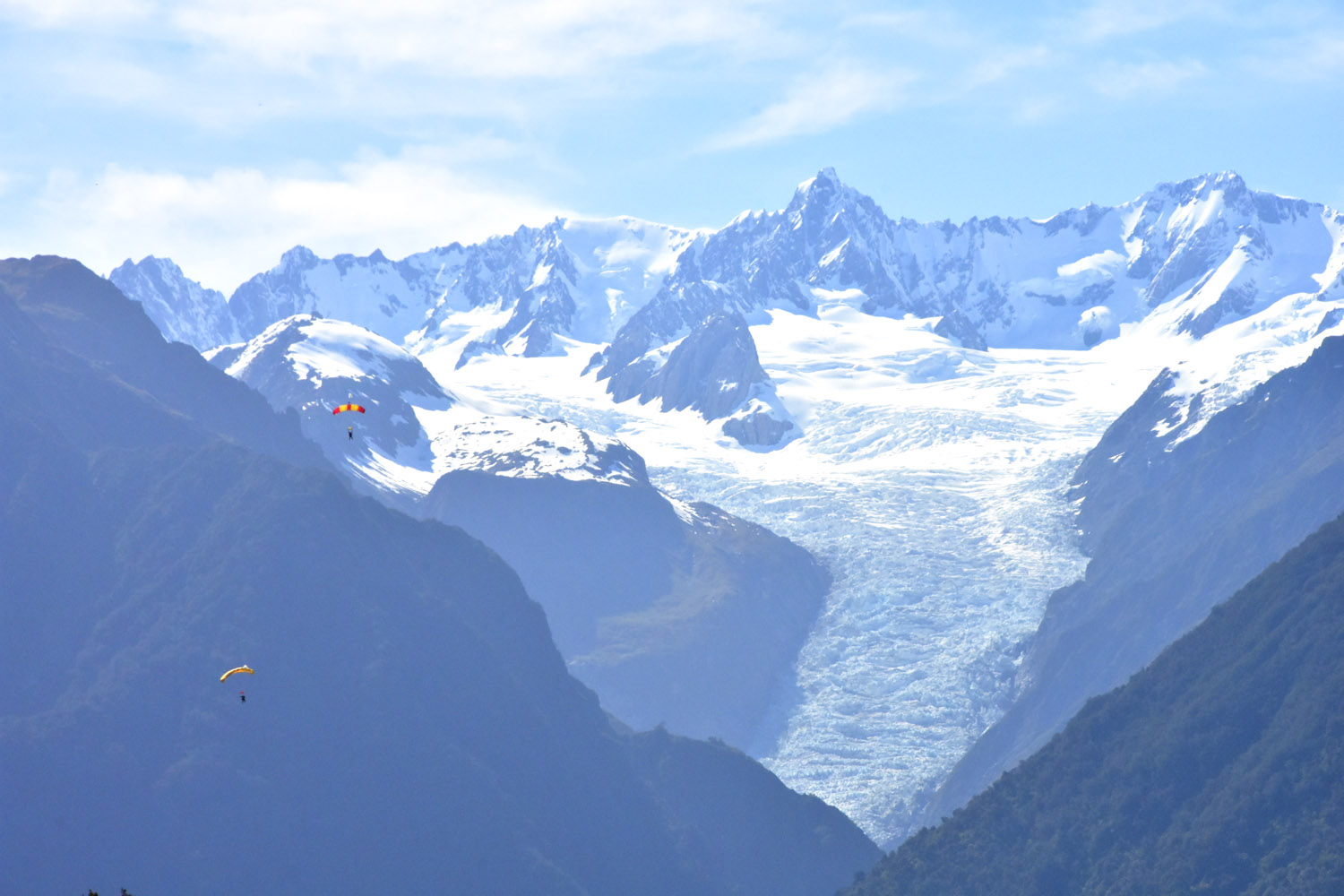 Paragliding at Fox Glacier
We then drove down to Queenstown, the home for adrenalin junkies, extreme sports and party-goers. Clearly not for us, so we stayed in a quiet, old historic mining town just outside Queenstown called Arrowtown! Located in the Wakatipu basin, Arrowtown is a beautiful town surrounded by mountains and great for walking as well as fine dining, for example, below is a picture of Graham’s turkey, brie and cranberry lunchtime sandwich. Commenting on this gastronomic delicacy Charlotte said, “this is the nearest thing you are going to get to a Christmas lunch!” We did however visit Queenstown and managed a coffee or two and great people watching.
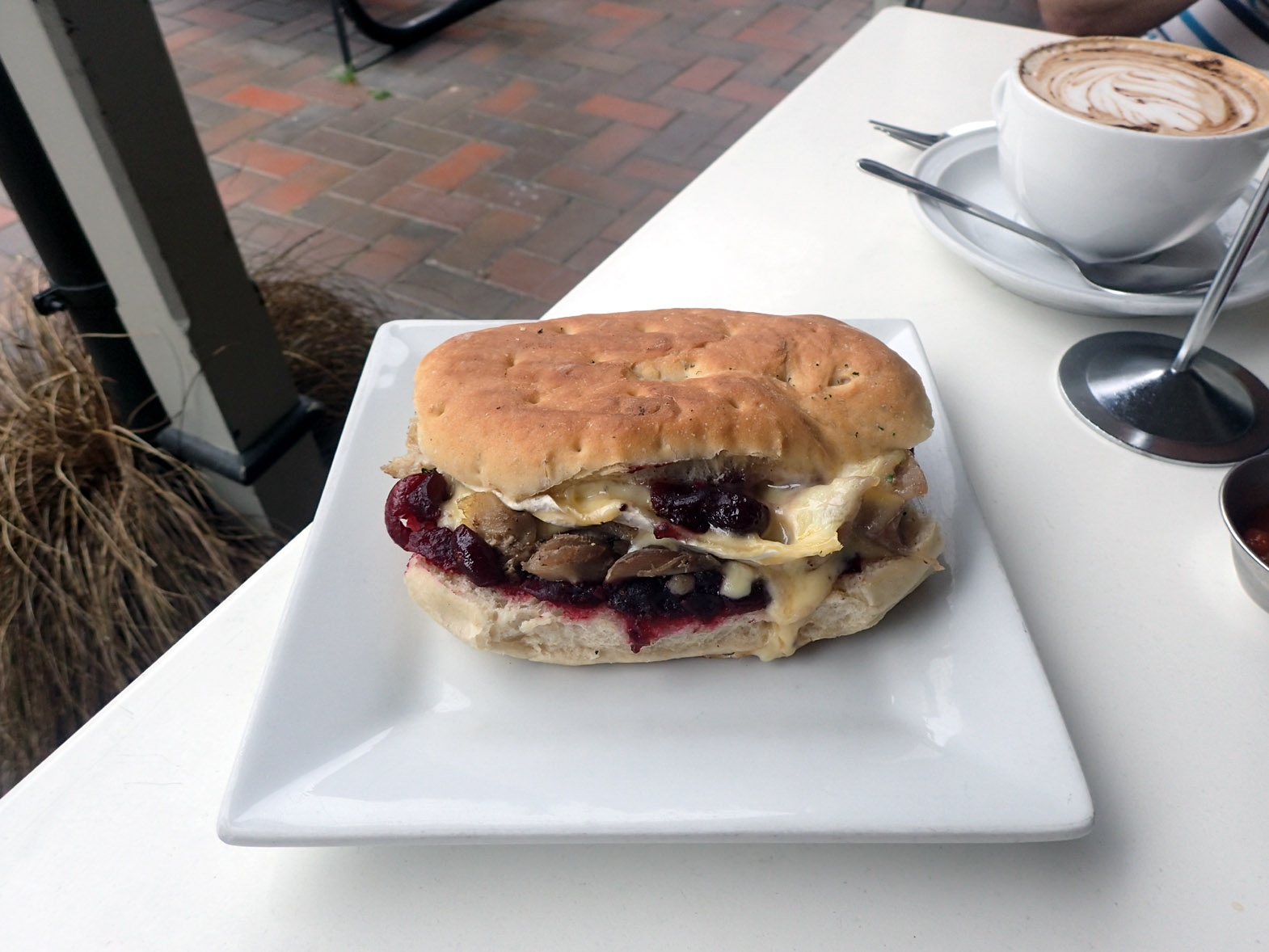 Graham’s turkey, brie and cranberry sandwich
Queenstown is on Lake Watatipu (and at 50 miles long the country’s longest lake) and is one of the most stunning locations of any of the places we have so far visited. The views from the top of the gondola station are breathtaking, and we were again blessed with fine sunny weather.
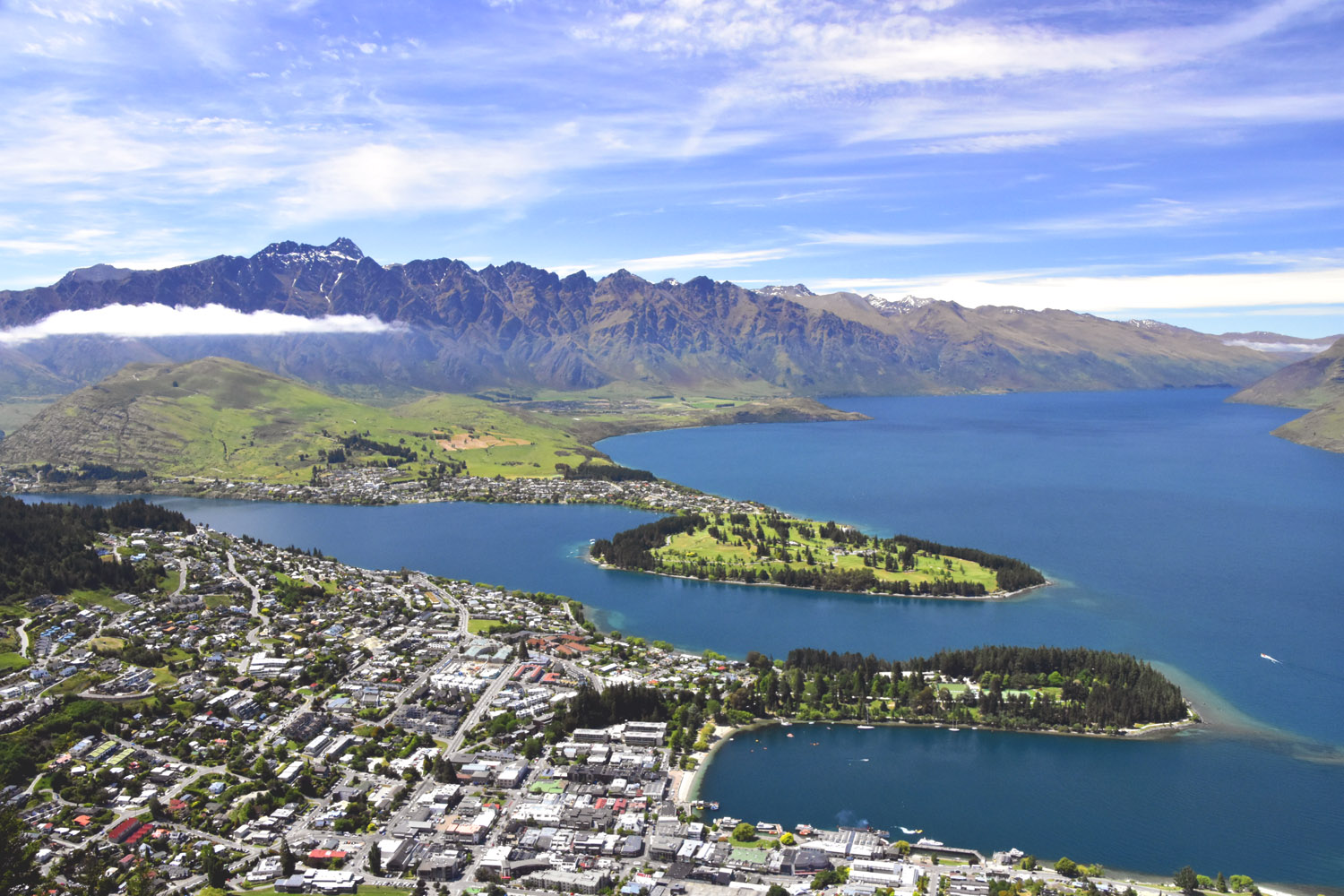 Looking down on Queenstown and Lake Watatipu from the gondola station
We then stayed for 5 nights in Te Anau in Fiordland National Park. Te Anau sits at the southern end of Lake Te Anau; whilst not the largest lake by area in New Zealand, it is the largest body of freshwater in Australasia. The area is famous for the glacier-carved fiords of Doubtful and Milford Sounds and for its walking. It is for many travellers to New Zealand, including ourselves, the No.1 place to visit. Fiordland National Park has international World Heritage status and is the largest of the country’s 14 national parks. The Department of Conservation has created 10 ‘Great Walks’ in its National Parks across the country, 3 of these are in Fiordland, including the 50-mile long Kepler Track. We walked the first 10-mile leg of the Kepler Track, which starts in Te Anau, and crosses the Waiau River on a suspension bridge to finish the walk and we caught a shuttle bus back to the town.
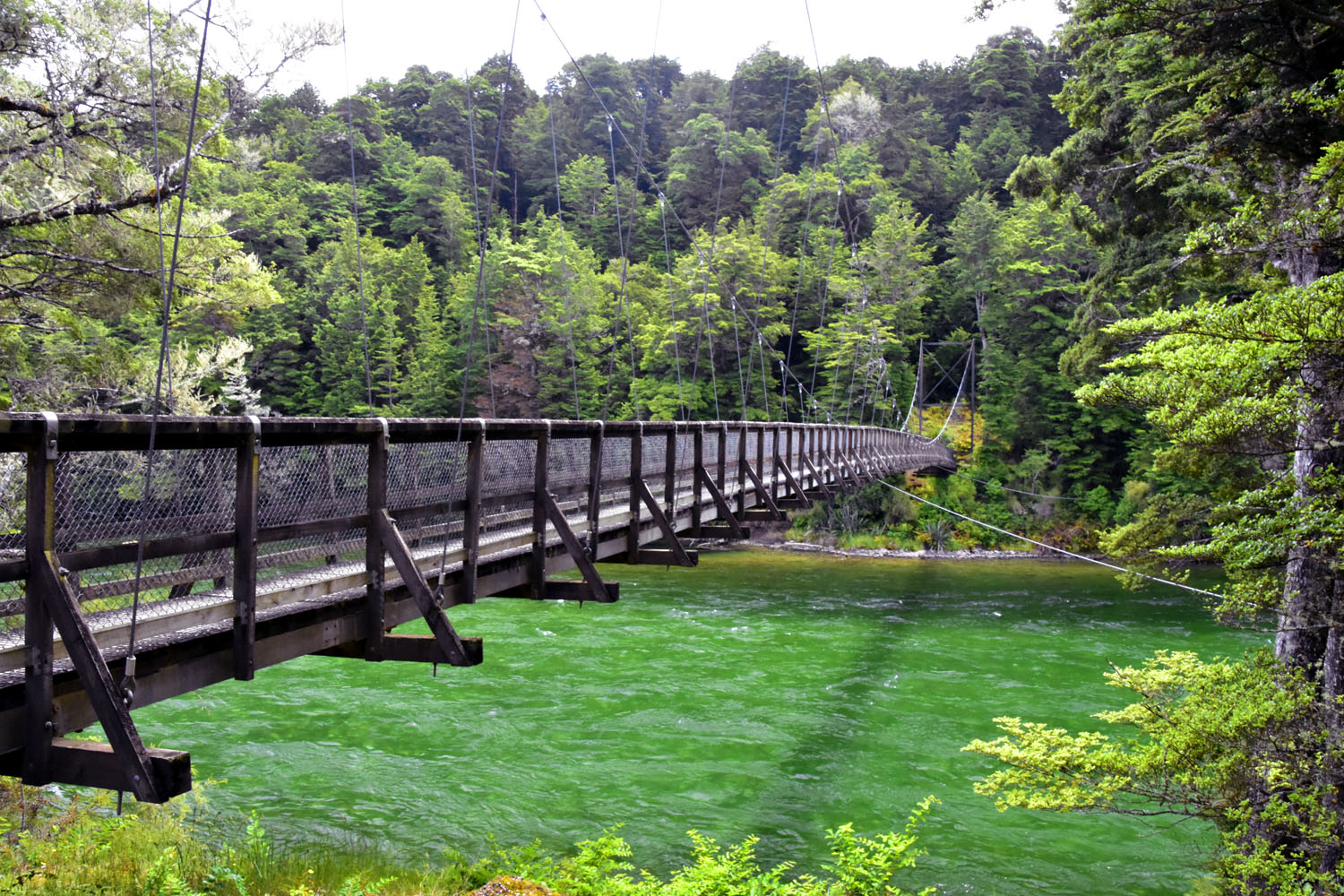 Kepler Track Suspension Bridge
The highlight for our stay in Fiordland were the boat trips on Doubtful and Milford Sounds and they lived up to their reputation. Considering they typically get 200 days a year of rain, we again managed to see them both in good weather. One of the most memorable features of Milford Sound are its waterfalls. After a rainy day the steep mountain faces are covered in hundreds of temporary waterfalls. However, the most well-known of the permanent waterfalls are Bowen Falls and Stirling Falls. The drive along Milford Highway on route to Milford Sound was also spectacular.
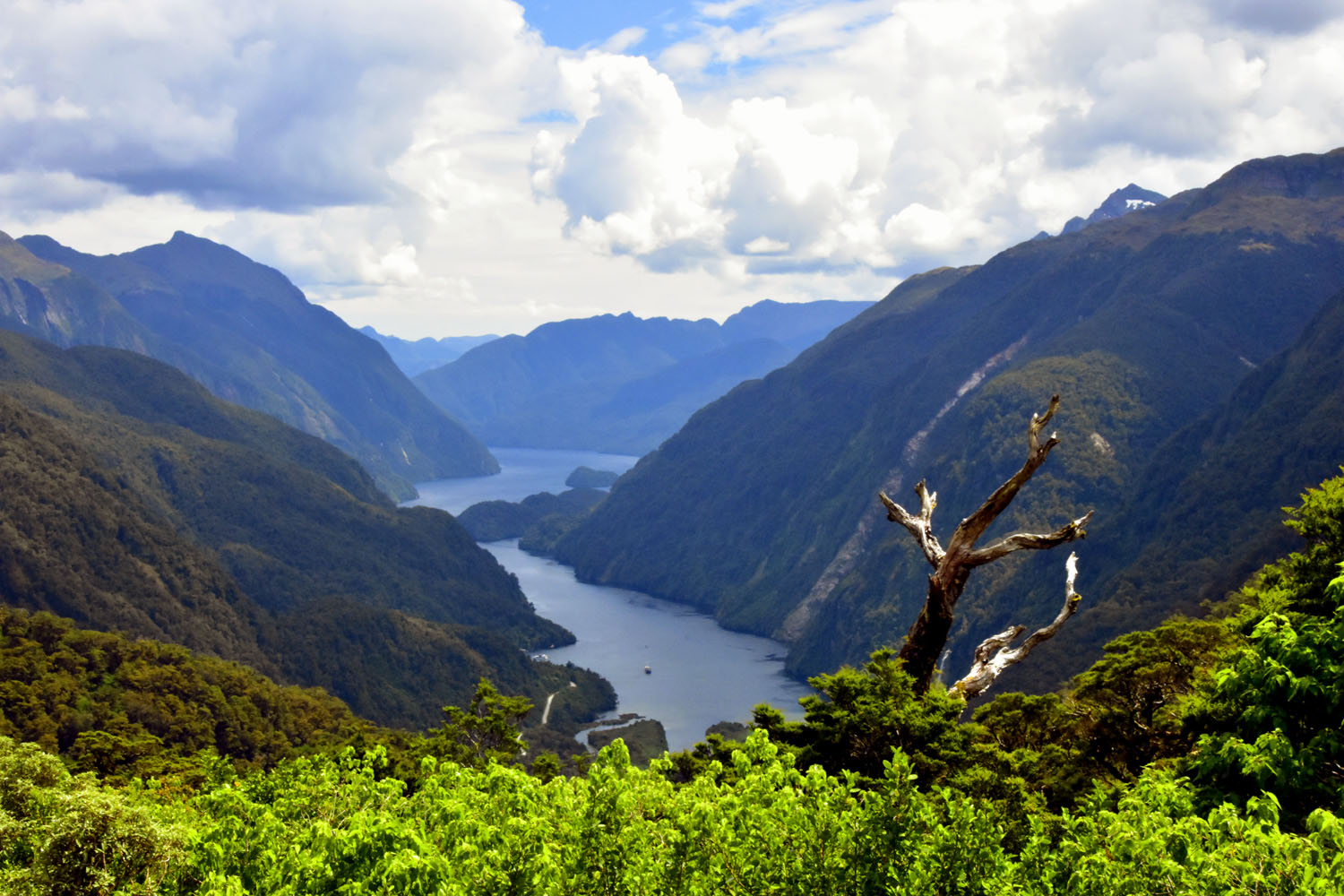 Doubtful Sound – View from Wilmott Pass
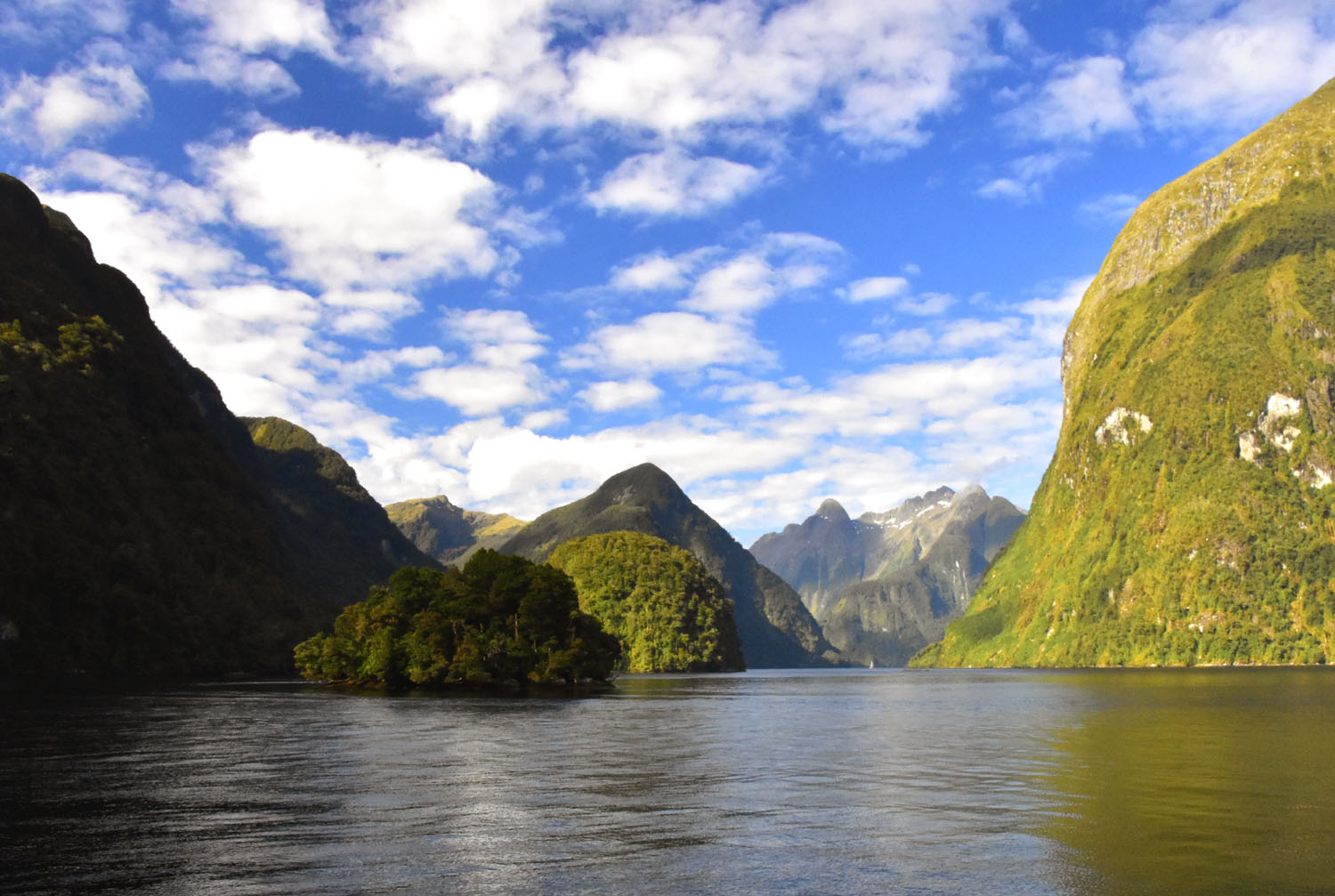 Doubtful Sound – Boat Trip
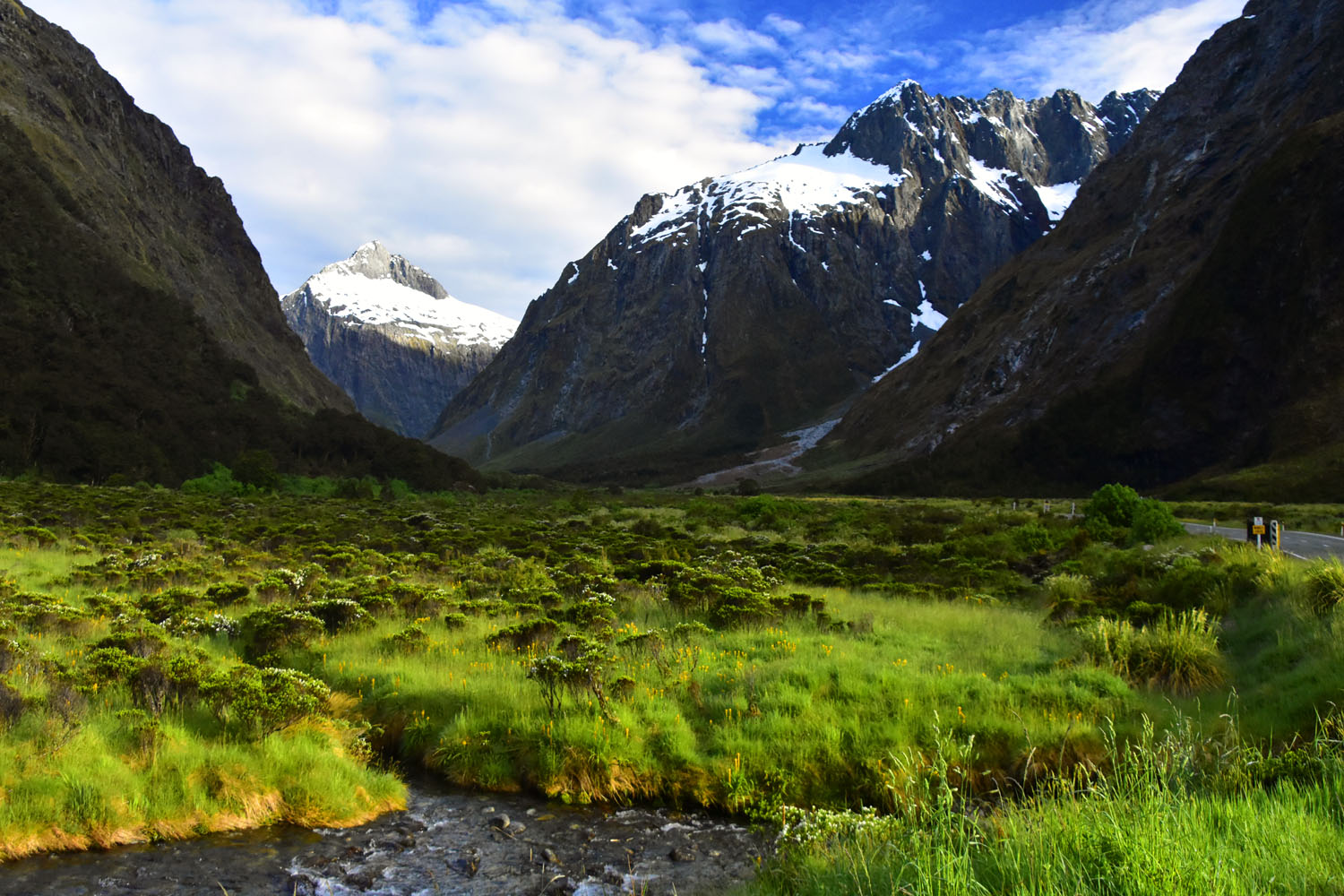 View from Milford Highway
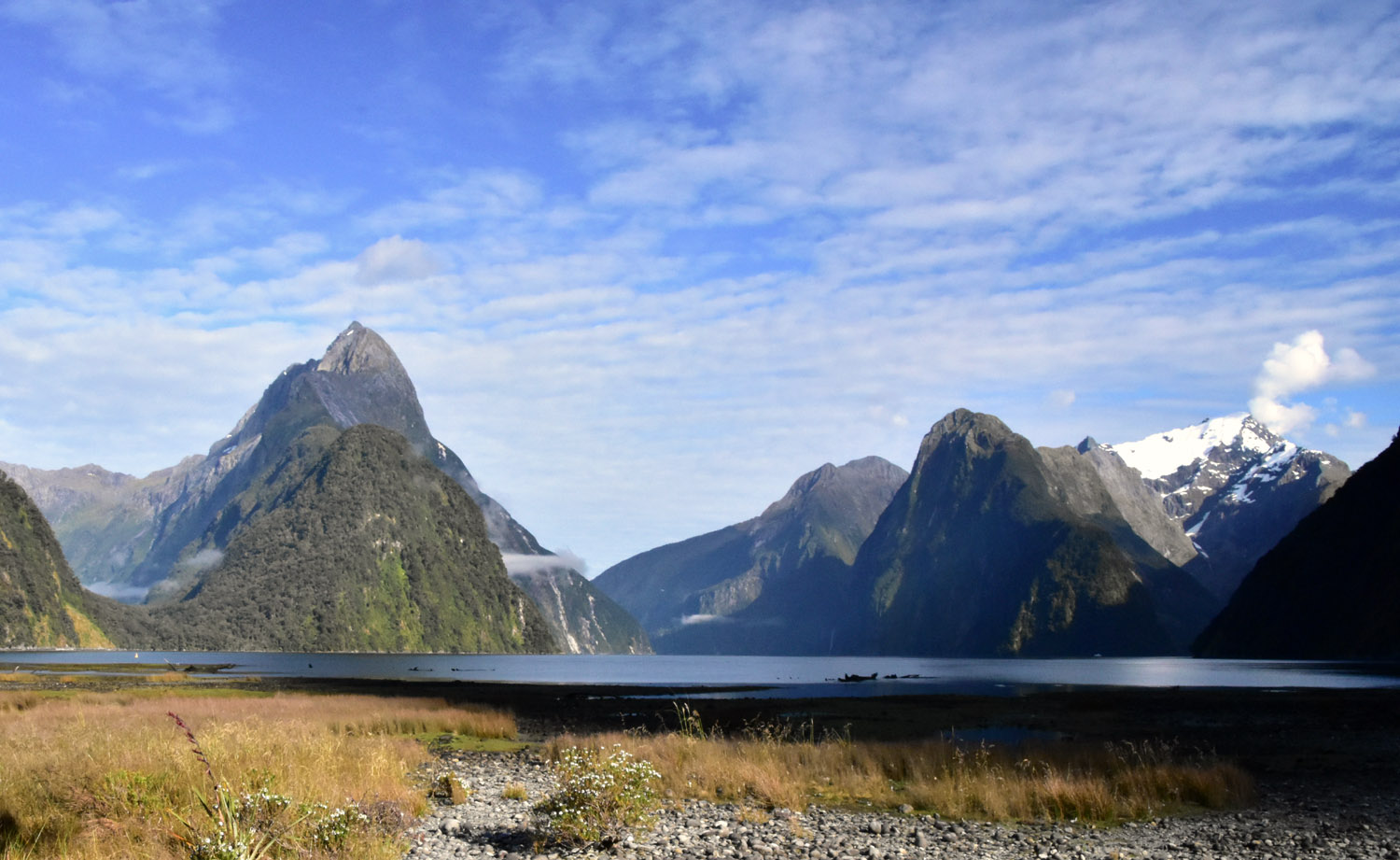 Milford Sound
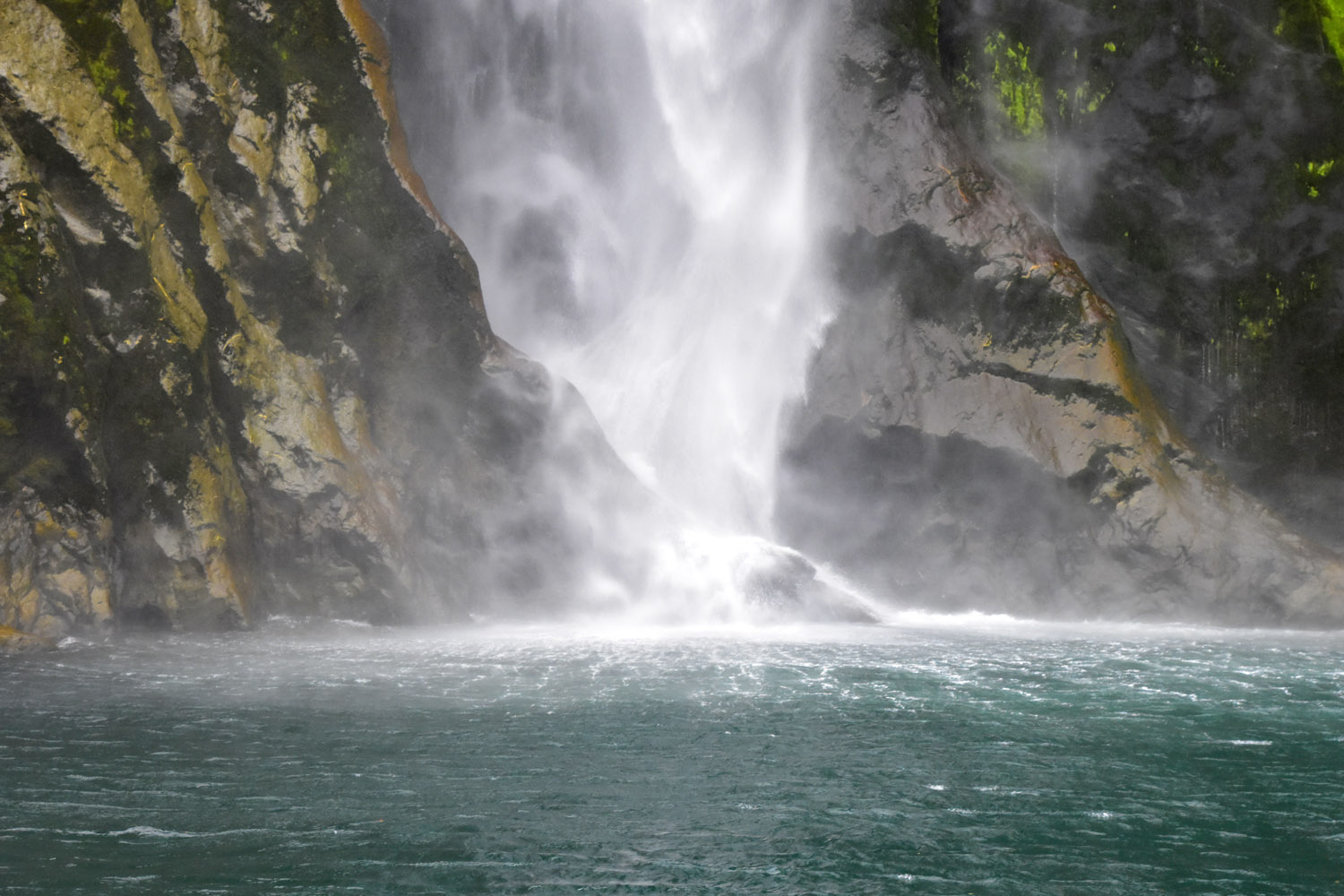 Milford Sound – Stirling Falls
On the way to our last port of call we drove through the Catlins; an area of outstanding beauty on the southern coastline of the South Island. Its rugged coastline contains some unusual geological sites as well as the first sweeping golden sandy beaches we have seen since leaving the North Island. Curio Bay is a site of a petrified forest, visible on the beach at low tide. The now petrified logs and tree stumps were buried 180 million years ago by ancient volcanic mud flows and gradually replaced by silica to produce the fossils now exposed by the sea.
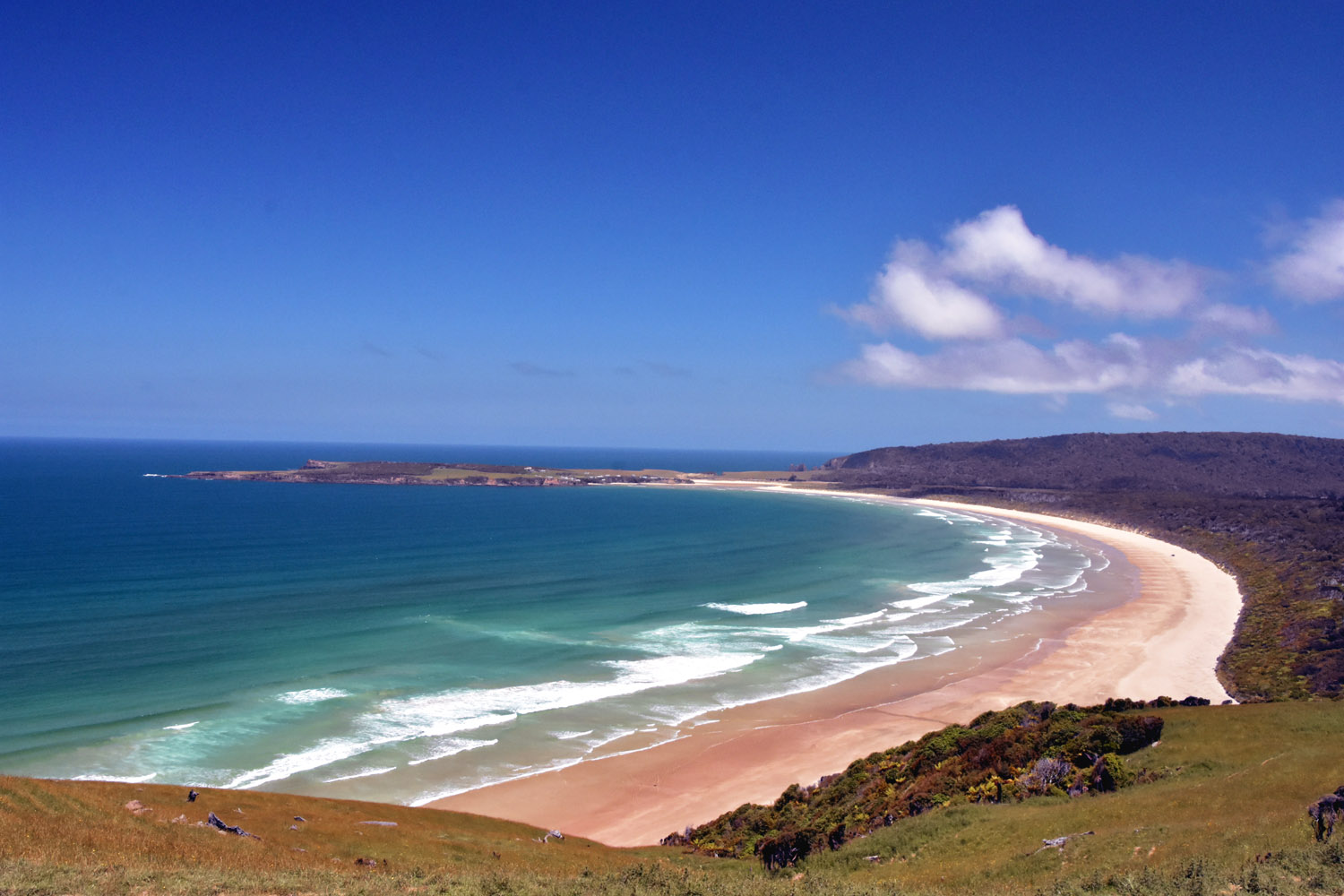
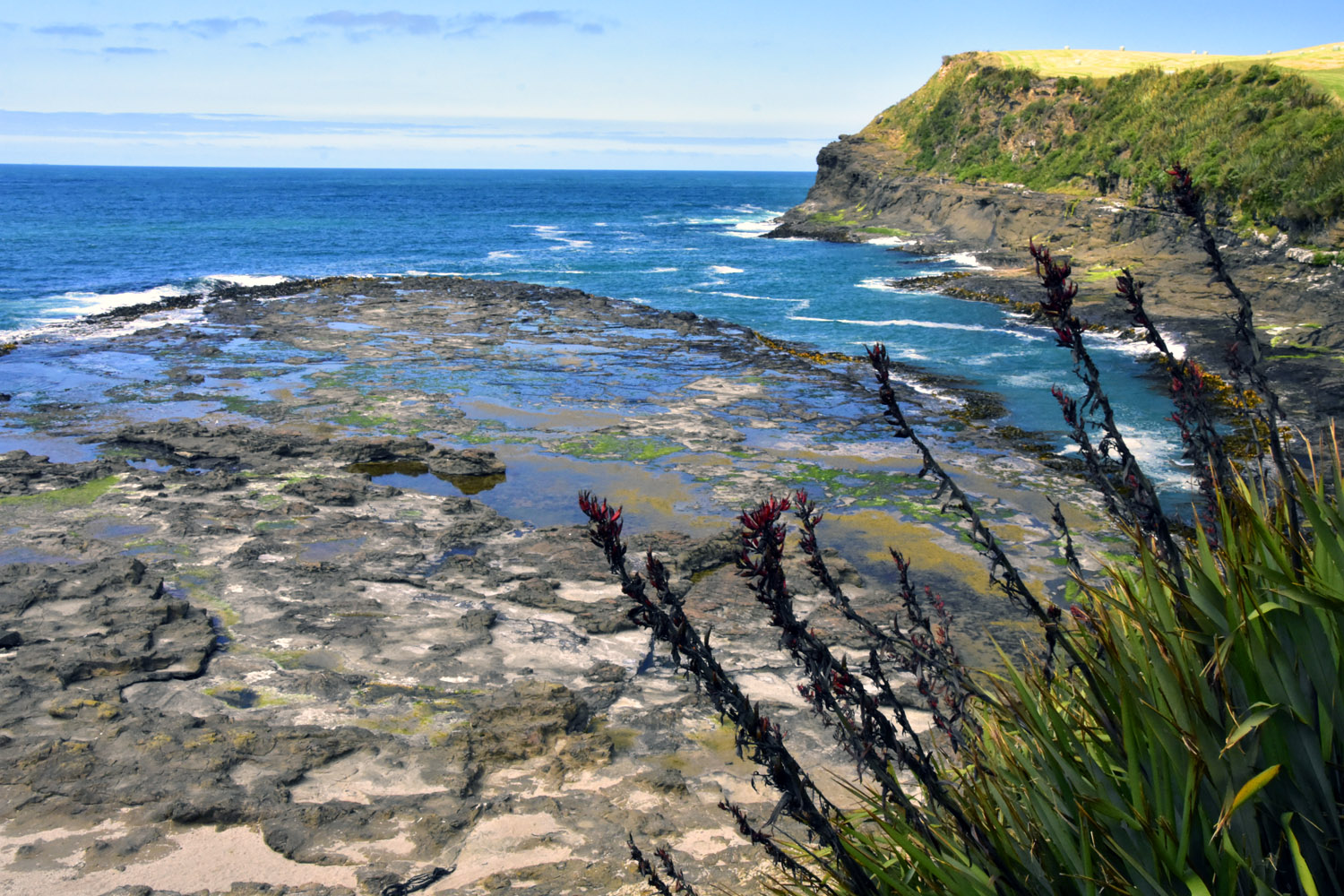 Catlins – Curio Bay – Petrified Forest
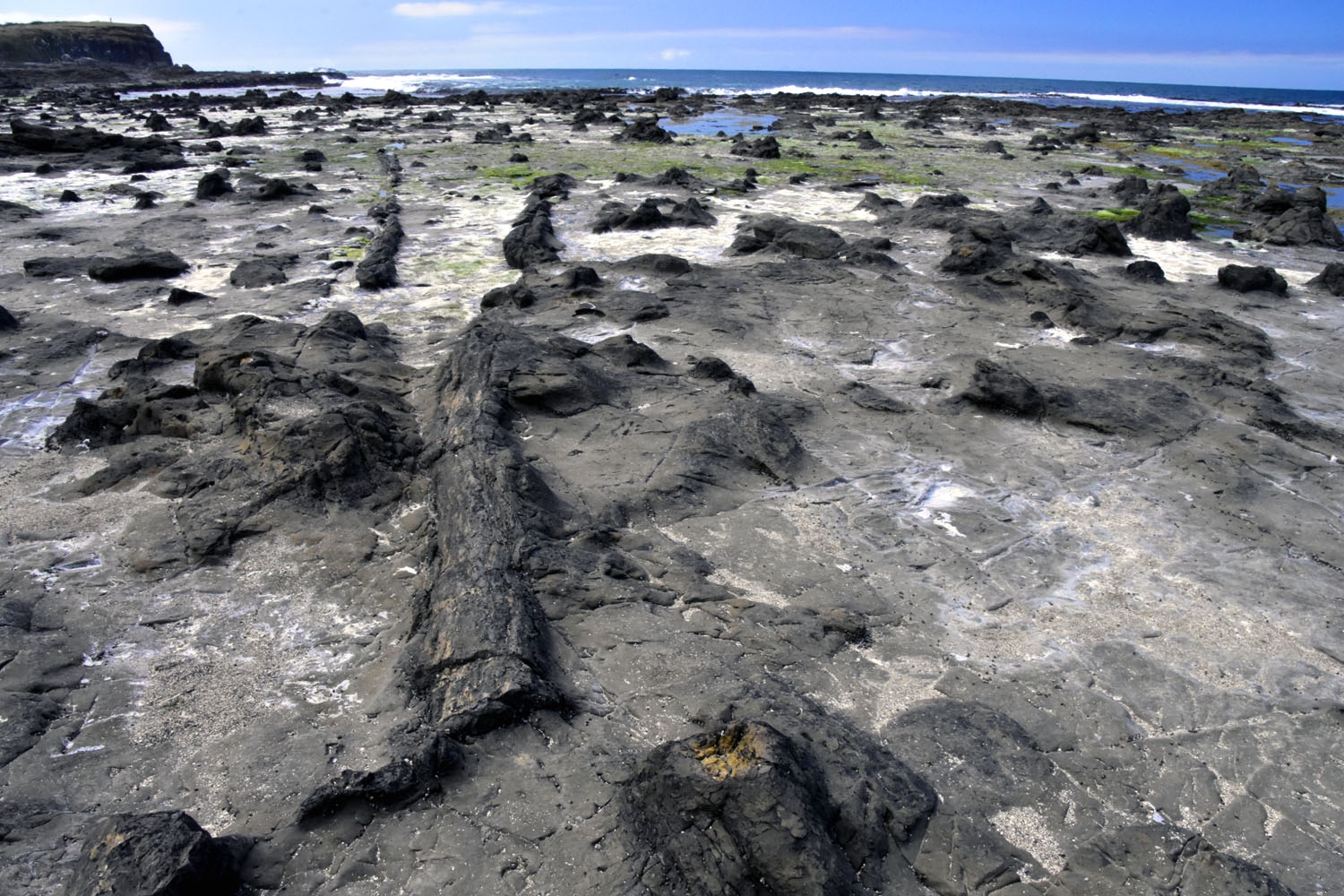 Catlins – Curio Bay – Petrified logs and tree stumps
Finally we arrived in Dunedin, our last stop on our 3,000-mile New Zealand road-trip. Dunedin is a lovely coastal city, with a colonial feel about it and a Scottish heritage. We had a great two days exploring all it had to offer. Dunedin also has fabulous surfing beaches stretching along the city’s southern shore, which gave us one final chance for a walk on a New Zealand Beach!
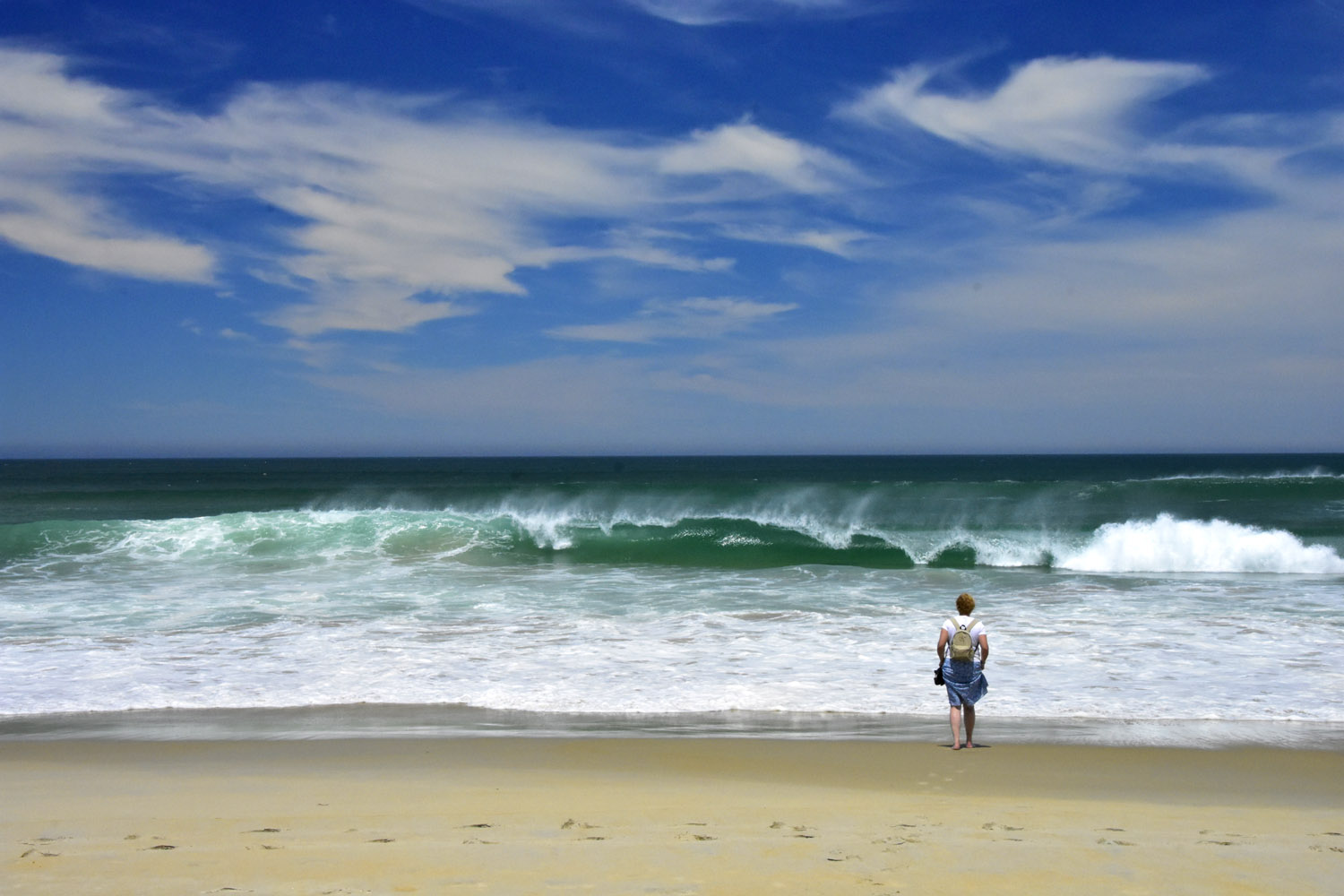 Dunedin – Final walk on a New Zealand beach
Tomorrow we are flying back to Auckland and then on to the Cook Islands the day after, for Christmas and 9 days of South Pacific R & R before flying home at the end of December.
 Charlotte & Graham's Travels