We are now afloat on our Central America adventure. However, our first port of call was Catalina Island, which is in California and only took about 2 hours sailing time! This small island, with a population of just over 4,000 people, is a popular day-trip resort as it is just 22 miles from Los Angeles. The Wrigley family (famous for its Gum) has owned the island in the past and is still involved with it today.
We visited the island’s main town, Avalon, with it’s lovely harbour and seafront. The main focus is the wonderful cylindrical art-decor Catalina Casino building, which is a cultural centre with a movie theatre, ballroom and museum. It doesn’t offer gambling as its name suggests, but it does house the world’s largest circular dance floor. We took a 2-hour off-road trip to explore the island in a converted Humvee – very exciting and very bumpy, but with the great views!
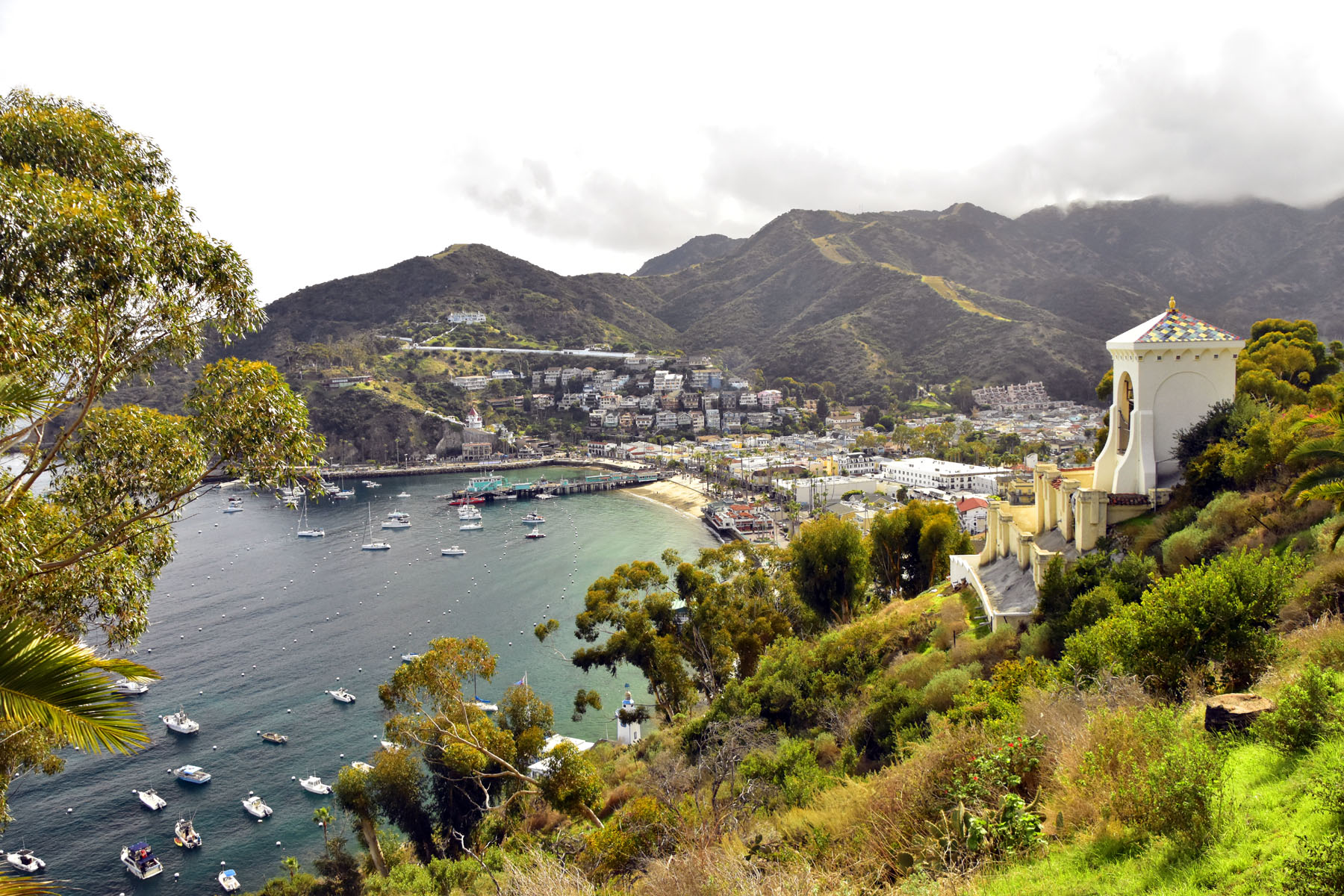 Catalina Island – Avalon Harbour
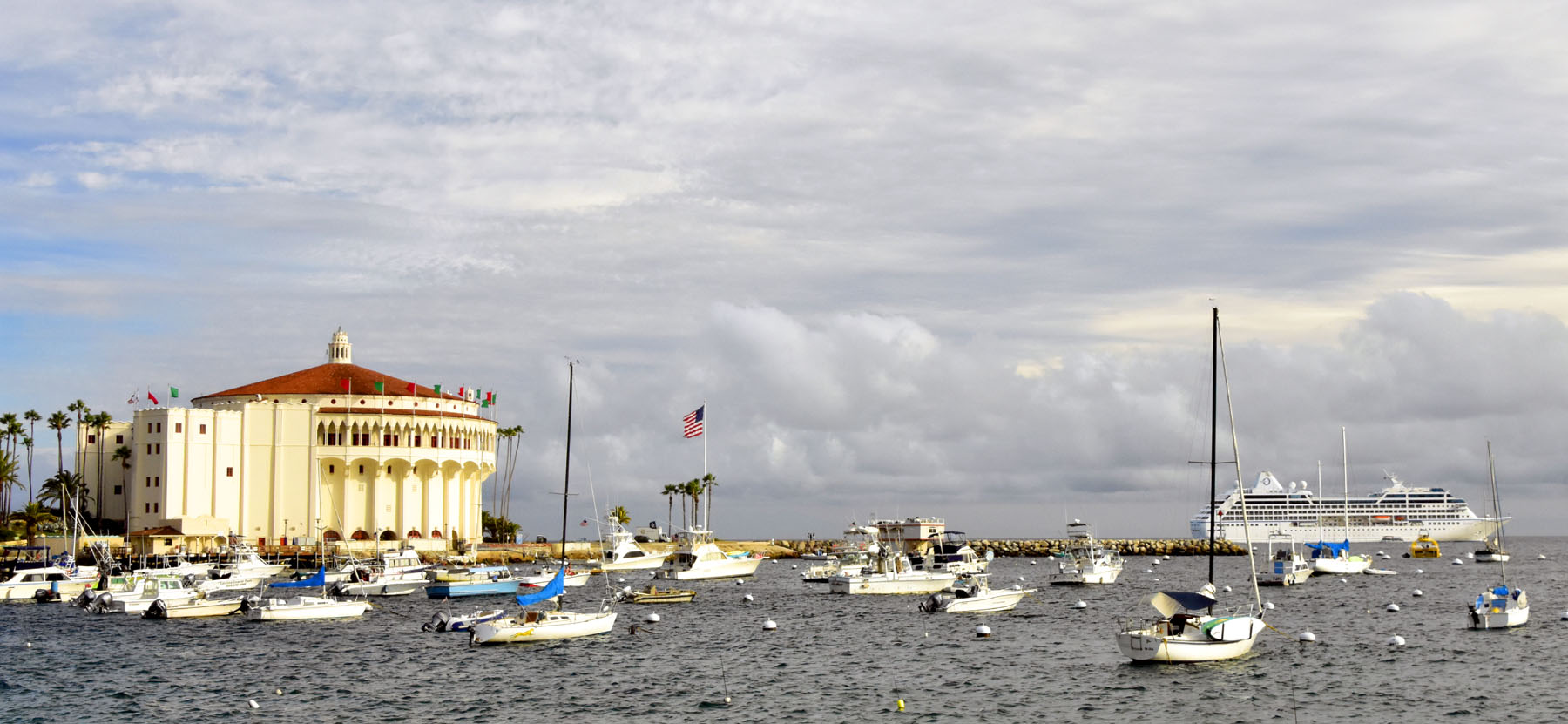 Catalina Island – Catalina Casino and our ship anchored in the bay
After a relaxing day at sea we visited Cabo San Lucas, a resort on the southern tip of Mexico’s Baja California peninsula. It is famous for it’s beaches, sports sea fishing and water sports. We chose a trip to a nearby beach well known for its snorkelling, located on the coast of the beautiful Gulf of California. Also known as the Sea of Cotez, the Gulf of California separates the Baja California Peninsula from the Mexican mainland. Small rock formations close to the beach were home to lots of beautiful fish – a lovely snorkelling spot. We drove to the beach in a convoy of four jeeps, which to the bystander must of looked a little suspicious considering this is the preferred mode of transport for the Mexican drug cartels!
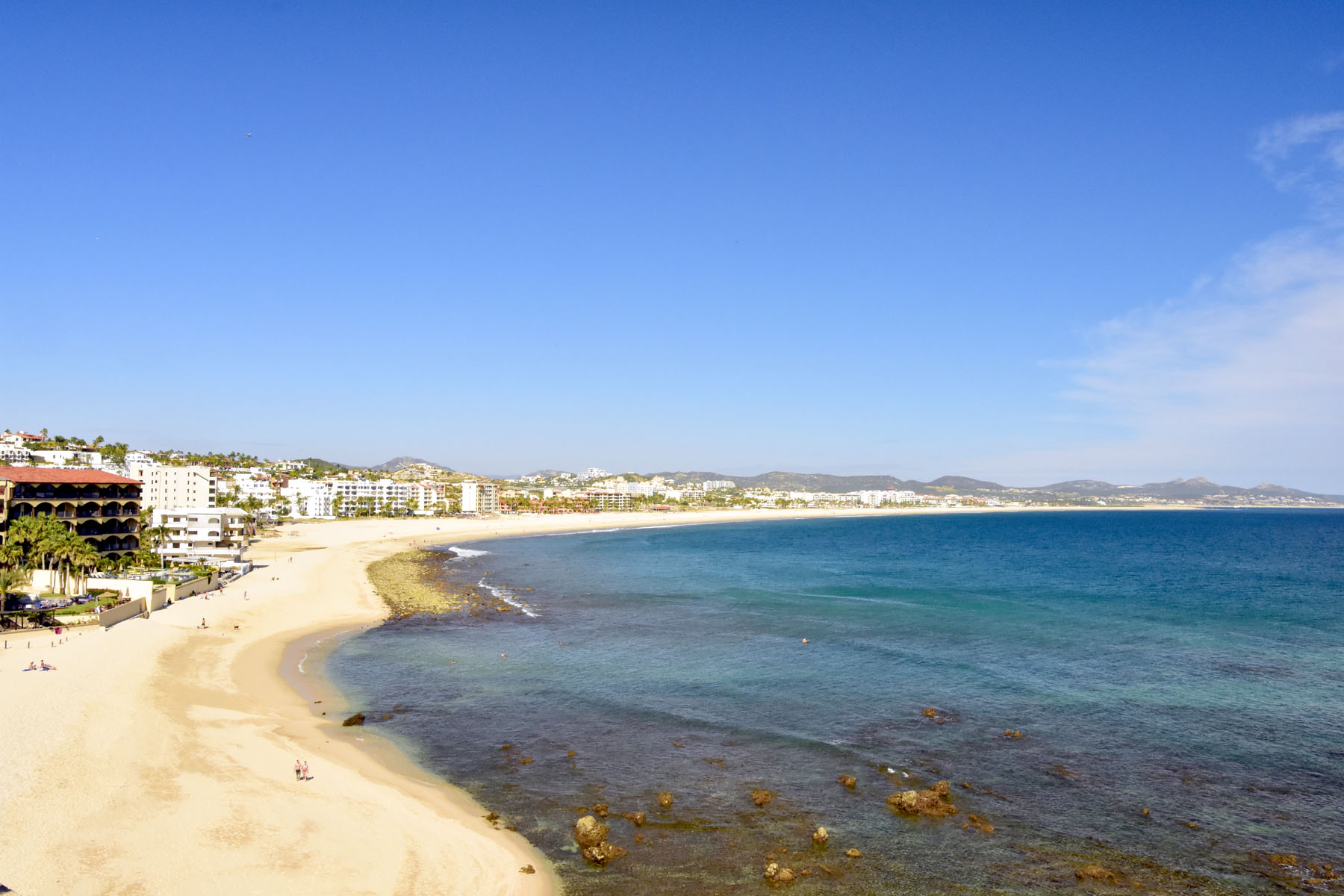 Cabo San Lucas – Beautiful beaches in the Gulf of California
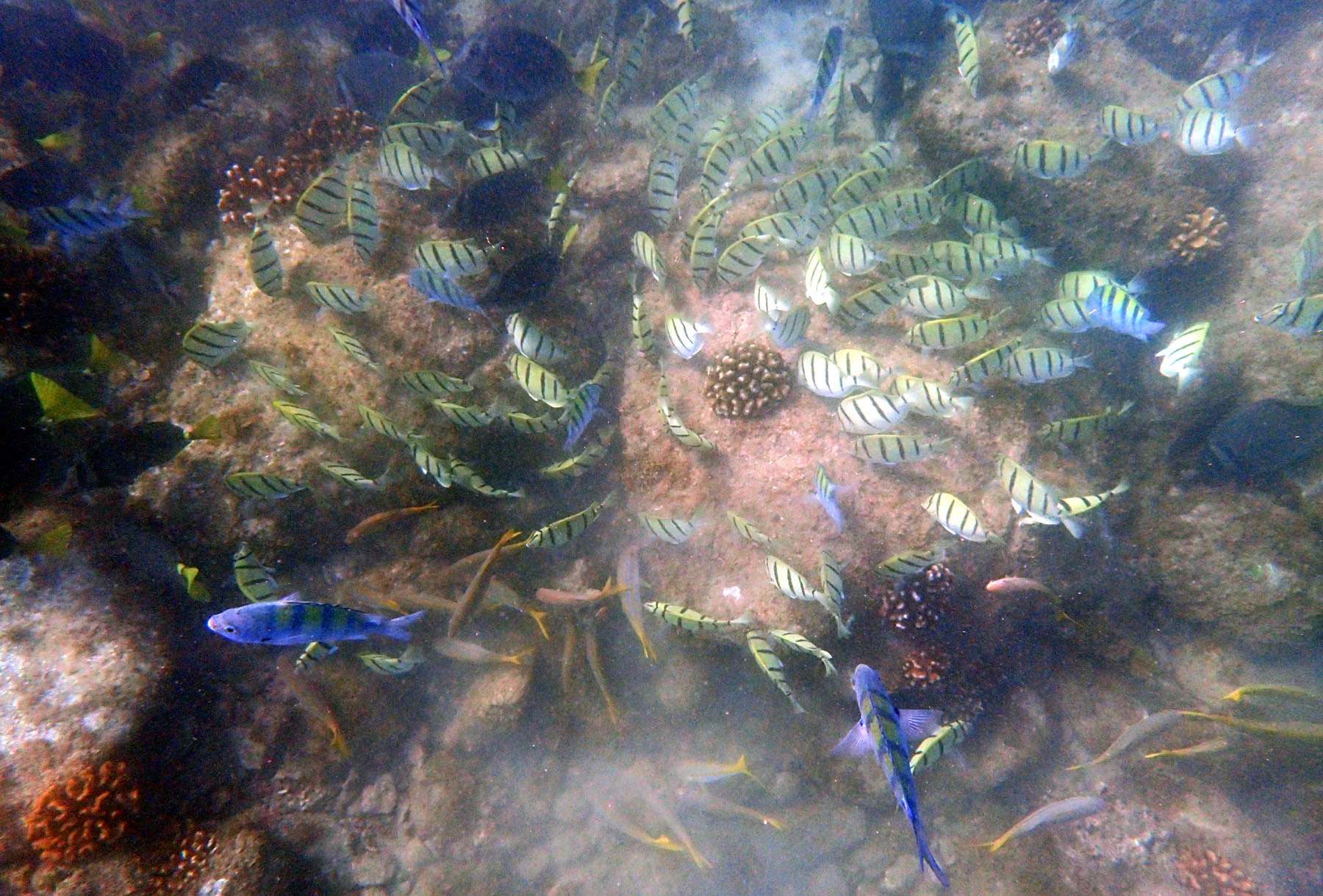 Cabo San Lucas – Snorkelling amongst lovely tropical fish
The next day was Christmas day and was again a sea day. The ship has been tastefully decorated for the festive season, not at all over the top. There is one Christmas display in the main plaza of the ship however, which is causing us some problems and that’s the collection of Gingerbread houses, see photo below. Each day, in front of this display, they provide a selection of wonderful festive cakes and biscuits, available all day. It’s almost impossible to walk past without indulging – in the grand scheme of things it’s not a bad problem to have!
 On Board – Display of Gingerbread Houses
Our second stop in Mexico was Acapulco on a lovely 30 Deg C sunny day – it was definitely getting hotter as we headed south. Acapulco de Juárez, commonly called Acapulco, is Mexico’s largest beach and spa resort. It is located on a deep, semicircular bay and has been a port since the early colonial period of Mexico’s history. It remains a major seaport today.
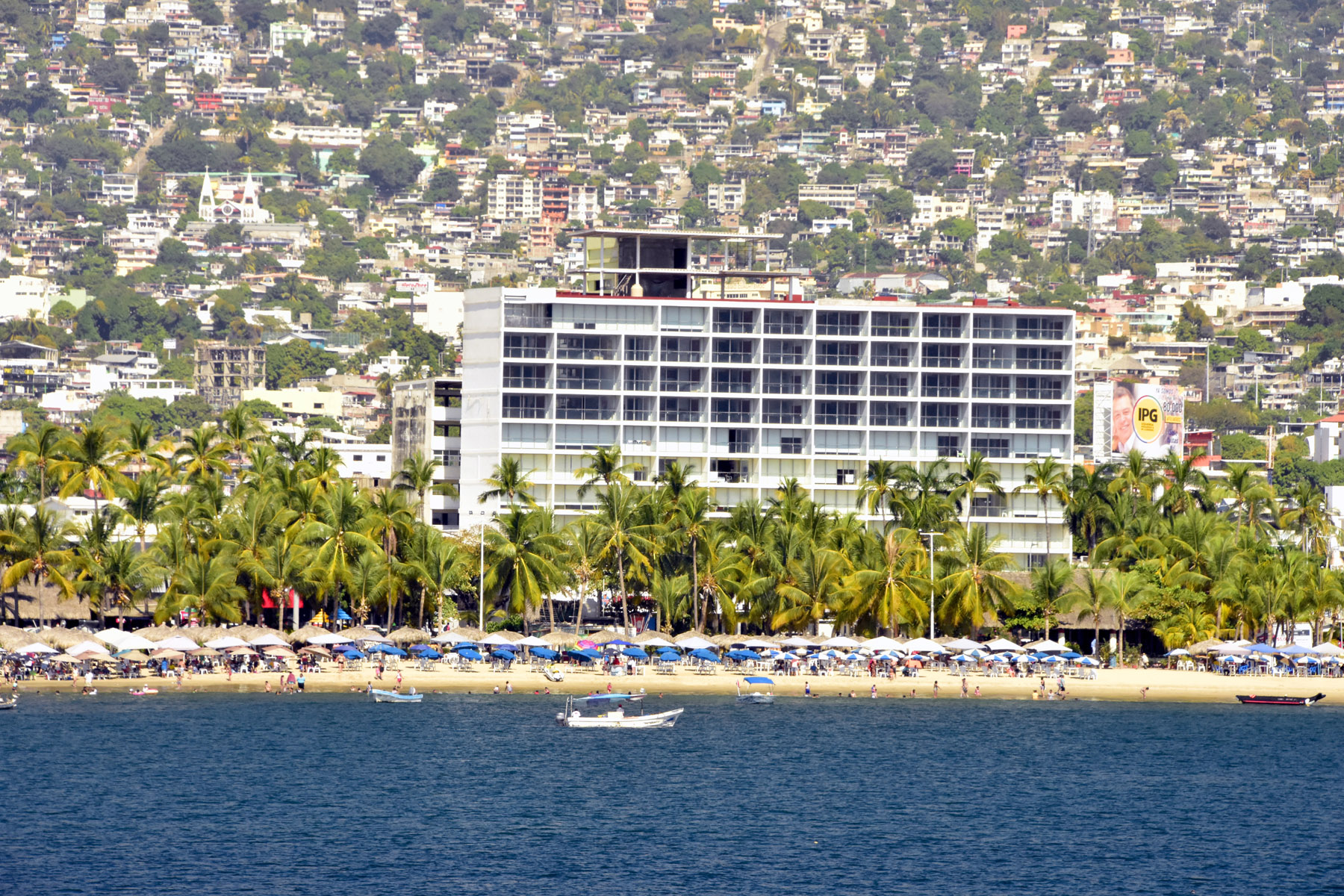 Acapulco – Up market beach front hotels, with the sprawling suburbs behind
Acapulco used to be a glamorous destination in the 1950s, when A-listers like Elizabeth Taylor would go there on holiday. Unfortunately, things have changed since the resort’s golden years as a result of a huge crime wave, fuelled by warring drug cartels. There is a heavy police presence in the tourist areas in order to reassure visitors. We took a walking tour of the old town and as well as a guide, we had 2 armed Tourist Police officers escort our group.
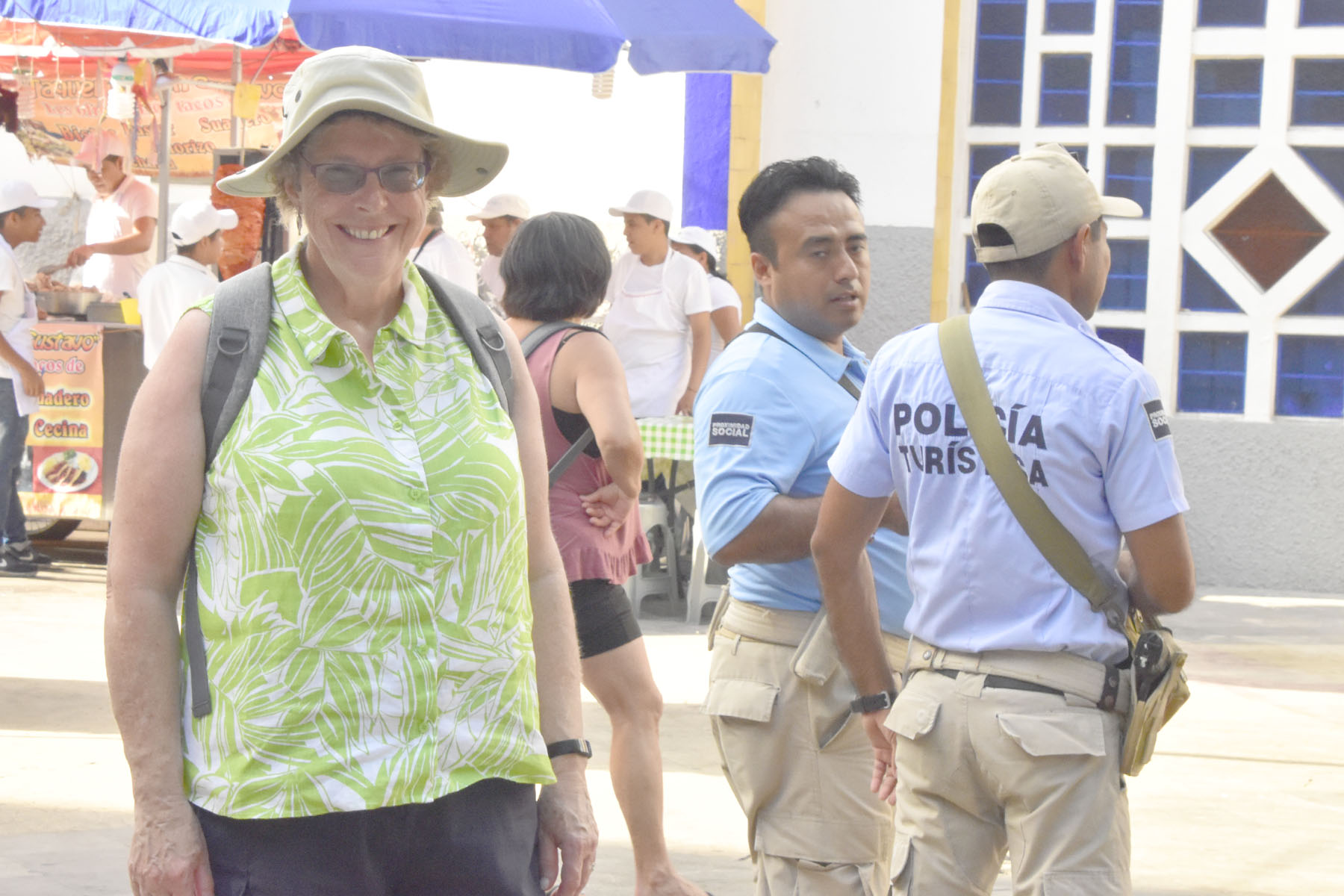 Acapulco – Charlotte and our armed Tourist Police guard
Having said that we had no problems and visited some interesting sites such as the San Diego Fort and San Felipe de Jesus Cathedral.
The fort was built by the Spanish in the 17th Century and has an interesting geometric design in the shape of a five pointed star.
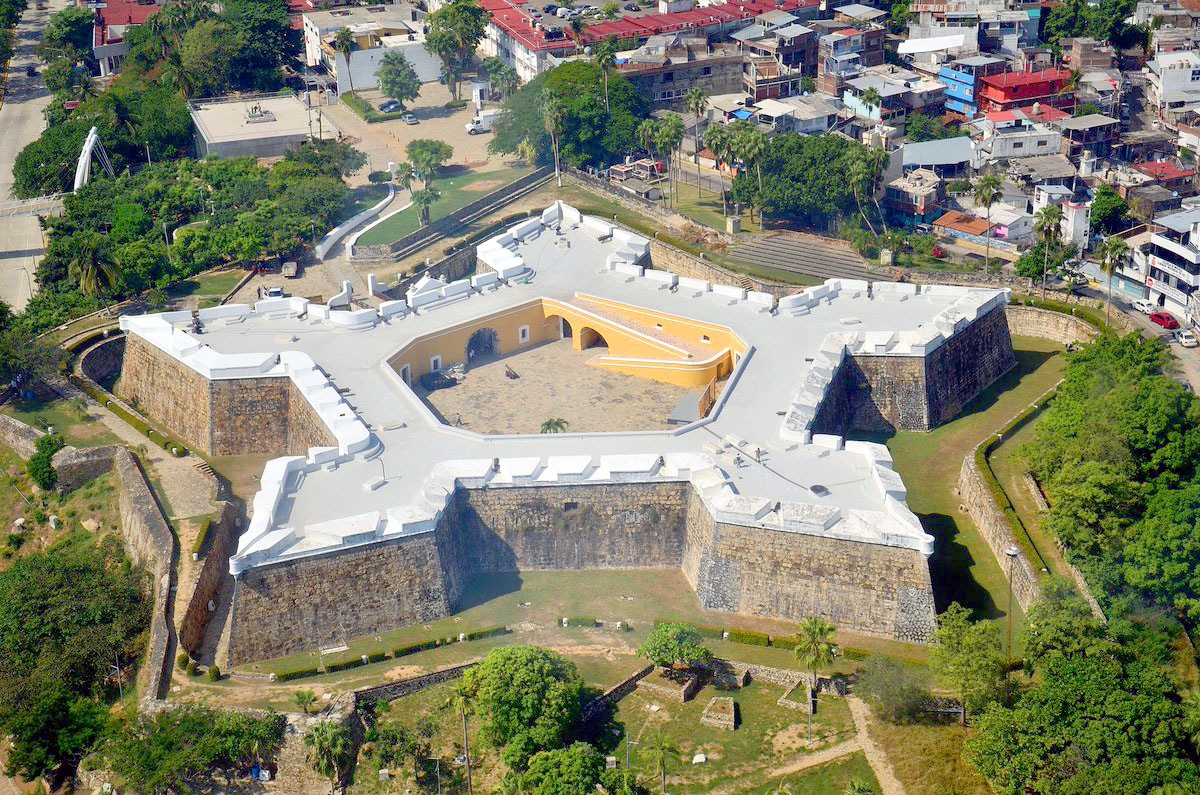 Acapulco – San Diego Fort
It was built to protect the trade between the Philippines and China. It was also a deterrent against British pirates who were very active in the Pacific plundering Spanish galleons loaded with treasure bound for Spain.
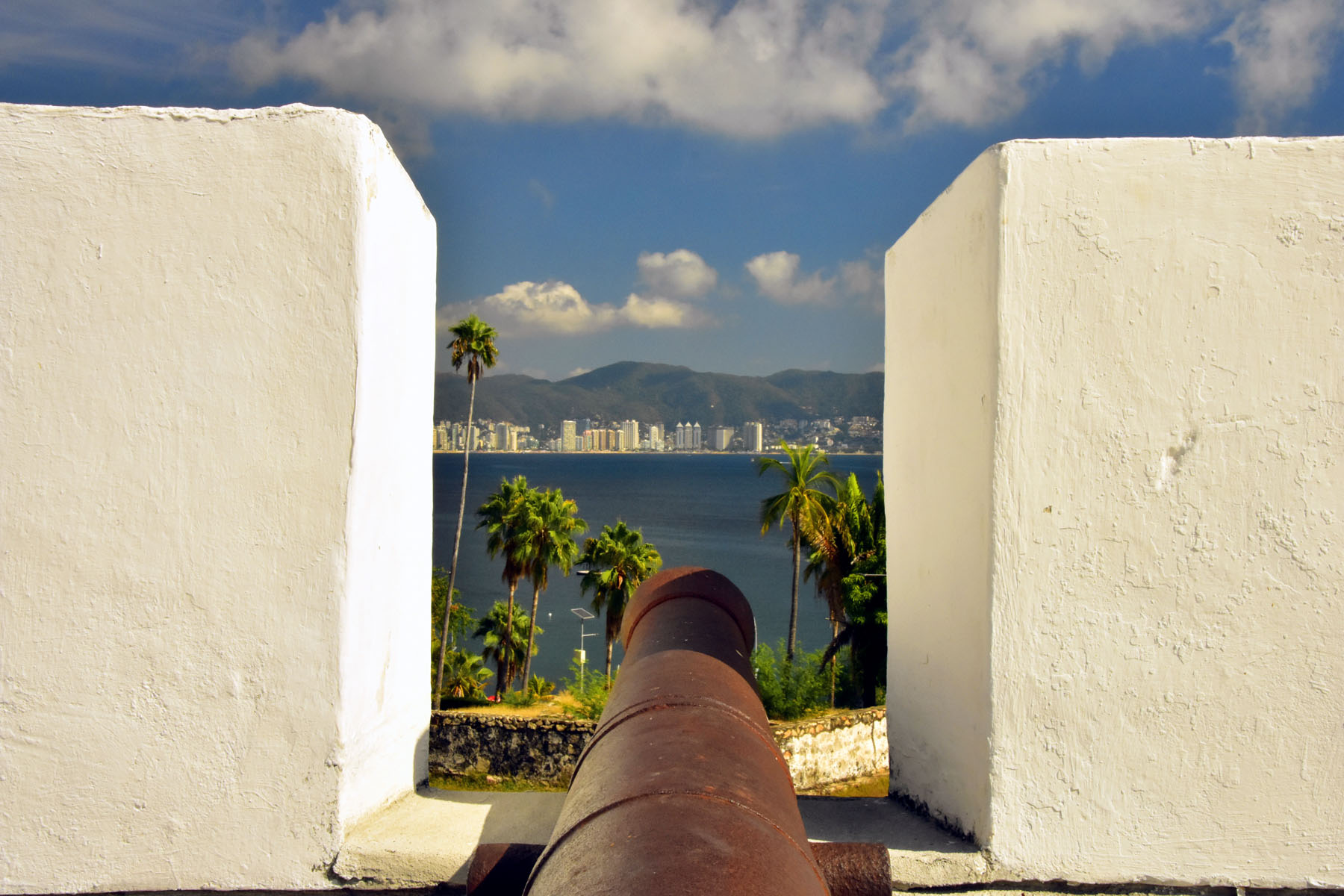 Acapulco – View from San Diego Fort across the bay
The Cathedral was built in 1936 and has an unusual construction for its time. It has a strong Byzantine influence with mosque-like turrets and domes and blue, gold and white colouring.
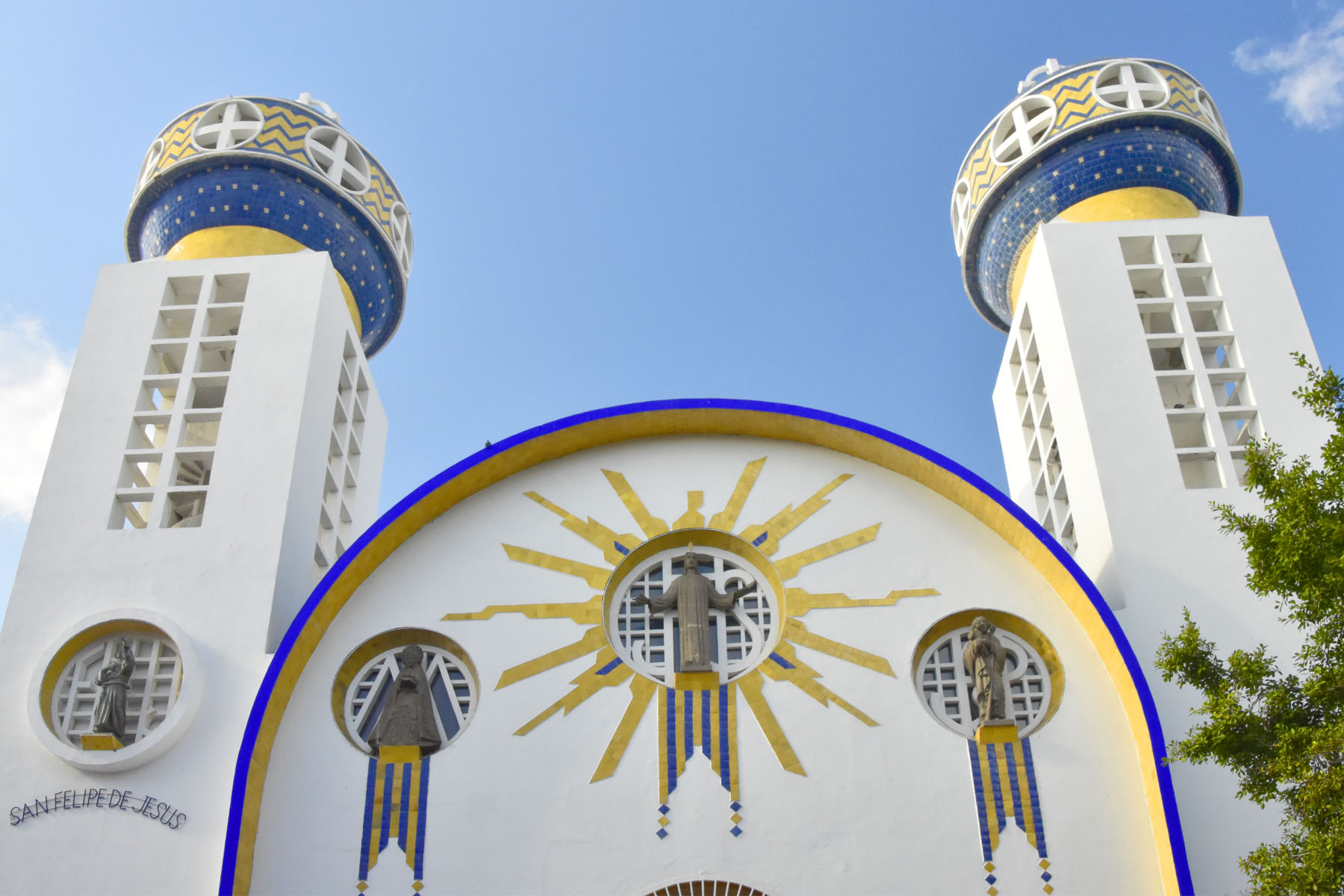 Acapulco – San Felipe de Jesus Cathedral
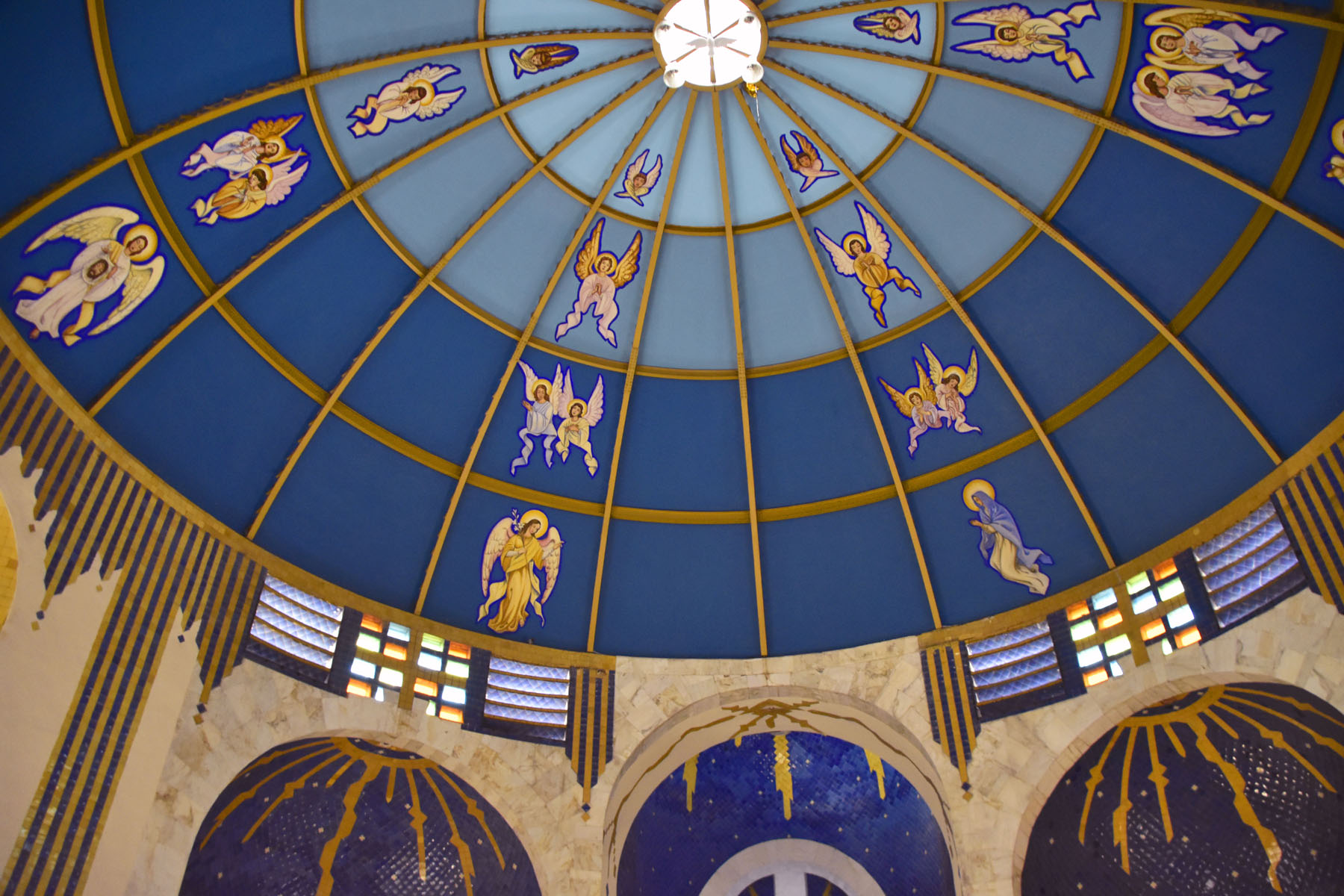 Acapulco – Inside San Felipe de Jesus Cathedral
Next on the itinerary was Guatemala and the beautiful colonial city of La Antigua. Like much of Central America, the region is well known for its Mayan culture which dominated the area for nearly 3,000 years until around 900 AD. The Spanish conquered the region in 1540 and La Antigua became the Spanish capital of Central America for over 200 years. It is now a UNESCO World Heritage site. Guatemala declared it’s independence from Spain in 1821. The country has a long history of authoritarian governments and only came under democratic rule in 1985. Today the country has a population of 15 million and is still relatively poor, primarily relying on agriculture for its economy. It is, however, slowly developing and wants to develop its tourism further.
Guatemala is a beautiful country with a landscape dominated by over 30 volcanos, of which 3 are still active. La Antigua is situated at 5,000 feet between three volcanoes, including the aptly named Volcán de Fuego (Volcano of Fire – 12,346 ft), which is still active and was continually belching out plumes of smoke.
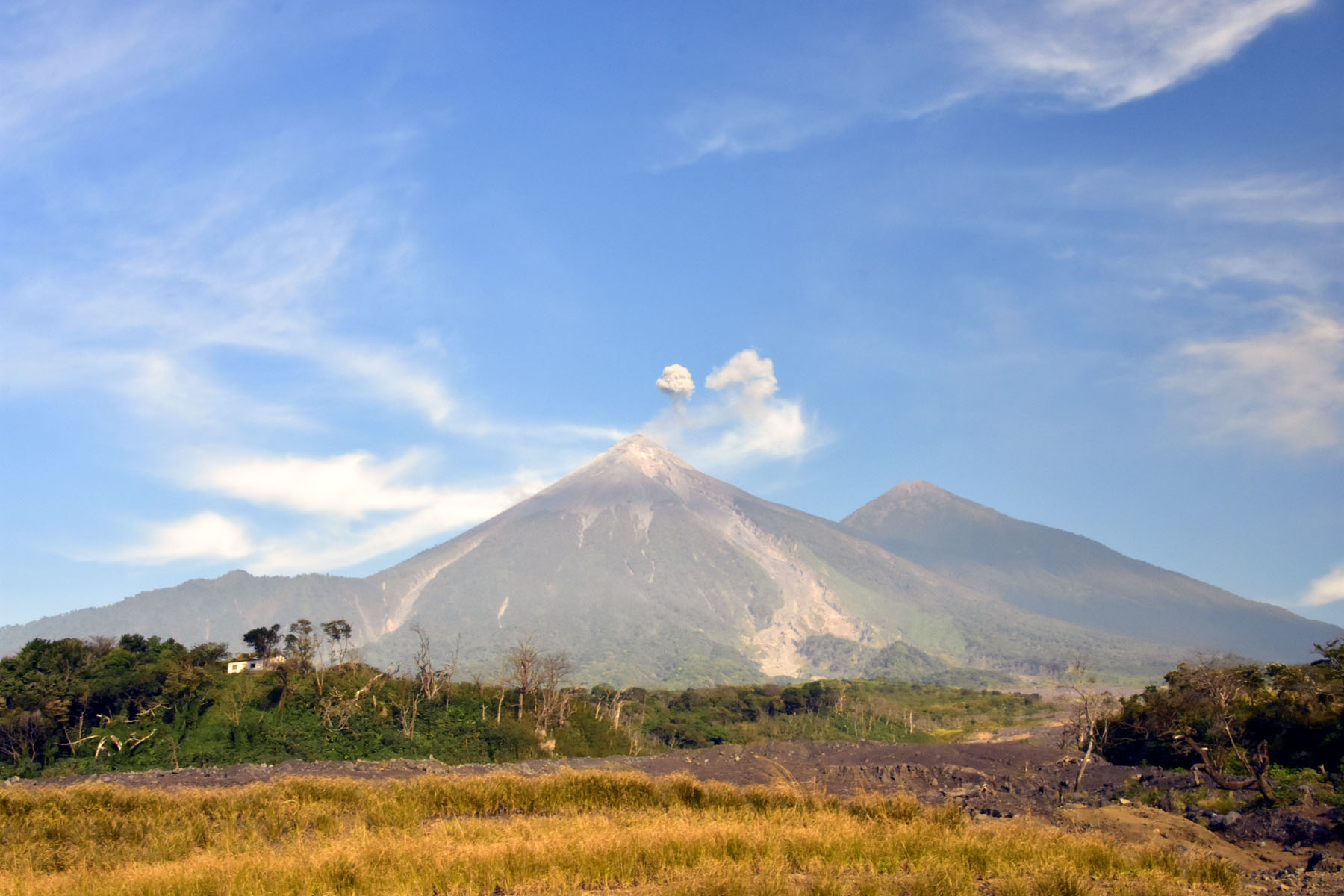 Guatemala – Volcán de Fuego (Volcano of Fire)
One of Guatemala’s important exports is coffee and on the way into La Antigua we visited a coffee Museum, which also produced it’s own coffee. It was fascinating to watch men turn over the coffee beans on the drying beds using rakes, which was repeated every daylight hour for 15 days, before the beans were roasted.
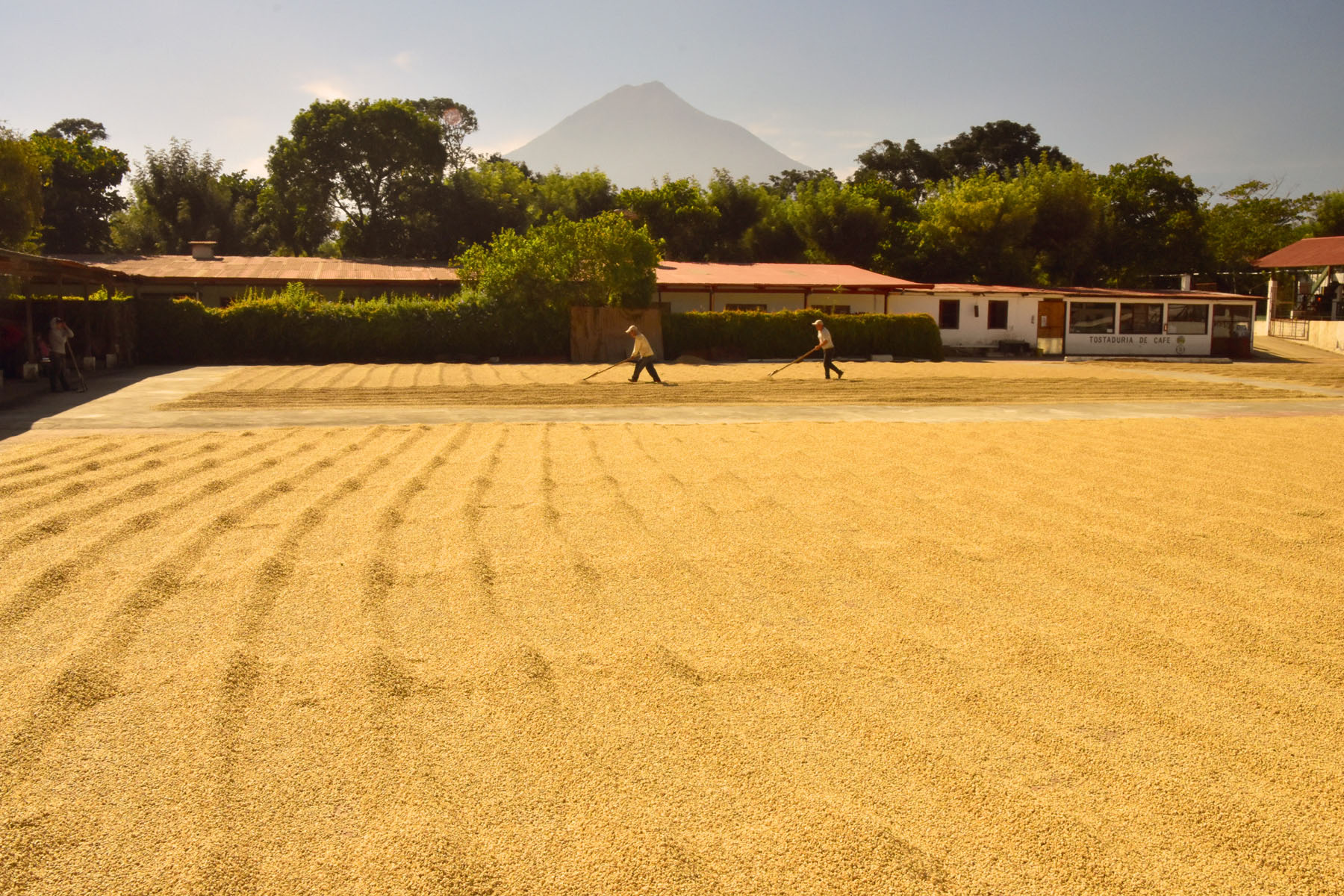 Guatemala – Coffee Beans being raked on the drying beds
La Antigua itself is a lovely colonial town, with beautiful churches, coloured houses, cobblestone streets and a bustling central plaza that houses many of the civic buildings, all overlooked by three volcanoes.
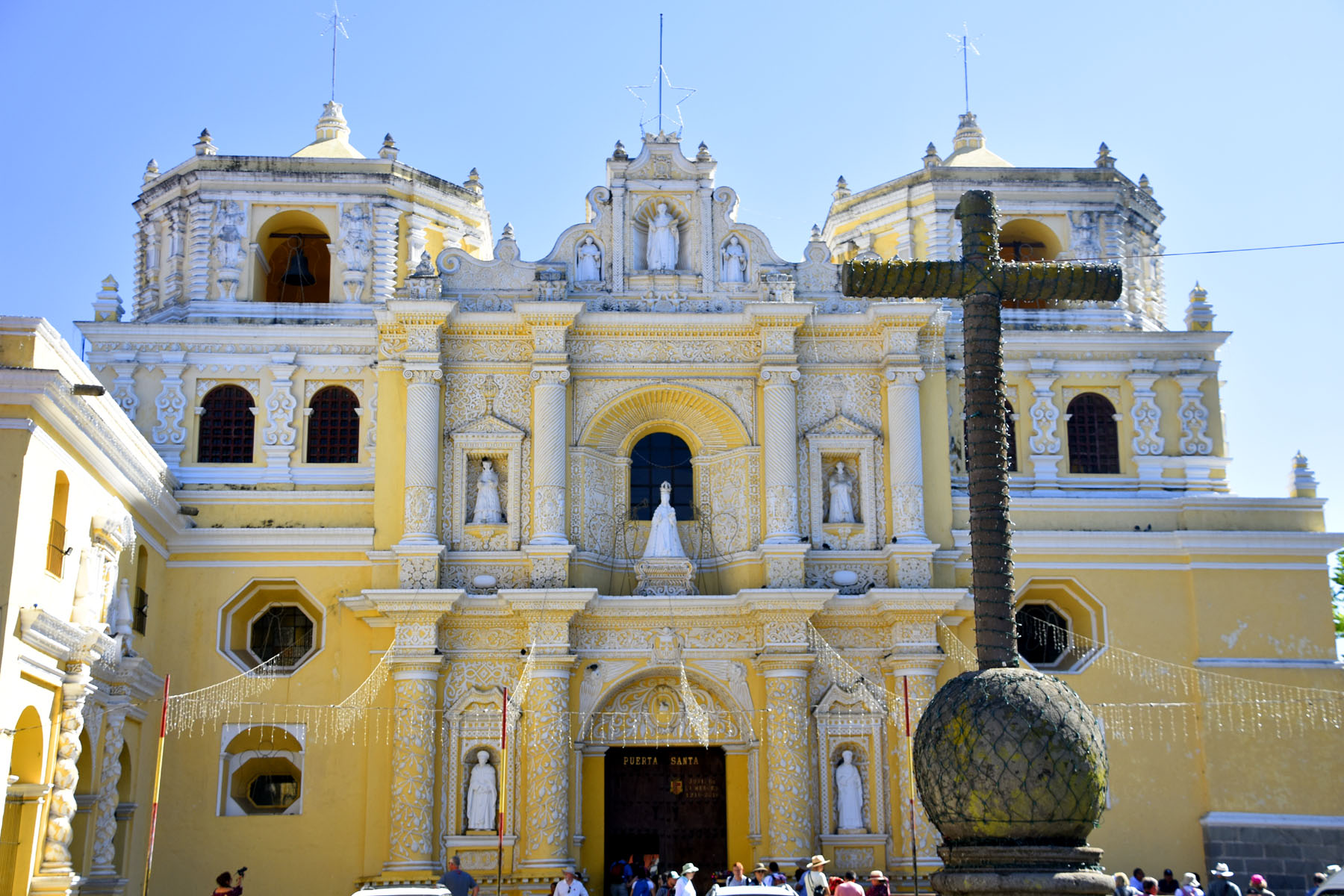 Guatemala – La Antigua, La Merced Church opened in 1767 and is one of the best preserved in the town, as it was built to withstand earthquakes.
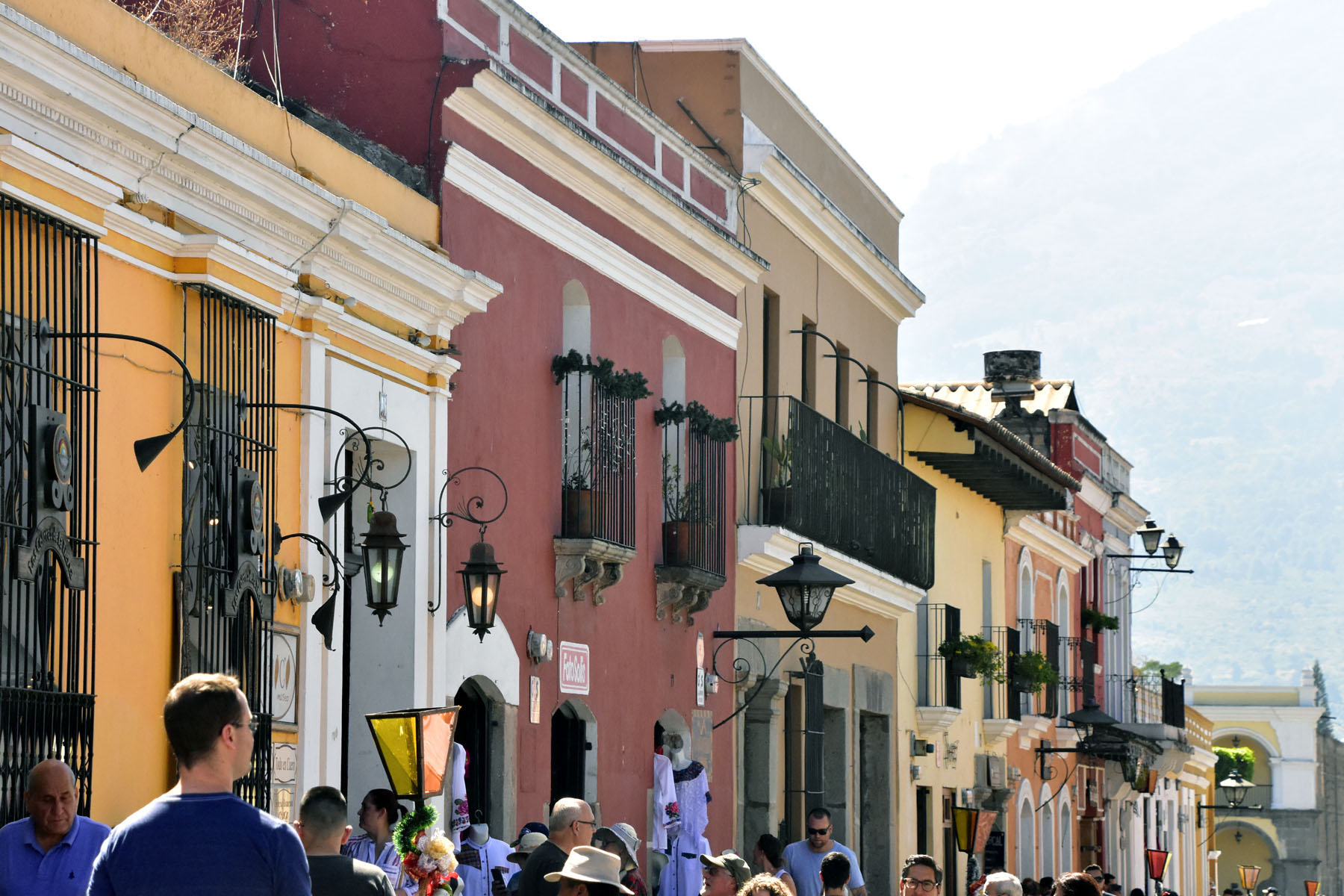
Guatemala – La Antigua, coloured houses with decorative ironwork around the windows.
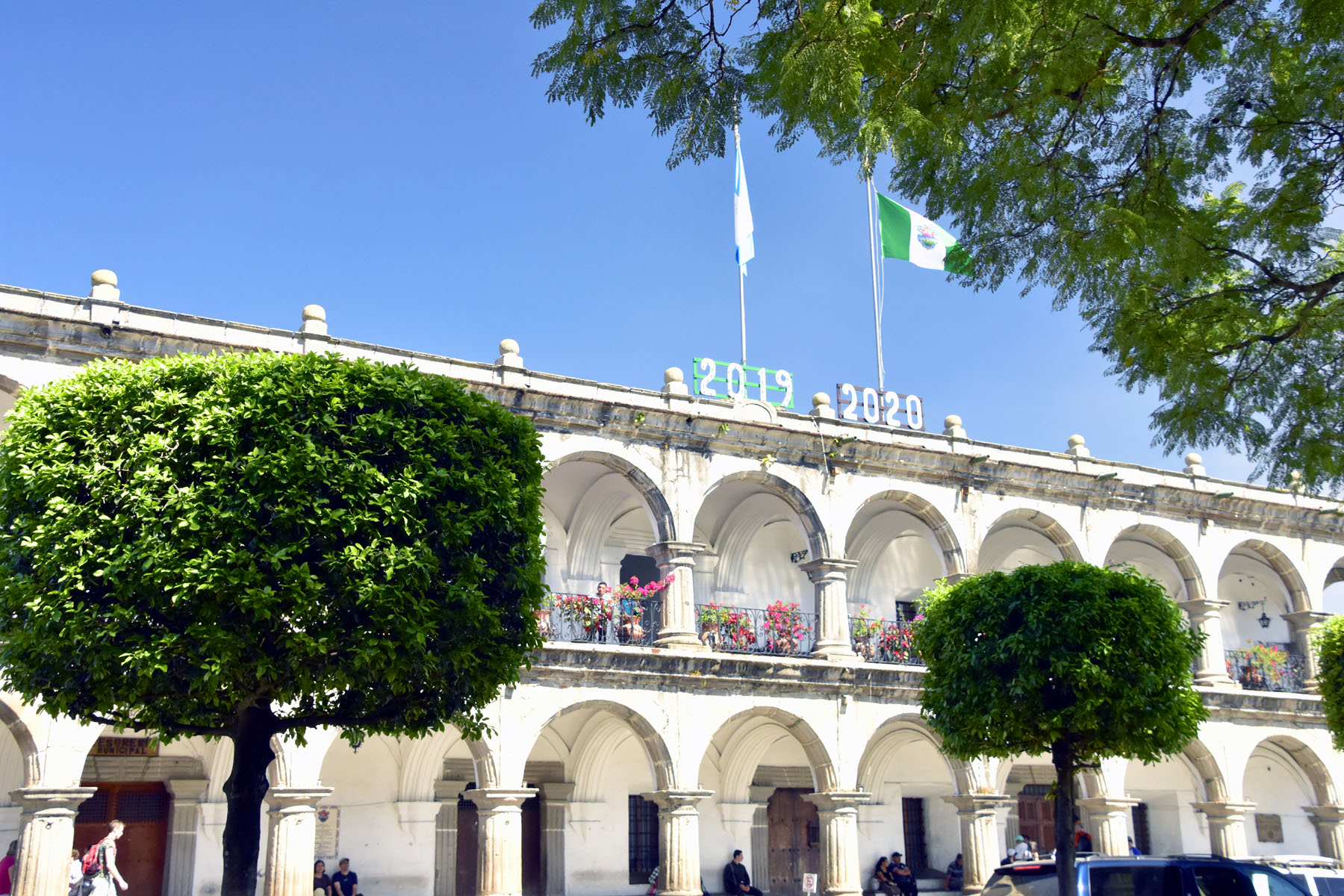 Guatemala – La Antigua, City Hall in the central plaza is prepared for the New Year celebrations.
The Santa Catalina Arch is one of the most prominent landmarks in La Antigua. Built in the 17th century, it originally connected the Santa Catalina convent to a school, allowing the cloistered nuns to pass from one building to the other without going out on the street.
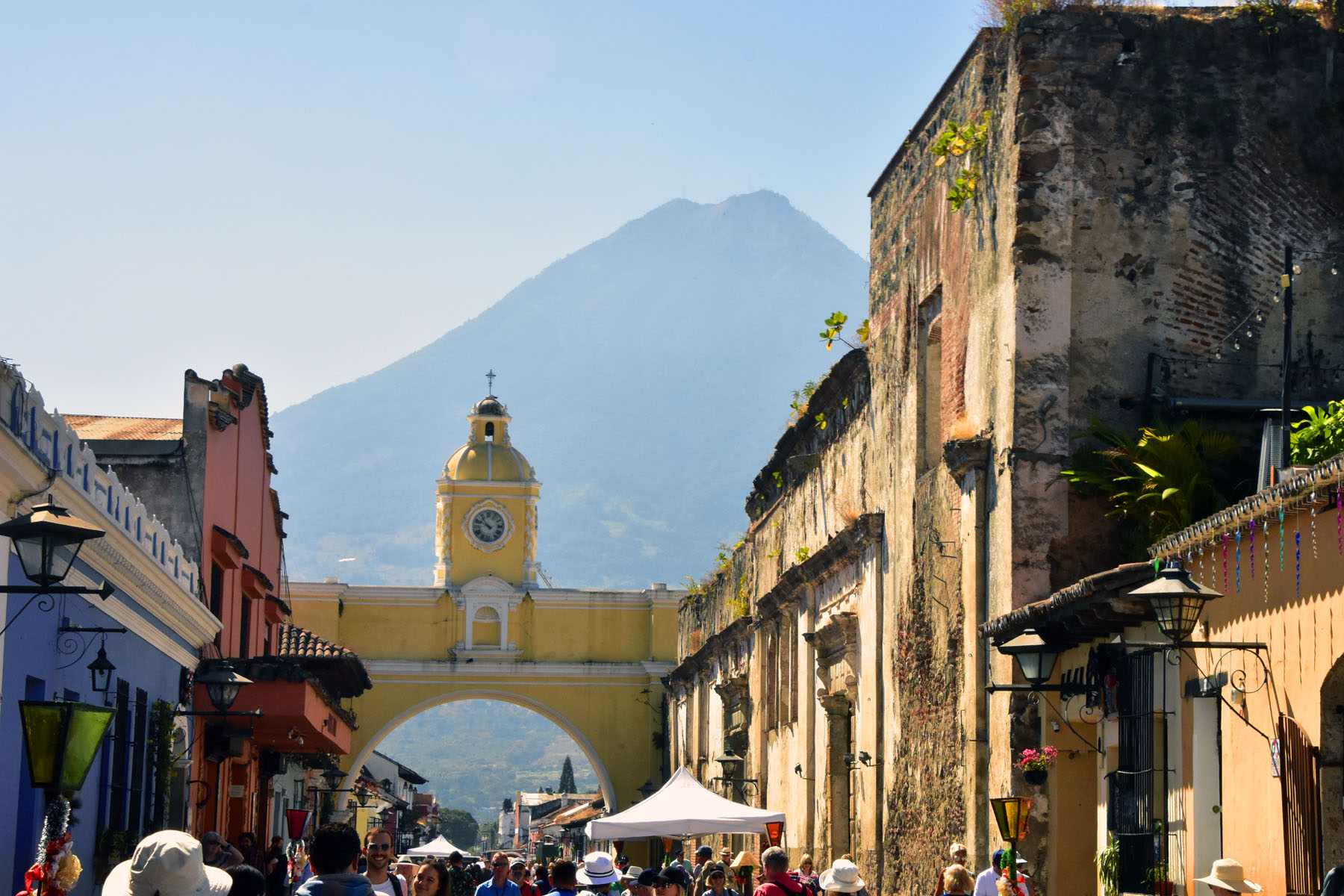 Guatemala – La Antigua, Santa Catalina Arch with the Volcano de Agua in the background.
Just to add more interest to this beautiful town, the ‘Chicken Bus’ is the only public transport available. ‘Chicken Bus’ is a colloquial English name given to these colourful, modified and decorated vehicles.
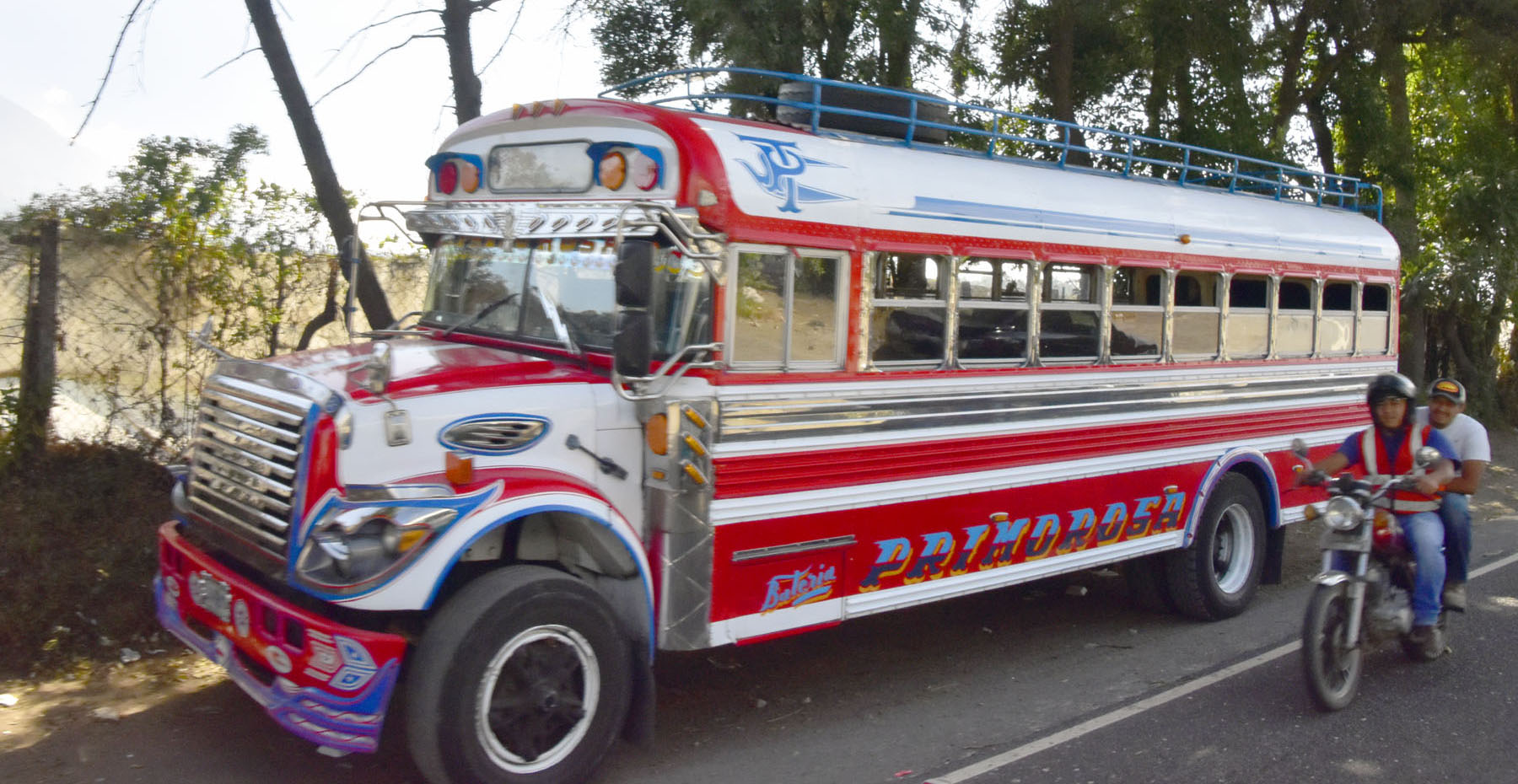 Guatemala – La Antigua: Chicken Bus
The next day we stopped at Nicaragua. As with many areas in Central America, Nicaragua has a strong Mayan culture, however, Aztec influences can also be found in the country as the Aztecs traded with the Mayans. Christopher Columbus landed in Nicaragua in 1502, but it wasn’t until 1523 that the Spanish colonized the region and founded the towns of Granada and Leon, the two colonial towns that exist today. Nicaragua finally became independent in 1883.
Since then the country has had a turbulent time. In 1855 an American Adventurer called William Walker seized power and declared himself president. However, he was driven out in 1857. Over the next 100 years a number of dictators ruled the country. The 1960s to the 1980s was a turbulent period with unrest and civil wars. Finally in 1990 the opposition gained control over the Sandinistas, which heralded the start of a modern democratic era. However, Nicaragua remains the poorest and with a population of just over 6 million, one of the least densely populated countries in Central America. It has a mainly agriculture based economy, but they are slowly building their tourism industry.
Nicaragua is the largest country in Central America and is a similar size to England. It has a beautiful landscape, with it’s dominant physical feature being Lake Nicaragua. At 3,200 square miles (about the size of Devon and Dorset combined) it is the largest lake in Central America. Located on the lake is Ometepe Island, home to around 40,000 people and two volcanoes, one of which is active.
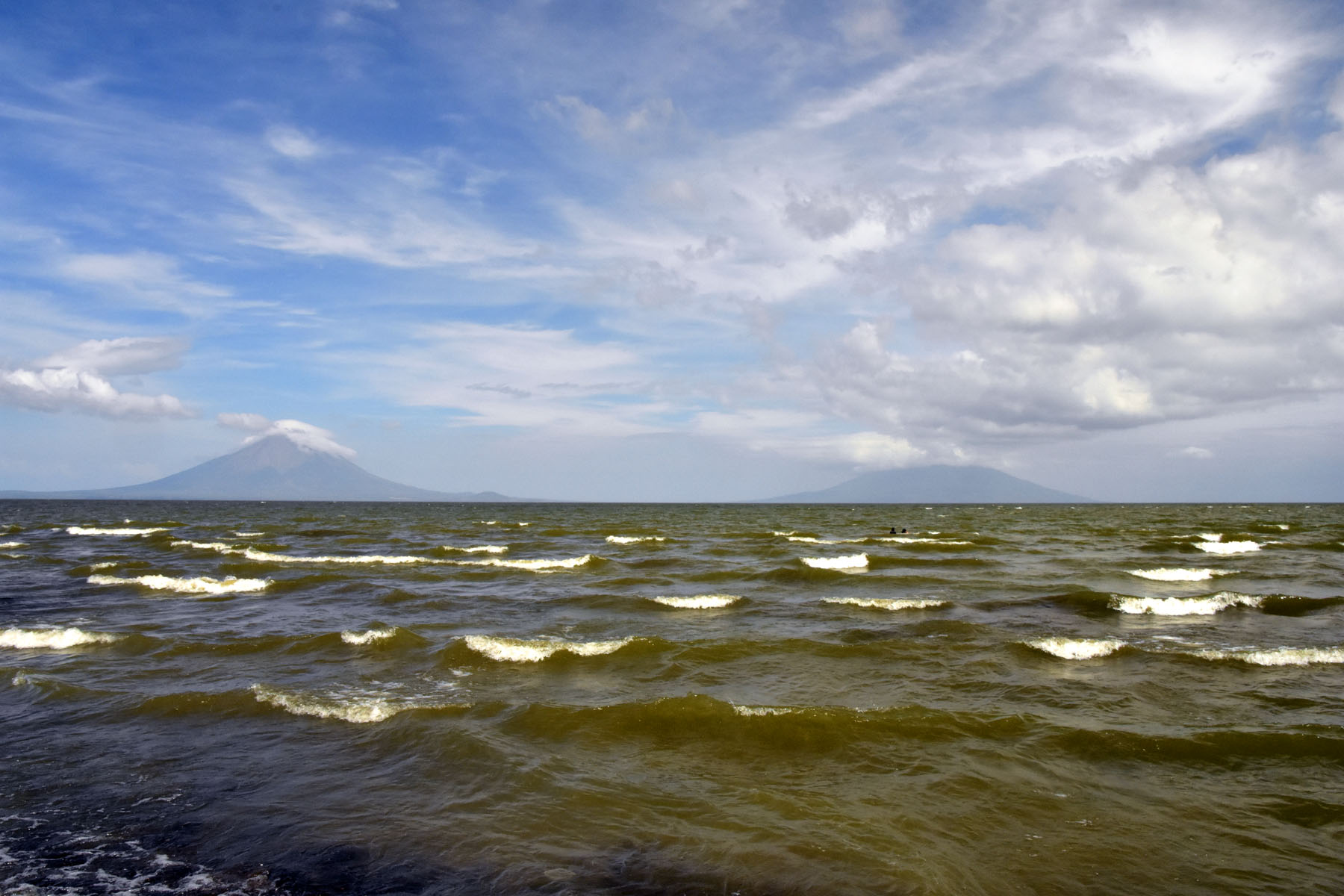 Nicaragua – Lake Nicaragua and the twin volcanoes on the Island of Ometepe.
We visited Granada, which is the oldest colonial city in Nicaragua. It is located on the north west side of Lake Nicaragua. Its colonial buildings in pastel shades, many churches, interesting history and relative safety make it an important tourism destination.
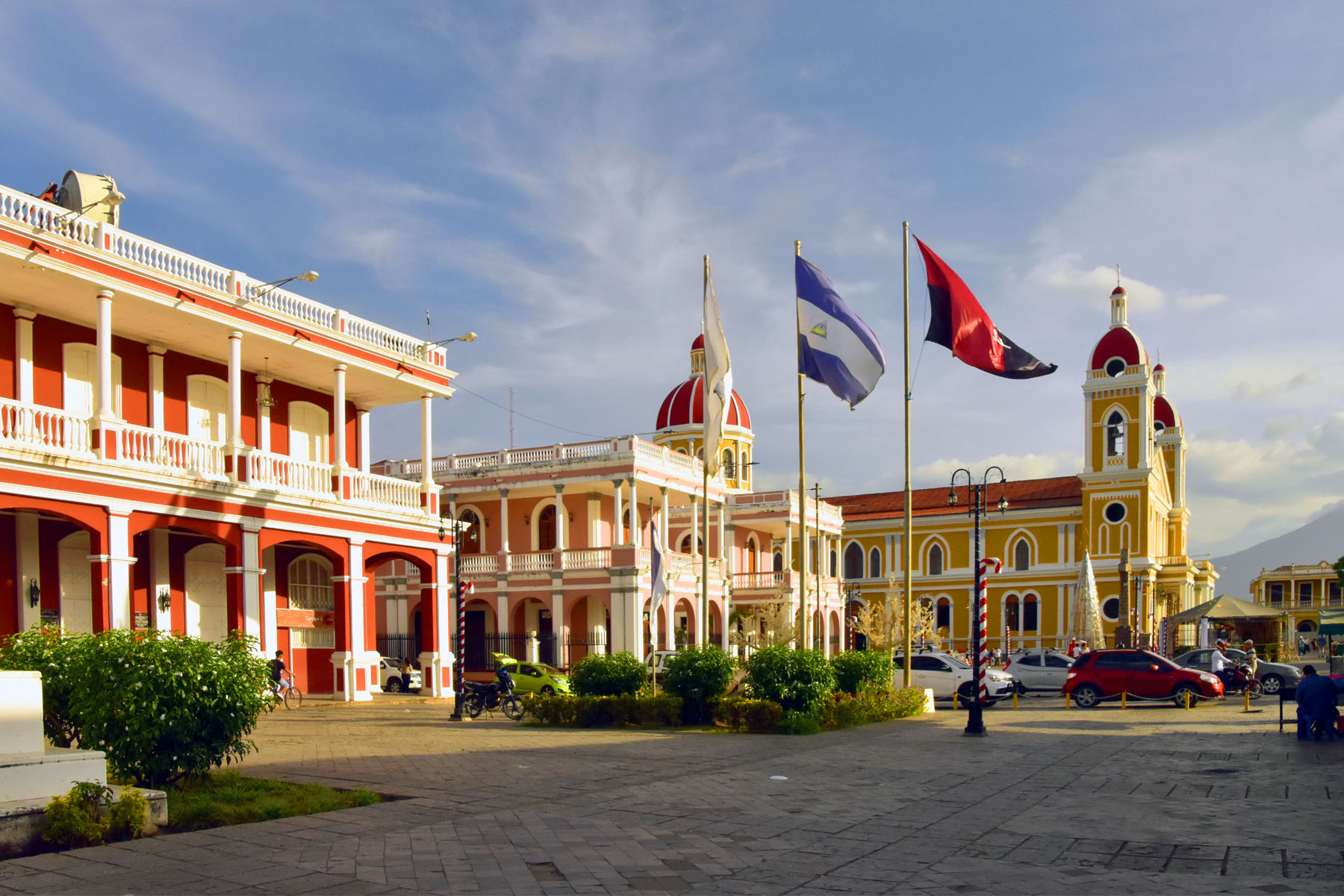 Nicaragua – The main square in Granada with the Our Lady of the Assumption Cathedral in the background.
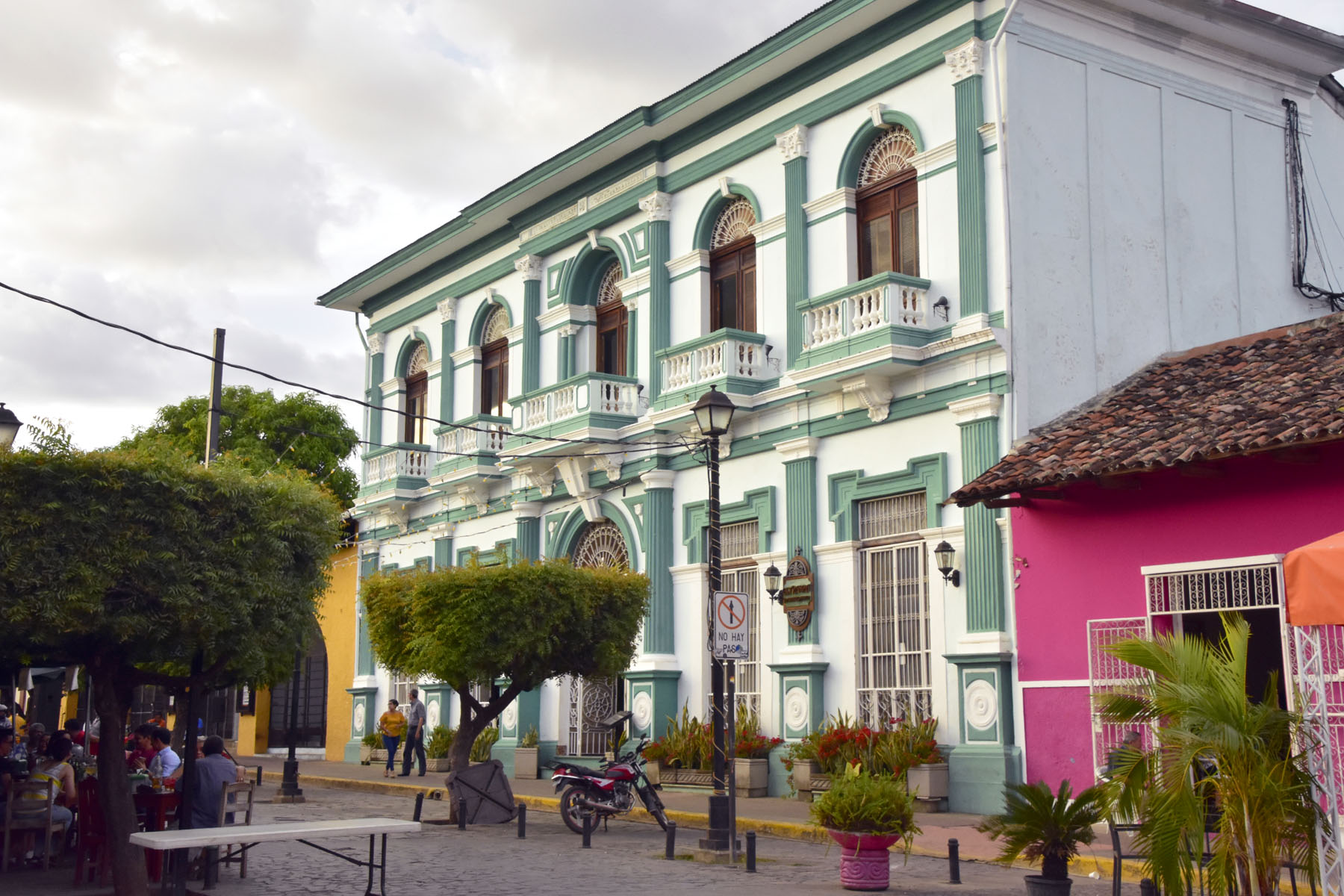 Nicaragua – One of Granada’s colourful colonial buildings
The next port of call on the last leg of our tour is Costa Rica, more to follow….
 Charlotte & Graham's Travels