We arrived at Westport, our second destination in the Olympic Peninsula, to be welcomed by some dry sunny weather. Westport is a small beach town located on a peninsula on the south side of the entrance to Grays Harbor from the Pacific Ocean. It is popular with visitors for its fishing, sailing, beaches and local seafood.
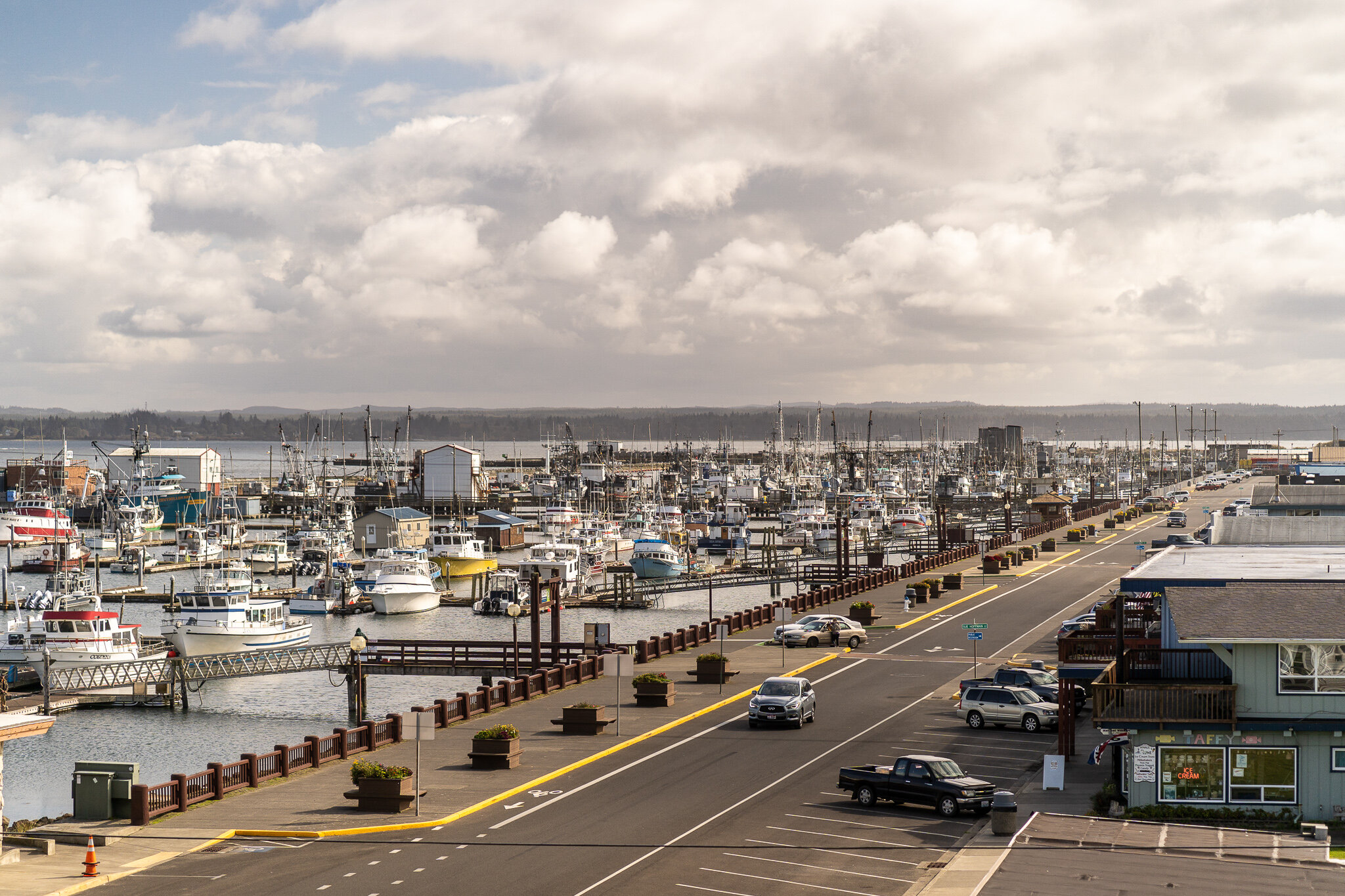 Westport Marina
The first couple of days we spent exploring a stretch of Pacific coastline north of Westport, which included two really interesting State Parks.
Pacific Beach State Park is a small park that offers simple facilities and access to a vast sandy and sometimes windy beach.
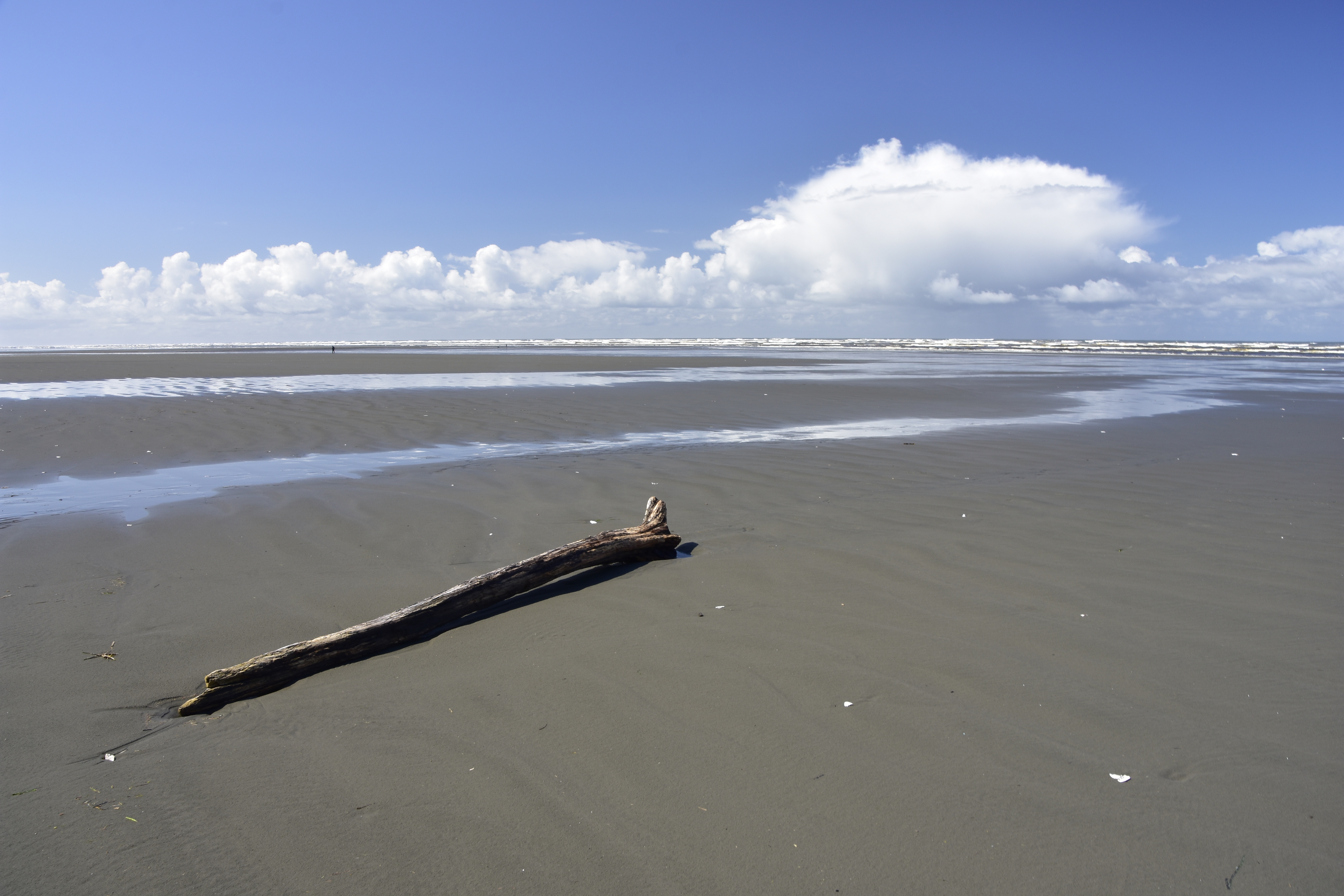 The huge expanse of Pacific Beach
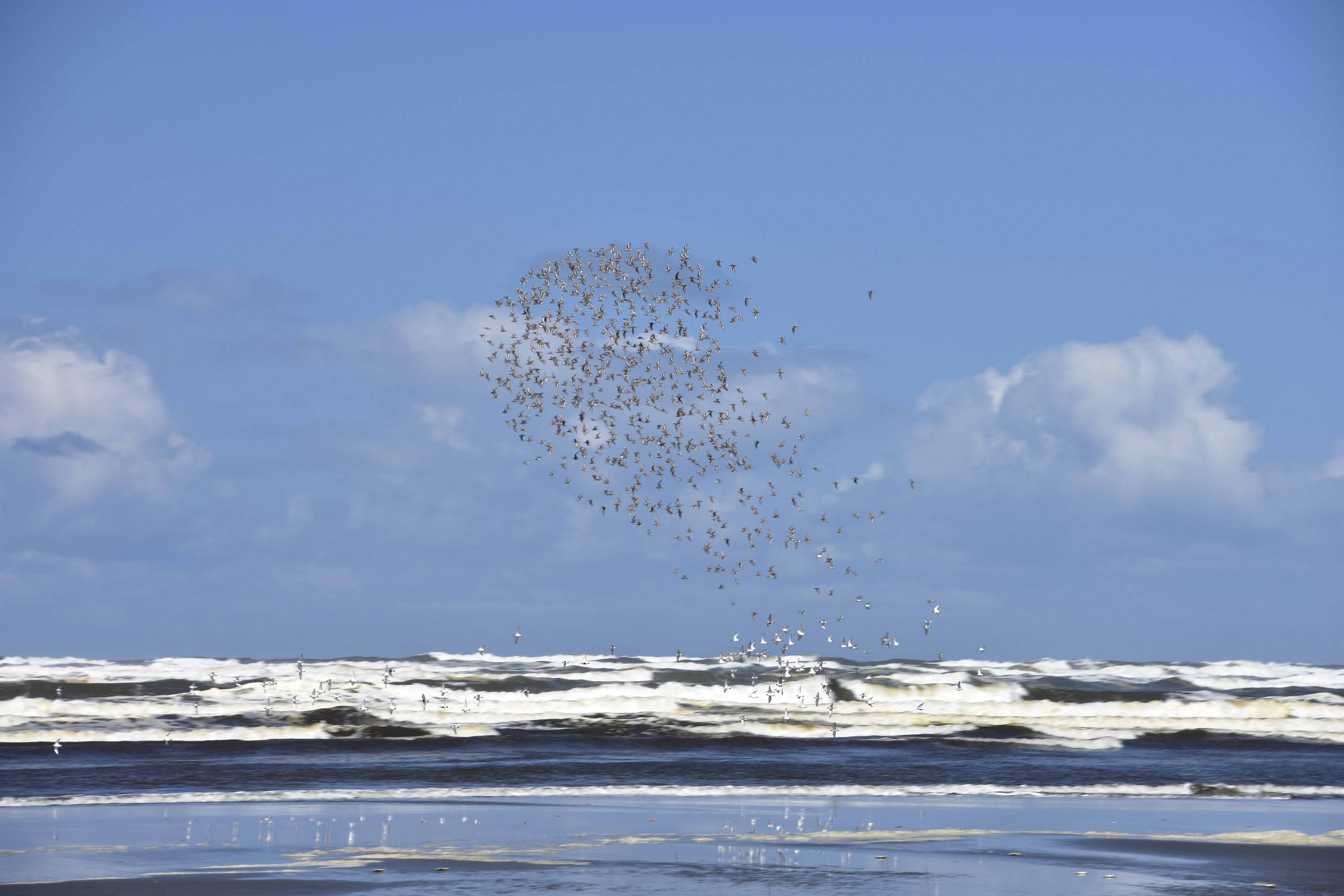 A murmuration of Western Sandpipers over the sea
When we walked down onto the beach we noticed a crowd of people and vehicles in the distance. Charlotte went over and harangued a couple of lads and asked them what they were doing. They were fisherman digging for Razor Clams. These fishermen are allowed to use the beach for harvesting Razor Clams for a few months a year, on specific days for about 4 hours at a time. The experienced fishermen know where to dig, using tell-tale signs left by the clams. They then sell the clams on the beach that day.
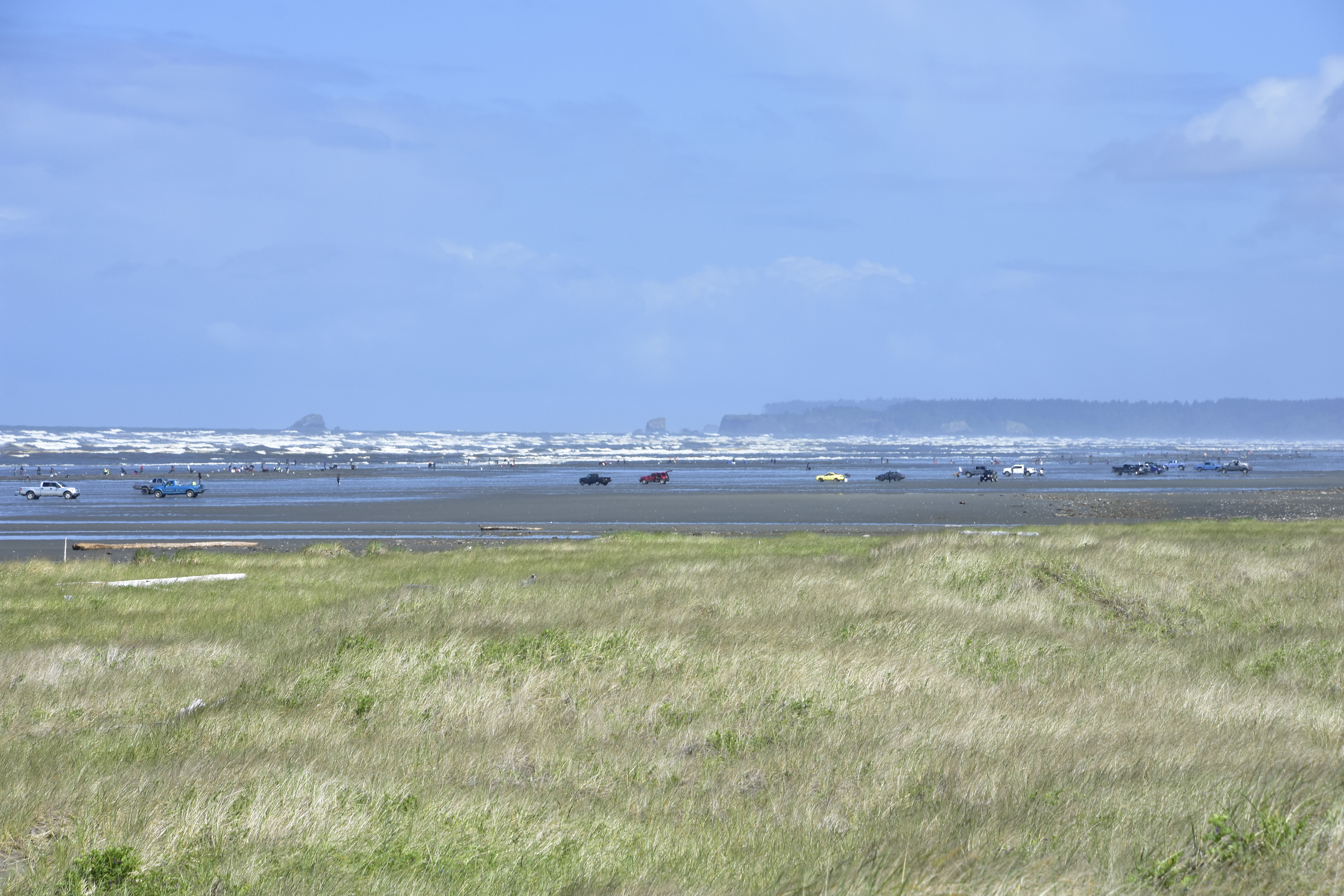 A large group of people and vehicles on the beach.
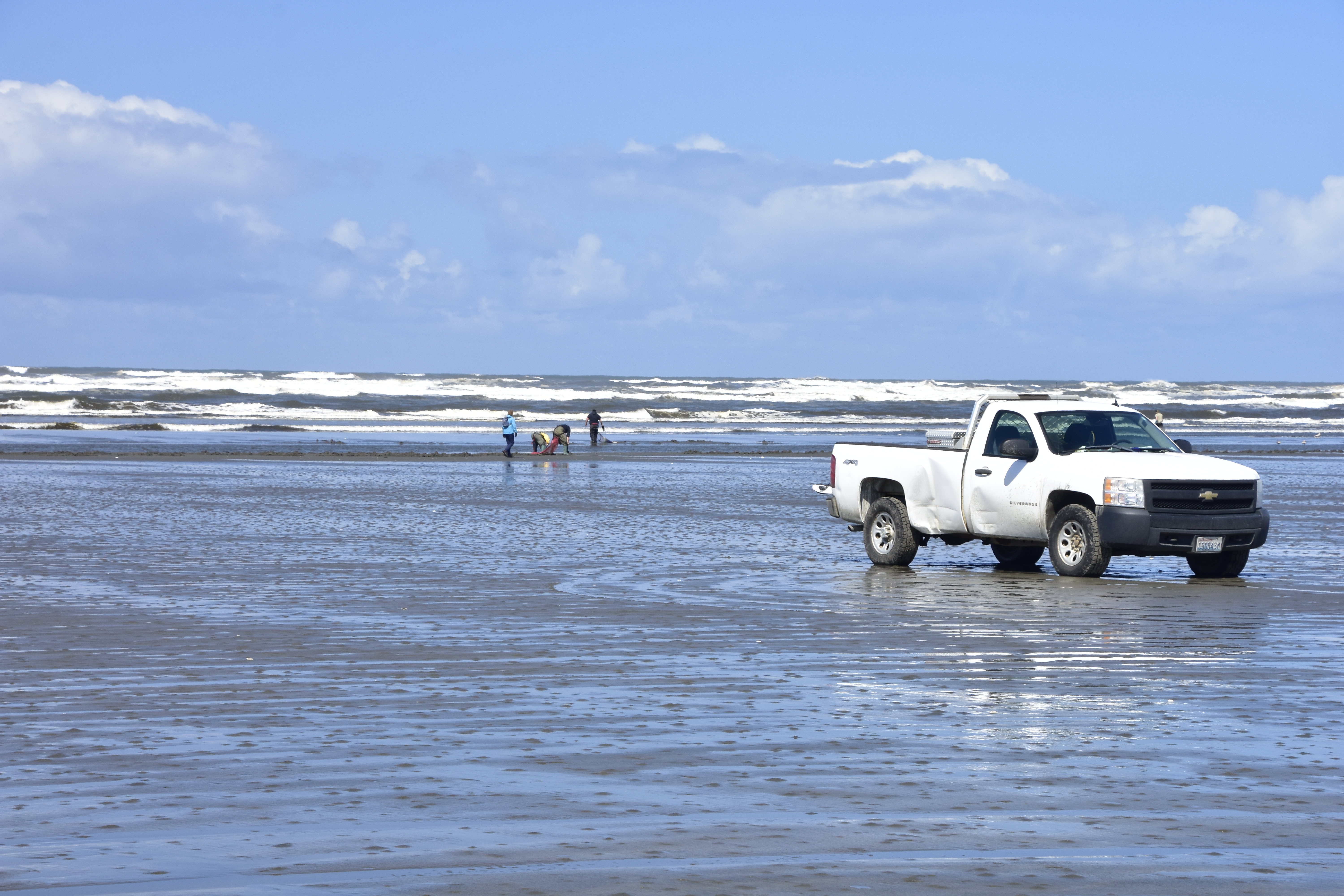 Charlotte is determined to find out what’s going on.
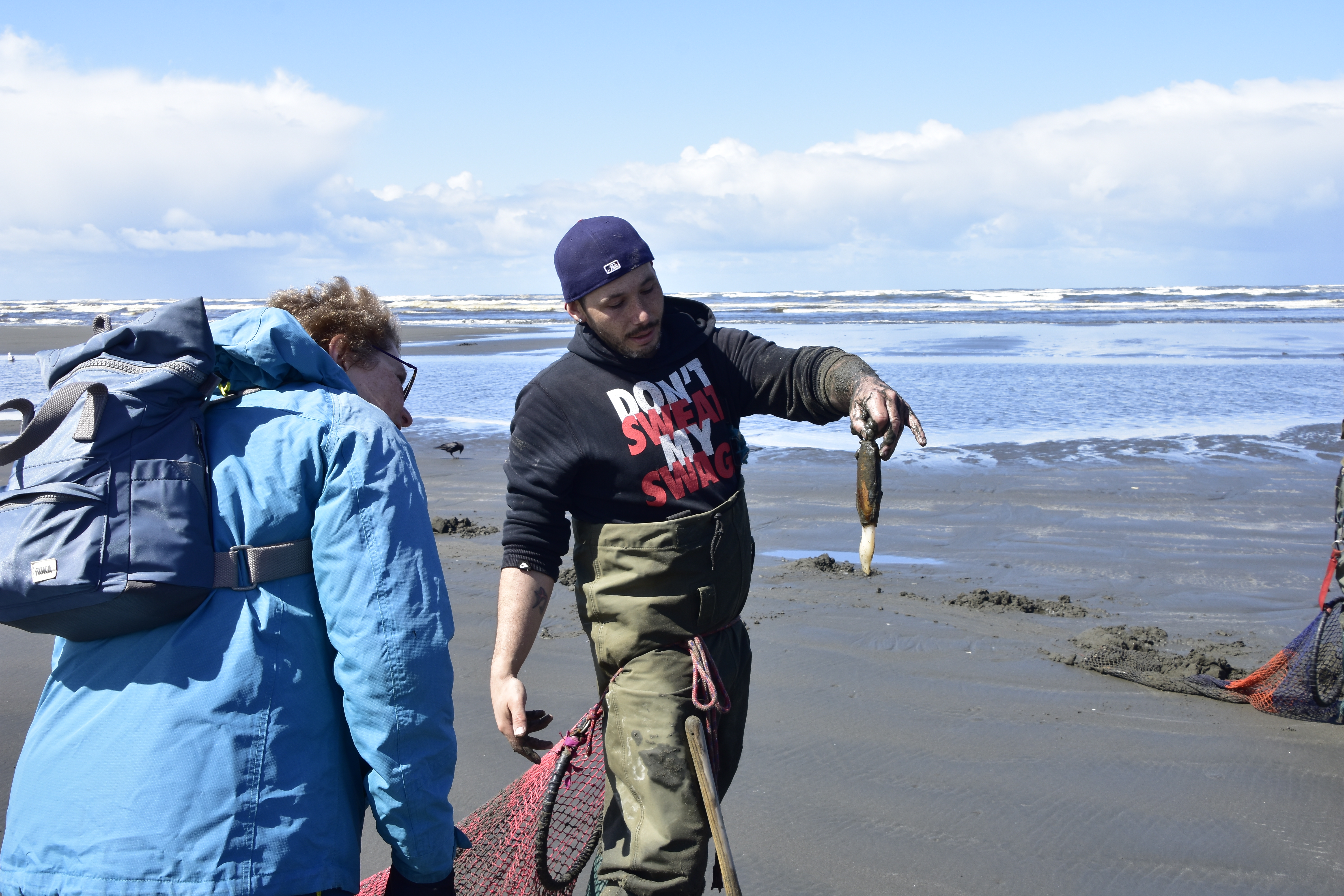 The Razor Clam is a very popular shellfish in Washington and is the principle ingredient in Clam Chowder.
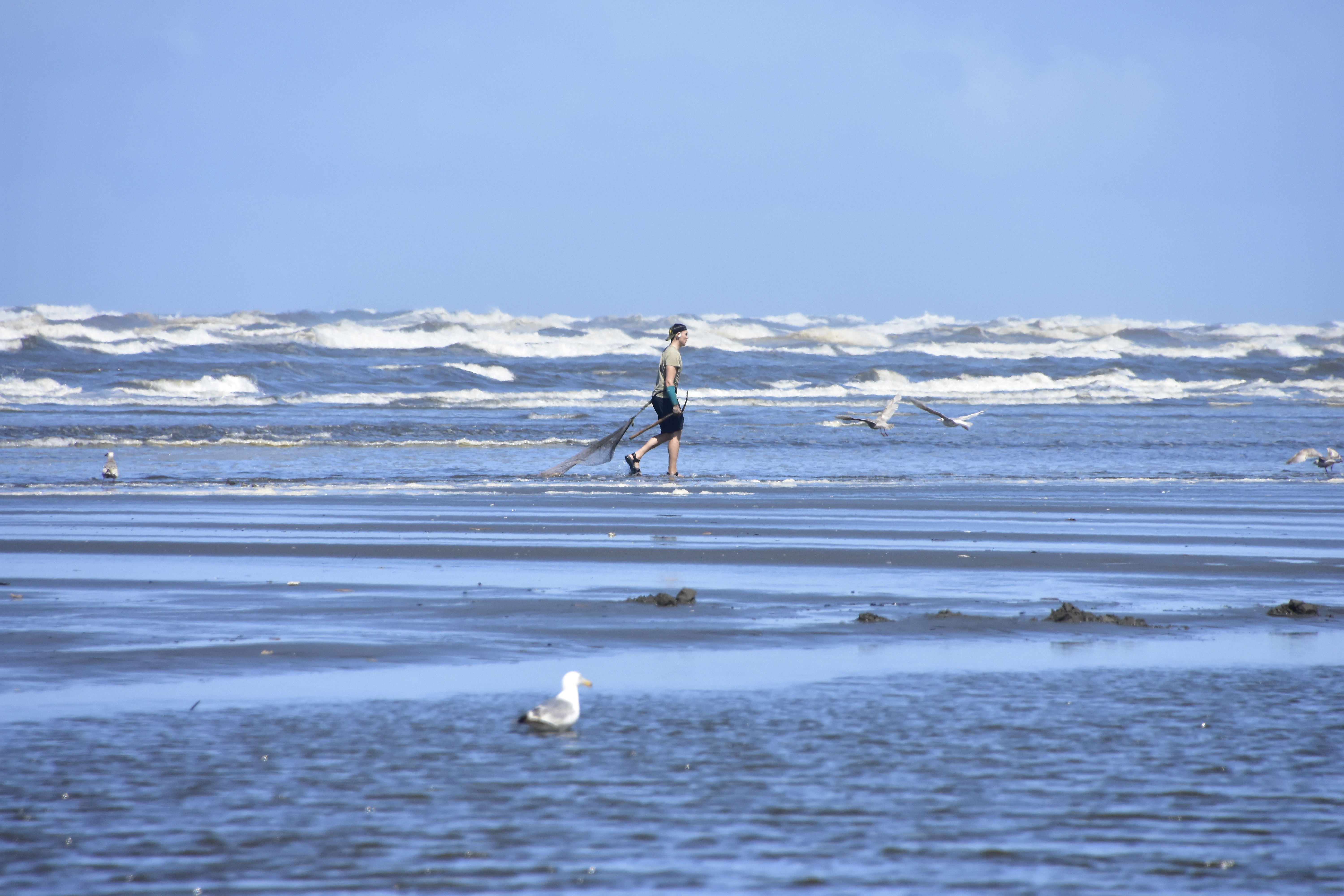 Another fisherman searching for Razor Clams in the shallows.
Griffiths-Priday State Park is located on the Pacific coastline where the freshwater River Copalis flows in to the Pacific Ocean. We walked a 2-mile trail in the dunes alongside the river to the headland and beach.
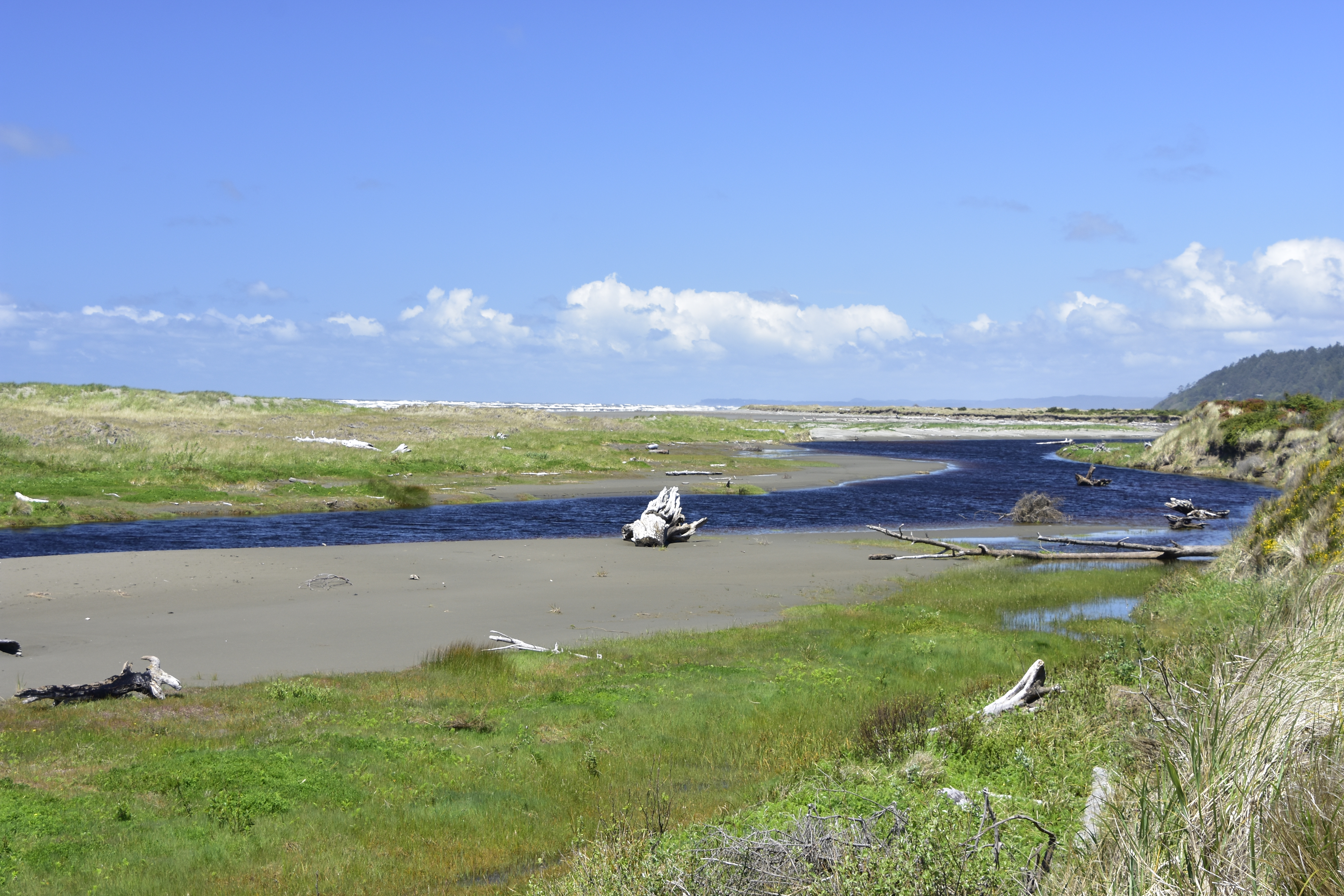 The River Copalis winds its way down to the sea. The crashing waves of the Pacific can be seen on the horizon.
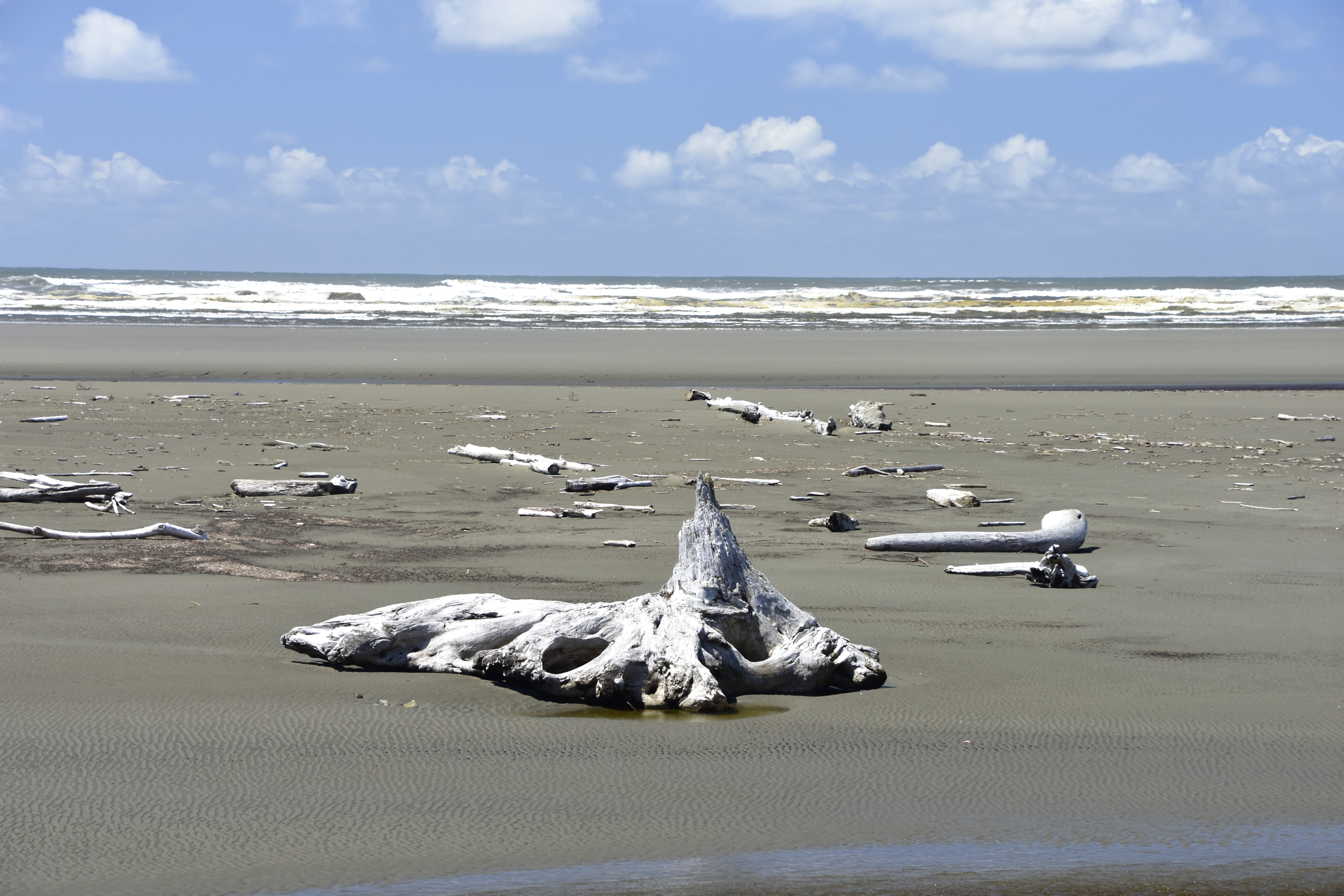 Natural bleached driftwood sculptures litter the sand next to the river.
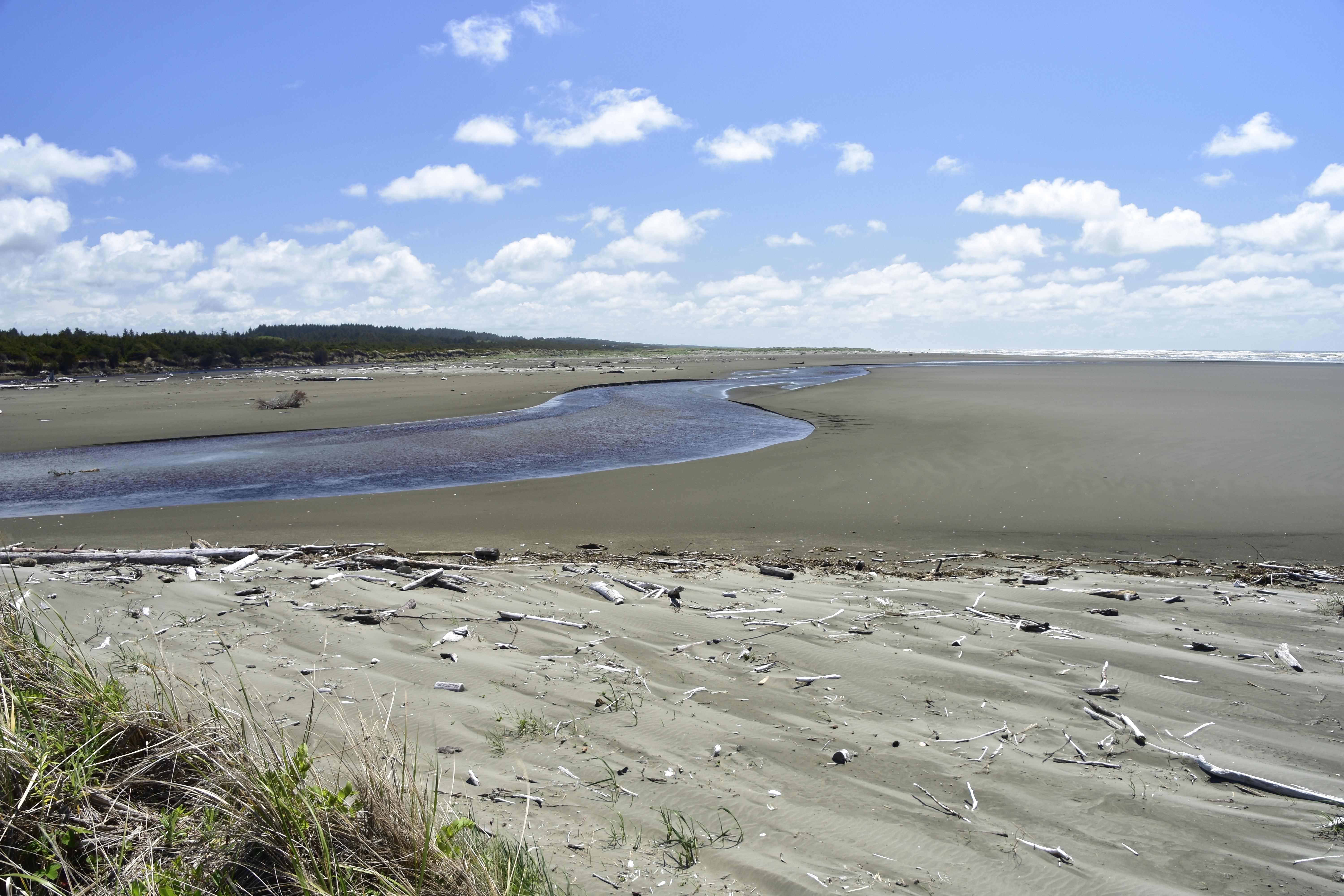 The River finally arrives at the sea.
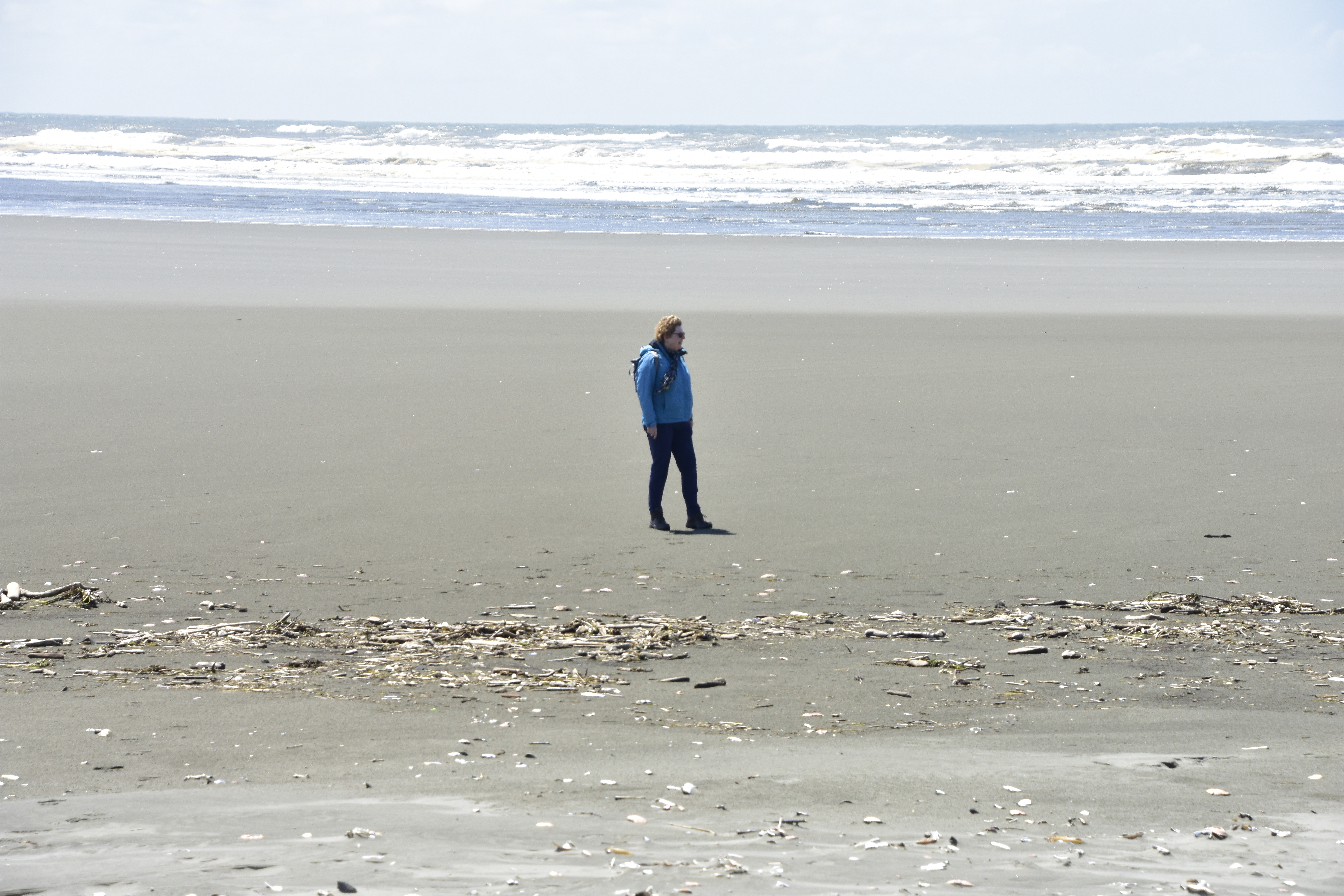 Charlotte enjoying the solitude of the beach and Pacific Ocean – we were the only people on the beach as far as the eye could see!
In search of some good hiking, we travelled south from Westport to Cape Disappointment State Park. Cape Disappointment is a 2,023-acre park on the Long Beach Peninsula, fronted by the Pacific Ocean and looking into the mouth of the Columbia River. It lies on the very south-west tip of the Washington coast. In 1788, British trader John Meares named it ‘Cape Disappointment’ when he mistakenly believed that the mouth of the Columbia River was only a bay and his ship could not enter due to shallow waters.
Having walked about 8-miles around some of the parks’ trails, we discovered some interesting landscape, stunning views and great wildlife. Unlike its name suggests; we were not ‘disappointed’ with what we found.
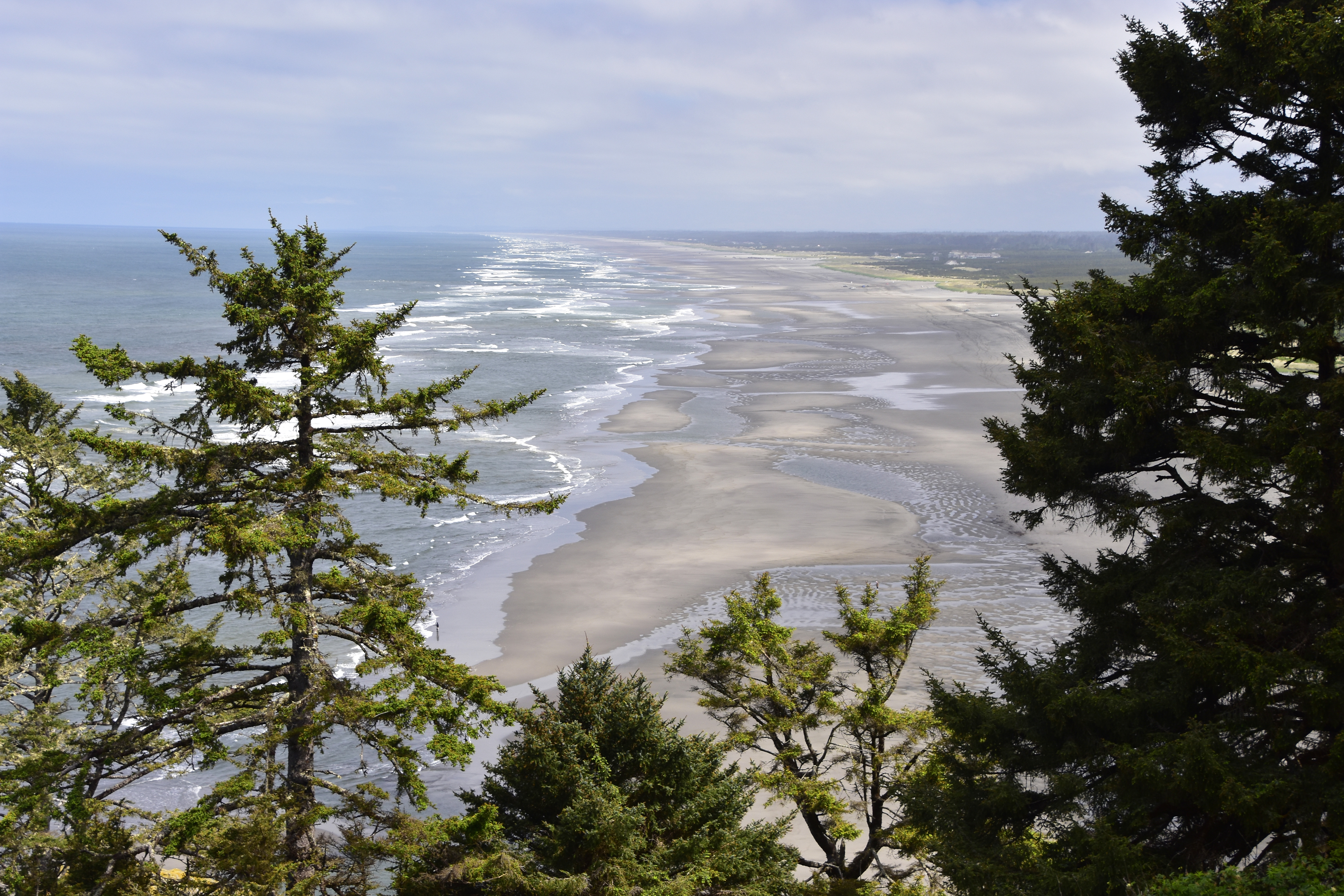 View along the Long Beach Peninsula coastline.
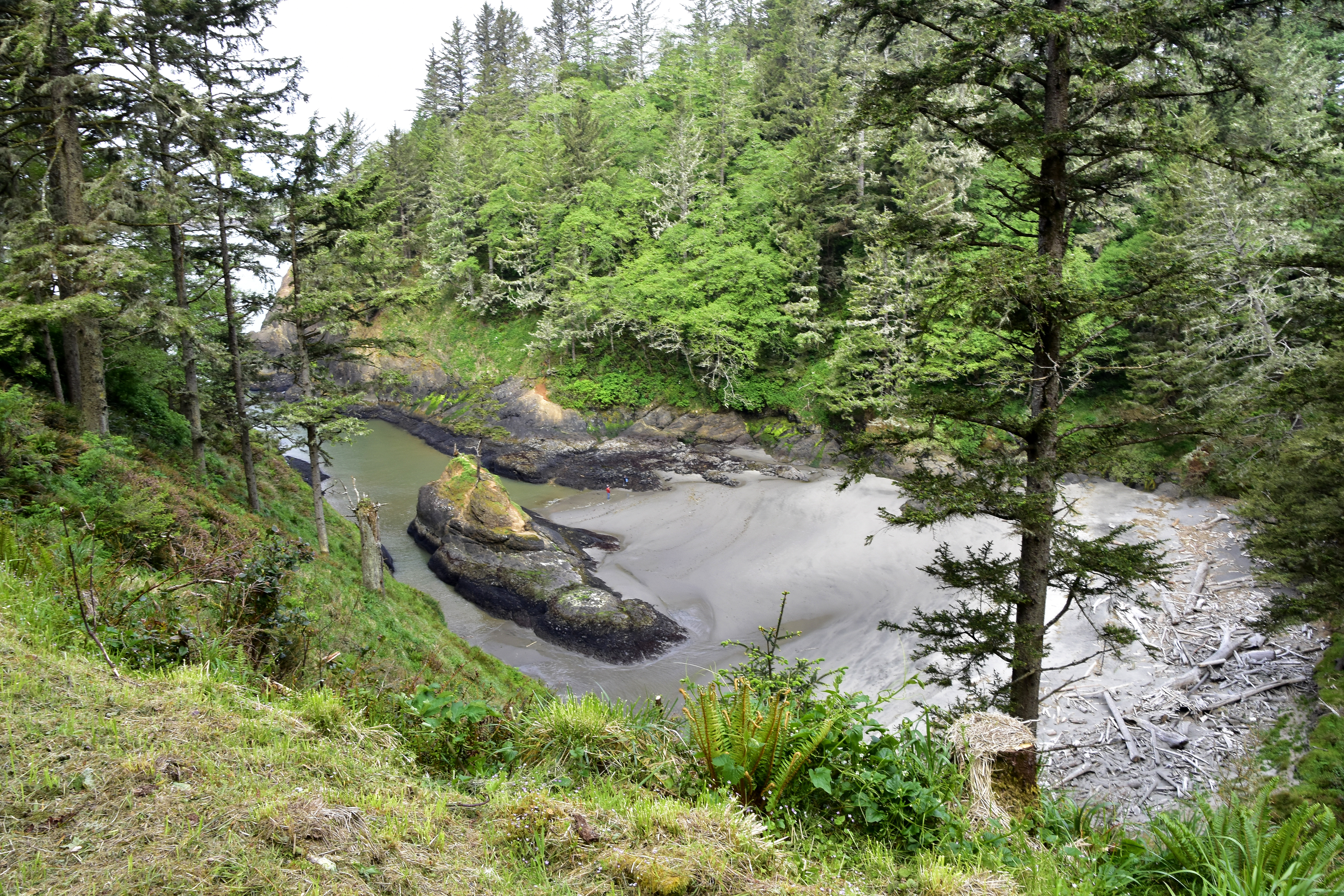 Deadman’s Cove – A solitary tree sits on a small islet in this idyllic sandy cove.
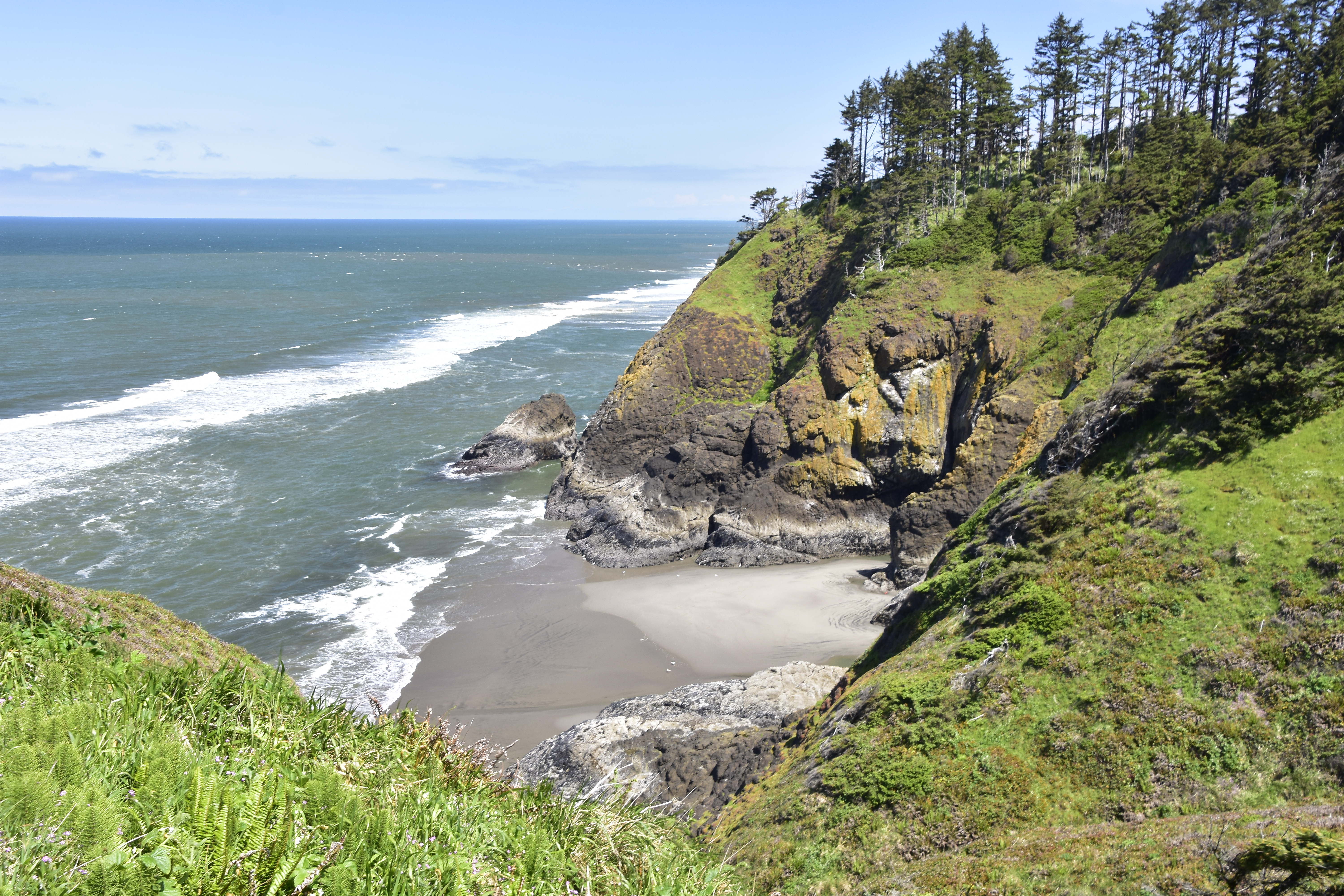 A small hidden cove visible from the cliff top.
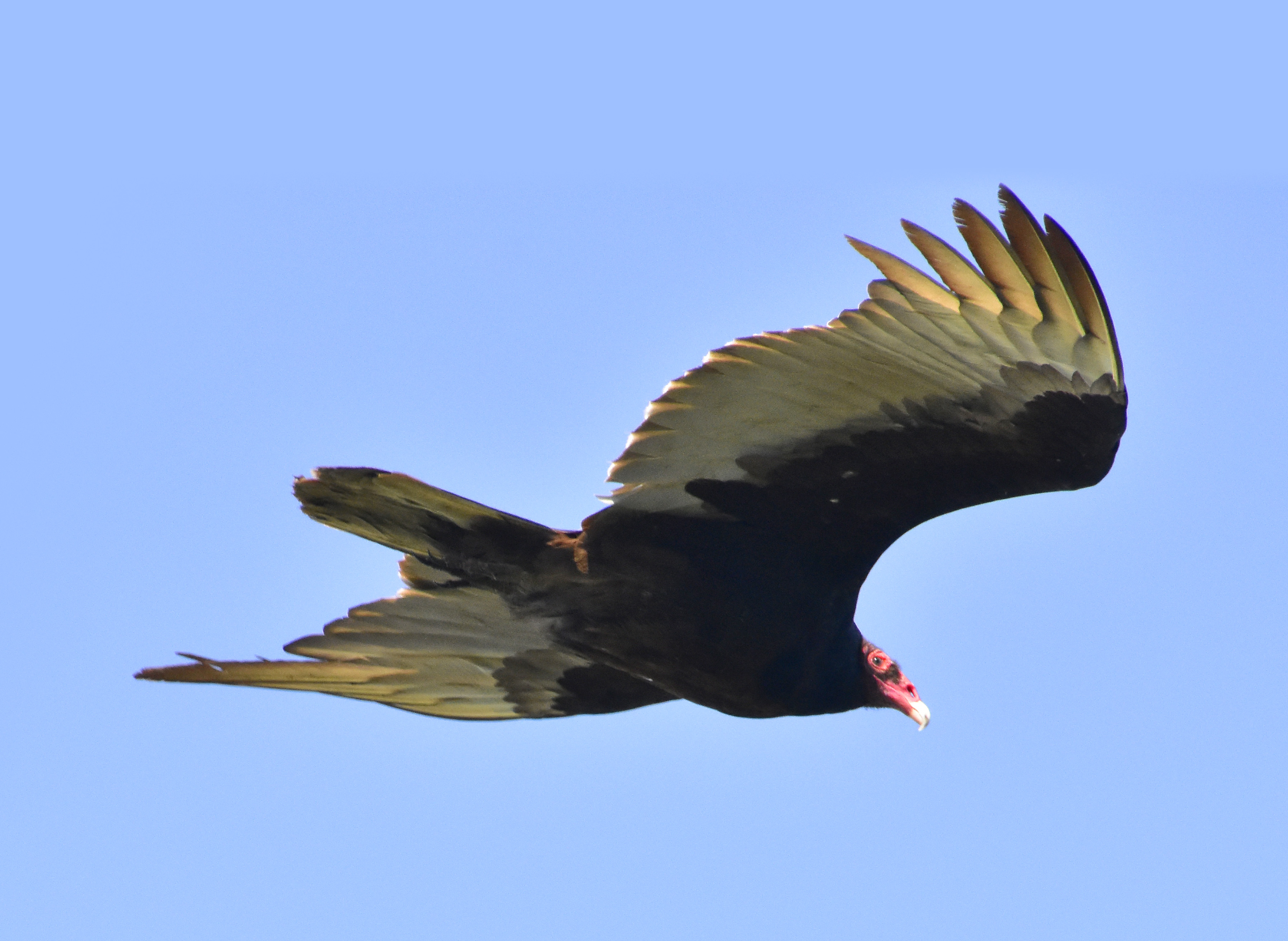 Bird of Prey – this intimidating looking red-headed vulture was soaring above the cliff tops.
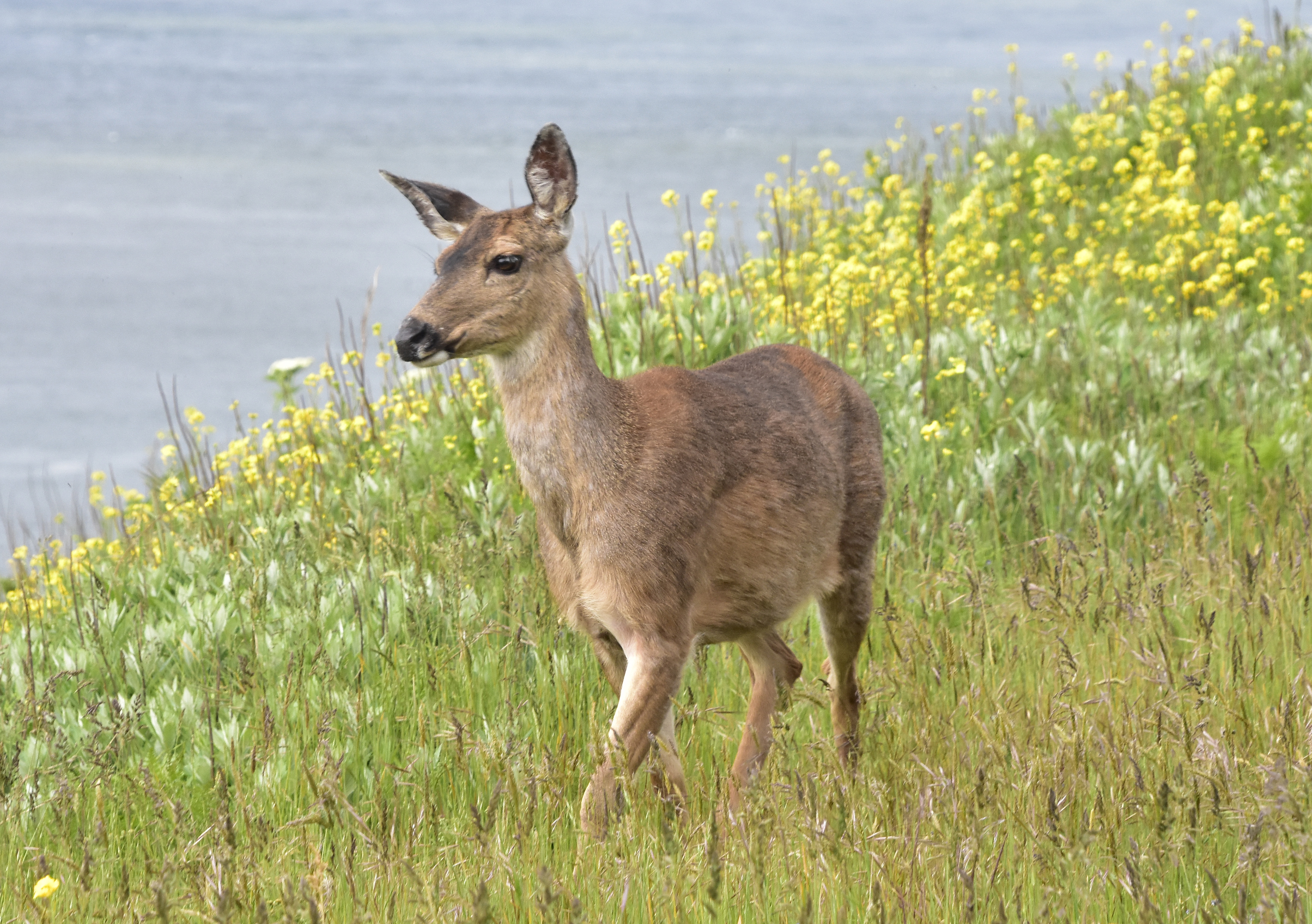 More serene wildlife, a black-tail deer on the cliff edge!
Olympic National Park
Continuing our exploration of the Olympic National Park, we visited a couple of stunningly beautiful places in the southwestern area of the park.
Ruby Beach is the northernmost of the southern beaches in the Pacific coastal section of Olympic National Park and is regarded as one of its crown jewels. Famous for its sea stacks and rock pools, Ruby Beach is one of the most popular beaches to visit along the Pacific coast.
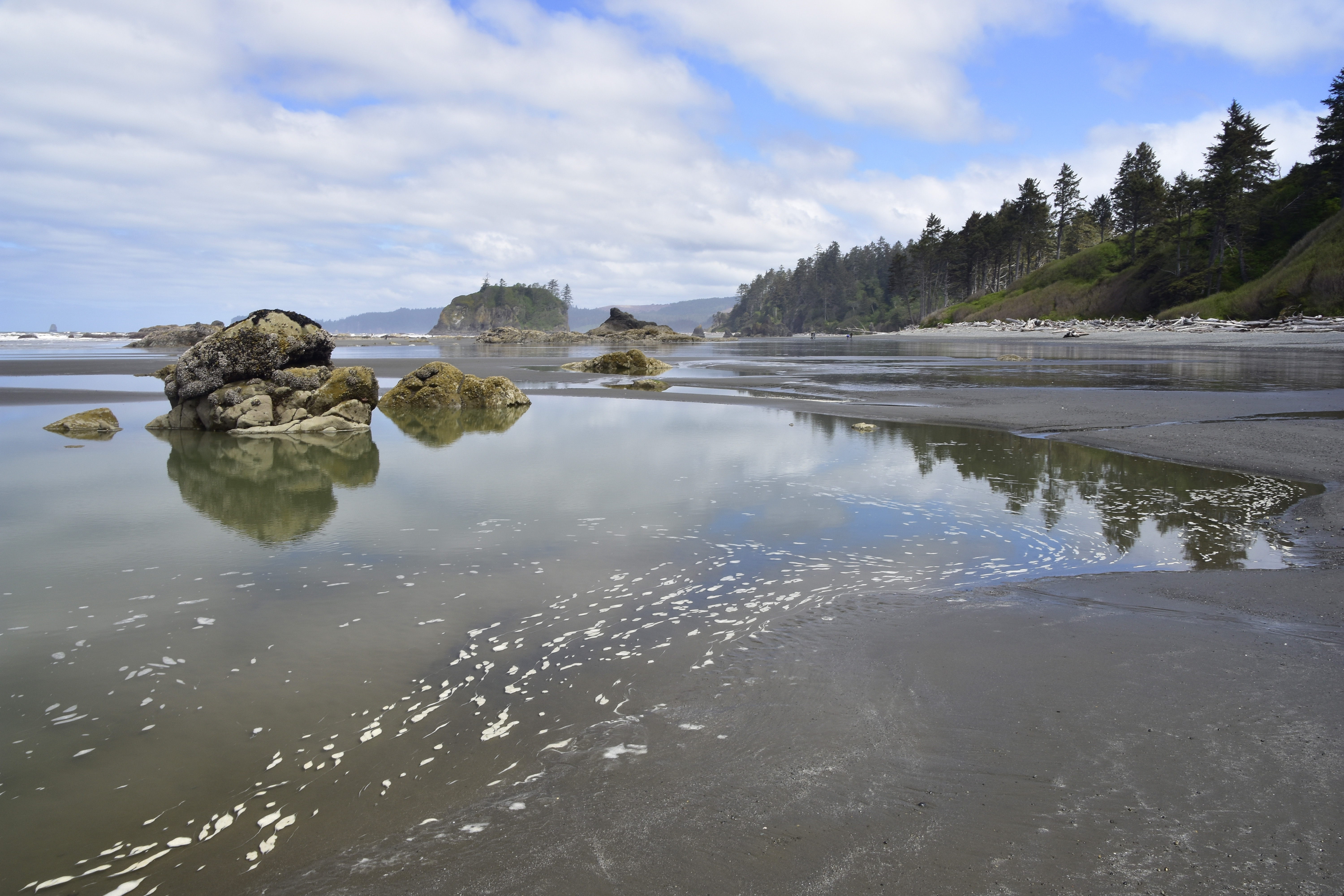 Ruby Beach with its dramatic sea stacks and rock formations.
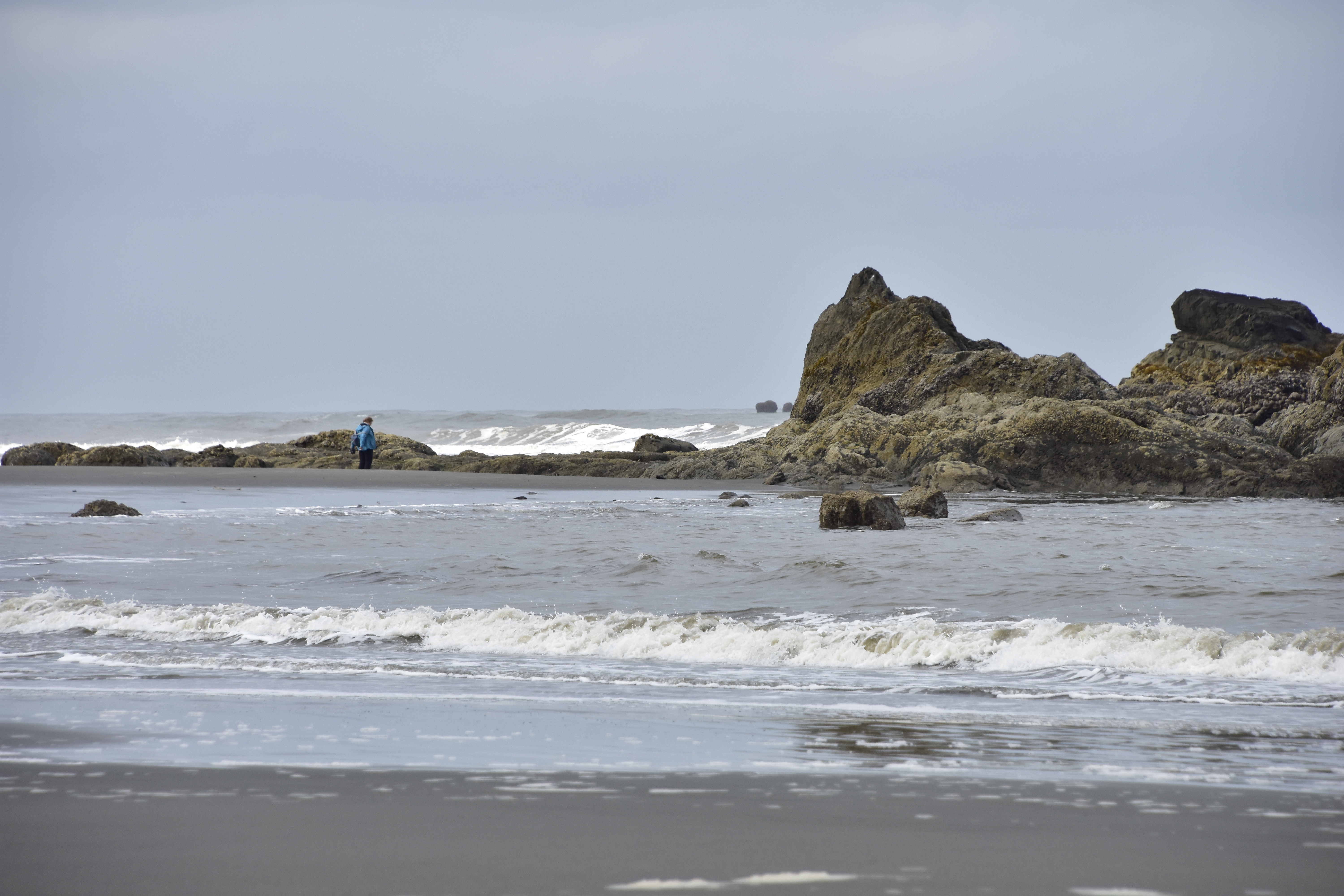 Charlotte looking for the rock pools.
The receding tide revealed rock pools with brightly coloured star fish and anemones.
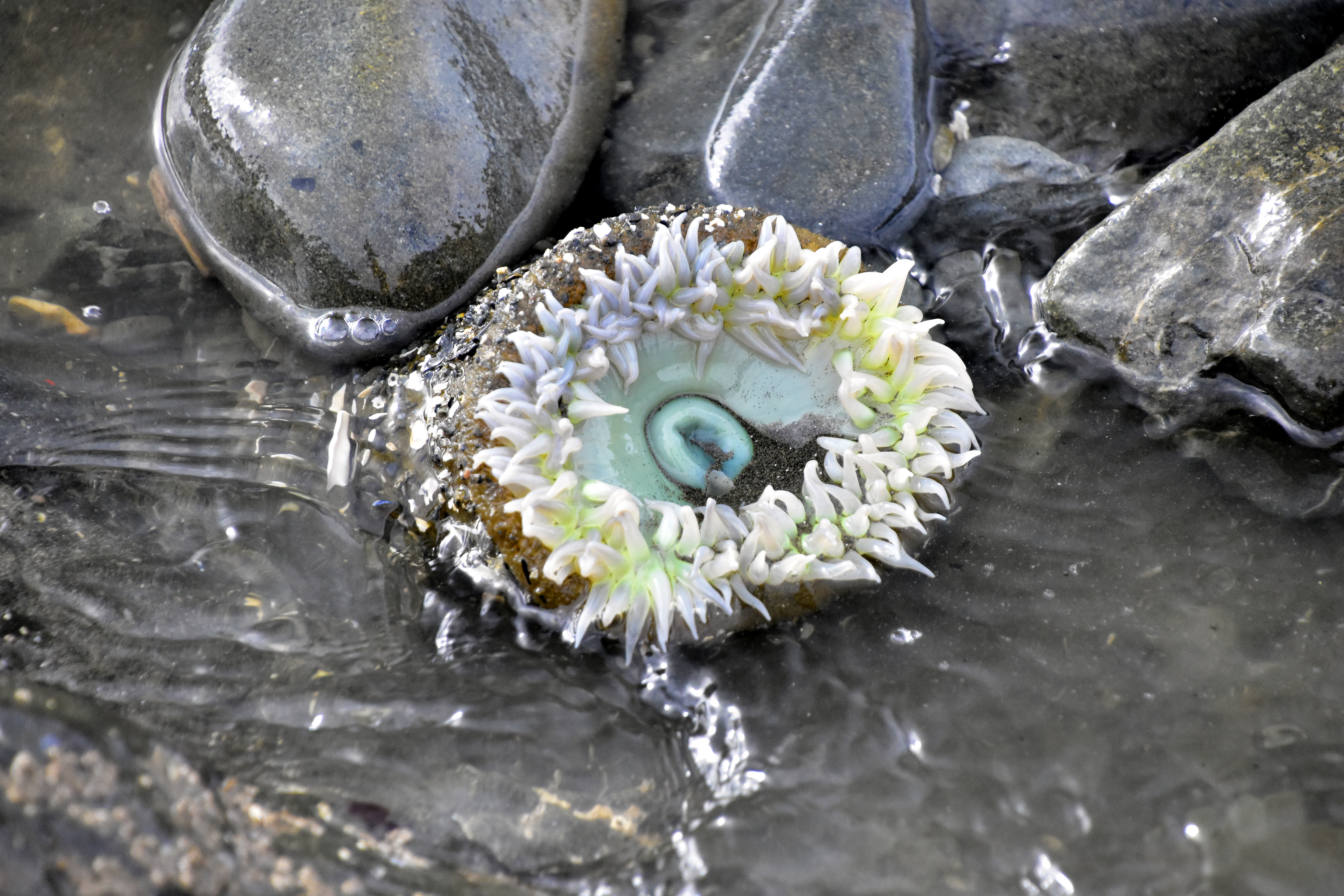 Giant green anemone.
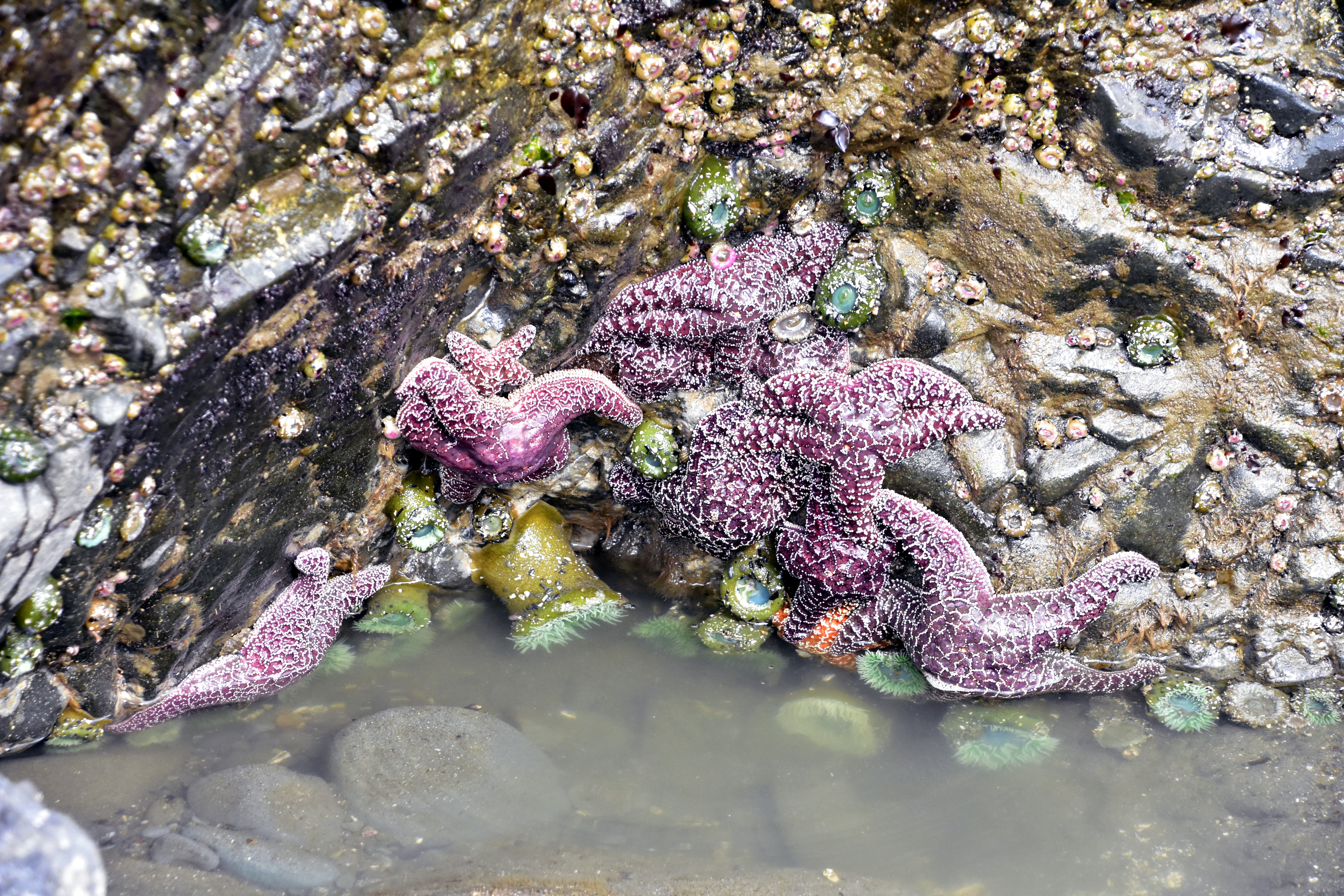 A group of purple starfish, which are common among the waters of the Pacific Ocean, together with giant green anemones.
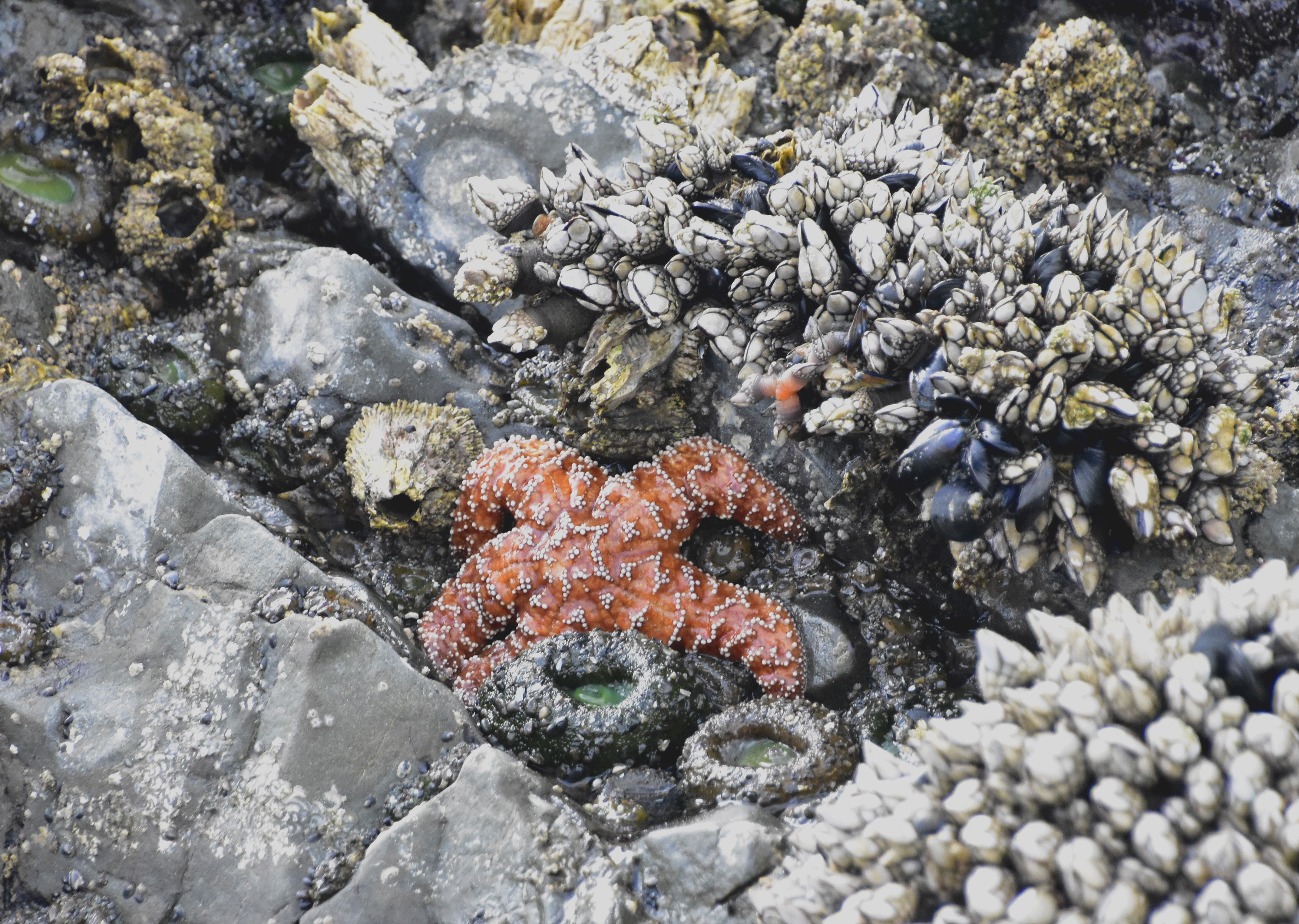 An orange starfish, with some giant green anemones and groups of barnacles.
Keeping on the theme of birds of prey, we spotted a pair of Bald Eagles flying above the trees along the coastline. Suddenly one of them flew across the beach above us…..
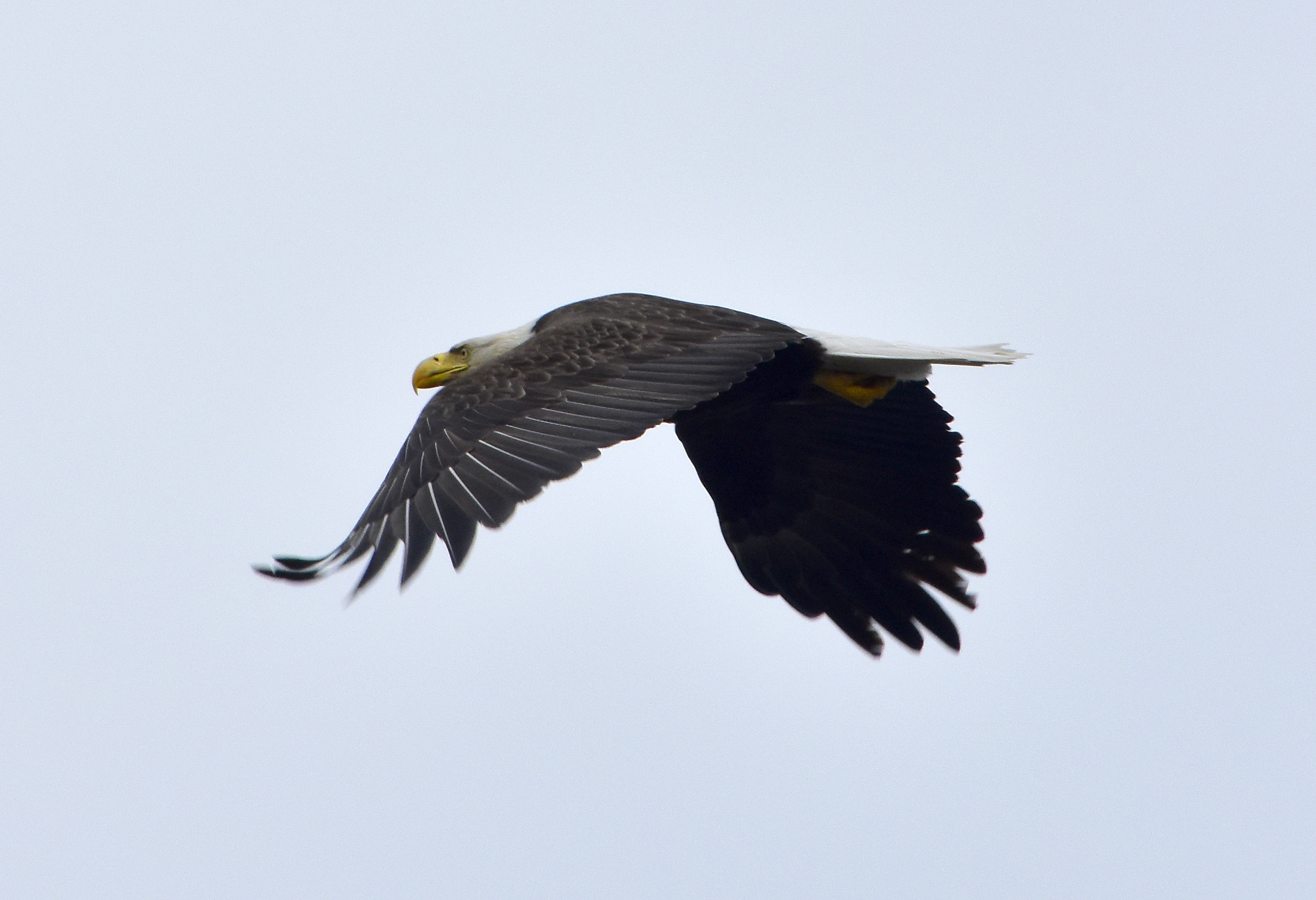 Bald Eagle in flight.
Our final visit to the Olympic State Park was Quinault Lake and Rain Forest. Even though we had experienced some rain forest in other parts of the park, we were looking forward to hiking in one of the main areas for this type of habitat.
The Quinault Rain Forest is one of four rich temperate rain forest canopies that lie within the west side of the Olympic Mountains. This majestic forest follows the paths of the North and East Forks of the Quinault River. These forks meander down the valley and merge into one Quinault River, which enters the beautiful Lake Quinault. The Quinault Rain Forest completely surrounds Lake Quinault, bringing its unique environment to the shoreline.
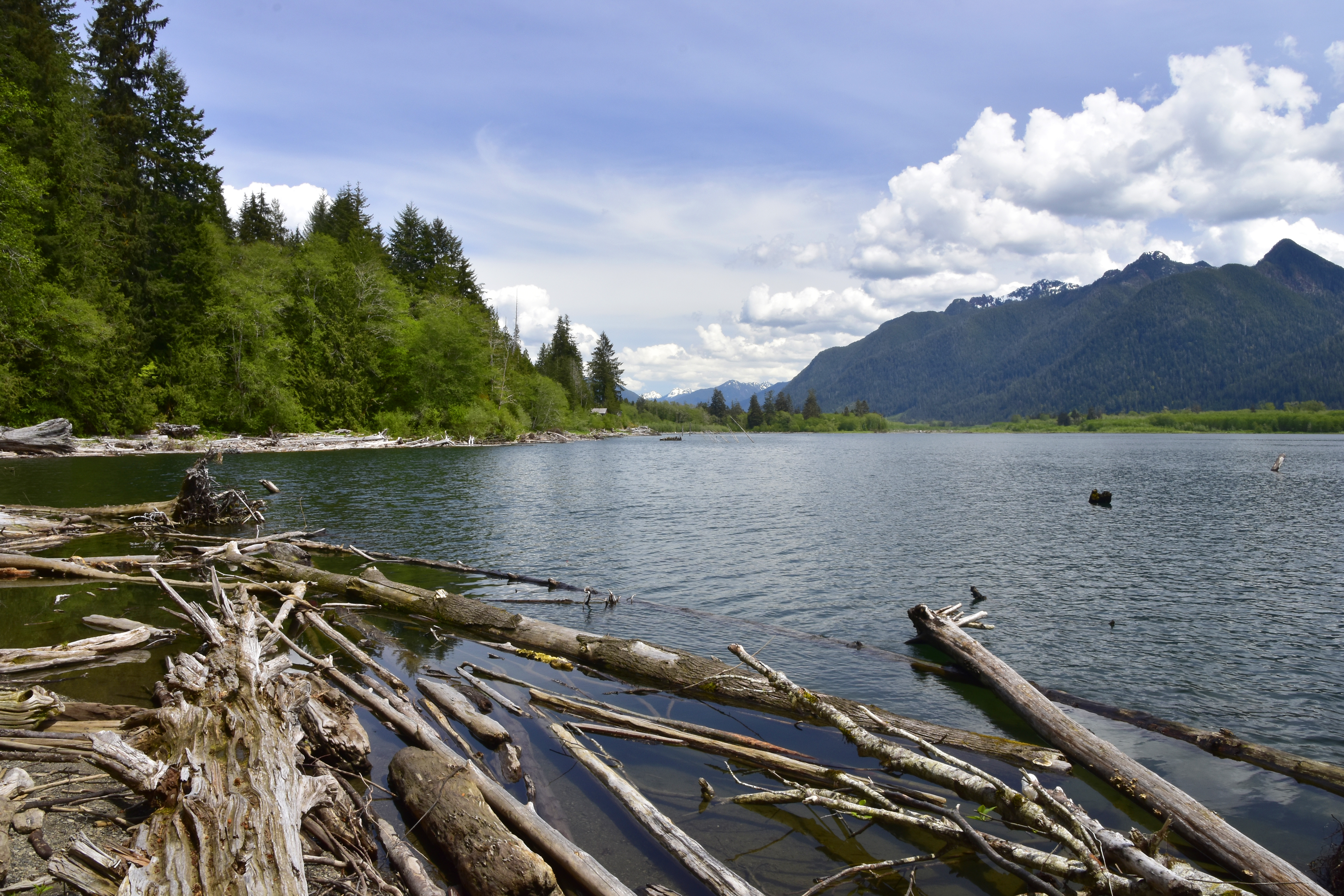 View across the eastern end of Lake Quinault to the Olympic Mountains.
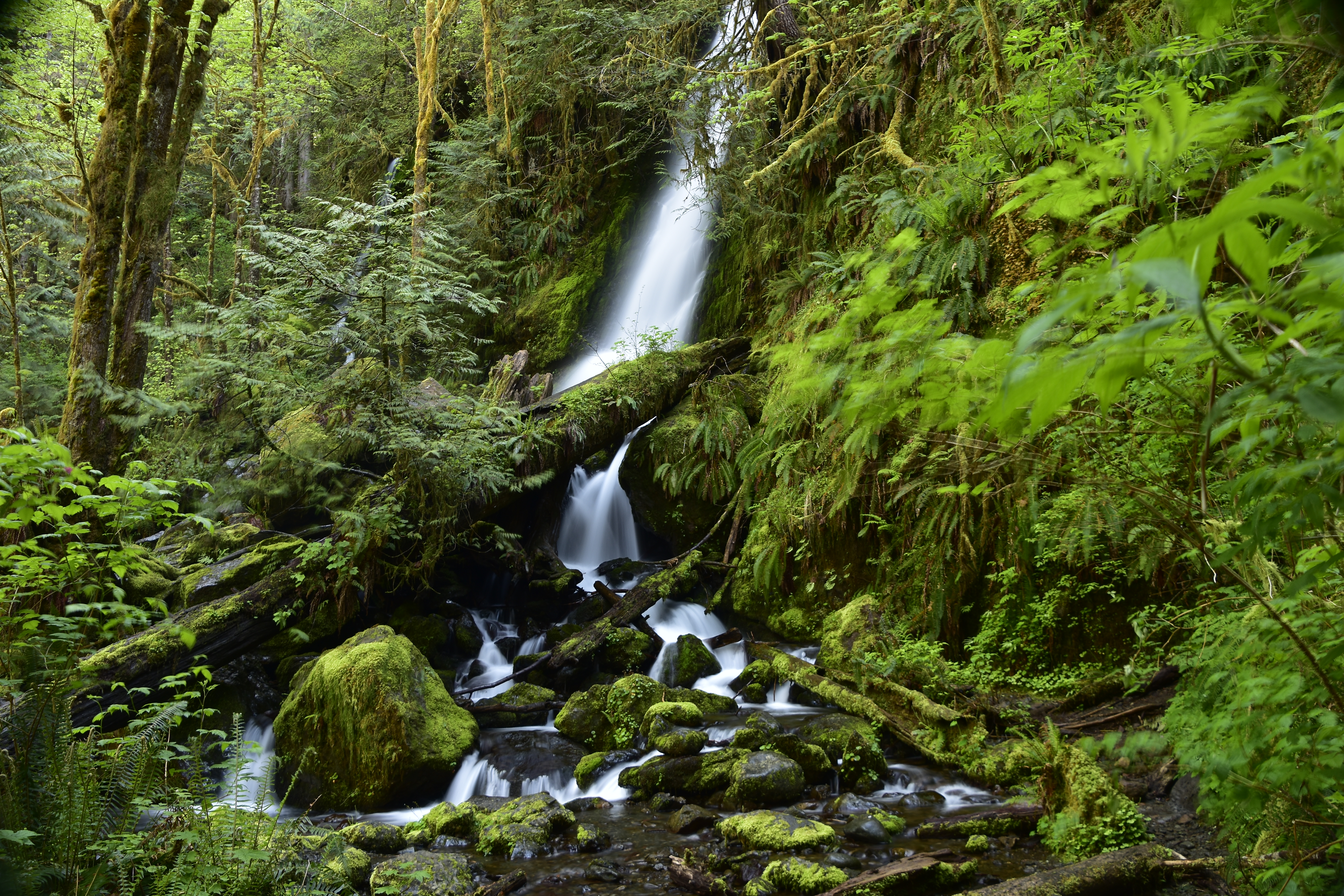 Merriman Falls
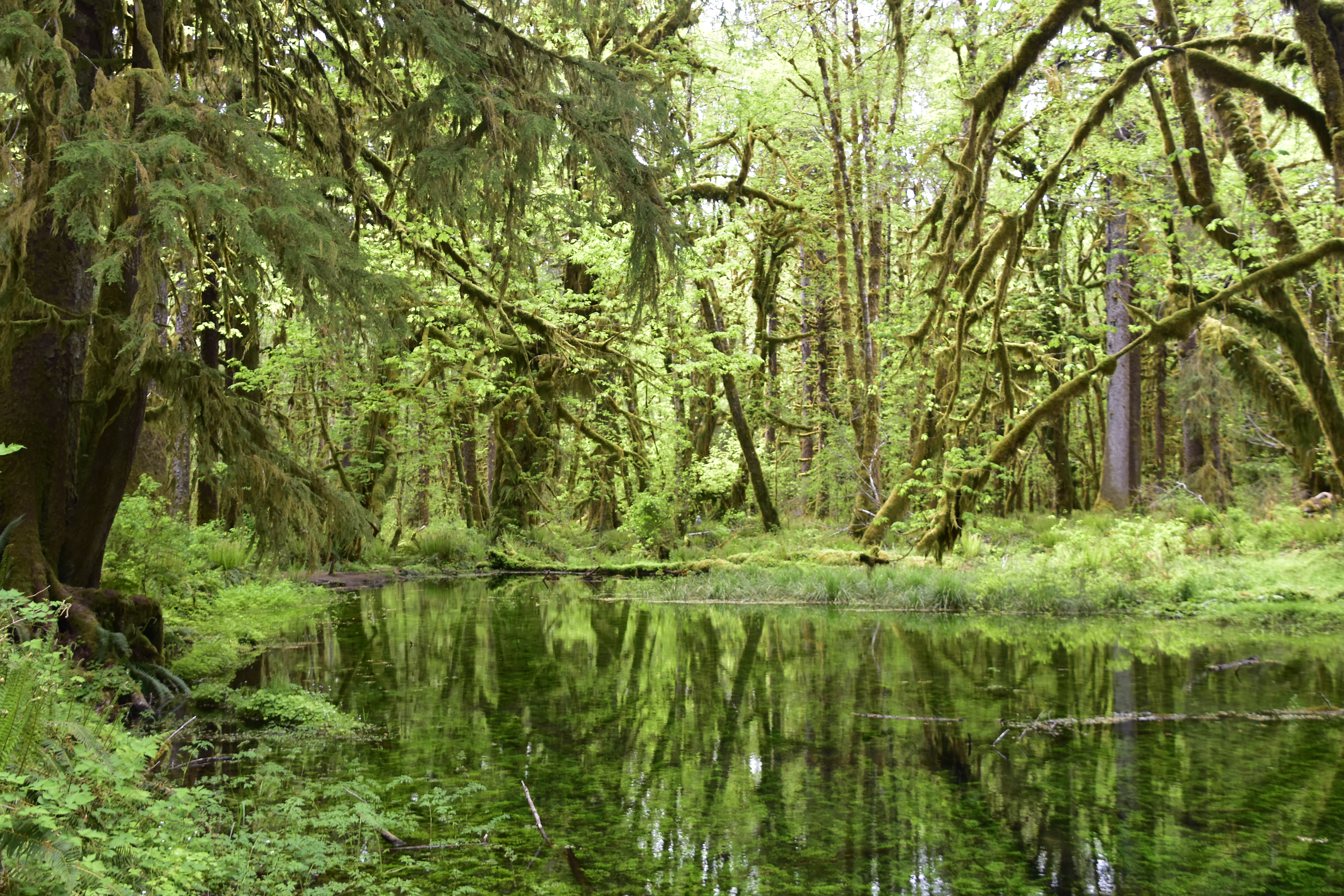 Maple Glade – a beautiful glen in the heart of the rain forest.
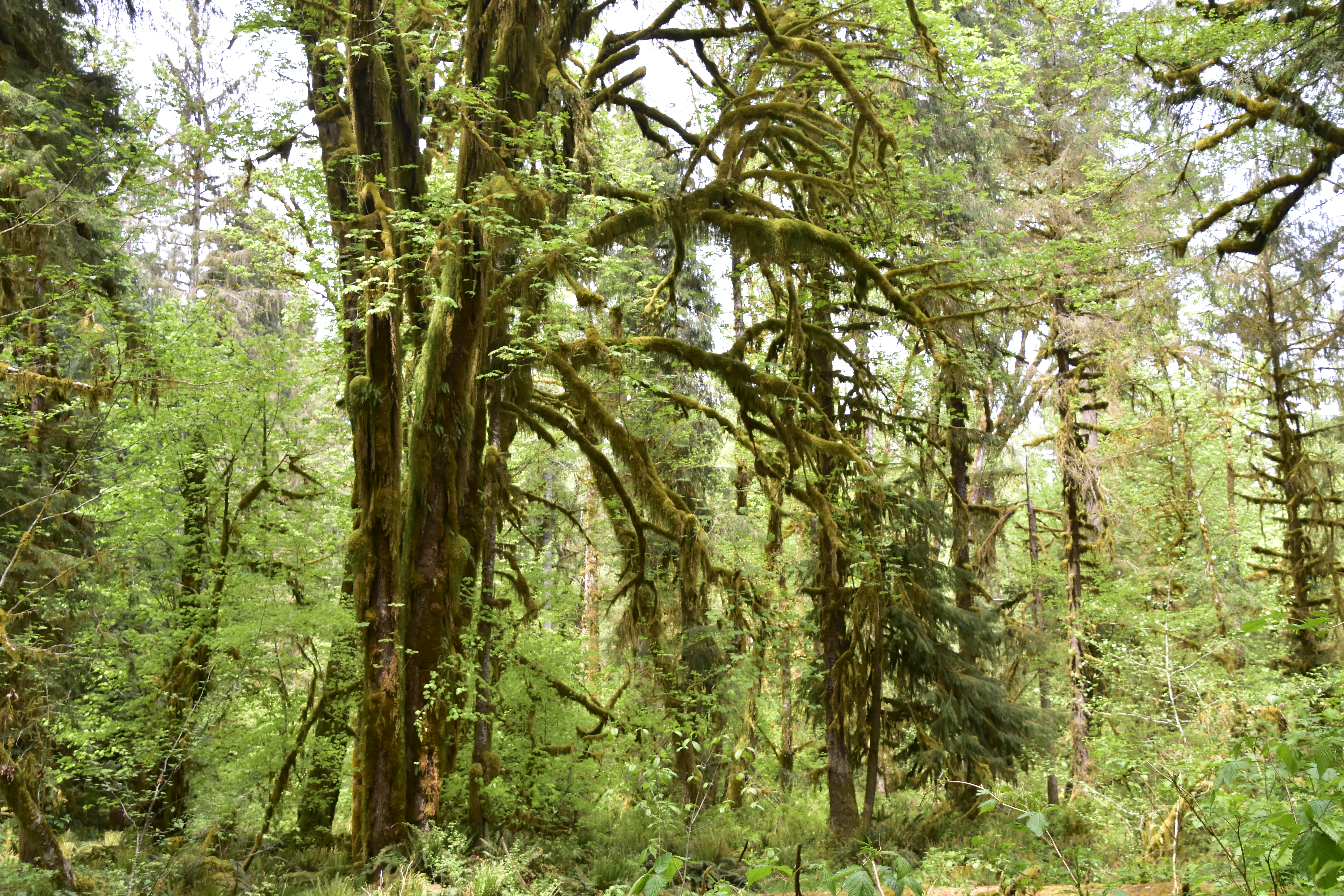 The surreal looking moss covered trees
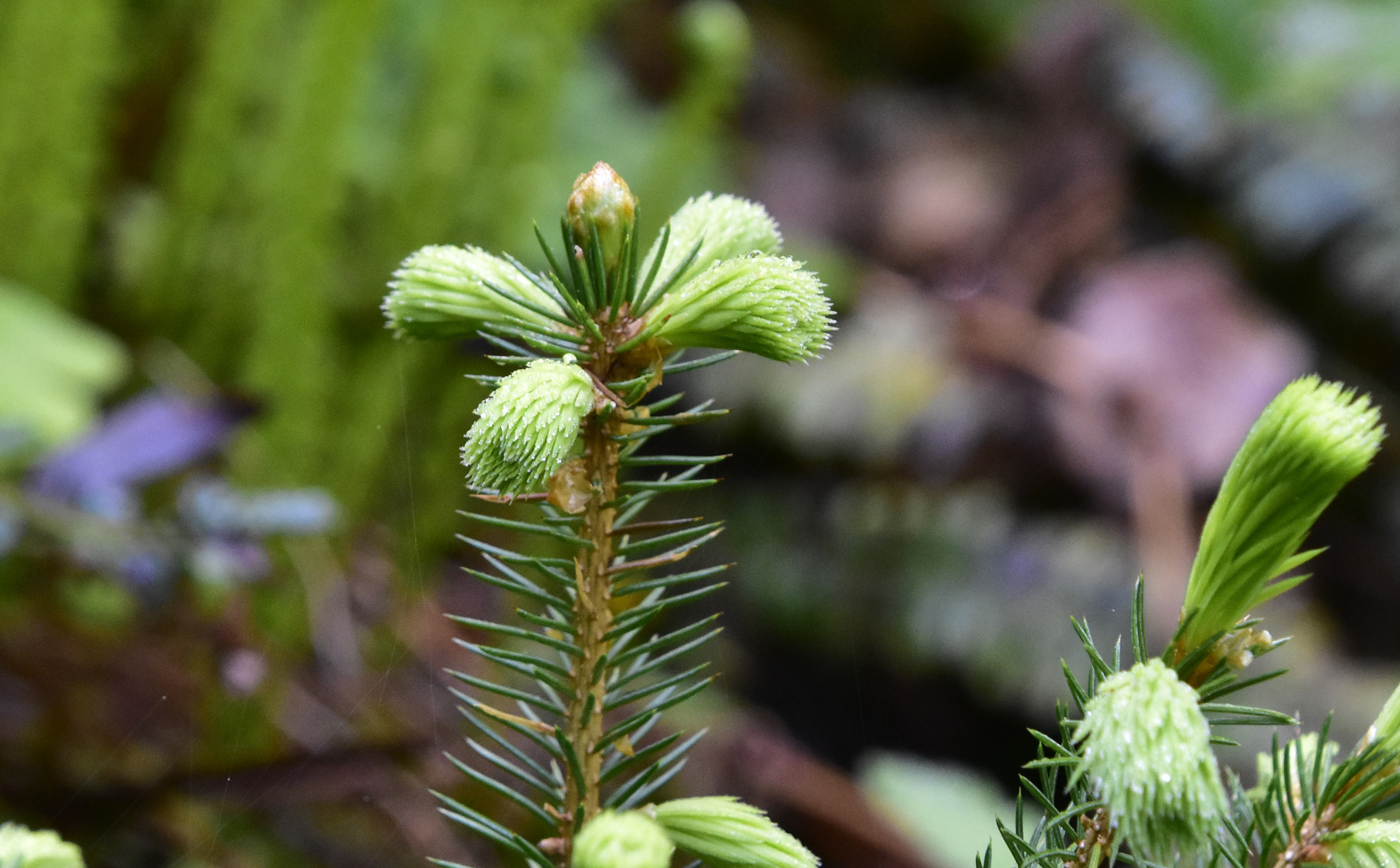 New life.
And finally… image of the week!
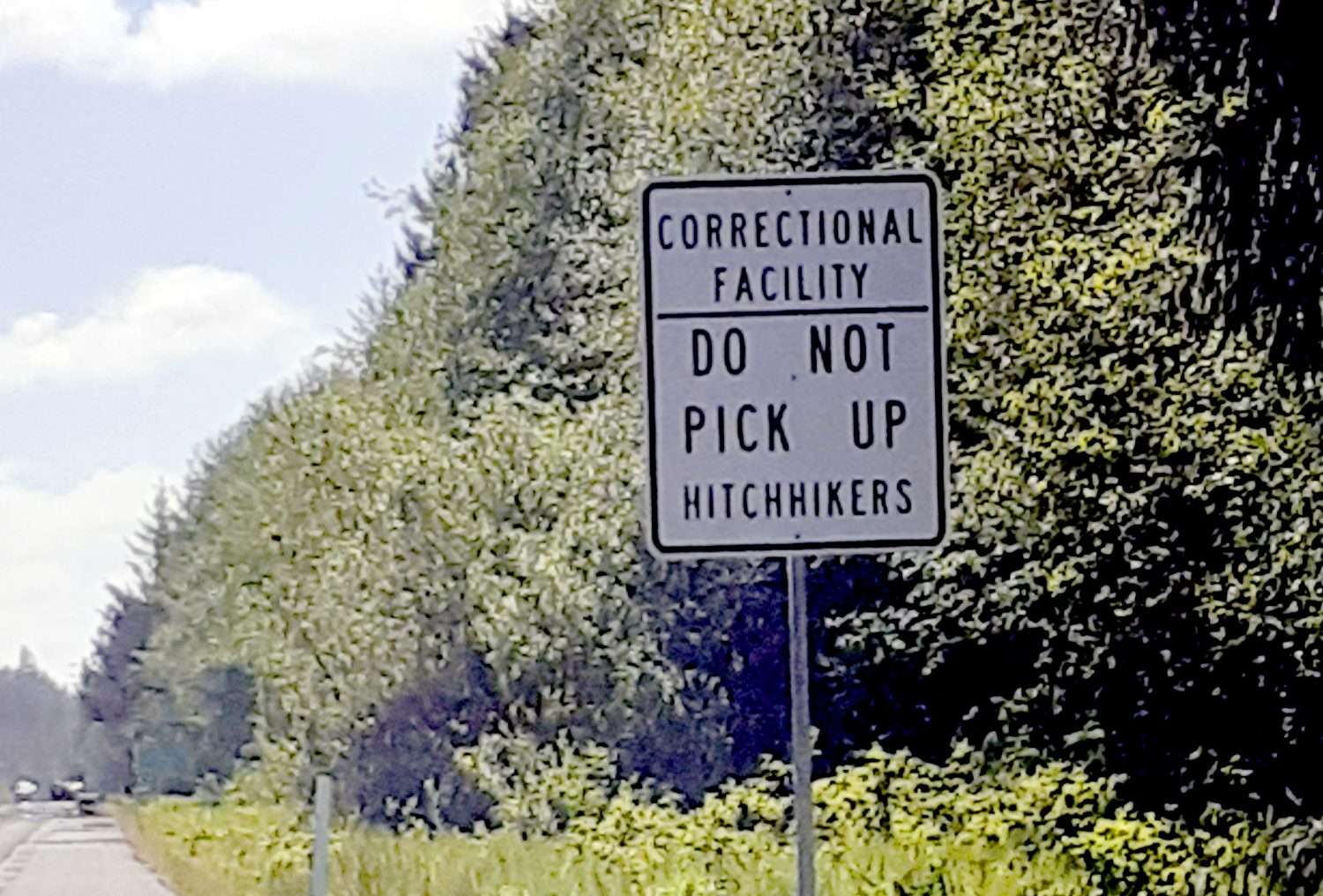
Tomorrow we are leaving Westport for the drive east to Tacoma.
 Charlotte & Graham's Travels