The base for our stay in Peru, was Cusco. Located 11,000 ft high up in the Peruvian Andes, Cusco was once capital of the Inca Empire. The city itself has a population of 450,000 and is known for its archaeological remains and Spanish colonial architecture. It is a delightful and beautiful city.
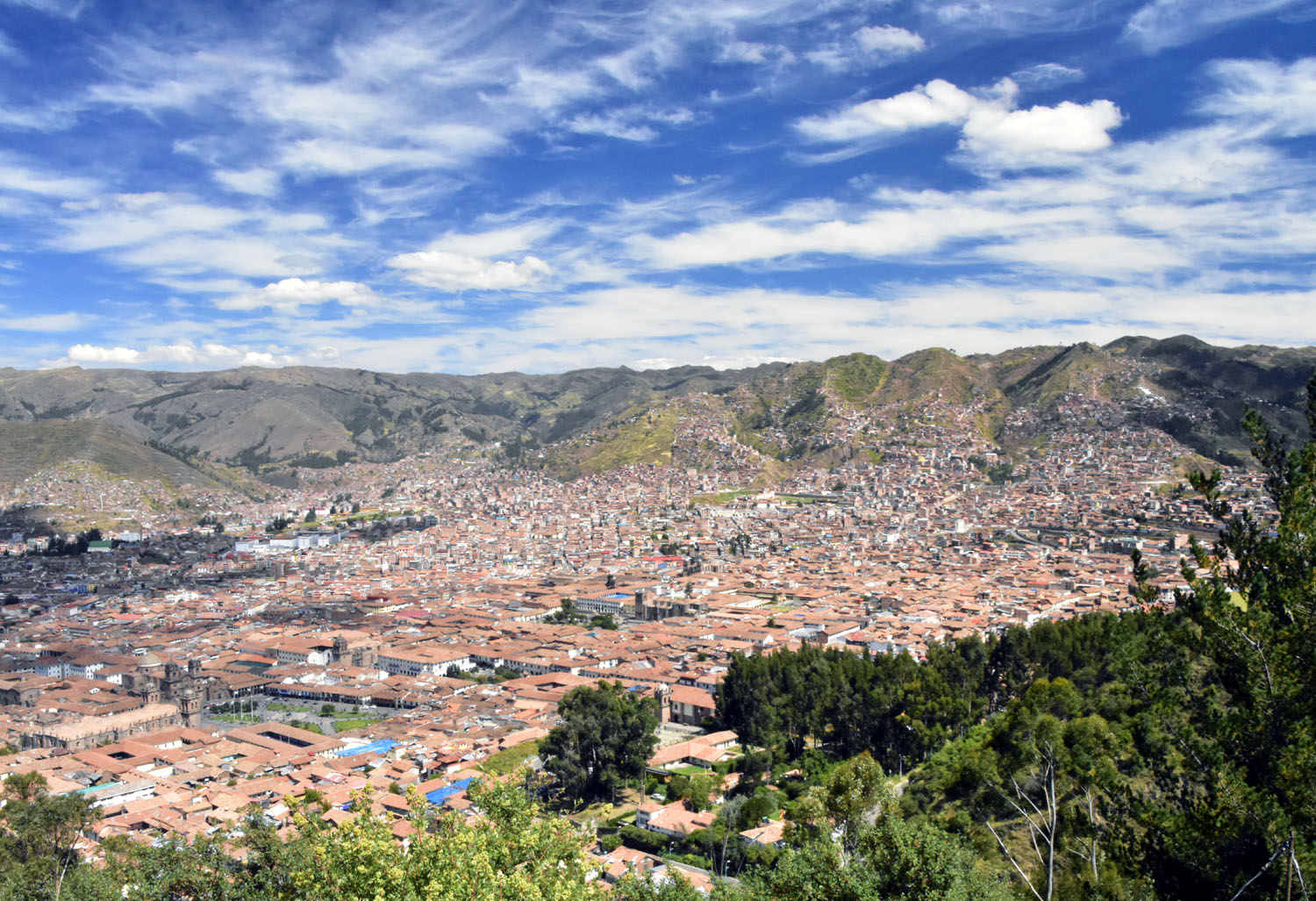 Cusco – Aerial View
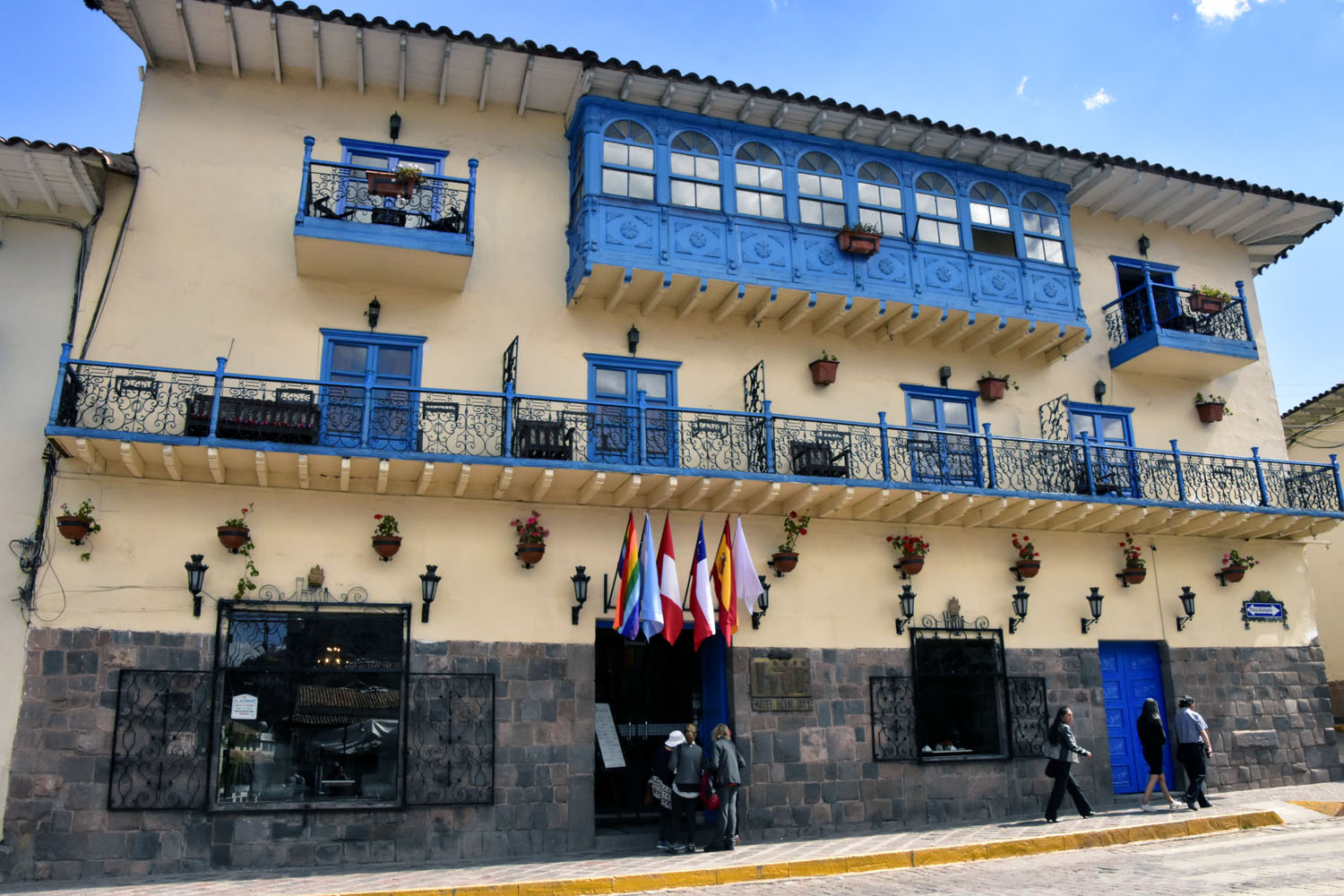 Cusco – Typical building with carved wood balconies
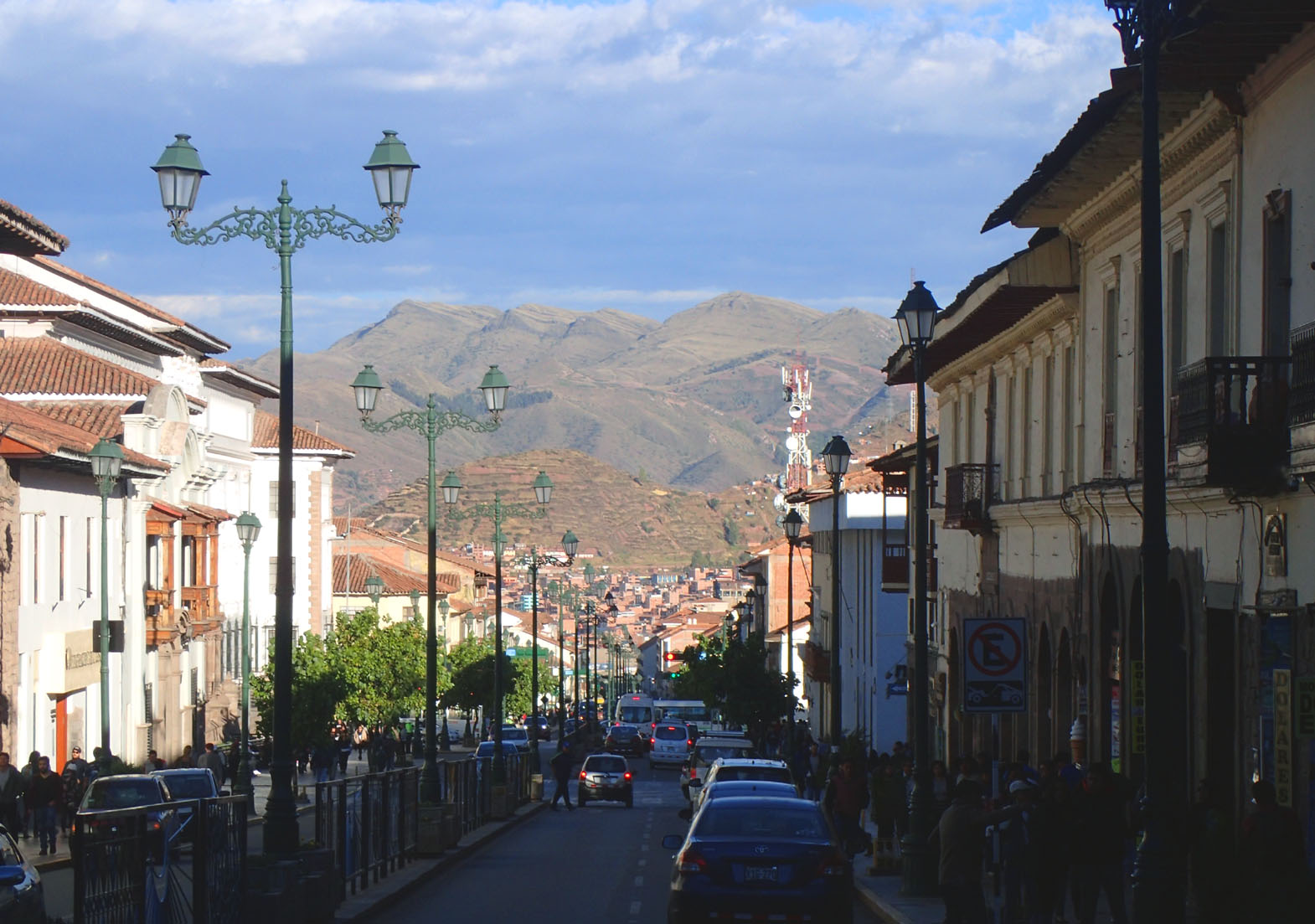 Cusco – Main commercial street
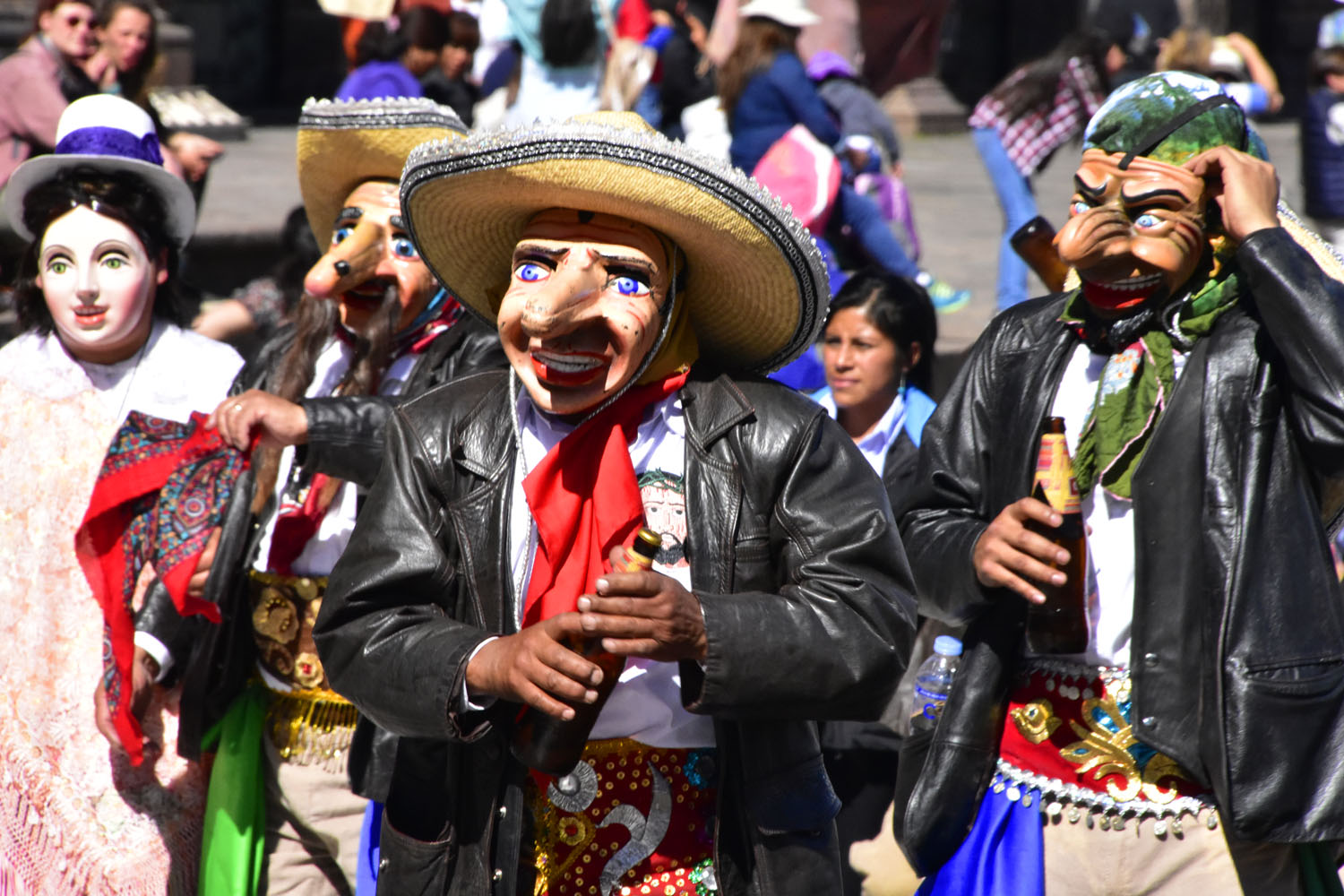
We arrived on a Sunday to discover a parade taking place in the Plaza de Armas, the city’s main square – it was like Morris Dancing on steroids. We subsequently found out that every Sunday there is a small parade through the streets around the square as well as to celebrate major festivals.
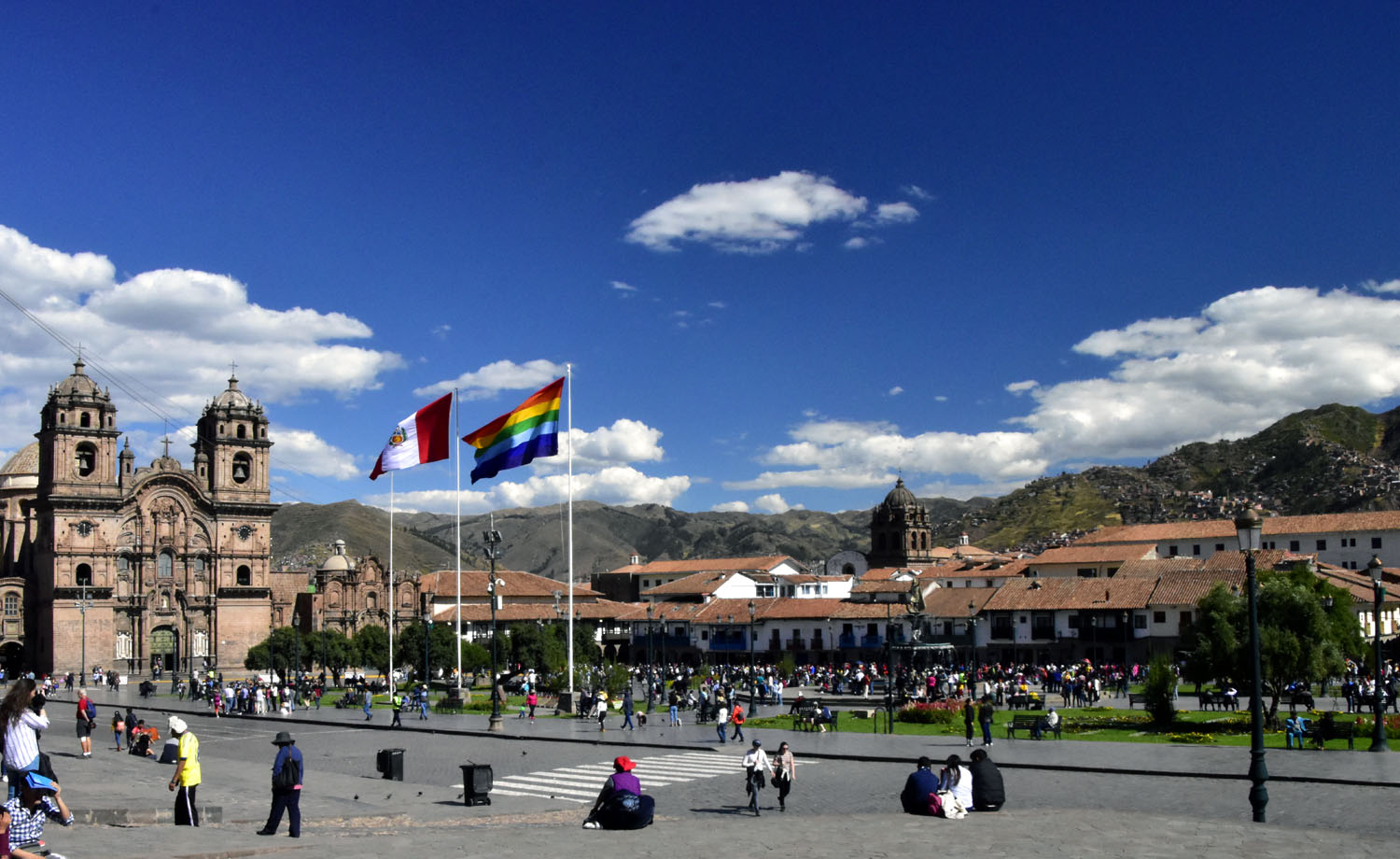 Cusco – Main square – Plaza de Armas
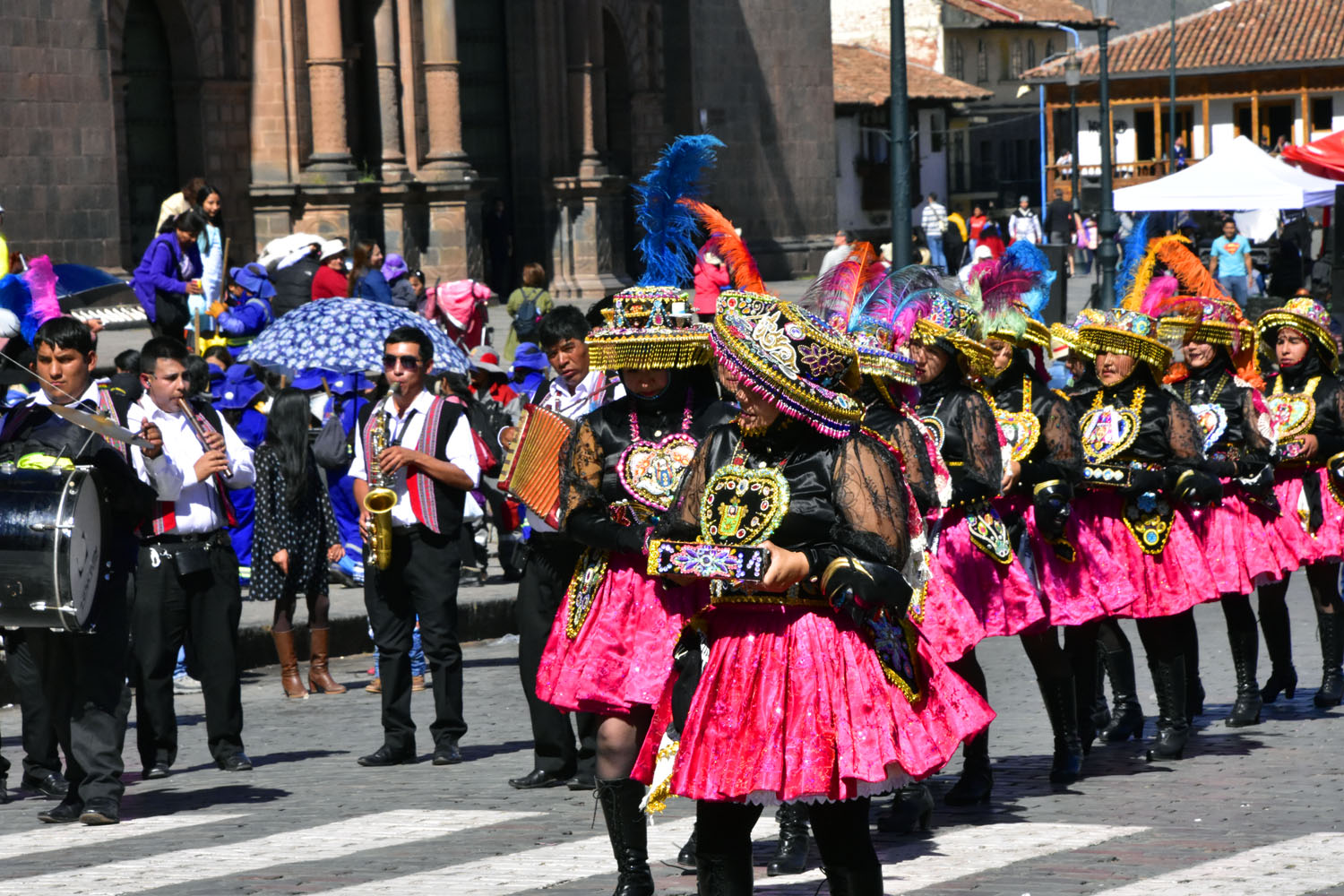 Cusco – Sunday Parade
Of course there are many Inca ruins in and around Cusco and we managed to visit a number during our 6 day stay in the city. One has to admire the construction of their temples and buildings, many using shaped stone building blocks assembled without mortar – even after 600 hundred+ years, the destruction by the Spanish and several earthquakes many of them still have parts standing.
On such ruin was Saqsaywaman, which is a citadel on the northern outskirts. Sections were first built by the Killke culture around 1,100. The complex was expanded and added to by the Inca from the 13th century. They built dry stone walls constructed of huge stones, the largest weighing over 300 tons. The workers carefully cut the boulders to fit them together tightly without mortar. The picture below shows one of the outer walls, with the city in the background and Charlotte in the foreground for scale. It is thought that the Incas used around 20,000 people to complete the complex in approx. 50 years – astonishing!
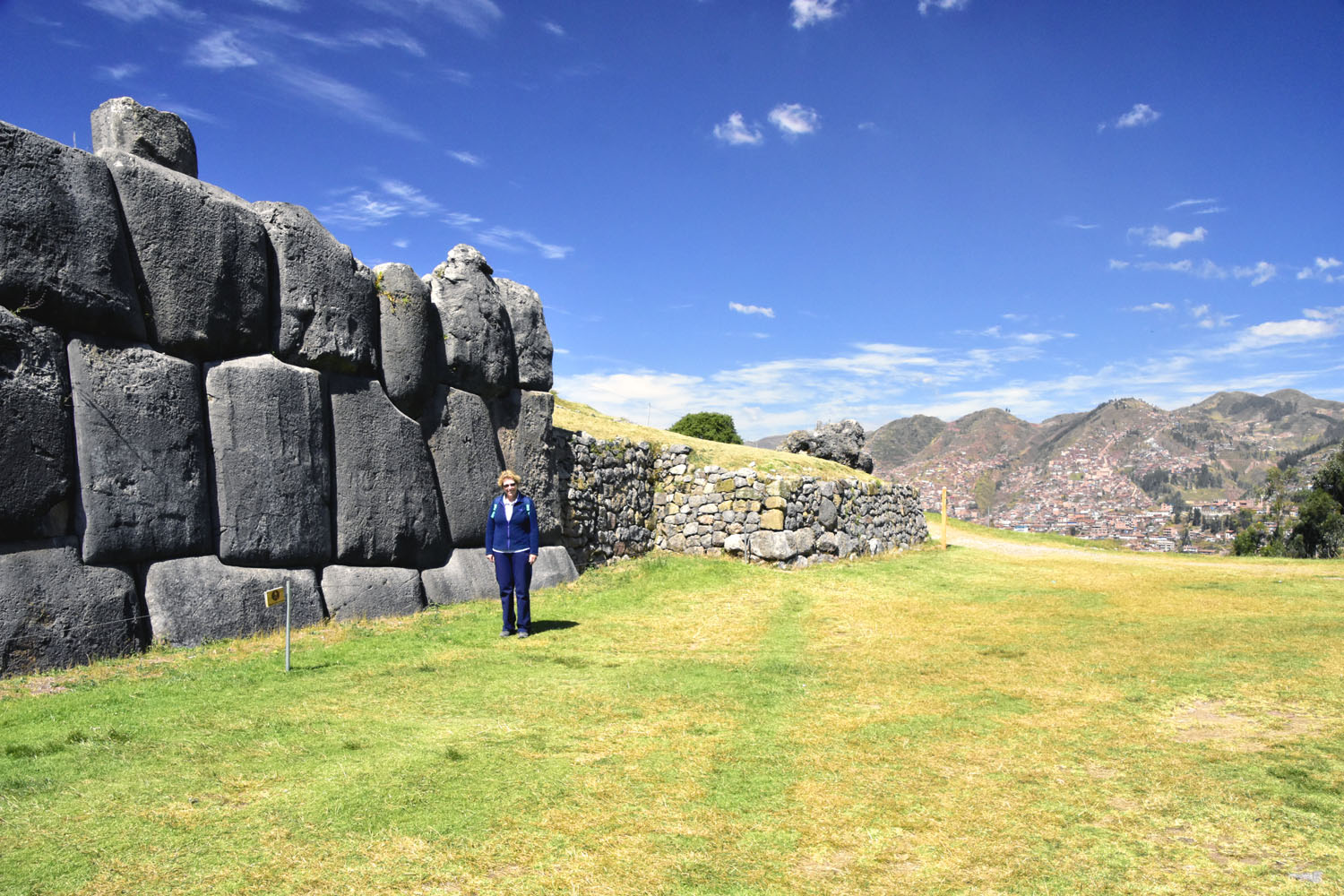 Cusco – Saqsaywaman Inca Ruins
Another local site was Pukapukara Inca Fort, a military construction made up of stairways, terraces and large walls which were part of the defence system of the Inca empire’s capital. The fort is located on high ground overlooking the Cusco valley at an altitude of 12,380 ft. Its small temple had a direct line of sight to Ausangate, the tallest mountain in the Cusco region standing at 20,945 ft, making it of religious importance. Travellers passing the fort on their way to Machu Picchu along the Sacred Valley would have stopped and offered gifts for the gods.
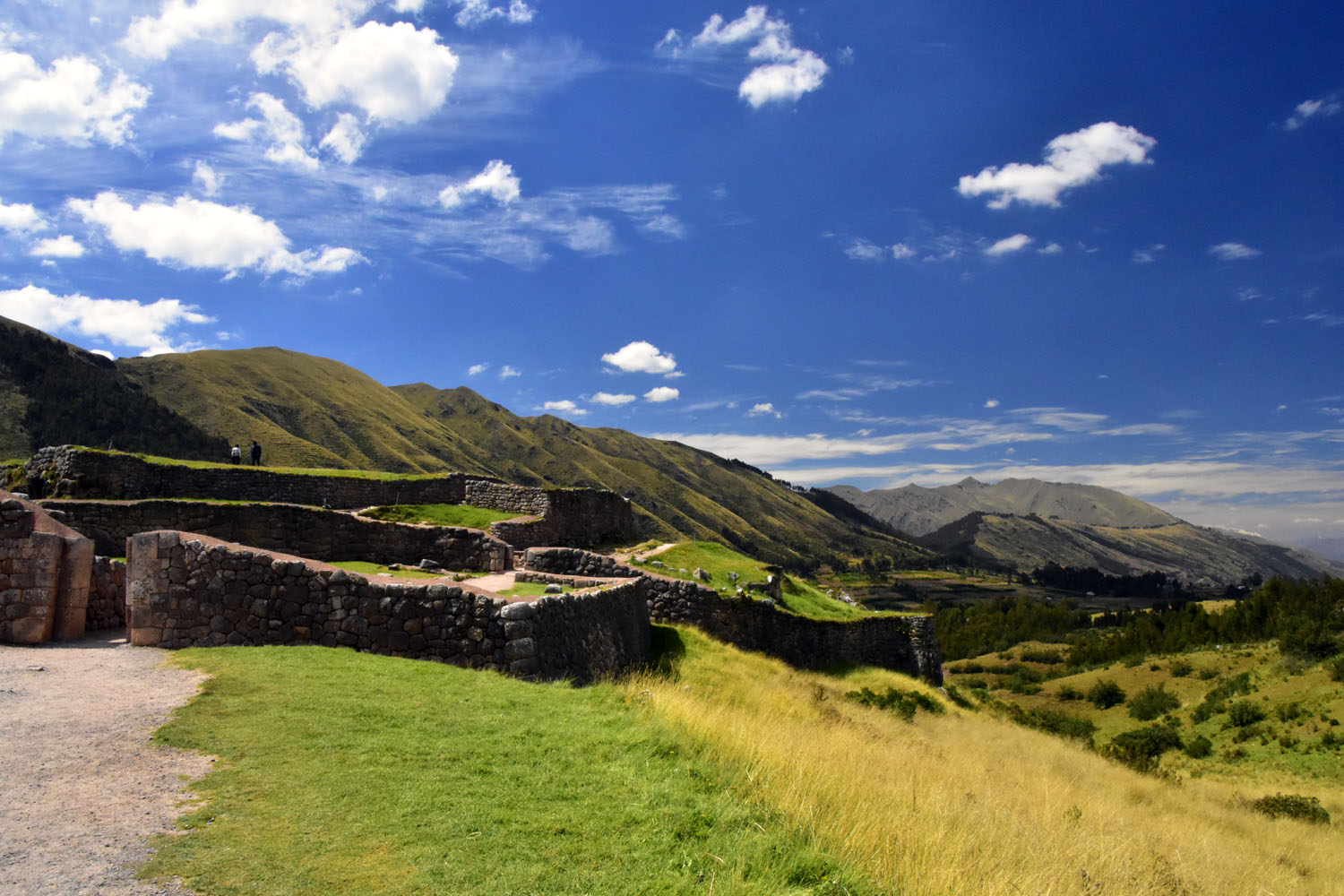 Cusco – Pukapukara Inca Fort
The main reason for visiting this part of Peru was of course to see Machu Picchu, the world’s most famous icon of Inca civilization and one of the ‘New Seven Wonders of the World’. It is located on a 7,970 ft mountain ridge overlooking the Sacred Valley 50 miles from Cusco. Most archaeologists believe that Machu Picchu was constructed as an estate for the Inca emperor Pachacuti (1438–1472). The Incas built it around 1450 but abandoned it a century later at the time of the Spanish Conquest. Although known locally, it was not known to the Spanish during the colonial period and remained unknown to the outside world until American historian Hiram Bingham brought it to international attention in 1911. It therefore remains one of the most intact Inca ruins and has also been partly reconstructed so visitors can see how they would have originally appeared. It is one of the most beautiful and fascinating historic sites we have ever seen.
We spent 2 days visiting Machu Picchu, with own guide. The first day was hiking the 8-mile long Short Inca Trail, the start of which was reached by driving from Cusco to Ollantaytambo Station, and then boarding a lovely scenic railway. The walking trail took us along mountainside paths in outstanding scenery and then through the Inca Ruins of Wiñay Wayna, built into a steep hillside. It is thought that the Incas constructed this temple and terraces to supply food to Machu Picchu.
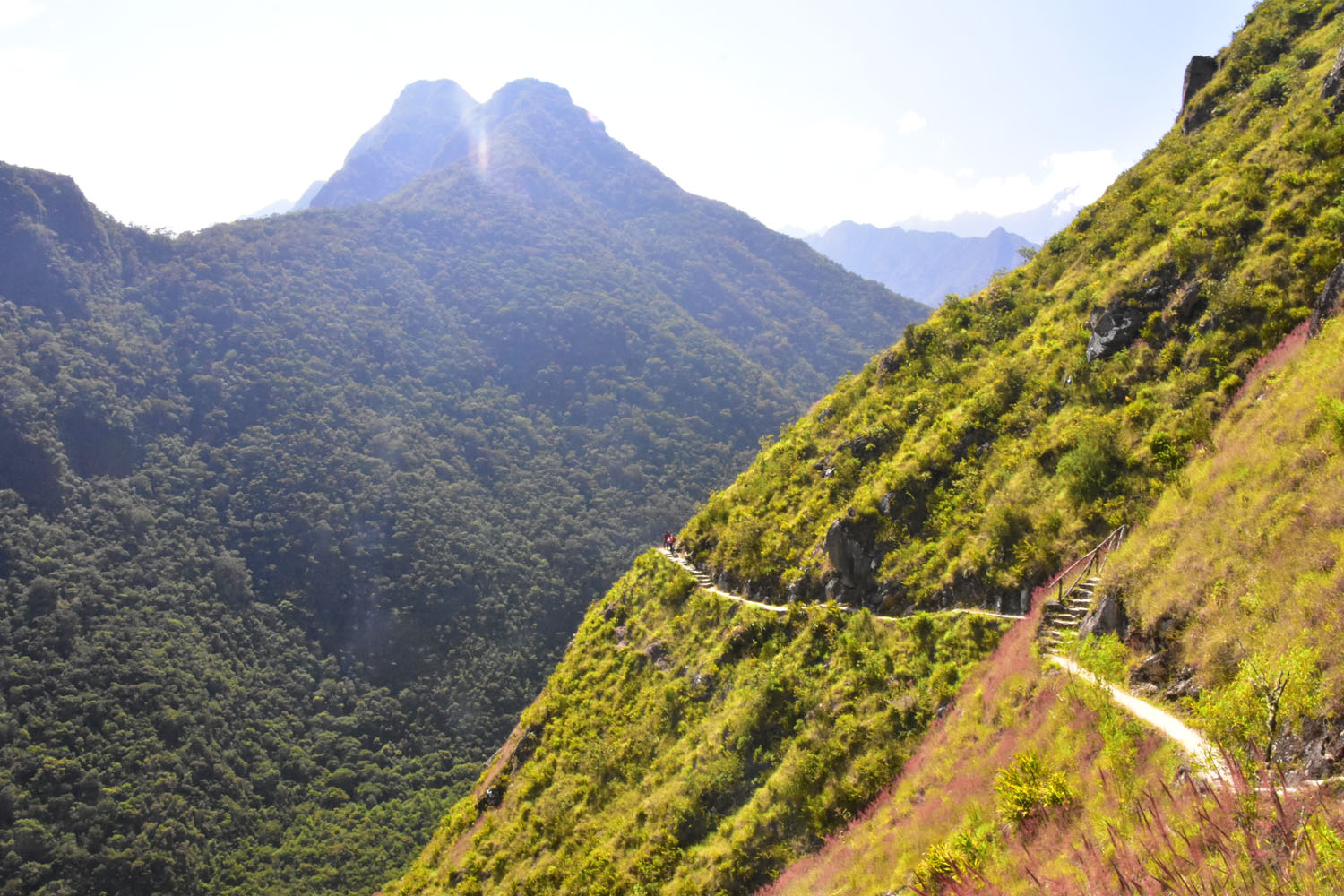 Inca Trail – Track running along mountainside
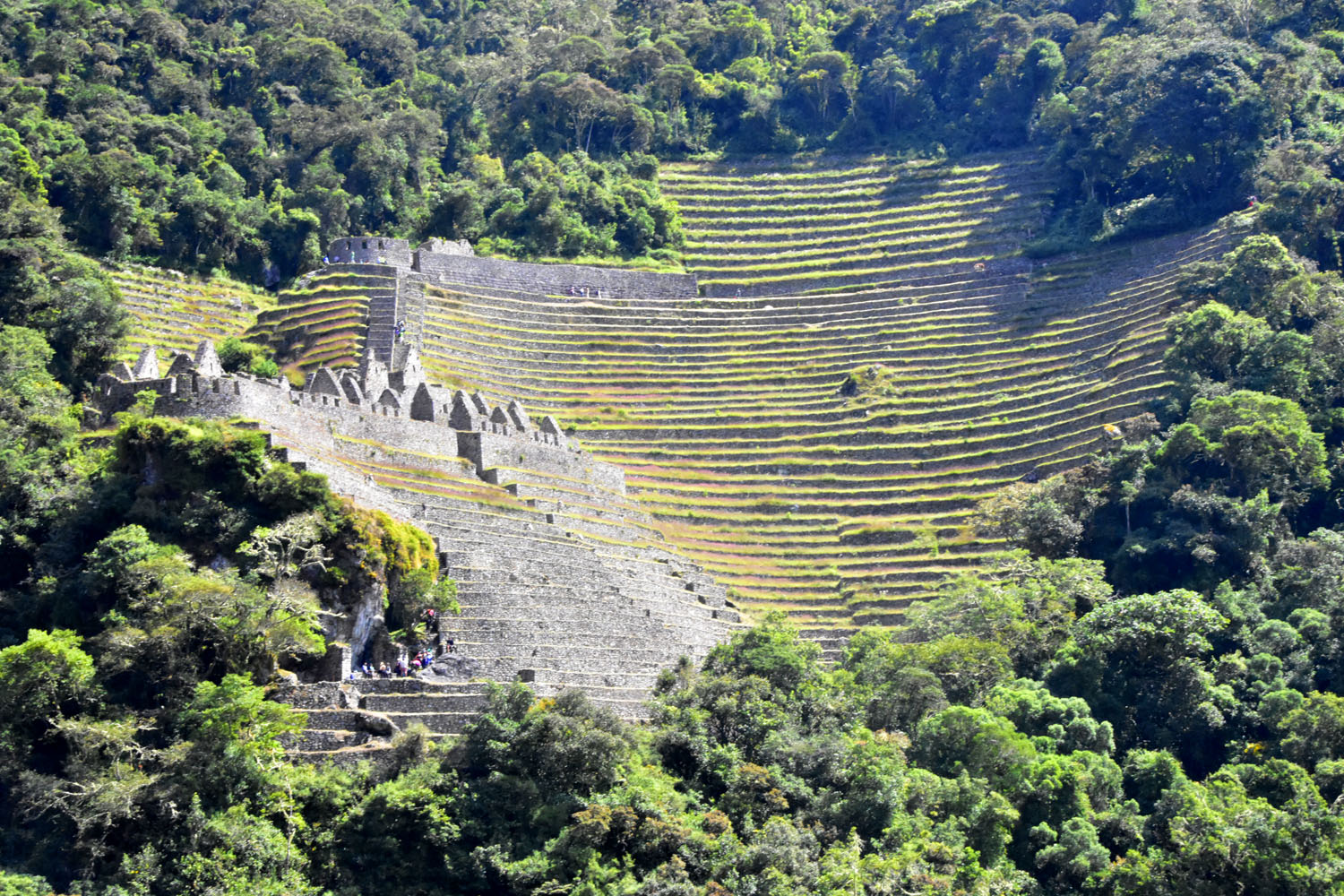 Inca Trail – Wiñay Wayna Inca Ruins
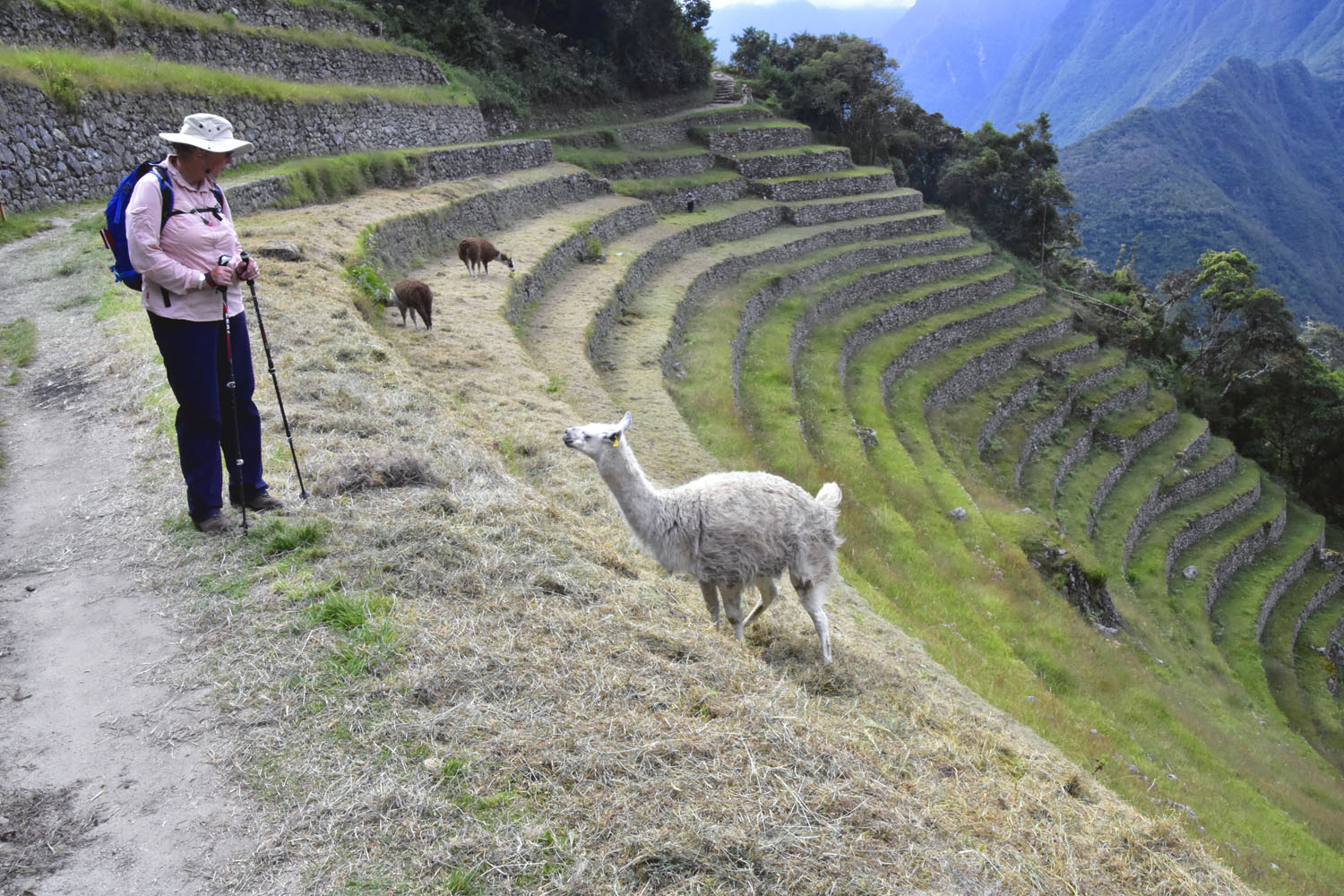 Inca Trail – Wiñay Wayna Llamas
In total, the trek took us about 8 hours to complete, due to the condition of the rock-strewn trail, the temperature (about 25 Deg C, humid and sunny), but mostly due to the effects of walking at high altitude. The trail starts at 7,000 ft, and we climbed nearly 2,000 ft before reaching the Sun Gate, where we were rewarded with our first glimpse of Machu Picchu nestled in the Andian mountains. After another hour’s trek we finally reached Machu Picchu itself, where we picked up a bus to our hotel for the night. The next morning we spent exploring the Machu Picchu ruins with our guide.
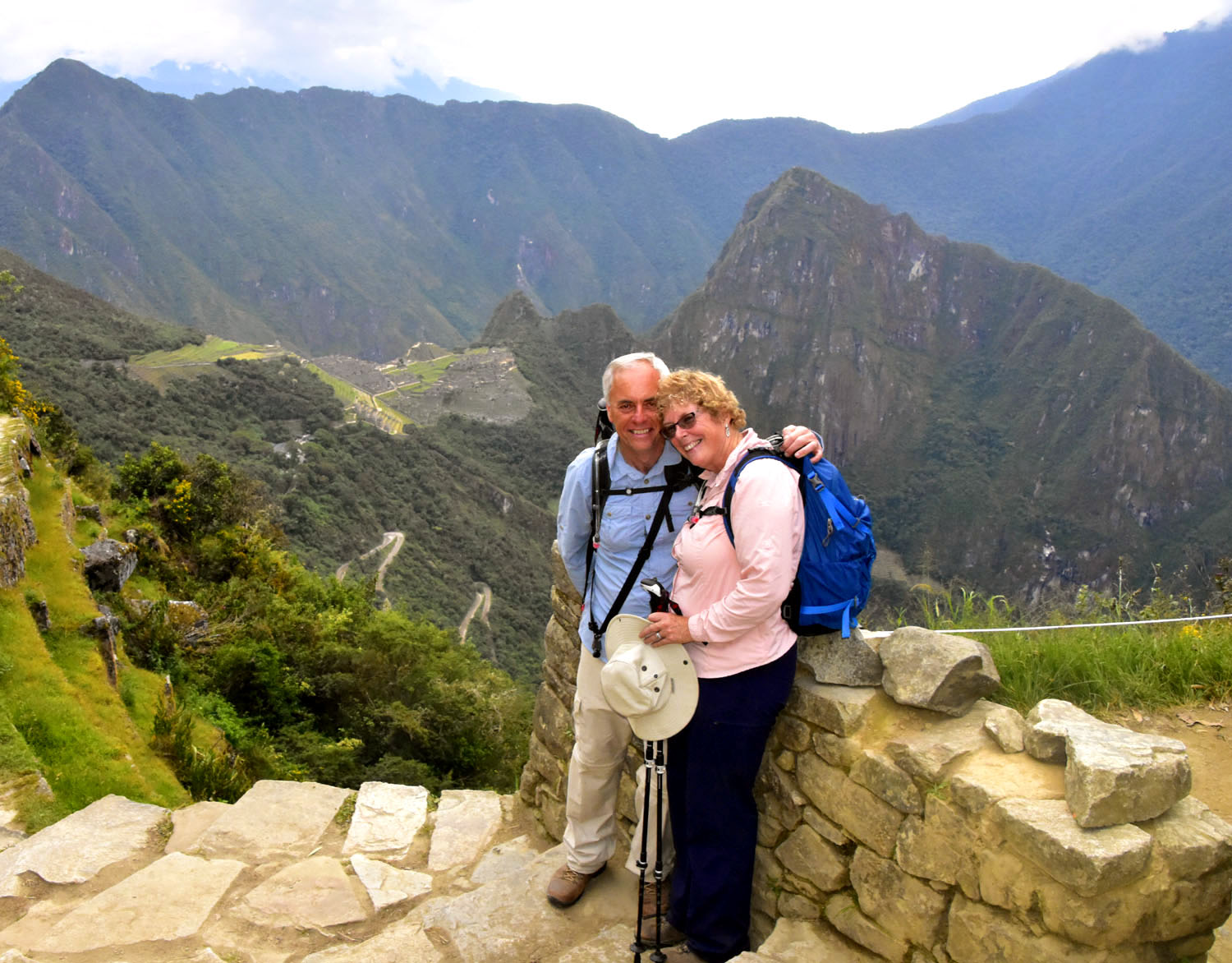 Inca Trail – Sun Gate Overlooking Machu Picchu
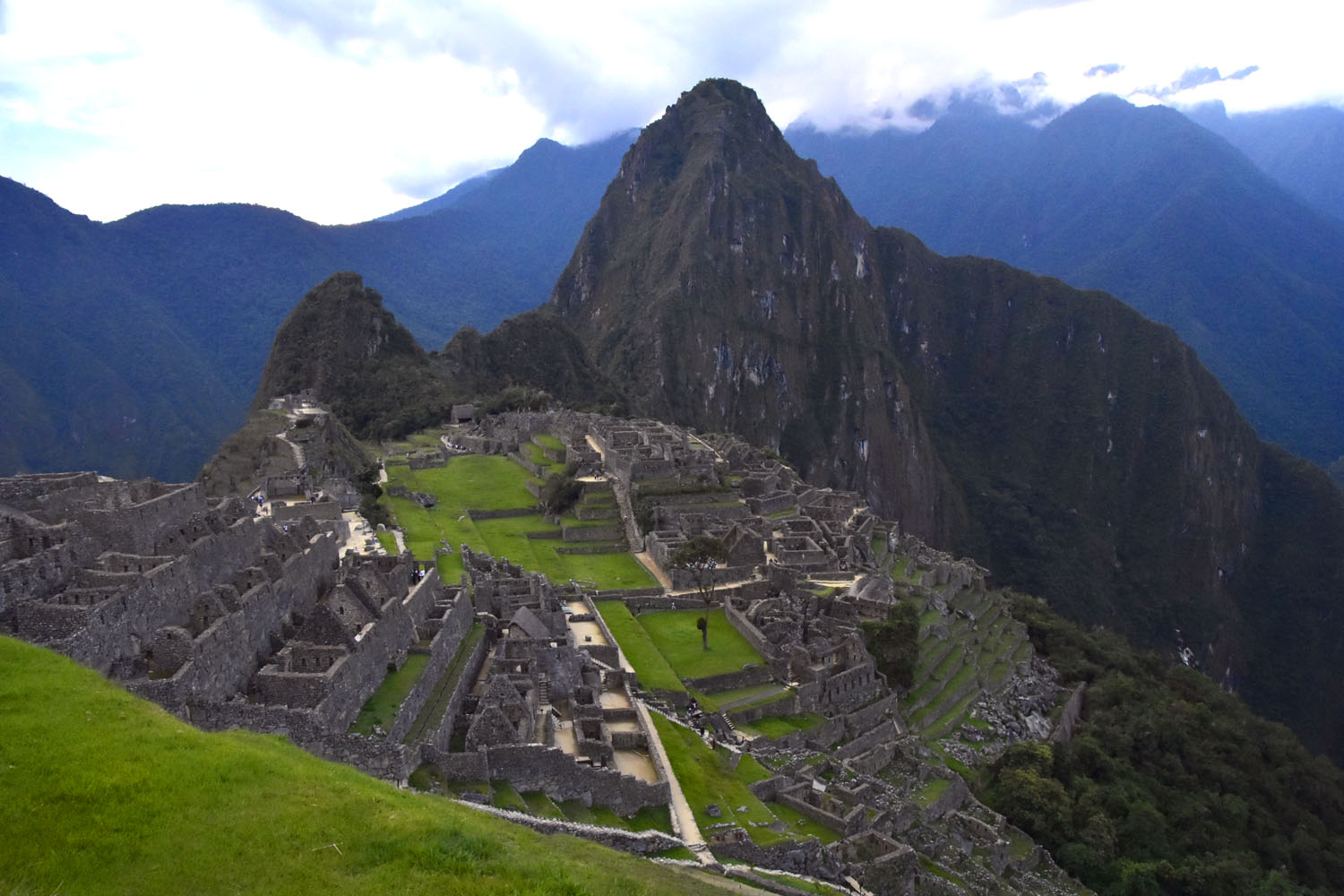 Inca Trail – Iconic View of Machu Picchu
This was a most fantastic two-day trip and in particular a personal achievement for us both to have completed the trek on the first day. We were pleased to have only taken 8 hours to finish it, but there is clearly room for improvement. Each year they run the Inca Trail Marathon. This is run over the traditional 4-day, 26 mile hiking trail. The current record is a little under 4 hours!
Tomorrow we fly to Lima for one night and then home to the UK arriving on Bank Holiday Monday.
 Charlotte & Graham's Travels