After returning from the Amazon Rain Forest, we spent another night in Quito and then headed down the ‘Avenue of the Volcanoes’. Running for 200 miles south of Quito in the Andian mountain range, the ‘Avenue’ contains seven peaks of more than 17,000 feet. In search of the largest of these volcanoes we headed for Chimborazo National Park.
The first thing we came across in the Park were the beautiful vicuña. The vicuña is one of the two wild South American camelids which live in the high alpine areas of the Andes, and is a relative of the llama.
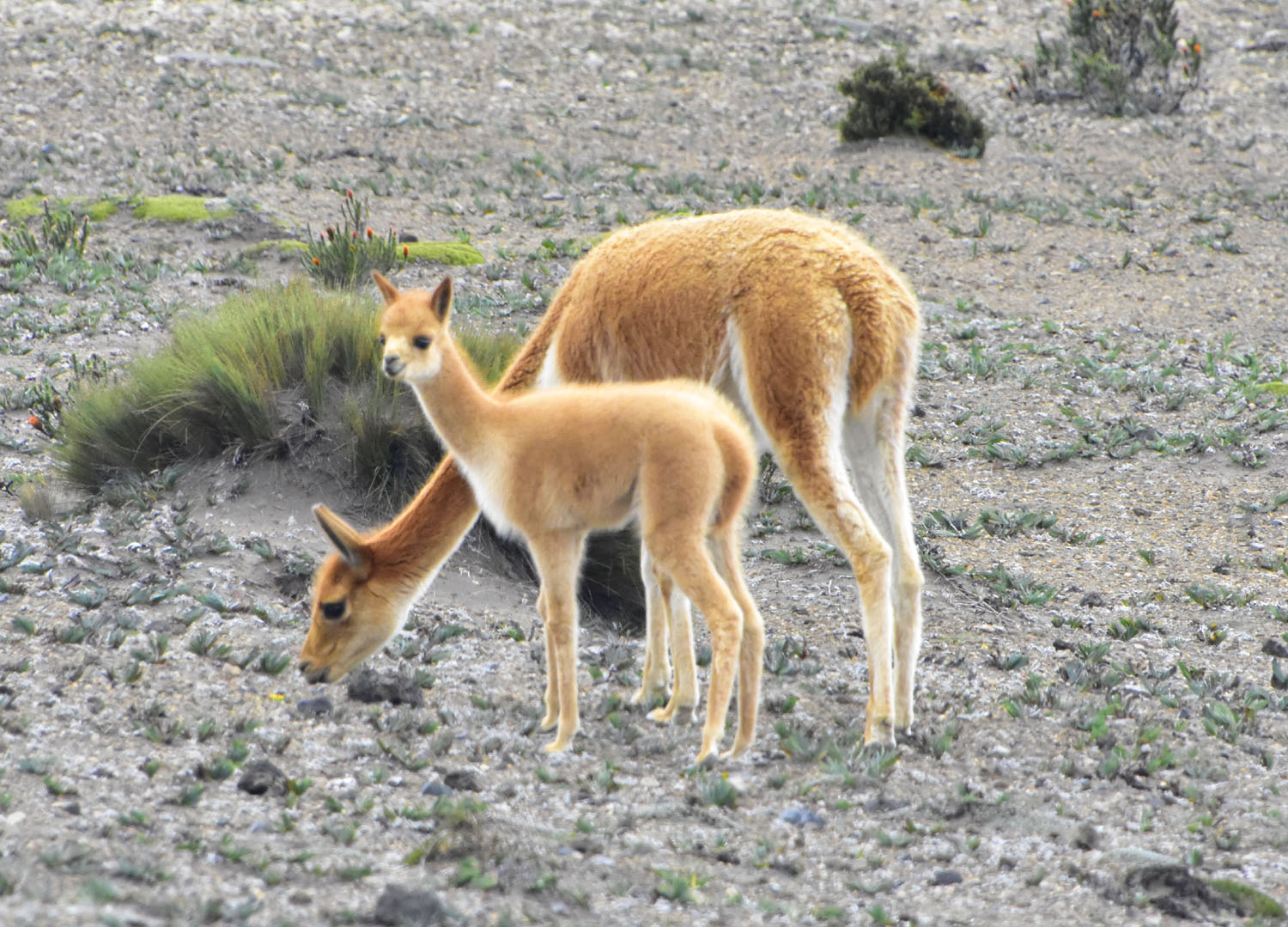 Chimborazo National Park – Vicuña
We headed for the base station of the 20,565-foot Mt Chimborazo, Ecuador’s highest peak, which for a long time was thought to be the highest mountain in the world. (In fact, it is higher than Mt. Everest when measured from the centre of the earth, owing to the planet’s equatorial bulge.) The approach to the base station revealed a desolate, barren landscape which combined with the low cloud produced an amazing vista.
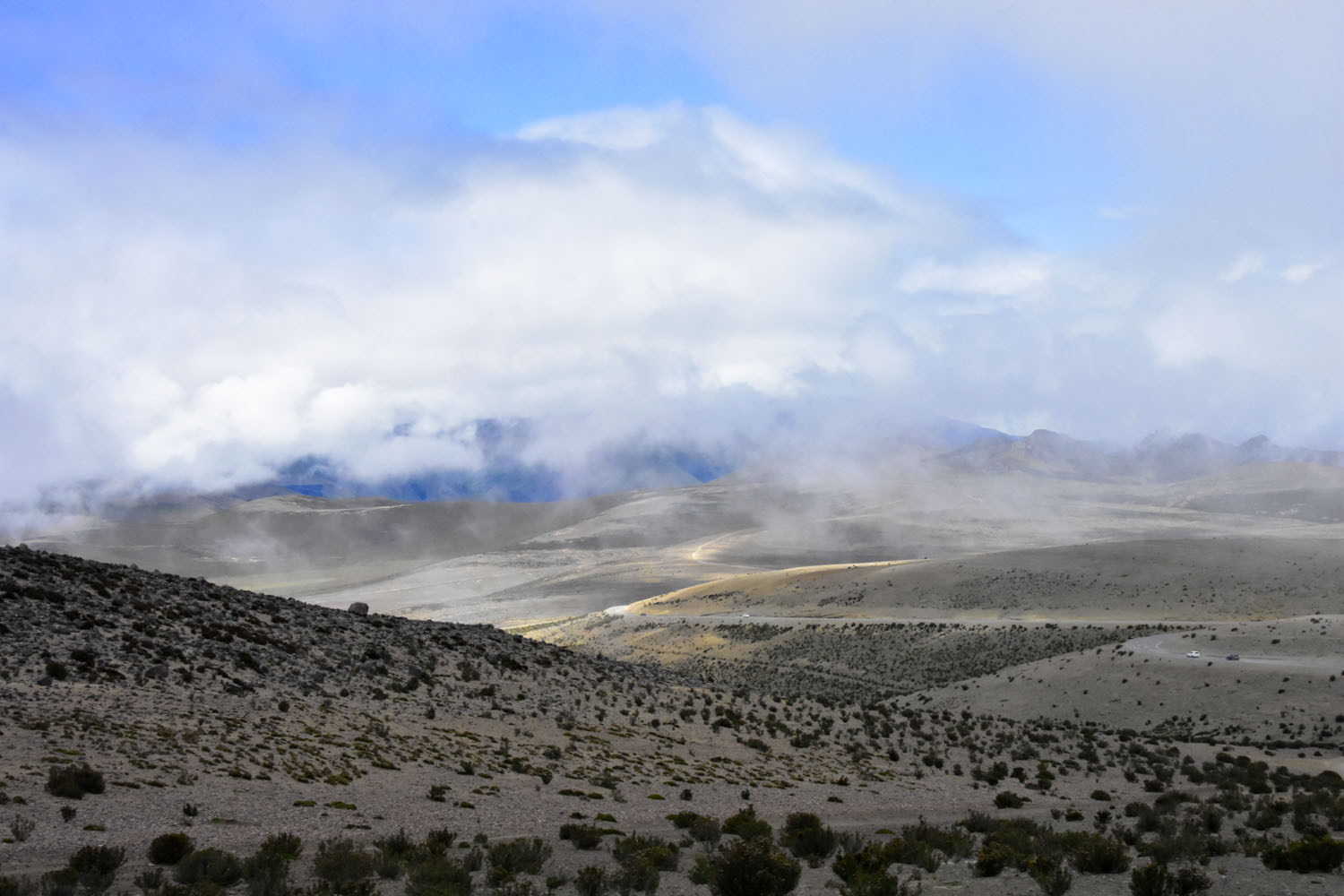 Chimborazo National Park – Desolate, barren landscape
The base station is at an elevation of 15,748ft and is often covered in cloud during the rainy season, as it was when we arrived. It was -2 Deg C, which was a drop of around 30 Deg C compared to the day before when we were in the rain forest! At 15,000ft walking and breathing was also very hard work.
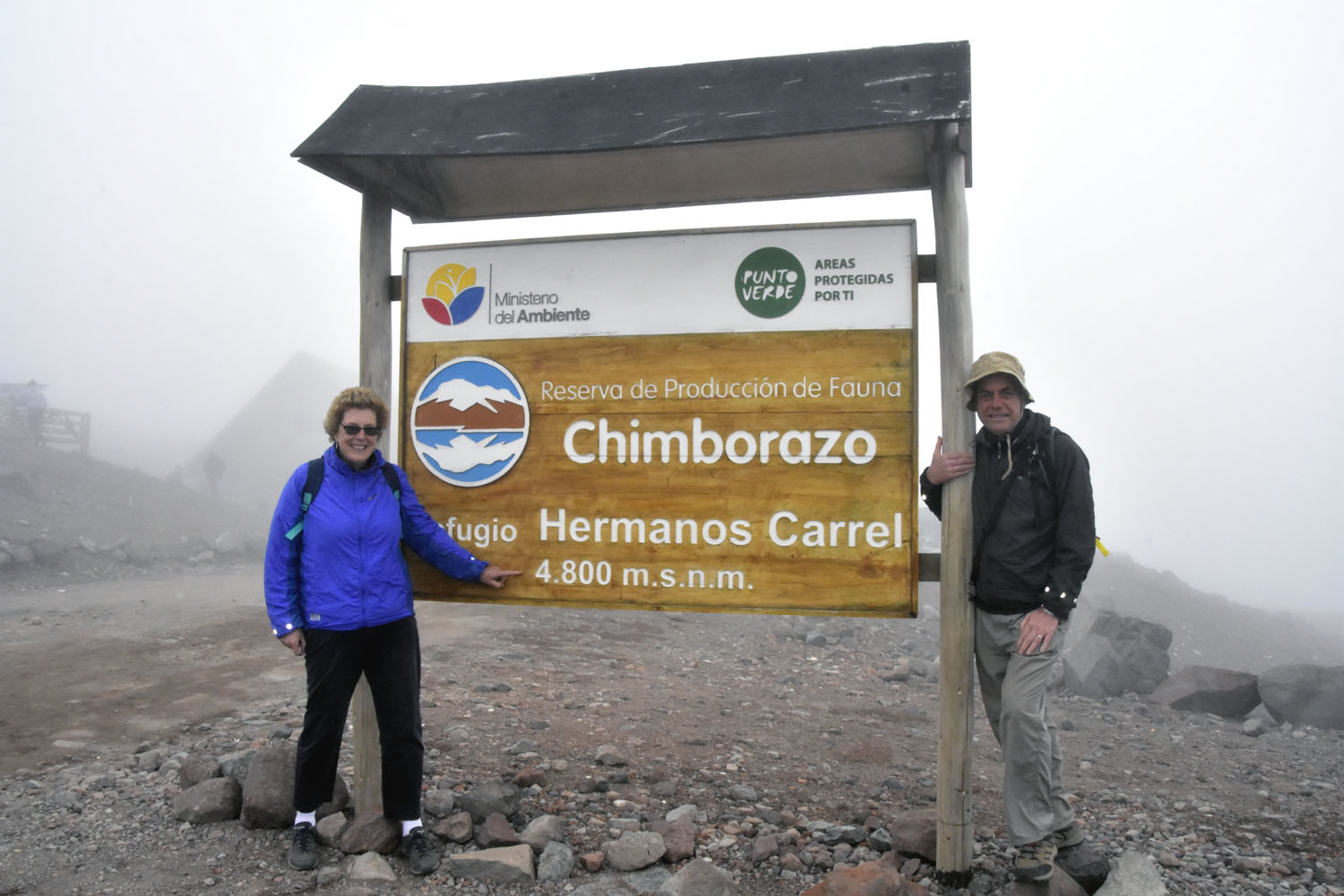 Chimborazo National Park – Chimborazo base station
As we drove back down the cloud started to clear and we were rewarded with a stunning view of Chimborazo from the restaurant where we had lunch.
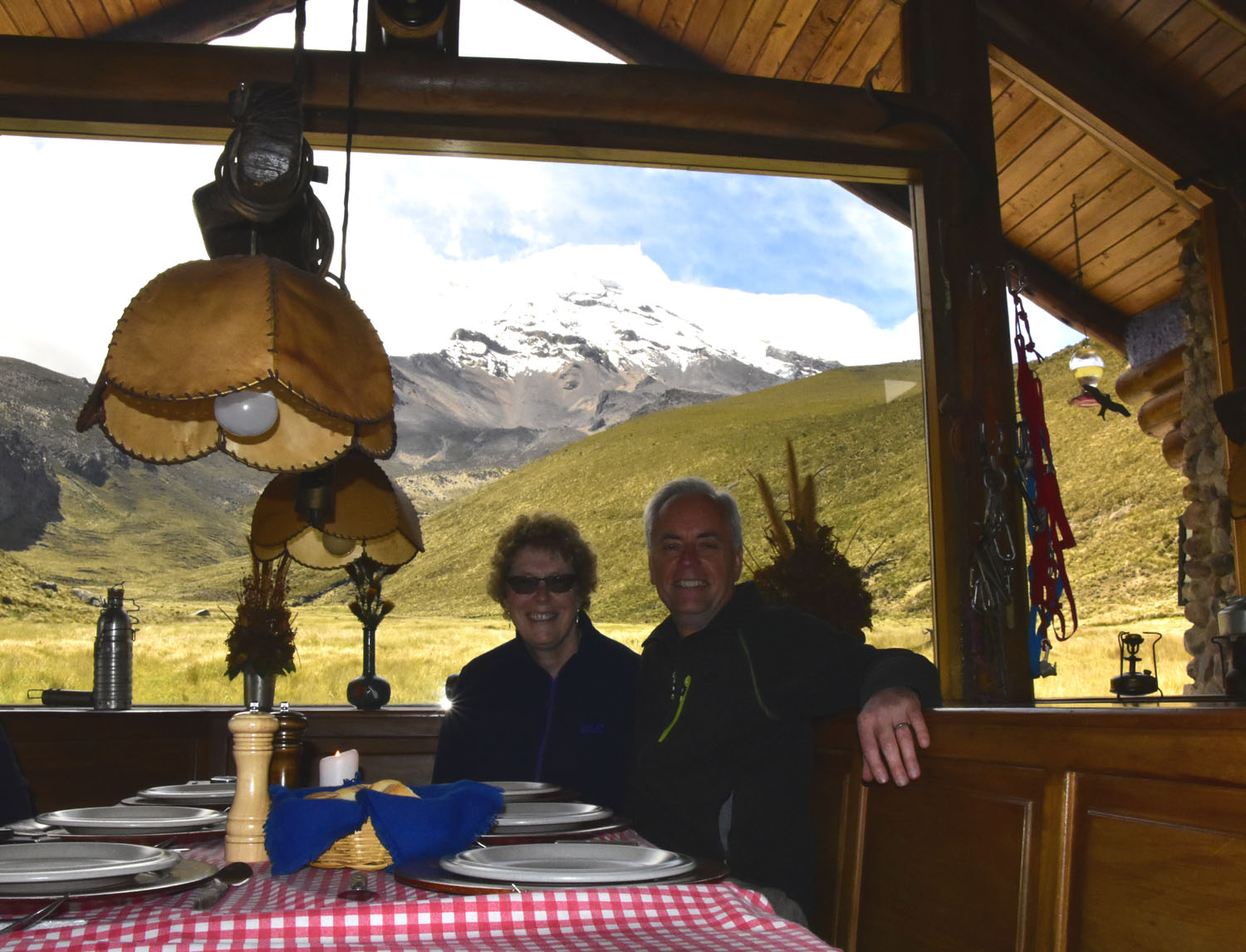 Chimborazo National Park – Lunch stop
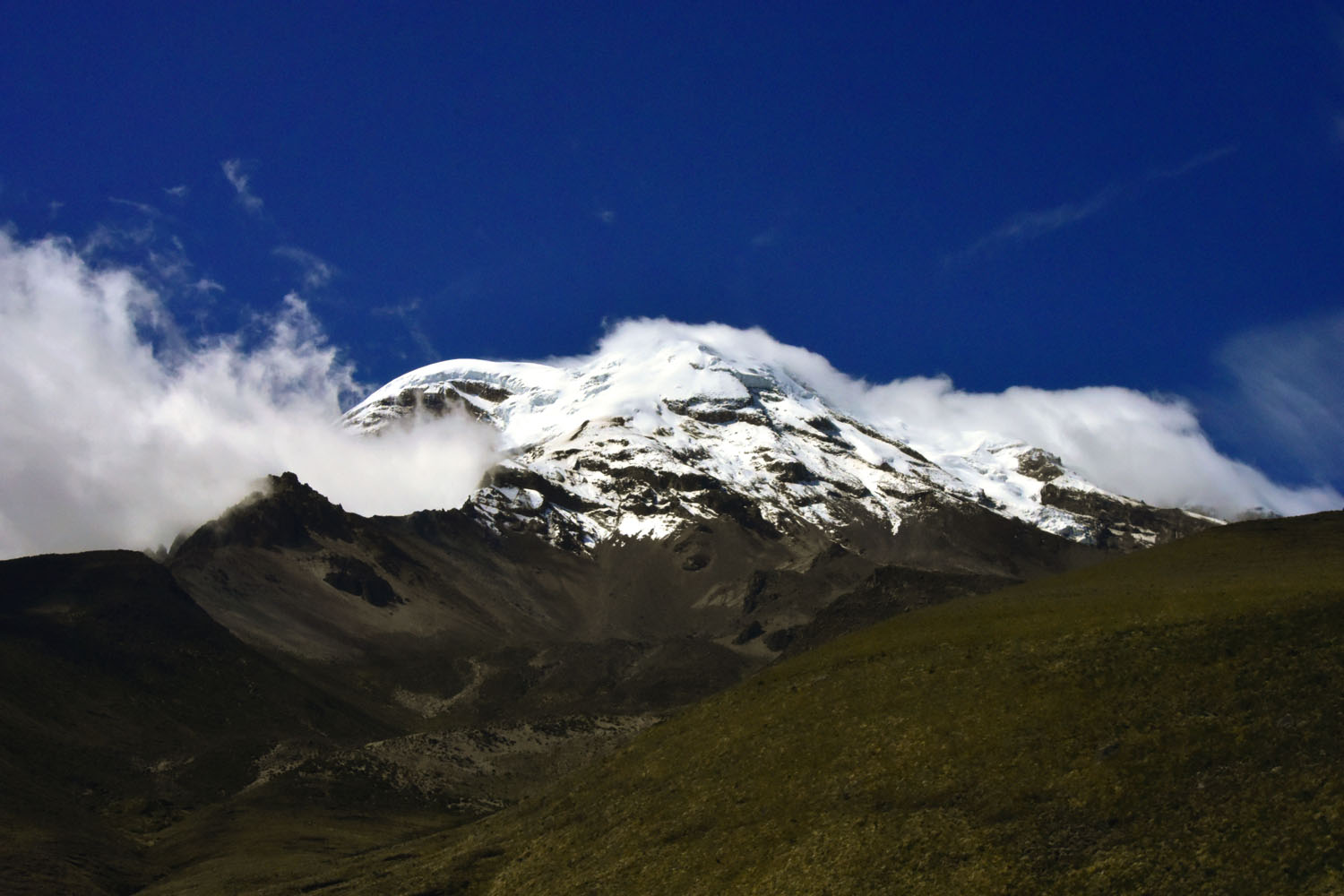 Chimborazo National Park – Chimborazo peak
Following a night in the city of Riobamba, we took a ride on the extraordinary Devil’s Nose Train. The biggest hurdle faced by the construction of this railway was the Devil’s Nose, a mountain with almost perpendicular walls. To overcome this obstacle a zigzag railroad was built that climbs more than 1600 ft in less than 8 miles with steep ascents and descents. Completed in 1902, the Devil’s Nose section of the railway descends from its starting point in the town of Alausi at an elevation of 7,700 ft to the lower station at 4,600 ft. The photo below shows the train traversing the narrow gorge with the river Chanchán below.
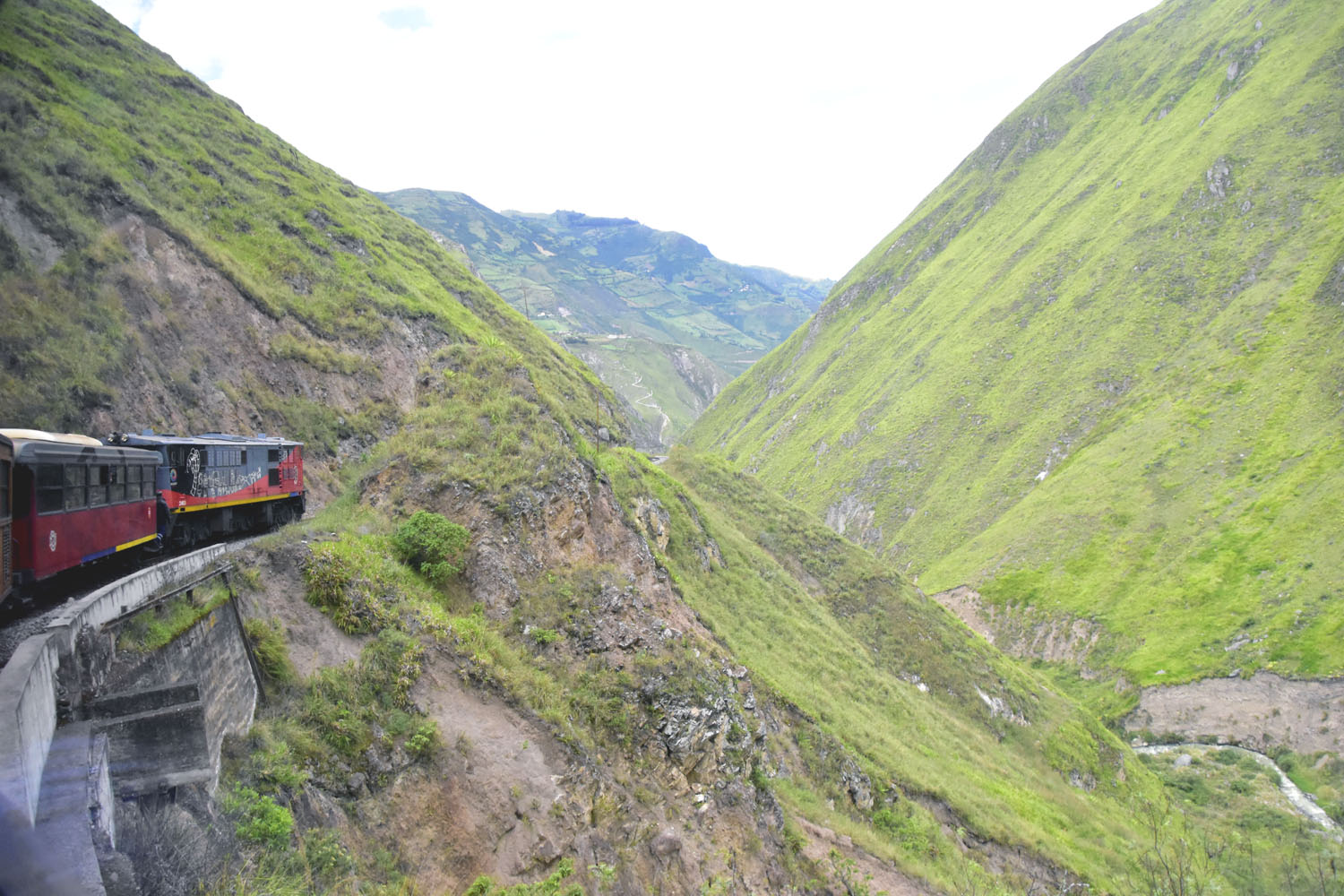 Devil’s Nose train
We then descended into the lower Andes. The landscape is very different from the volcanic mountainous region we had been travelling through. The area is covered in farms and small-holdings, many cultivating crops such as quinoa, soya beans, sweet corn, carrots and potatoes.
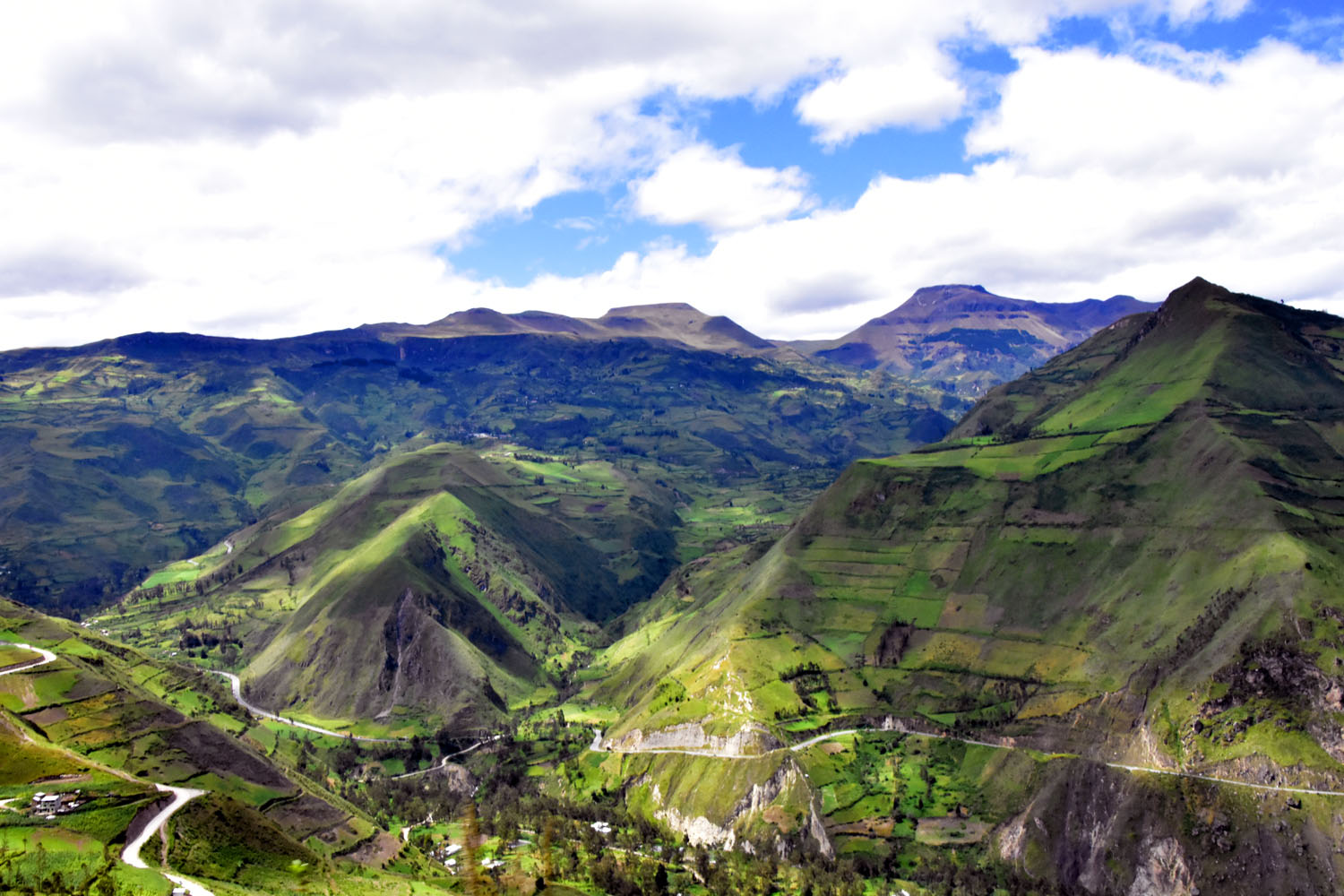 Lower Andies
We stopped in Ingapirca, a town with the largest known Inca ruins in Ecuador. The most significant building is the Temple of the Sun, an elliptically shaped building constructed around a large rock. The roadway passing through the ruins is part of the Inca trail connecting Quito in the north to Cusco and Machu Picchu in Peru. This was our first visit to an Inca ruin and gave us an insight into what we will be seeing later on in our travels in Peru.
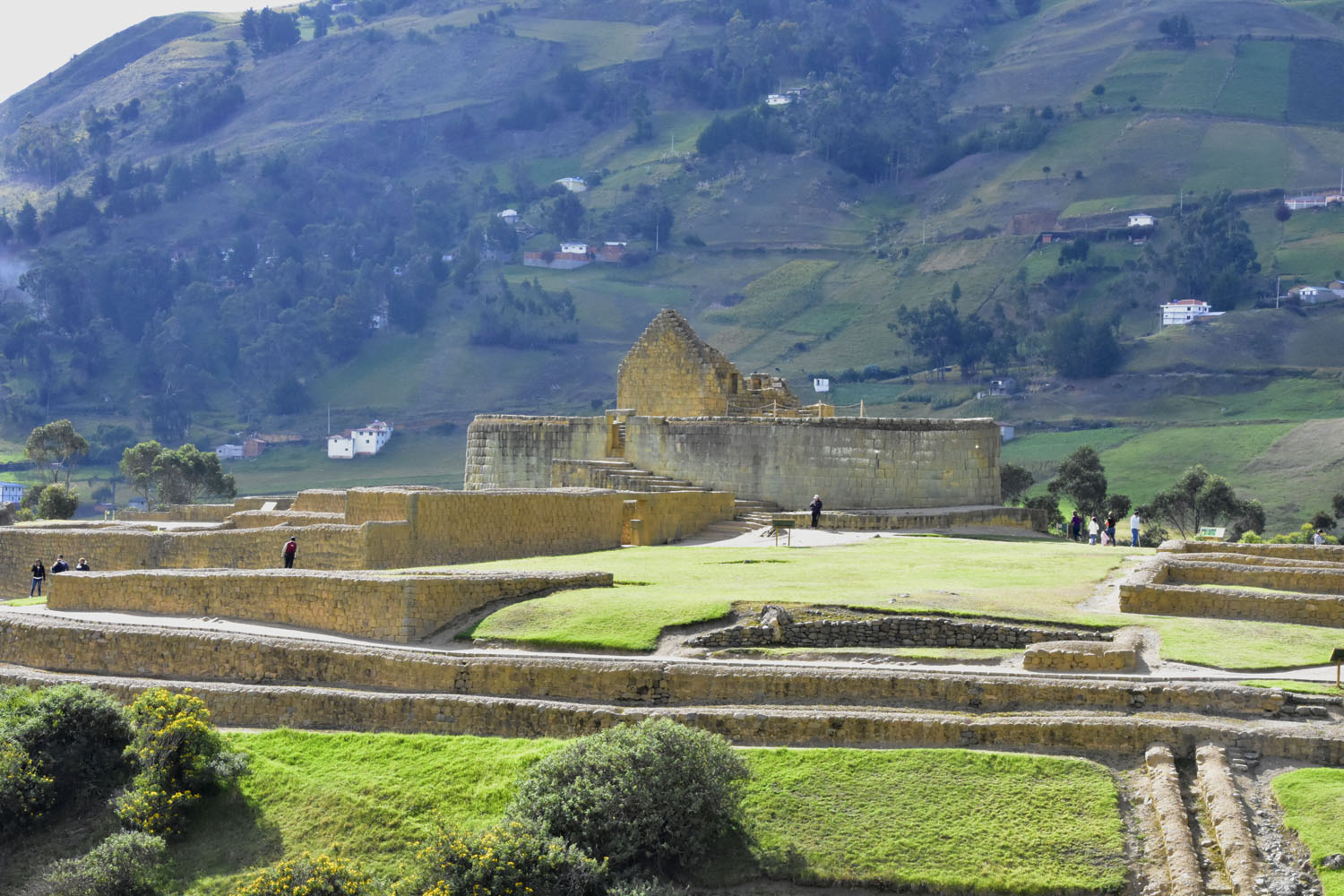 Ingapirca Inca ruins
We then travelled to the city of Cuenca for a 2-night stay. Cuenca is considered by most Ecuadorians to be the country’s most beautiful city. With a population of over 400,000 it is the third largest city in Ecuador and is located at an elevation of 9,400 ft in the Andes. The city is blessed with cobblestone streets, artisan crafts, beautiful cathedrals, colonial parks, urban rivers and a city centre that is a UNESCO World Heritage Site. The picture below is a view over the old town.
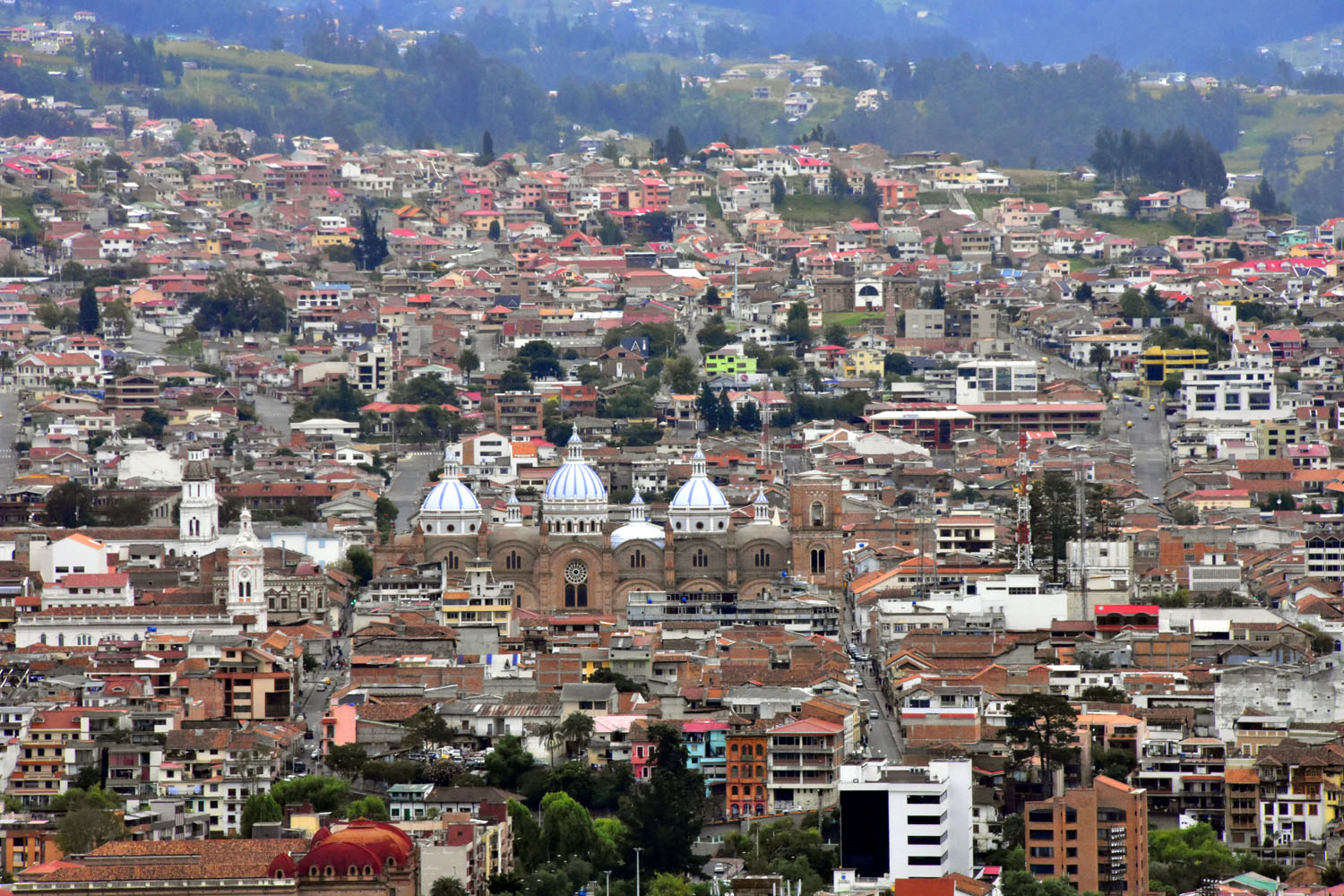 Cuenca City – View over the old town
The final day of our tour of Southern Ecuador took us to the Cajas National Park and a visit to a small cocoa plantation as we travelled to Guayaquil, the country’s largest city.
Cajas National Park is a Páramo Wetlands, incorporating a jagged landscape of rocky peaks, grasslands and crystal clear streams and lakes. The park lies at over 13,000 ft above sea level, stretches across 70,000 acres and includes approximately 768 lakes, all of which are glacier fed. It has the highest concentration of lakes in the world. Even though we were plagued with low cloud and rain, it was a very interesting landscape.
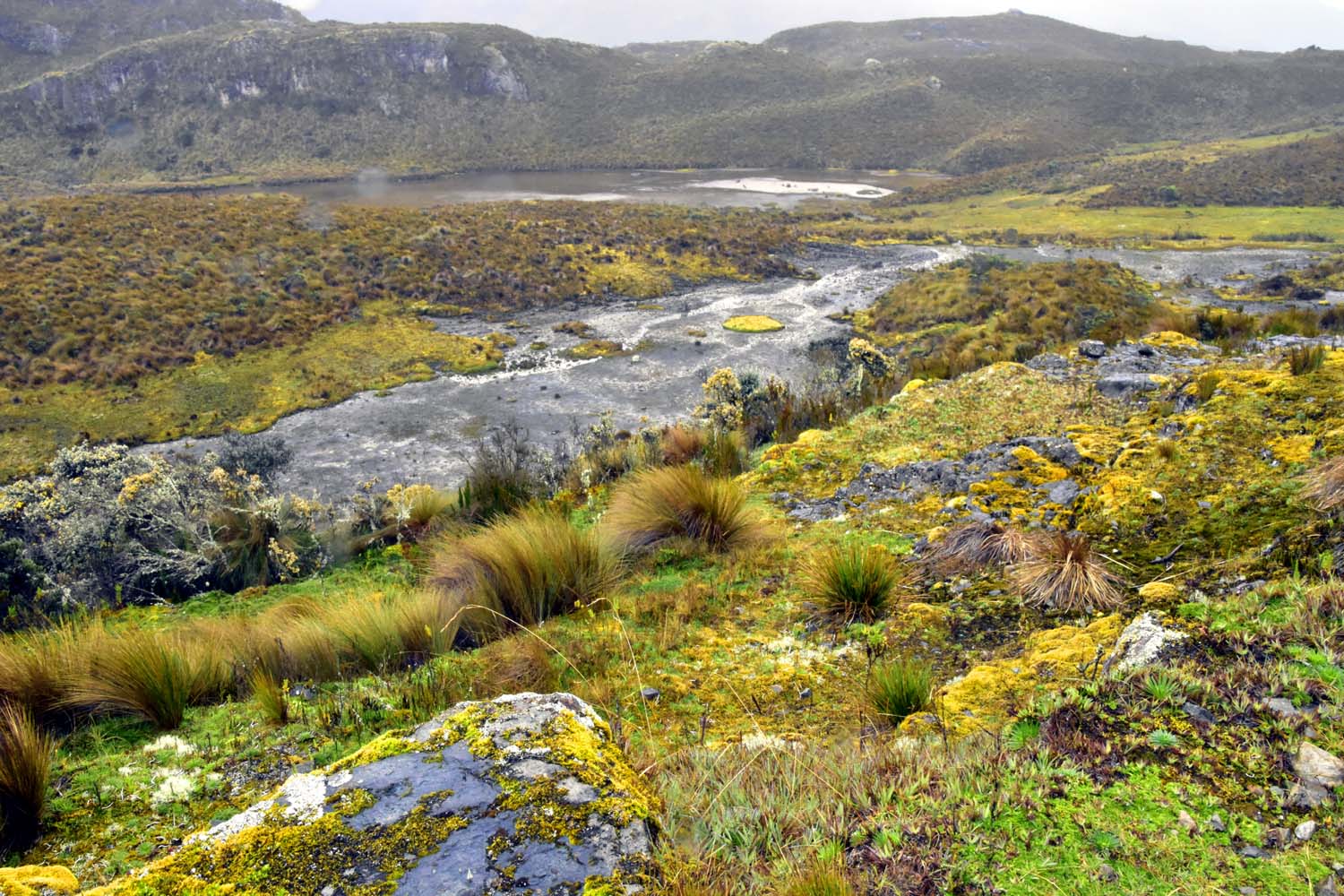 Cajas National Park
At the Finca Cacao y Mango cocoa plantation we learnt about the Cocoa plant and the process for extracting the cocoa seed and making chocolate. Ecuadorian chocolate is regarded as one of the best and most expensive in the world. We then made a hot chocolate drink. The picture below shows Charlotte grinding the cocoa seeds to produce the chocolate paste, which is boiled with sugar cane and lemongrass to produce the drink and very delicious it was too!
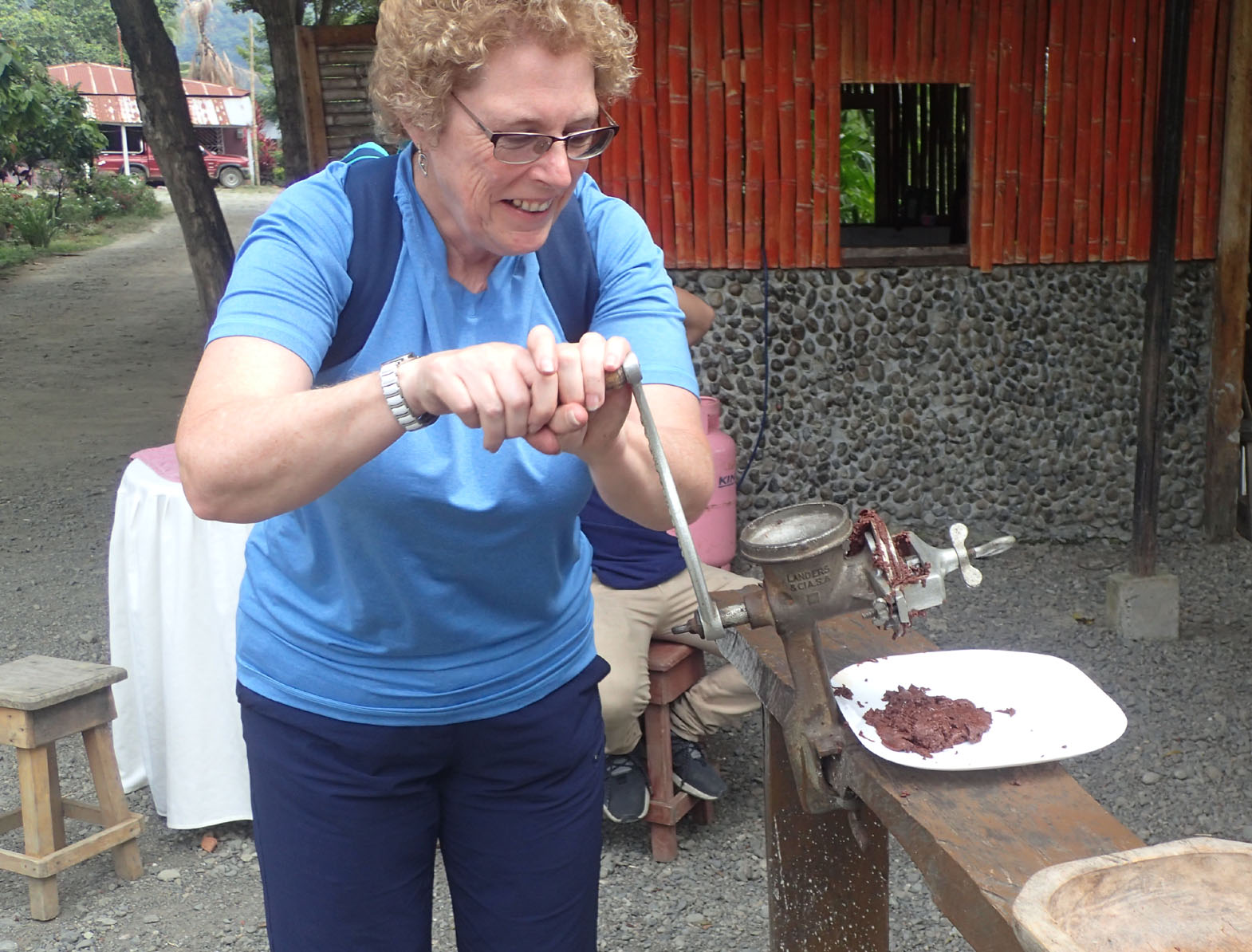 Cocoa Plantation – Grinding Coca seeds
Tomorrow we fly out to the Galapagos Islands, which for us, was always going to be one of the highlights of this trip. So hopefully more adventures to follow…
 Charlotte & Graham's Travels