Tortuguero National Park
Tortuguero National Park is situated in the northeastern part of the country on the Atlantic Coast, or more precisely the Caribbean Sea. Despite its remote location, reachable only by aircraft or boat, it is the third-most visited park in Costa Rica. The park has a large biological diversity due to the existence of eleven different habitats, including rainforest, mangrove forests, swamps, beaches, and lagoons. Located in a tropical climate, it is very humid, and receives up to 250 inches of rain a year.
Our home for the next couple of nights was Aninga Lodge, which is located only 5 minutes away from the Tortuguero National Park and right across the main canal, facing the town of Tortuguero. Known as the Little Amazon, it is surrounded by a network of picturesque canals and is considered one of the most exotic regions in the world with its rich flora and fauna. The lodge is reached by a 2-hour boat ride along jungle waterways inhabited by monkeys and varied birdlife. Here are a few photos from the boat trip along the Cano California canal to our lodge.
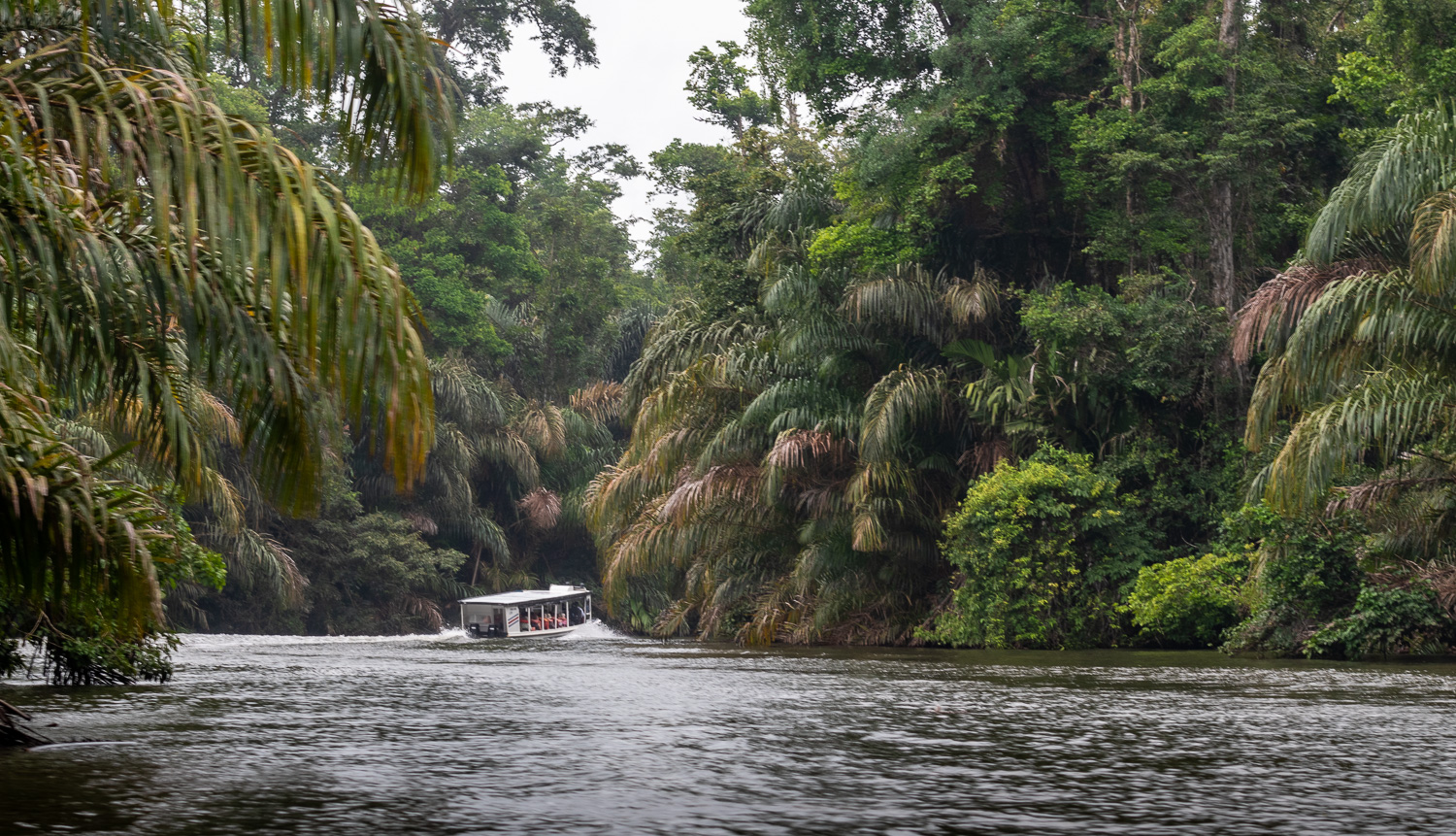 One of the many boats taking its guests to their hotel or lodge situated along the canal bank
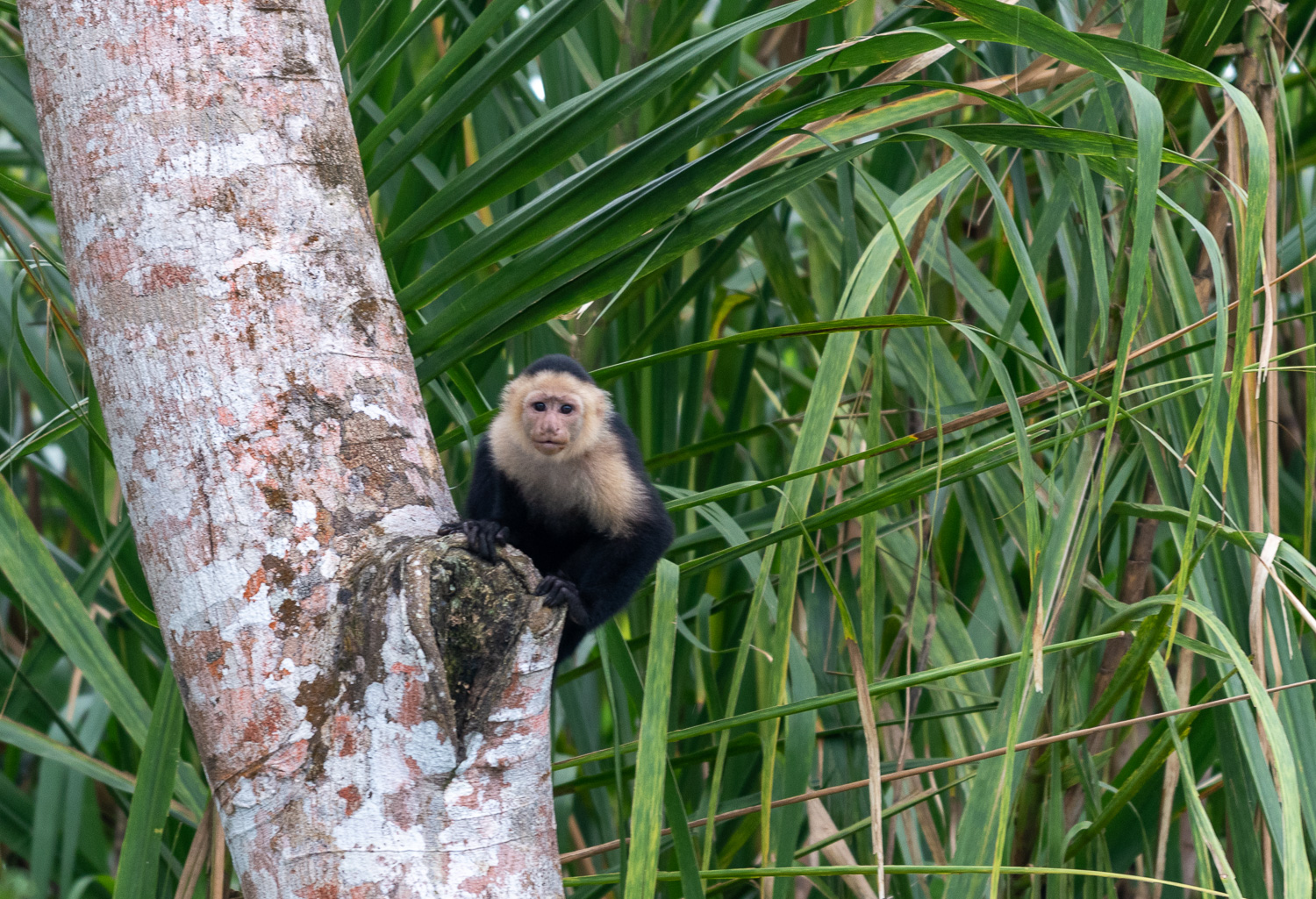 A white-faced Capuchin monkey watches the boats go by!
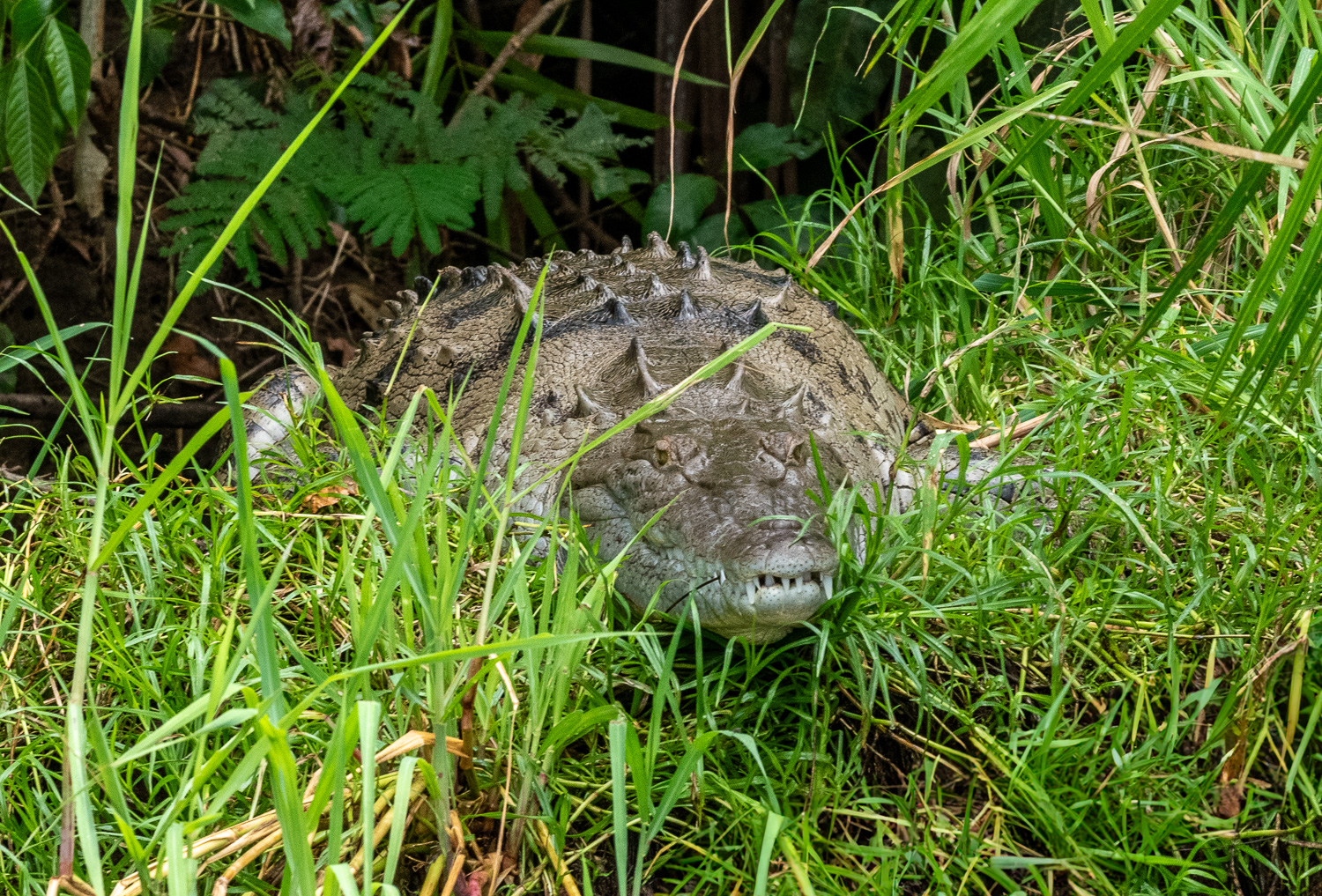 An American Crocodile keeping a watchful eye.
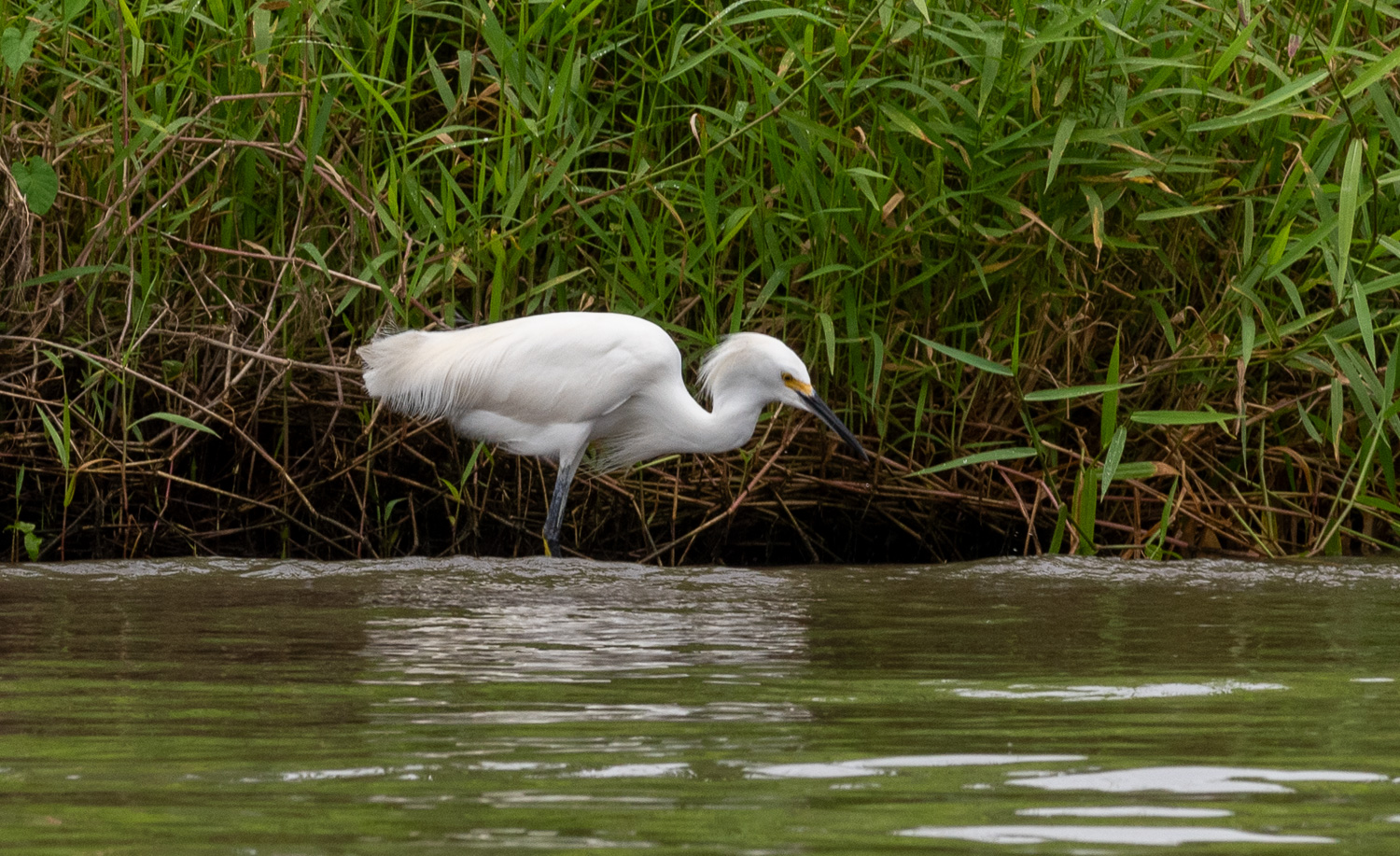 Snow Egret
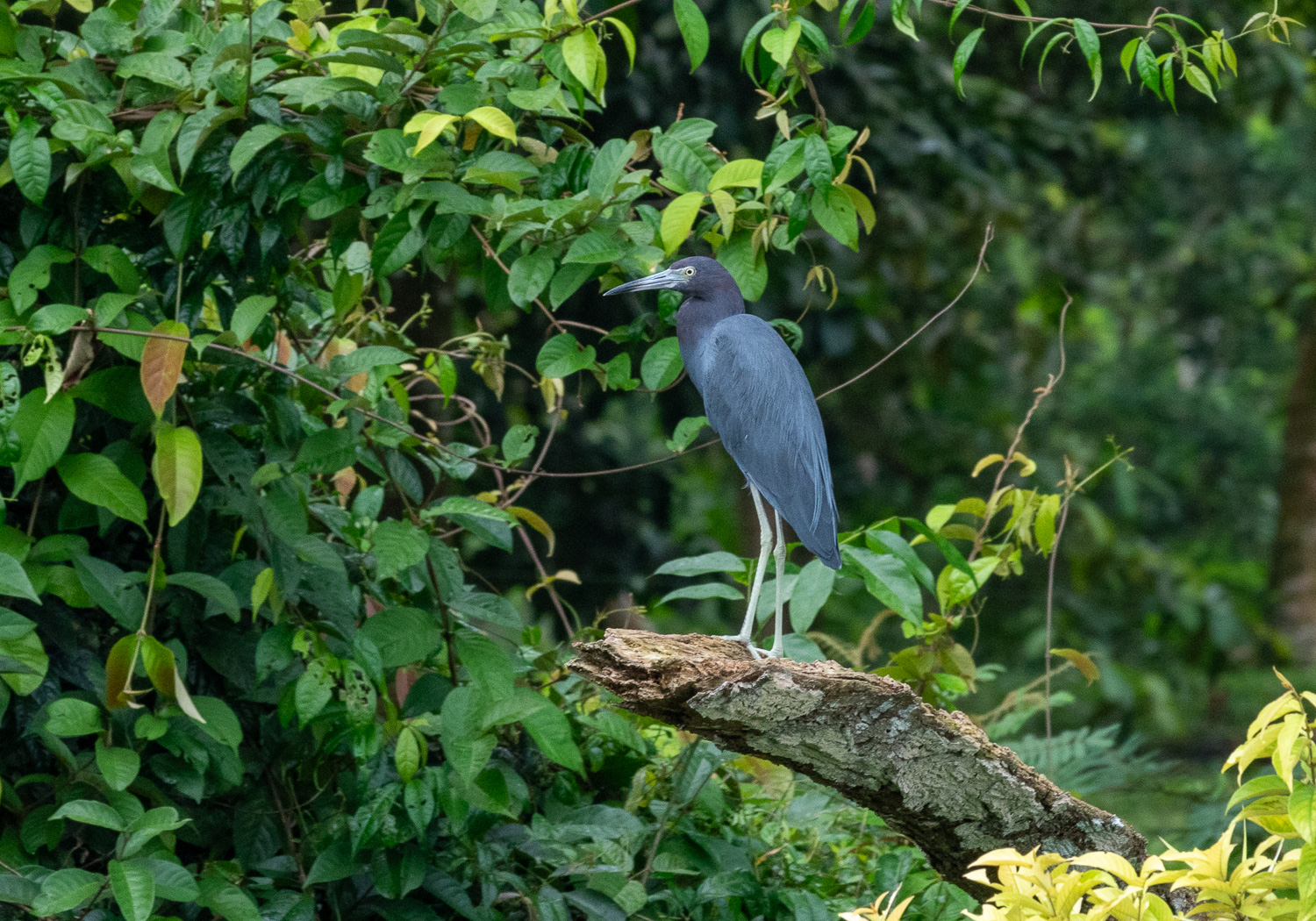 A beautiful Blue Heron
After the interesting boat trip we arrived at our lodge.
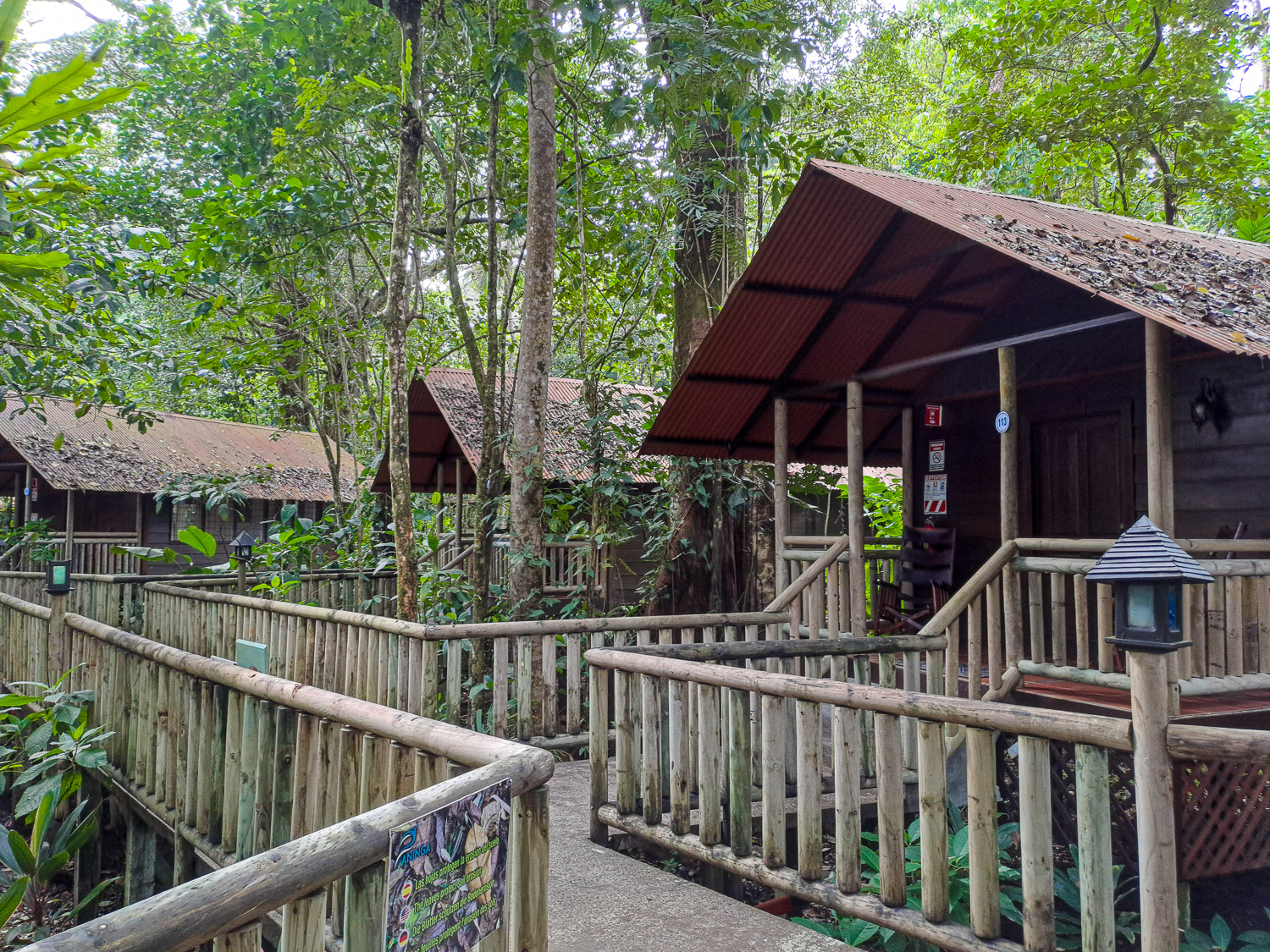 The chalets were located deep in the rainforest, interconnected by walkways
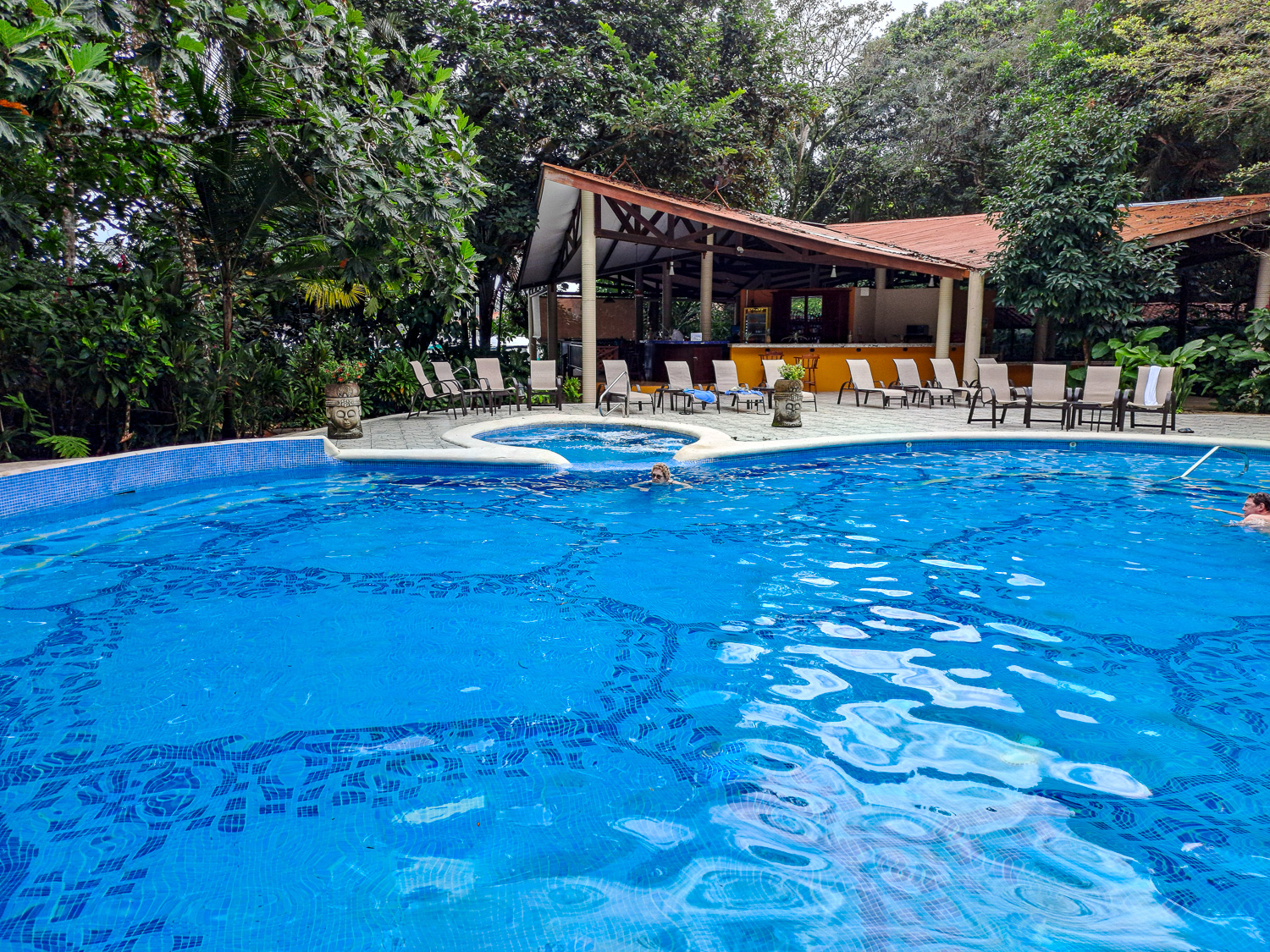 Charlotte soon found the lovely pool, where she swam and watched the monkeys play in the trees above!
The lodge had a number of walking trails through the rainforest, which allowed us to view yet more beautiful birds and animals.
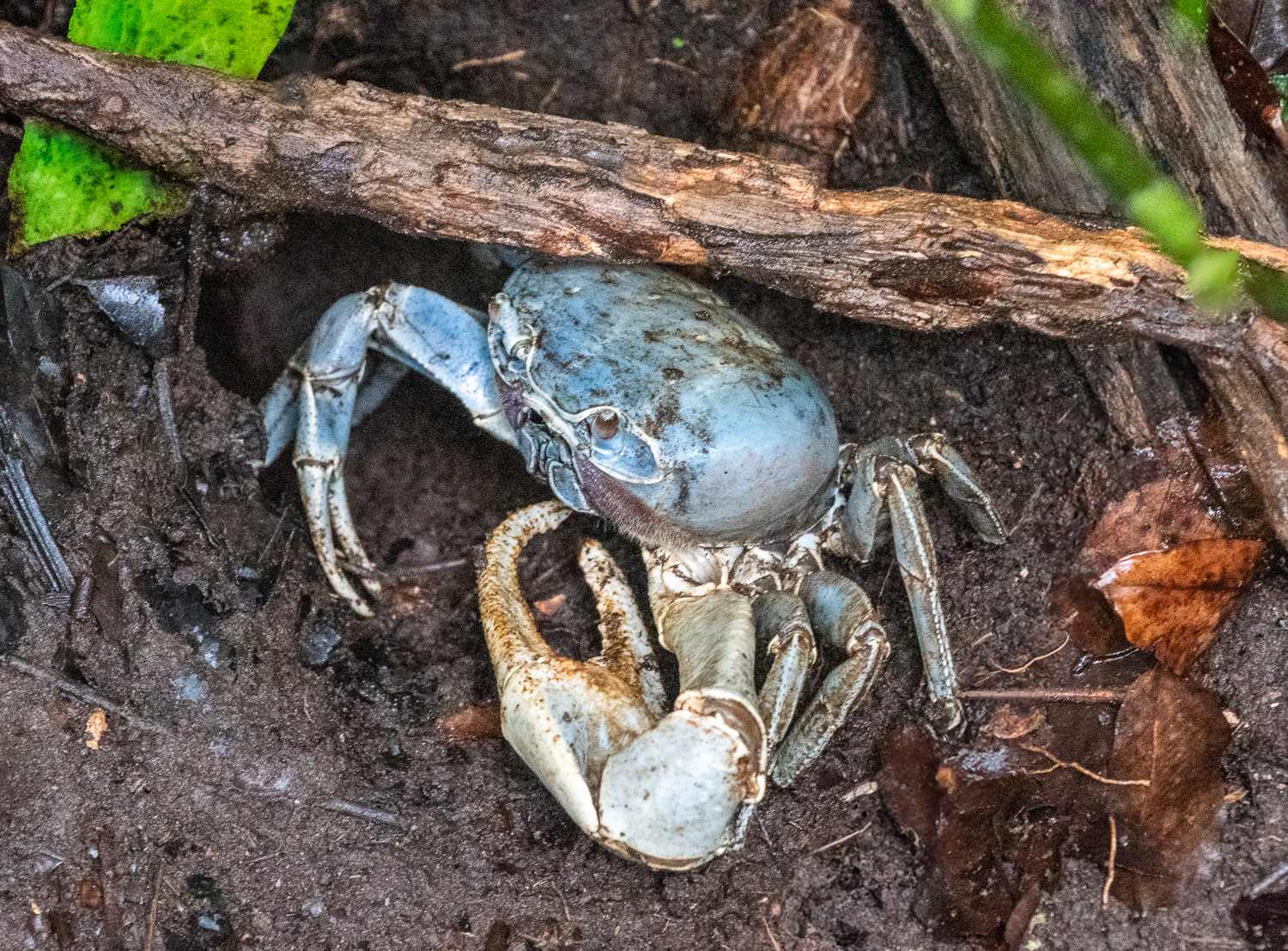 Nine-inch wide Blue Crab
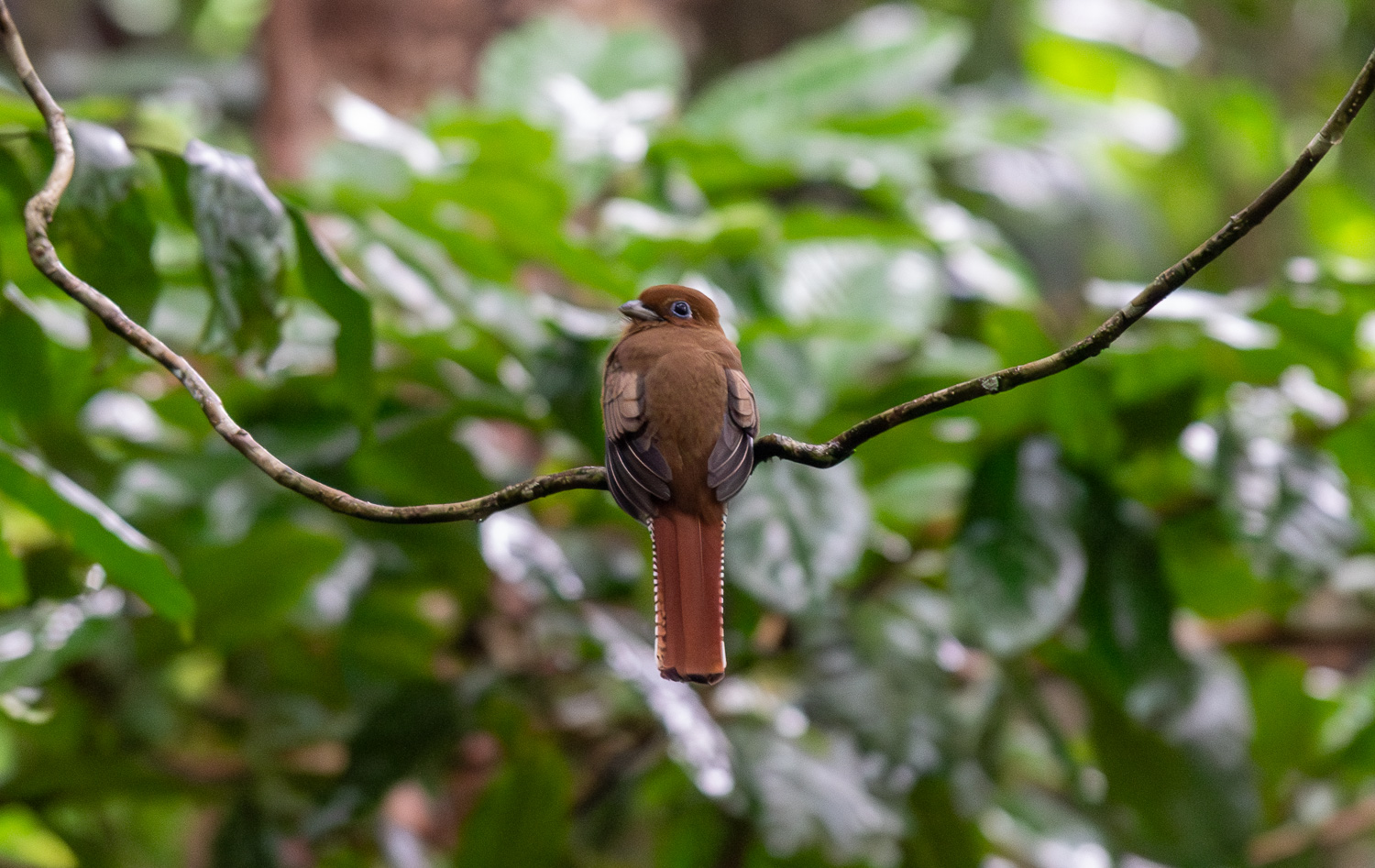 Black-throated Trogon
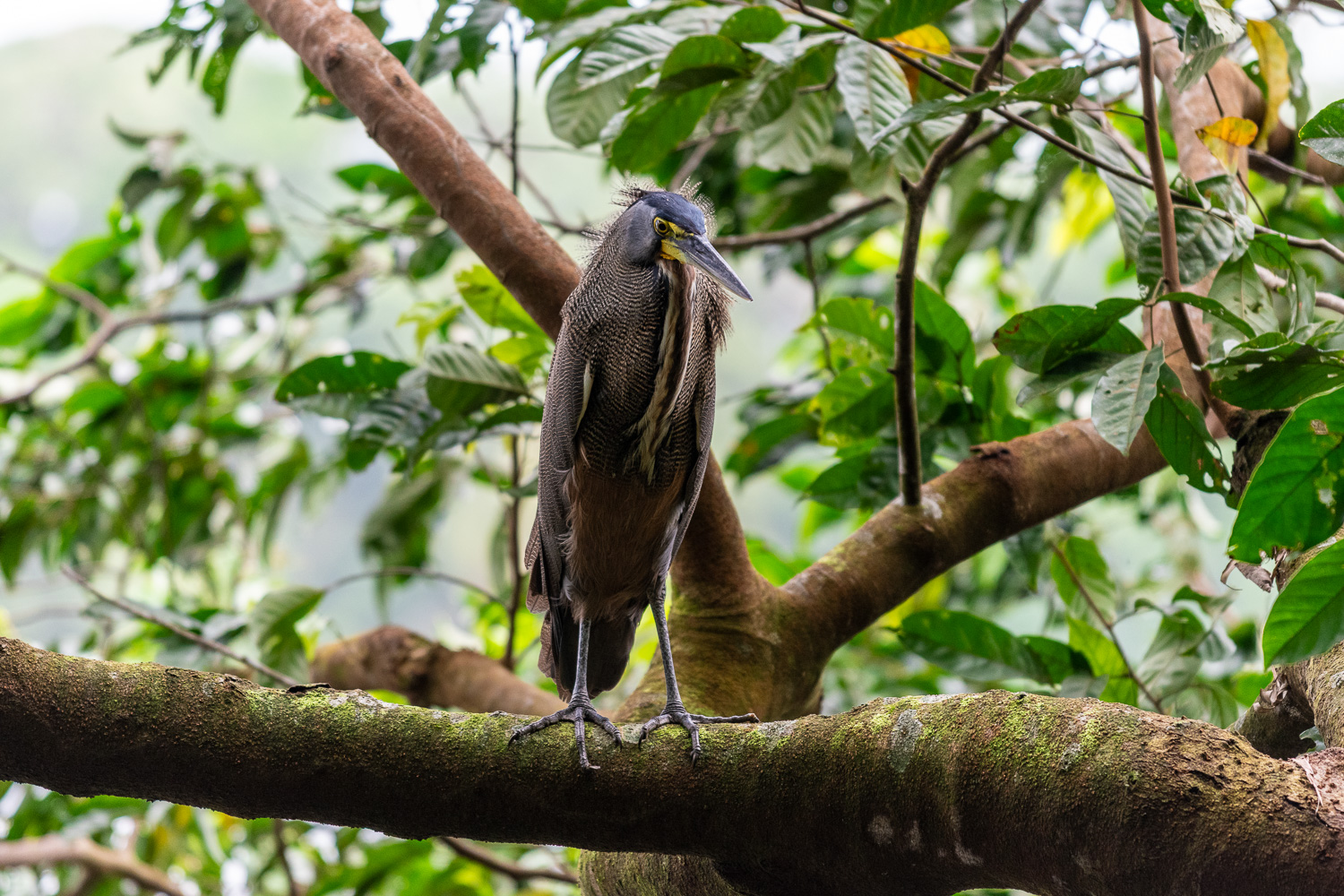 The majestic Tiger Heron
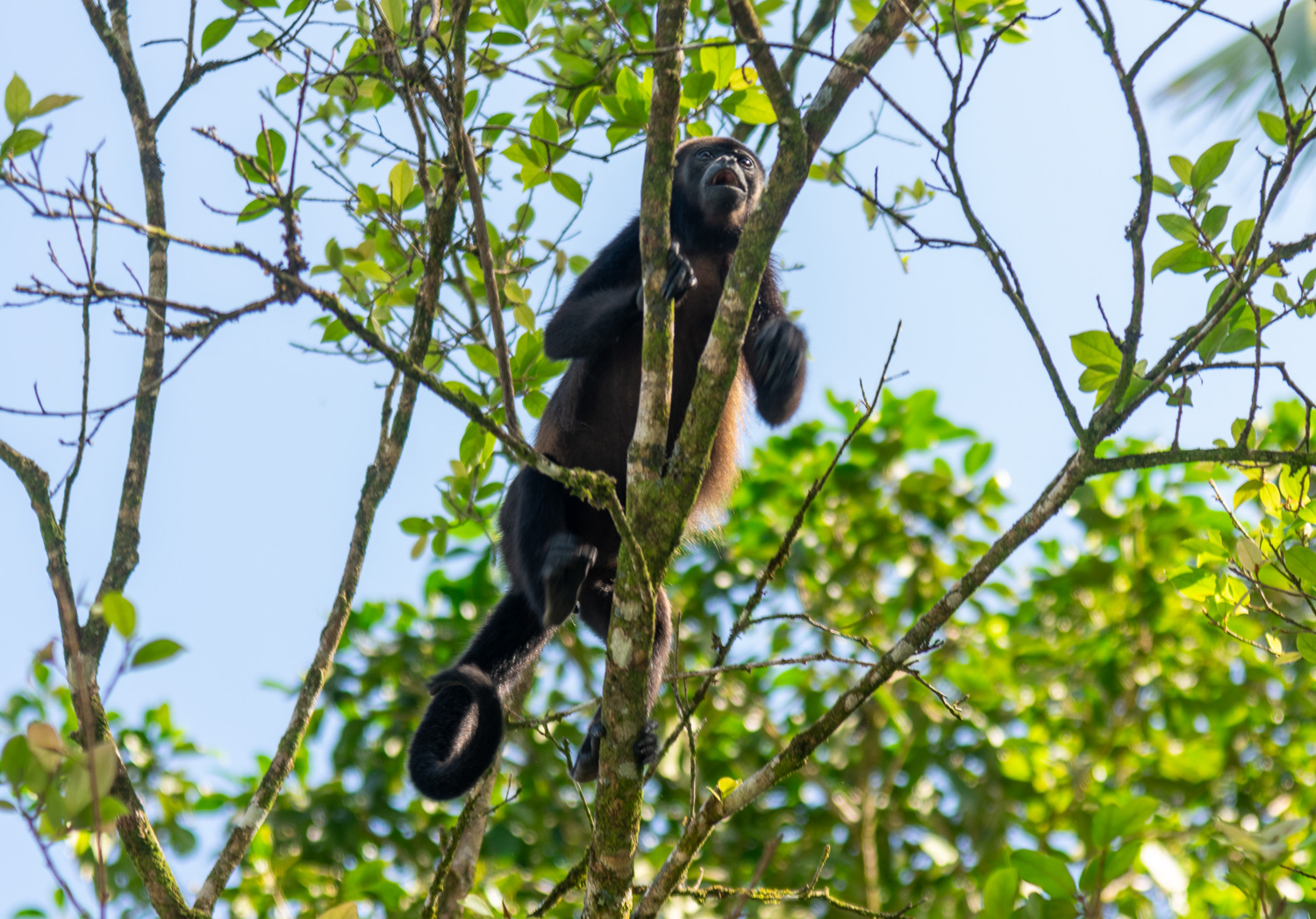 Spider Monkey
The next day we ventuered into the National Park on a small boat to explore the wildlife along the canals.
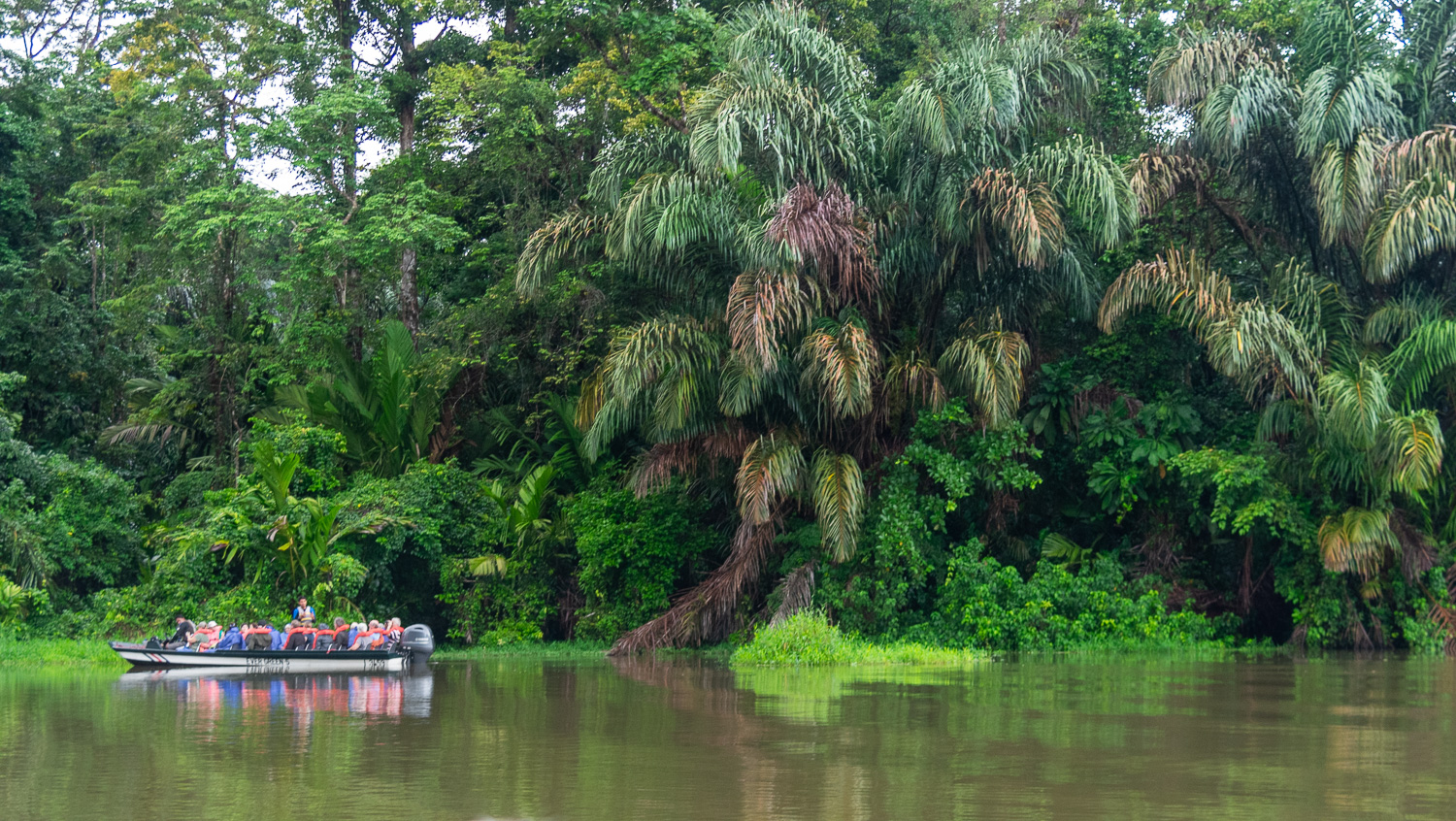 The small, open-top boats gave us excellent visibilty of the rainforest
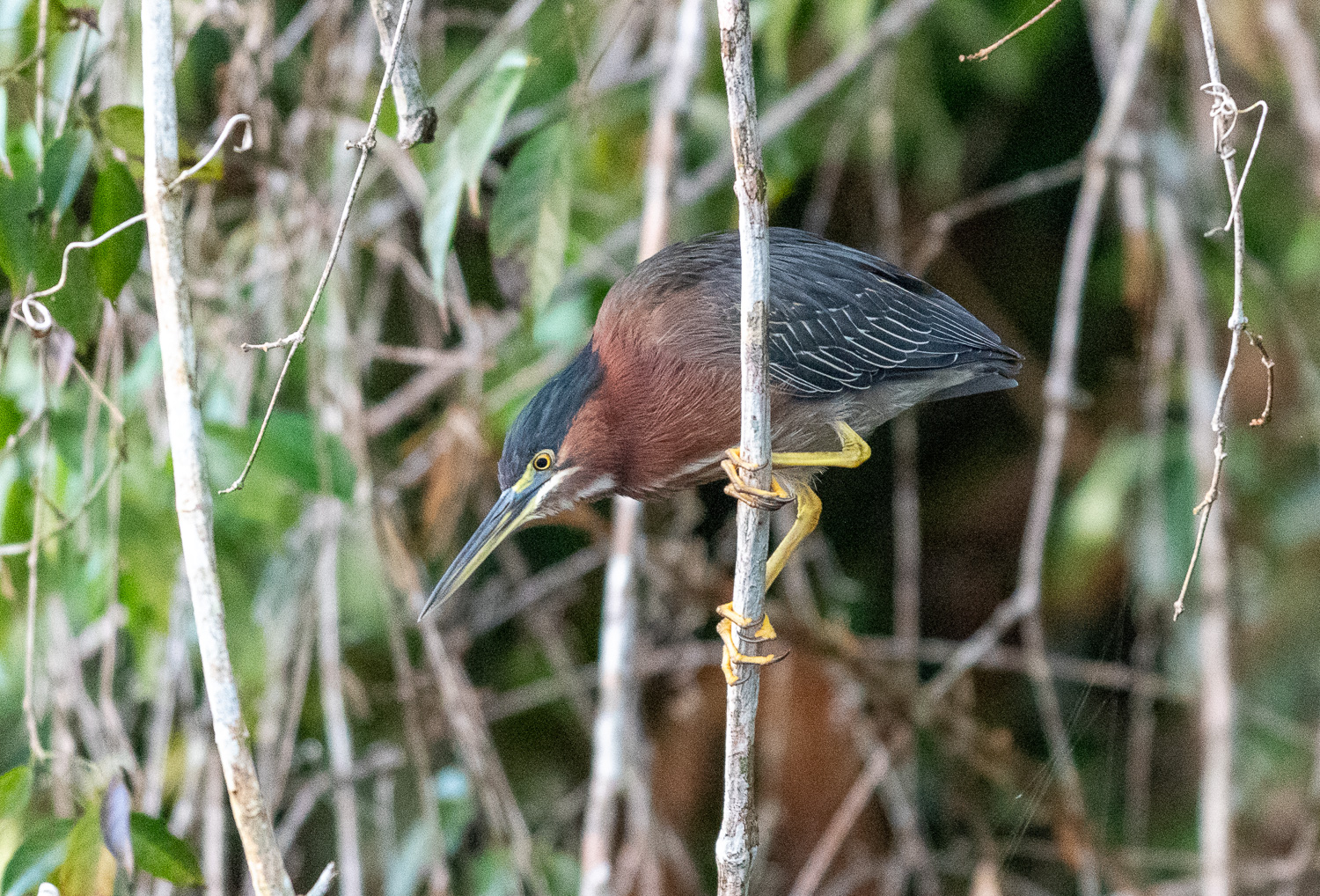 Green Back Heron
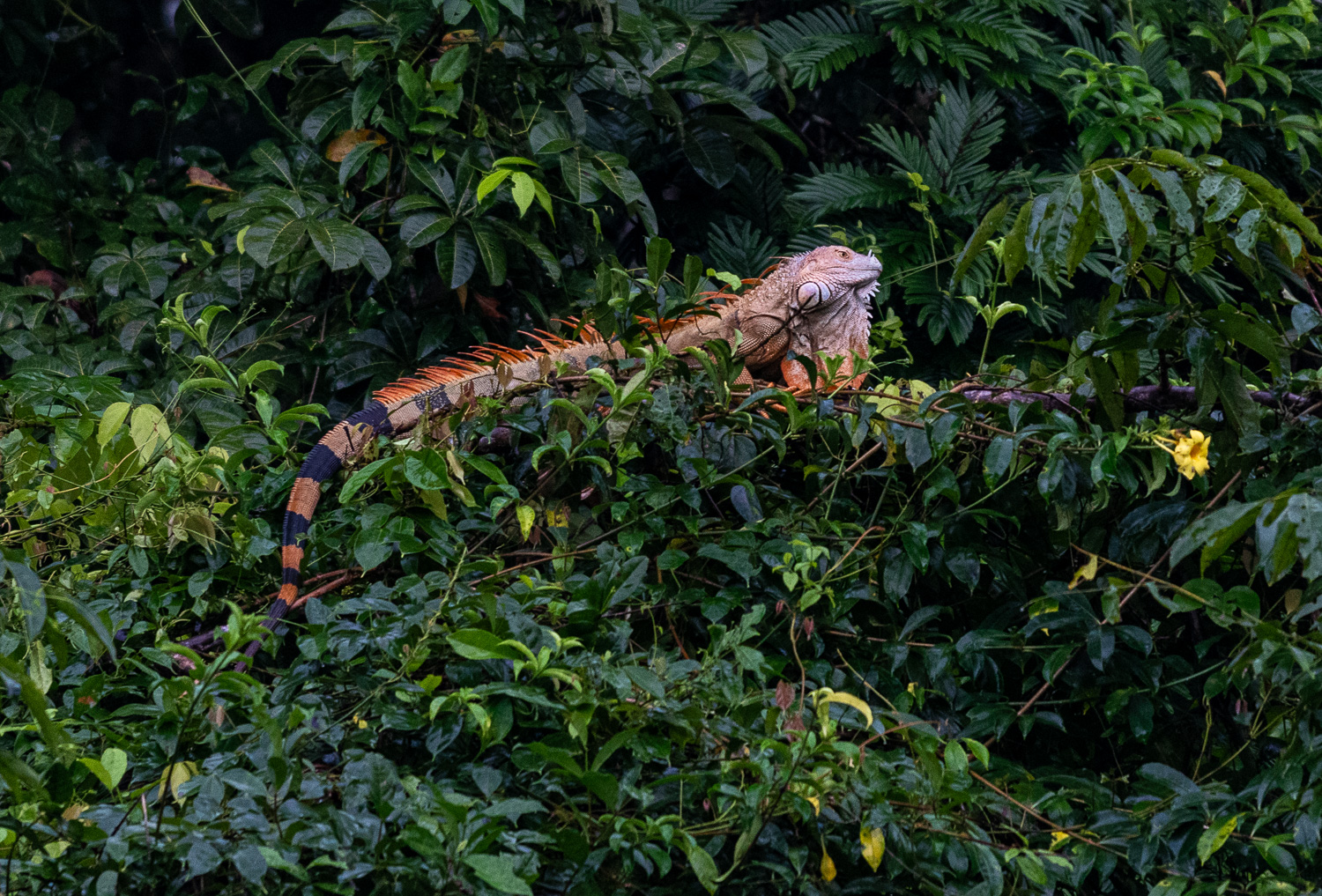 This 6-foot long male Green Iguana, which changes colour to orange when trying to attract a female, is perched high up in the trees.
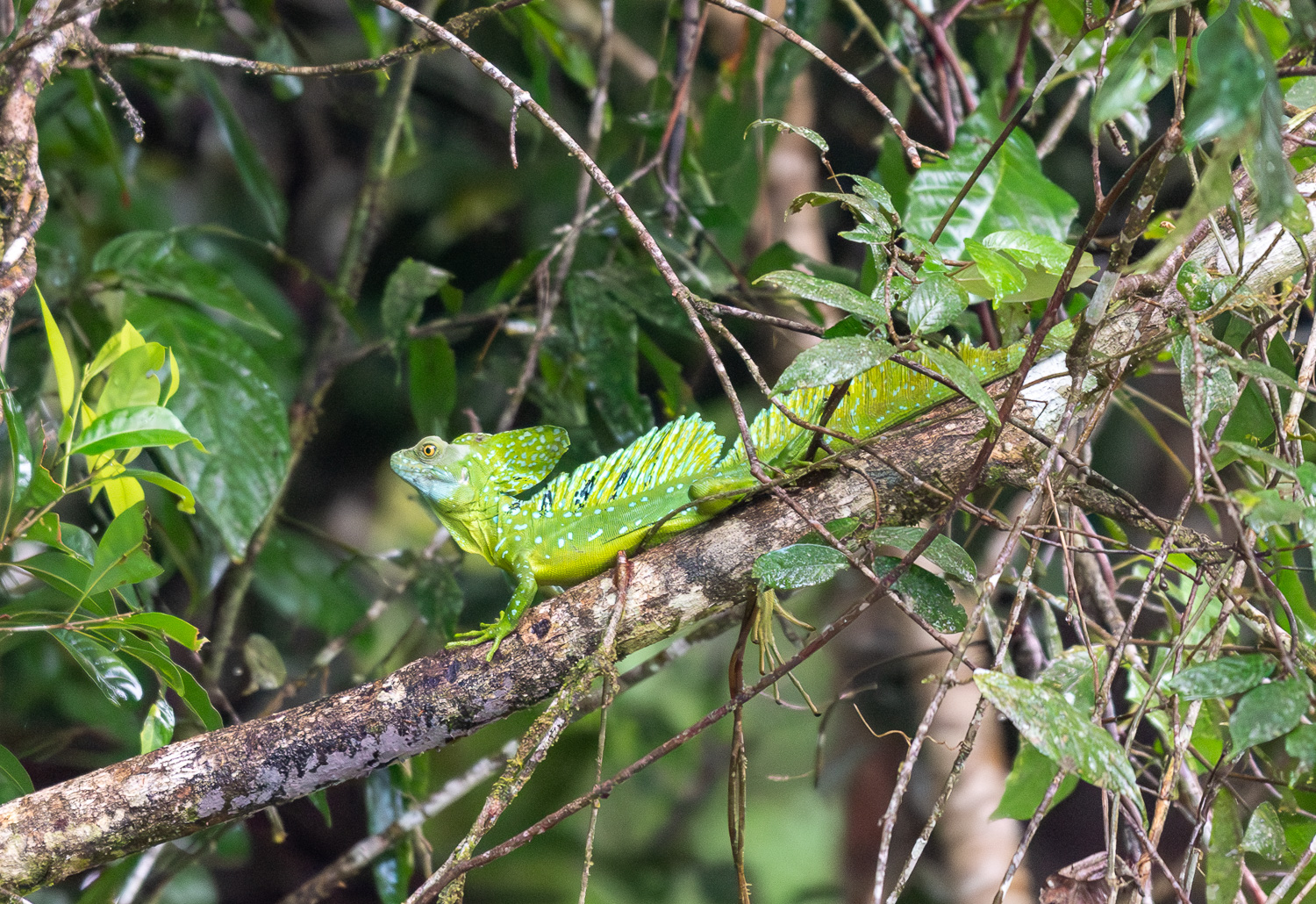 Common Basilisk is known as the Male Jesus Christ Lizard – so named as they can can walk on water! It can grow up to 1 foot in length.
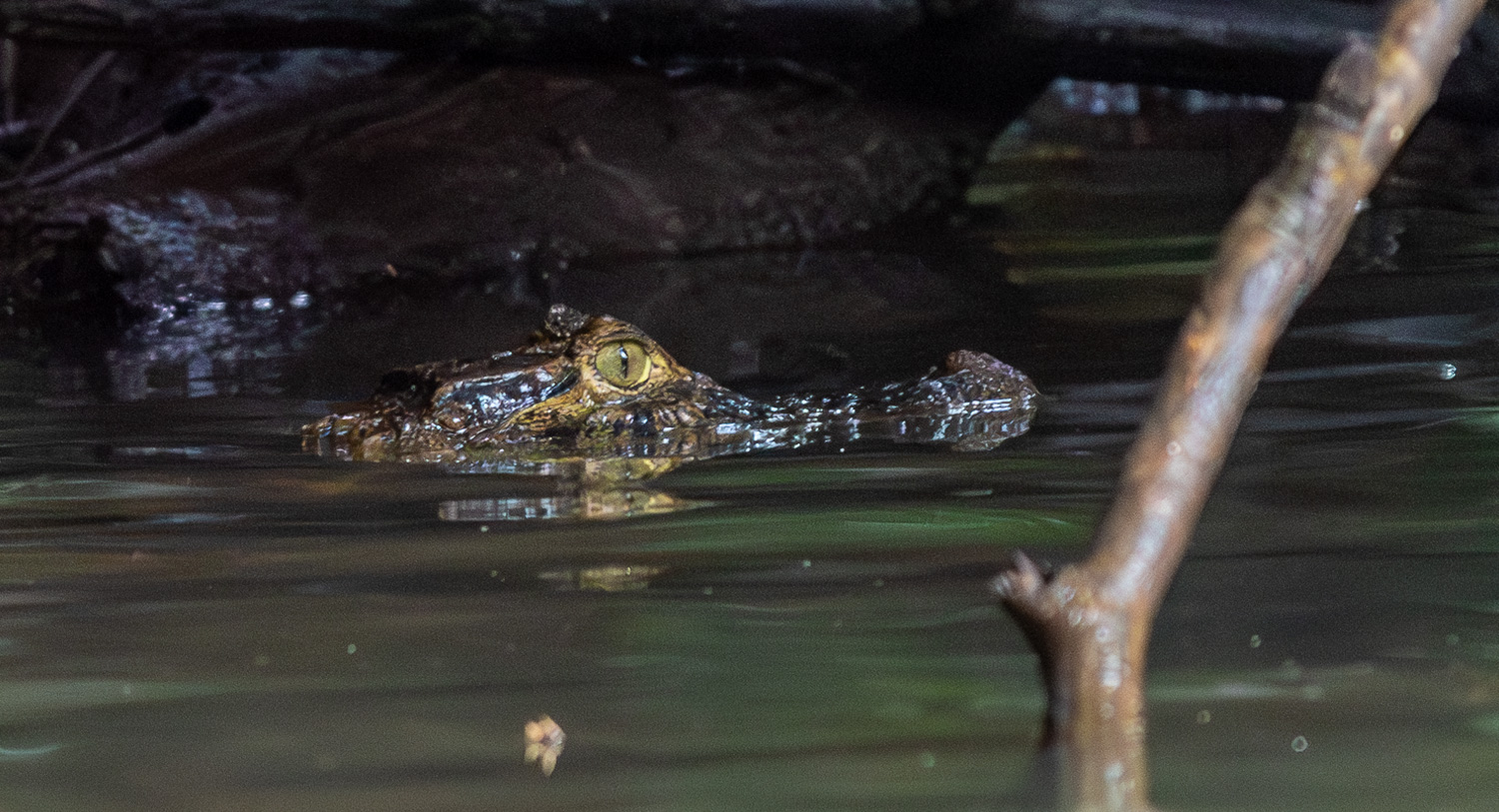 The Caiman, which typically grows to about 6 feet, is the smaller cousin of the crocodile and is found in fresh water habitats.
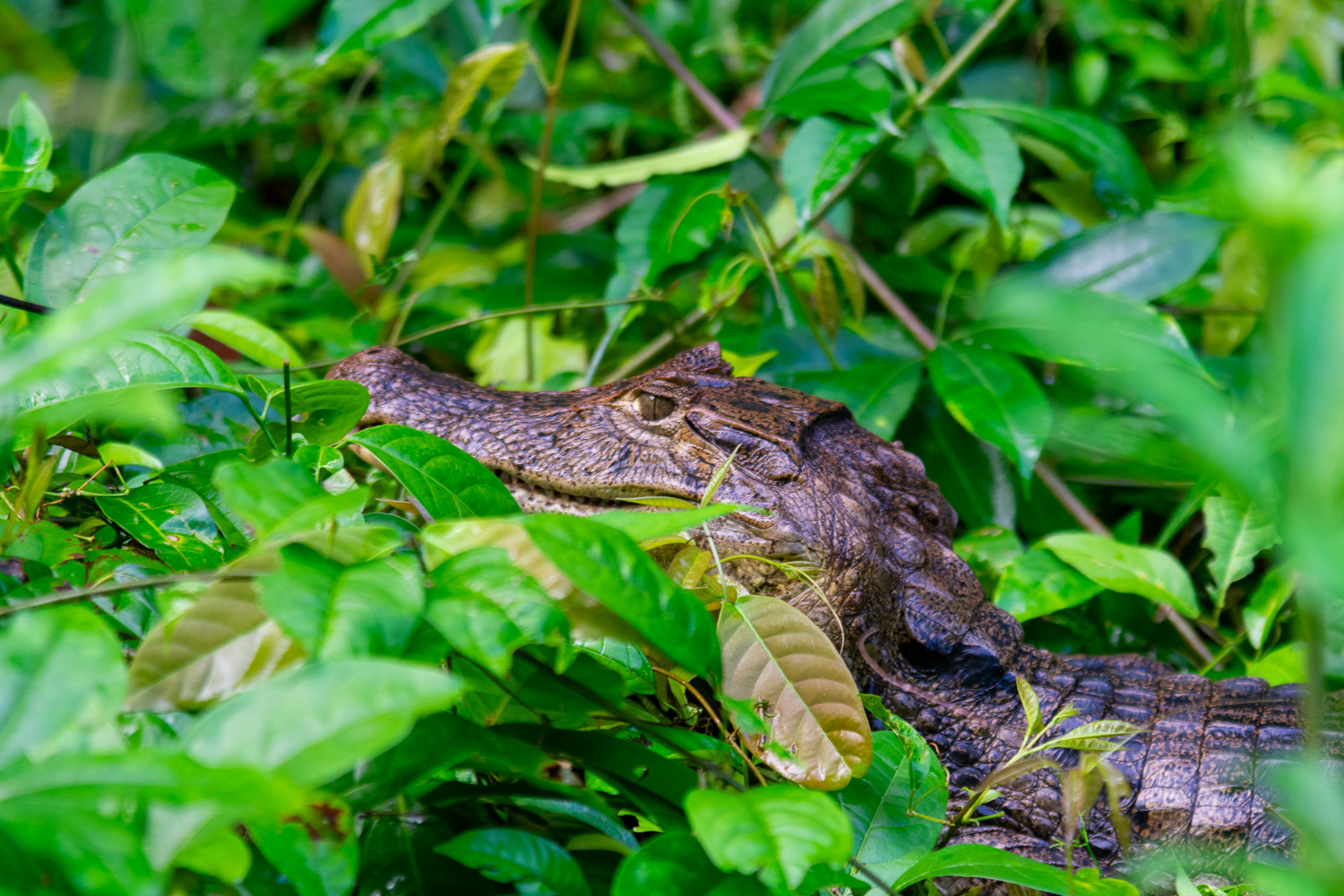 A Caiman basking in sun on top of the reeds.
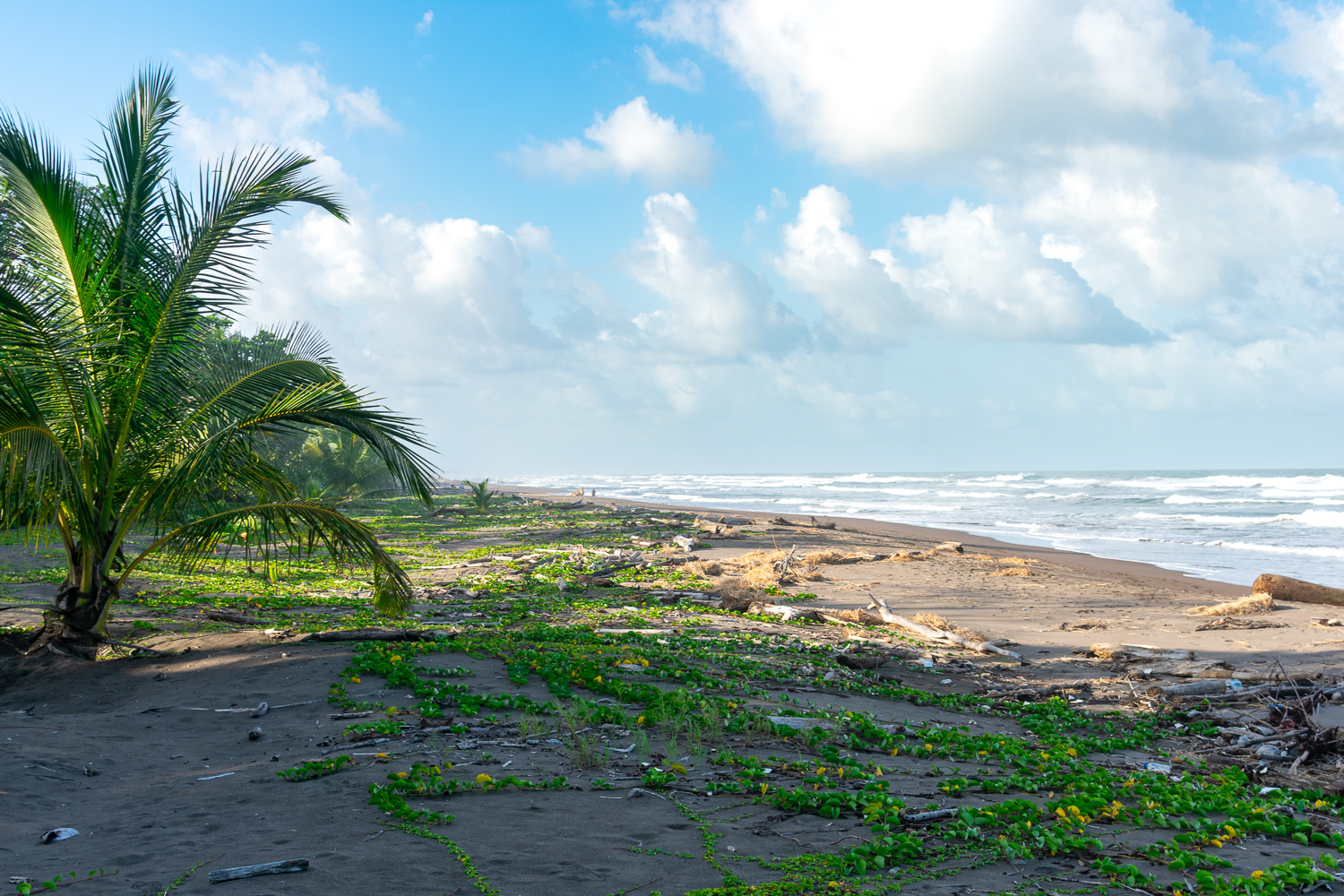
We visited the wonderful Caribbean Sea coastline and beach at Tortuguero Town, unfortunately swimming is not allowed because of sharks.
Sloth Encounter
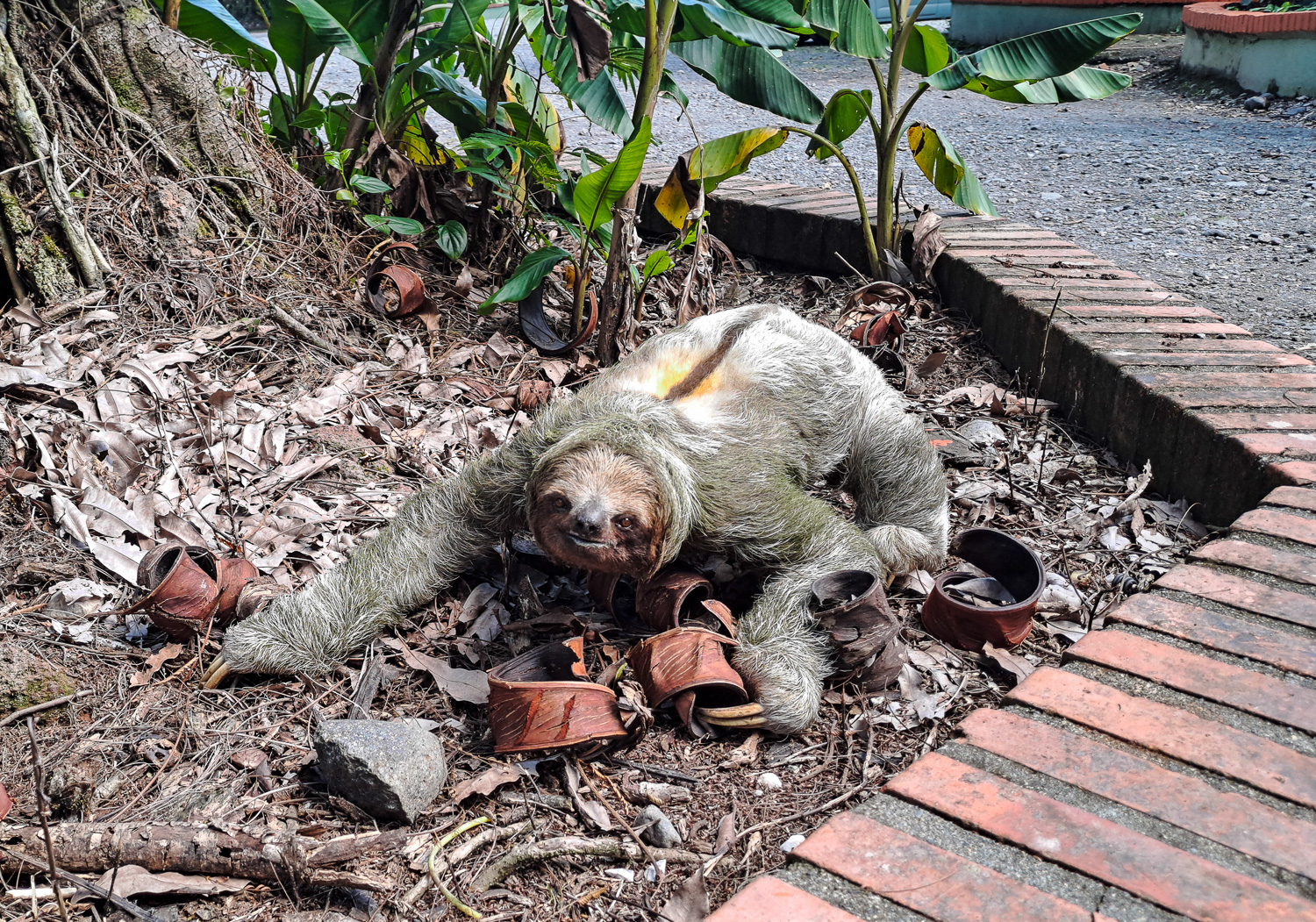
Whilst driving from Tortuguero to our next destination, our guide noticed a young sloth by the side of the road. She was trying to cross the busy highway. We stopped and moved her further back away from the road. She then started to crawl towards the highway again. It was a unanimous decision to then transport her to the other side of the road!
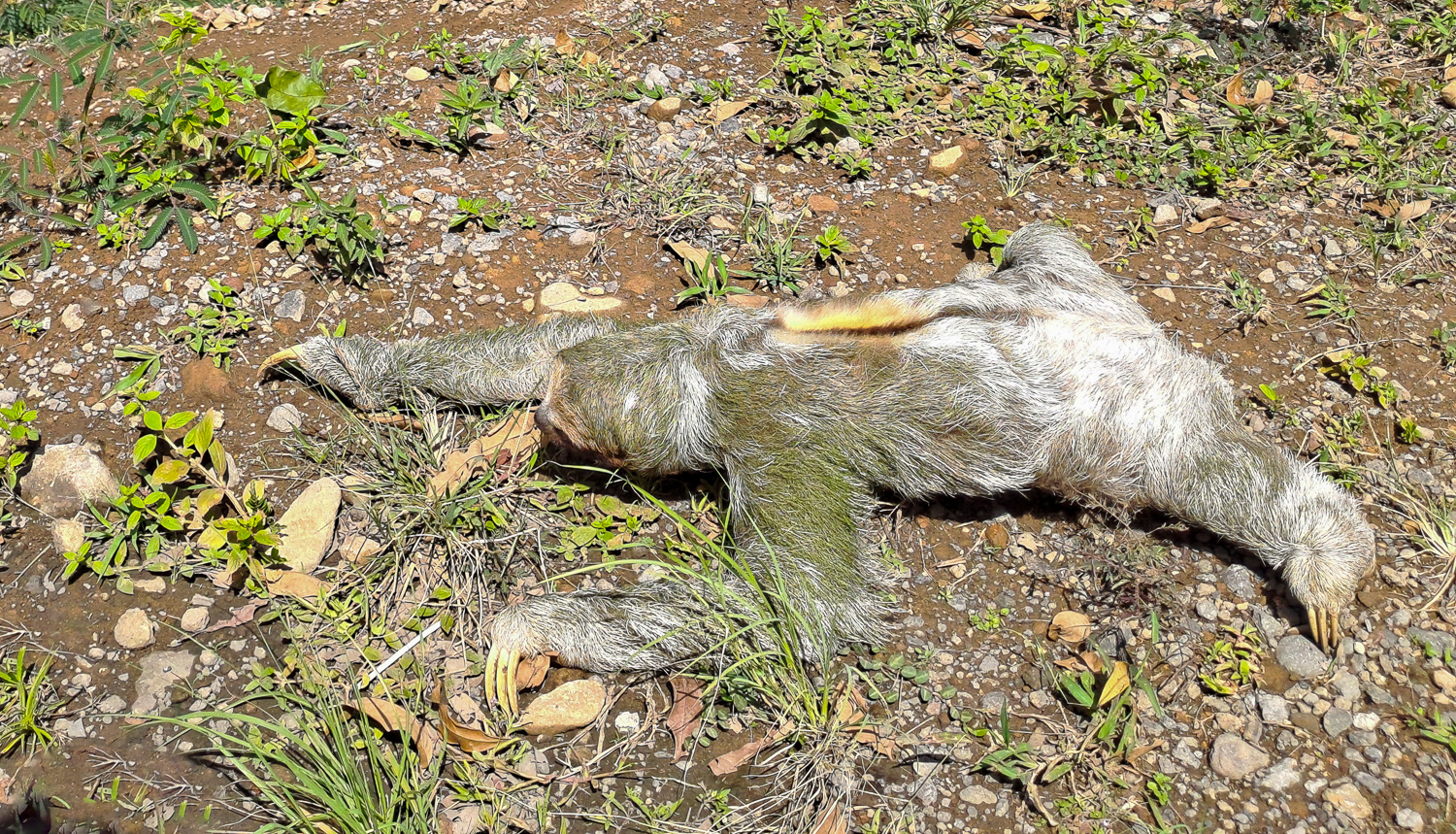 Young female sloth heading for the highway.
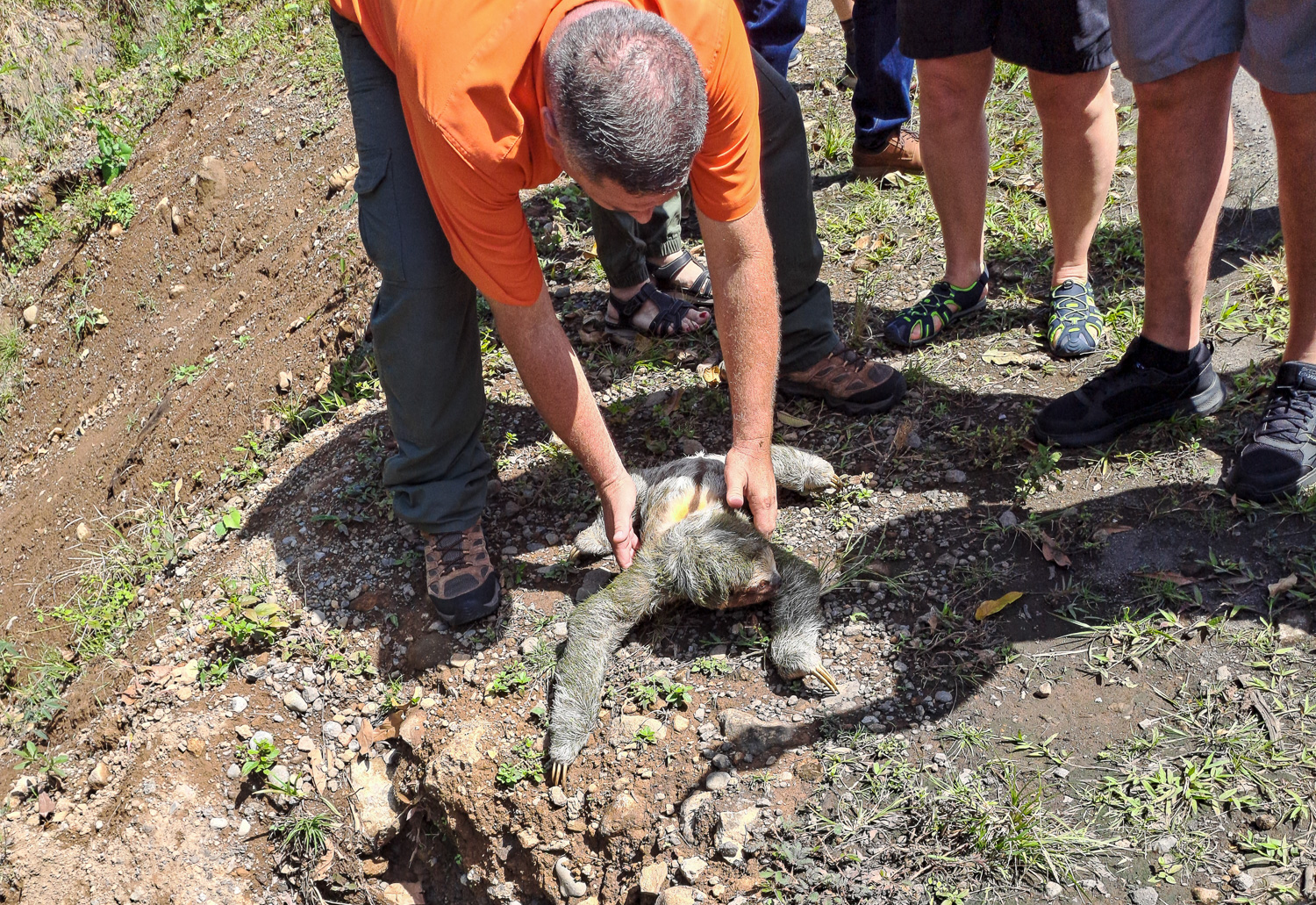 Picking her up to put her in the minibus.
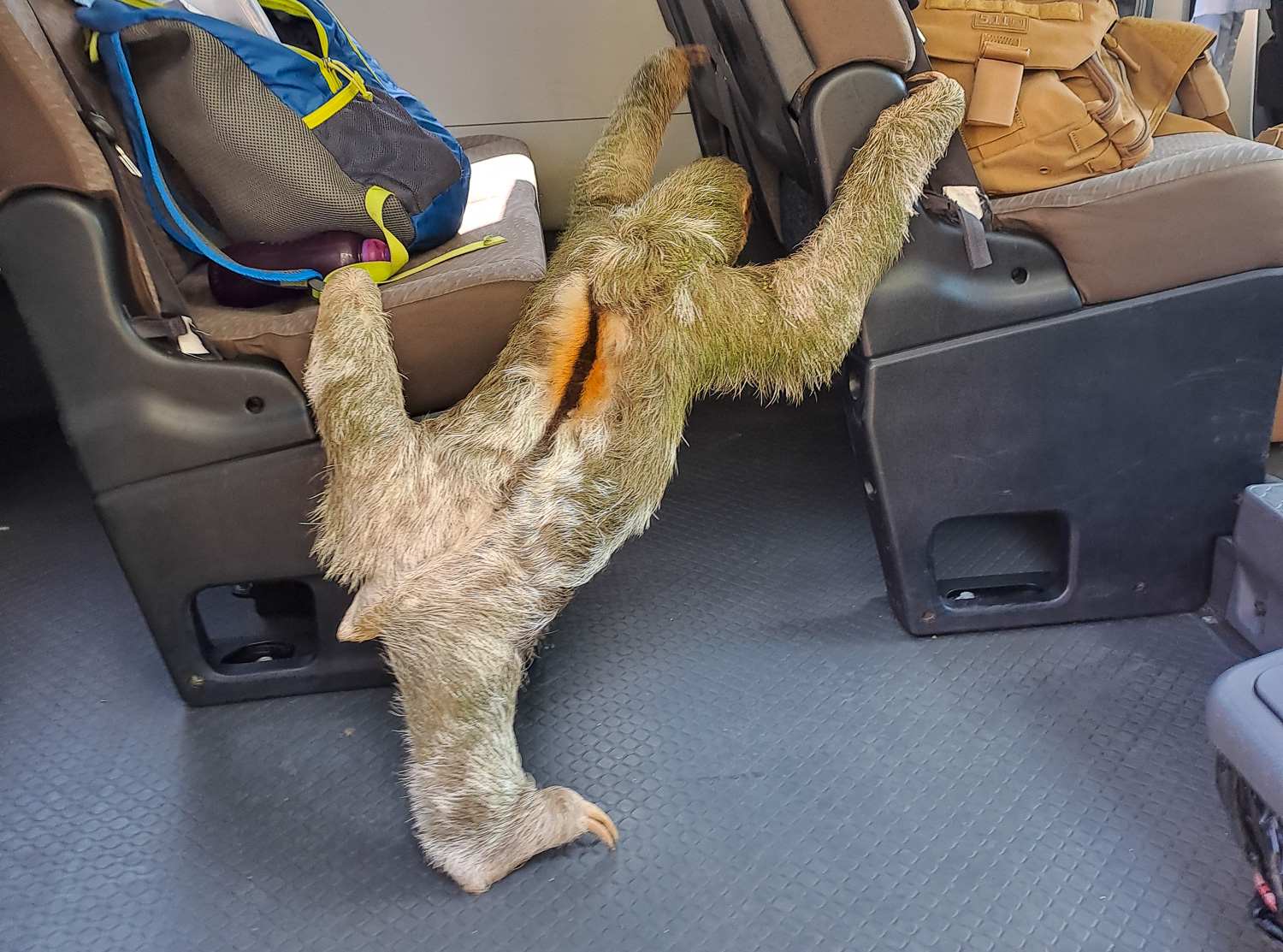 She couldn’t make up her mind which seat she wanted!
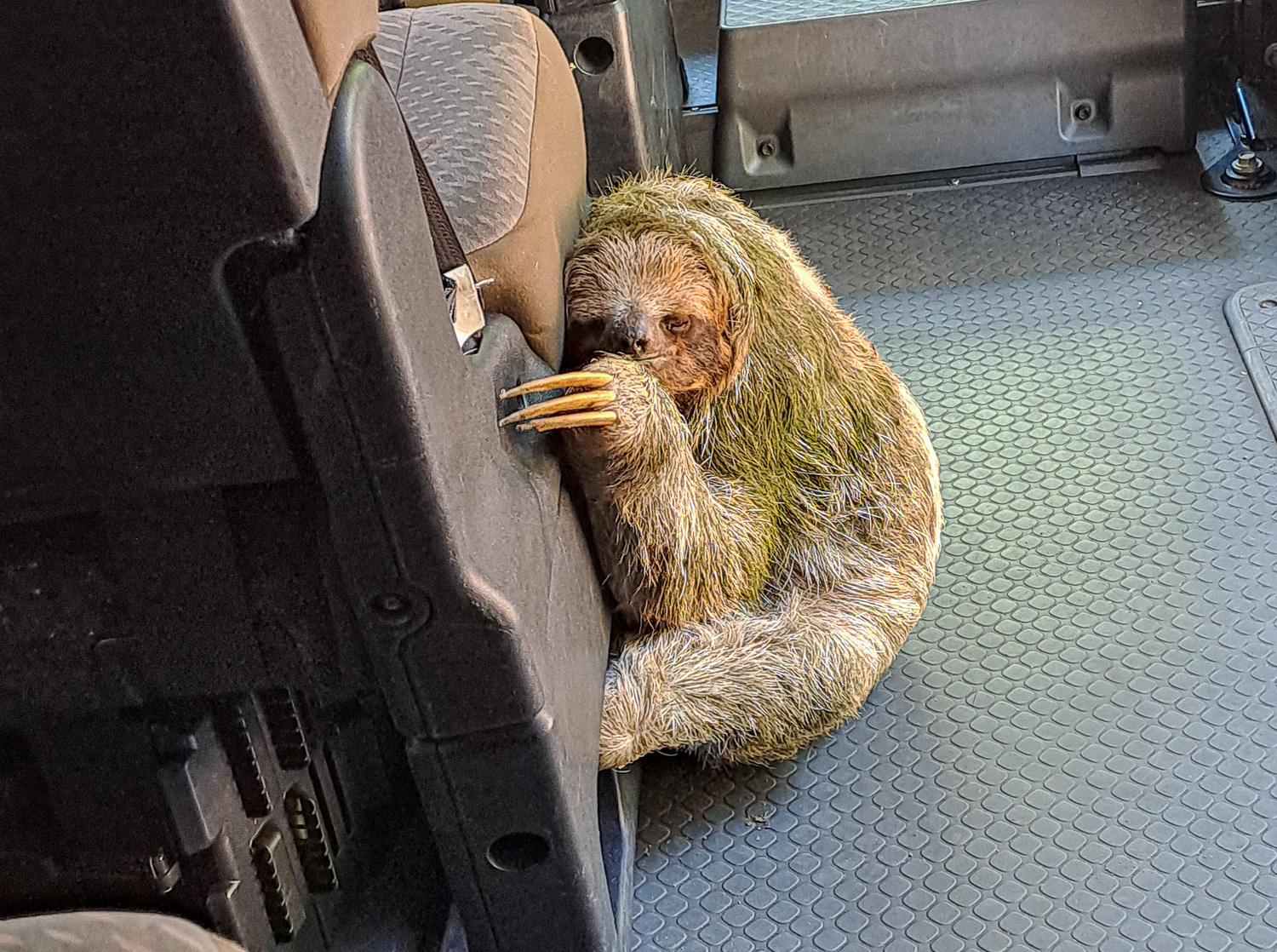 In the end she sat on the floor.
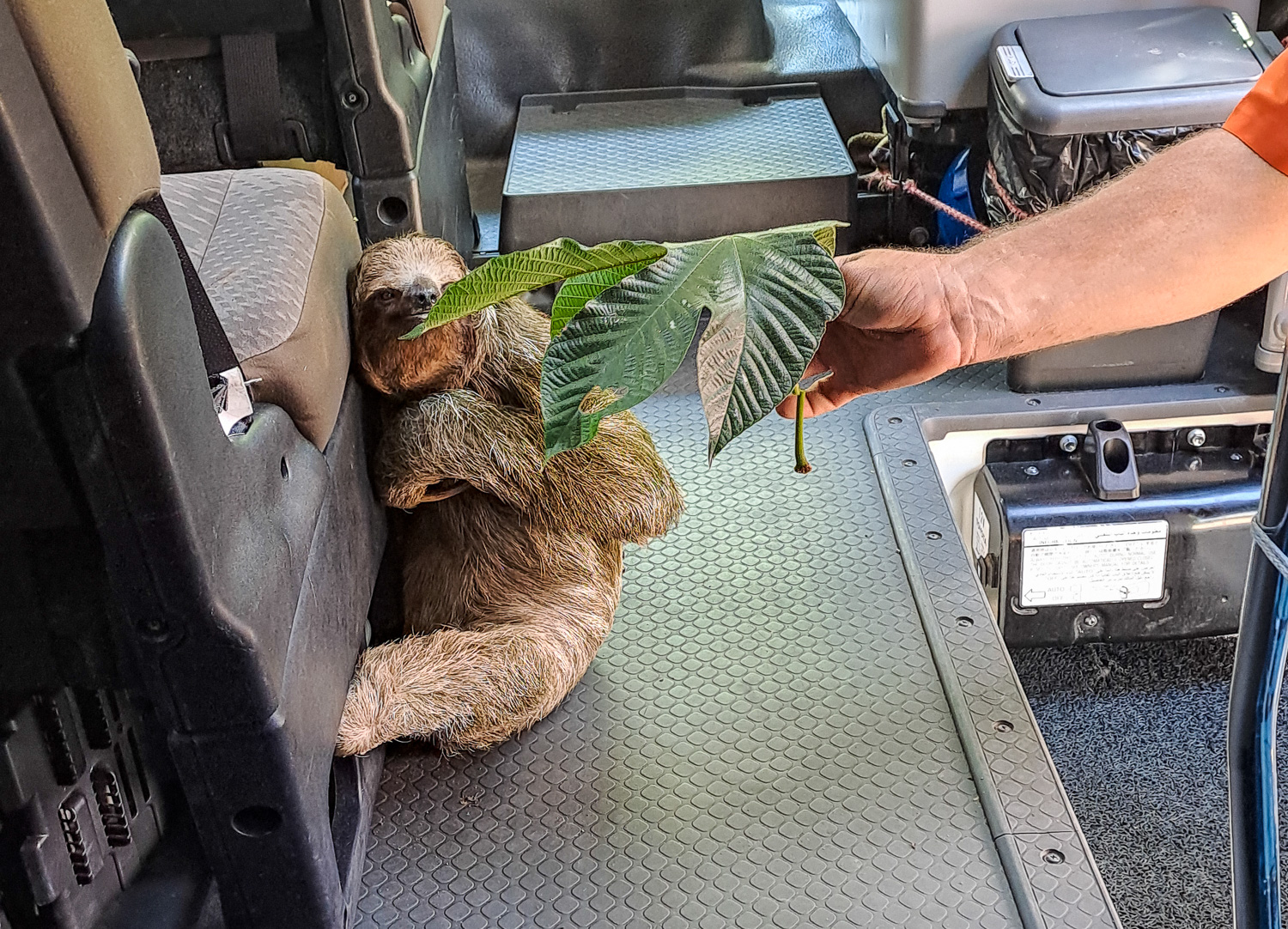 A short drive later, on the other side of the highway, we tried to coax her off the minibus with one of her favourite foods.
 Finally she was put down at the base of a tree, which she soon started to climb, safely away from the Highway. We all decided to name her ‘Lucky’.
Arenal
The area is dominated by the Arenal Volcano National Park and Lake Arenal. The 5,480 ft Arenal Volcano is still considered active, but there hasn’t been an eruption since 2010. Located in the Northern Lowlands regions of Cost Rica, Arenal is a popular tourist destination known for it’s outdoor adventure activities and hot springs.
We stayed for 3 nights in the Arenal Manoa & Hot Springs hotel in La Fortuna. The hotel is nestled in a secluded location surrounded by breathtaking views of the Arenal Volcano.
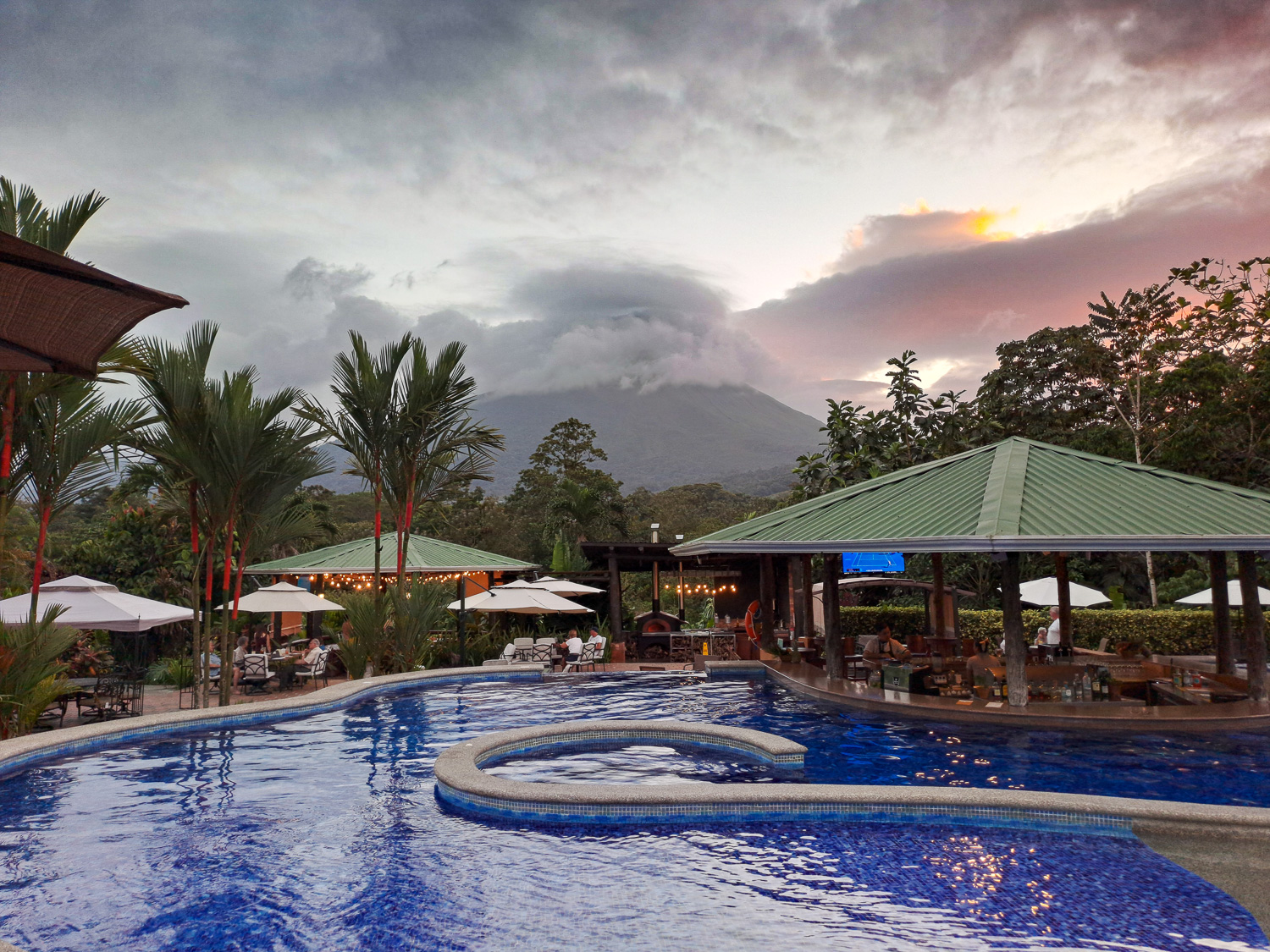 Swimming Pool at sunset, with views of the cloud covered Arenal Volcano
The chalet accommodation is spread amongst beautiful gardens, with walking paths around the grounds, which are alive with wildlife.
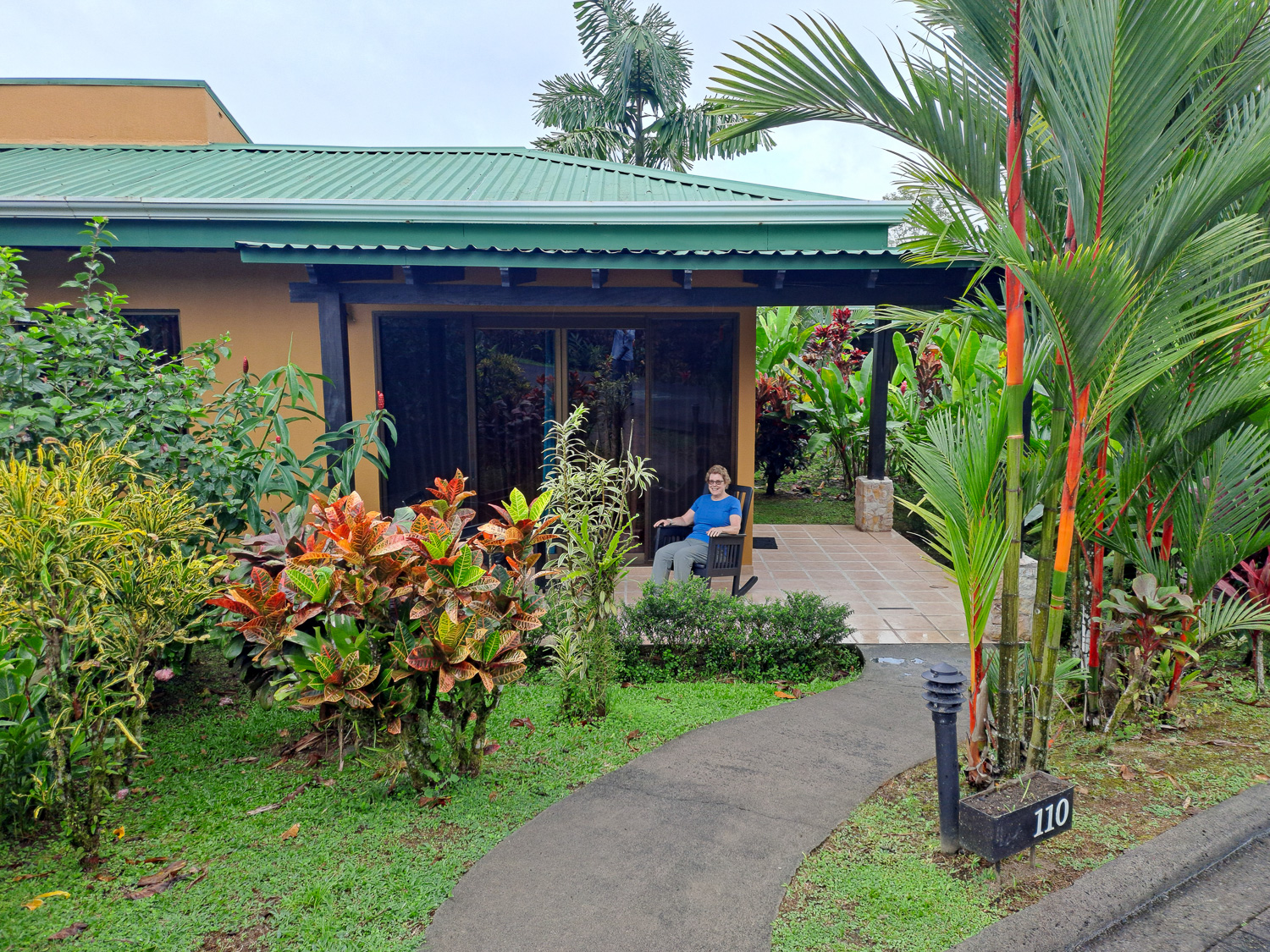 Our chalet.
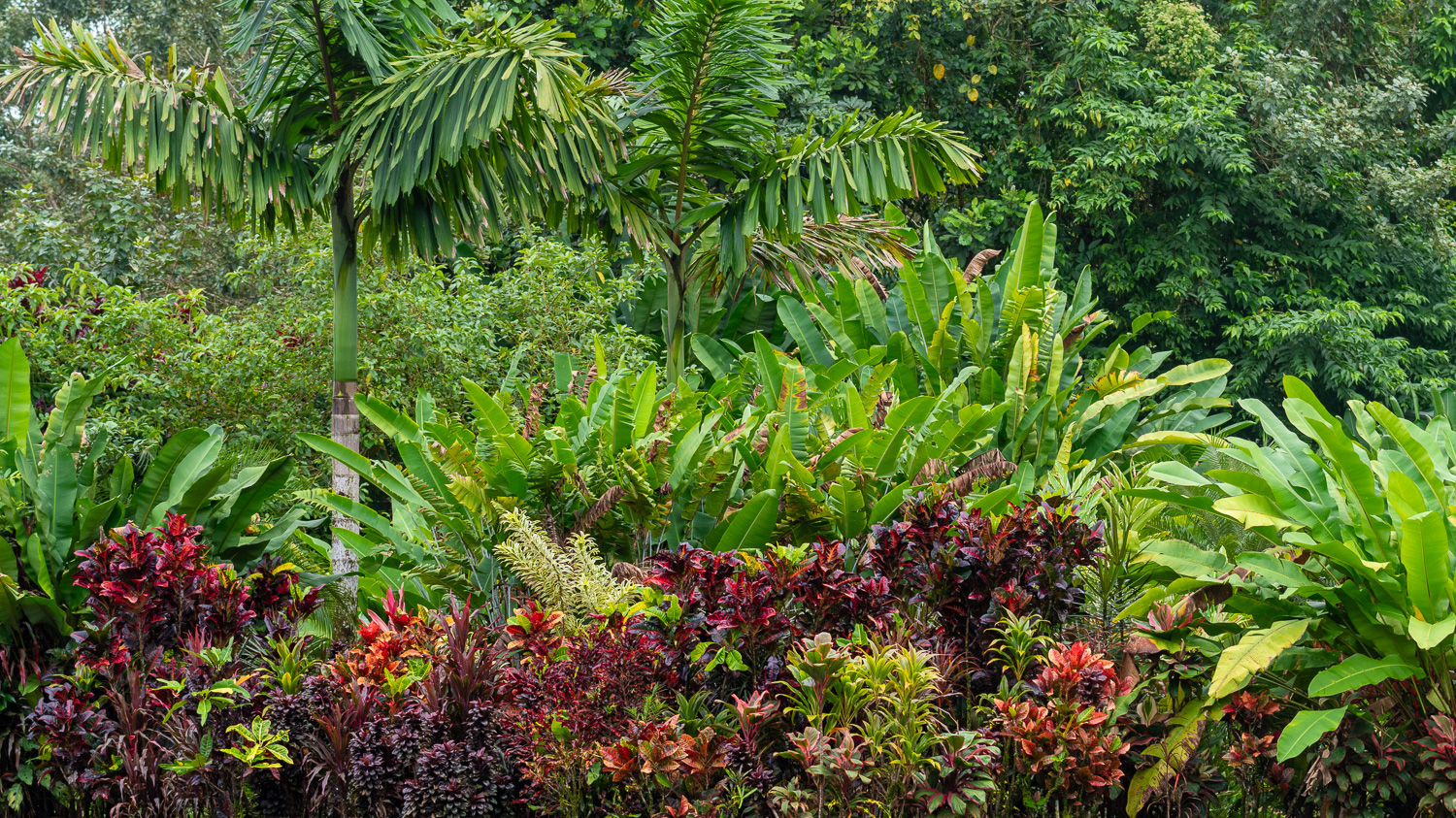 Dense, colourful vegetation could be found throughout the hotel grounds.
Here are some of the birds and wildlife we saw, whilst walking around the grounds:
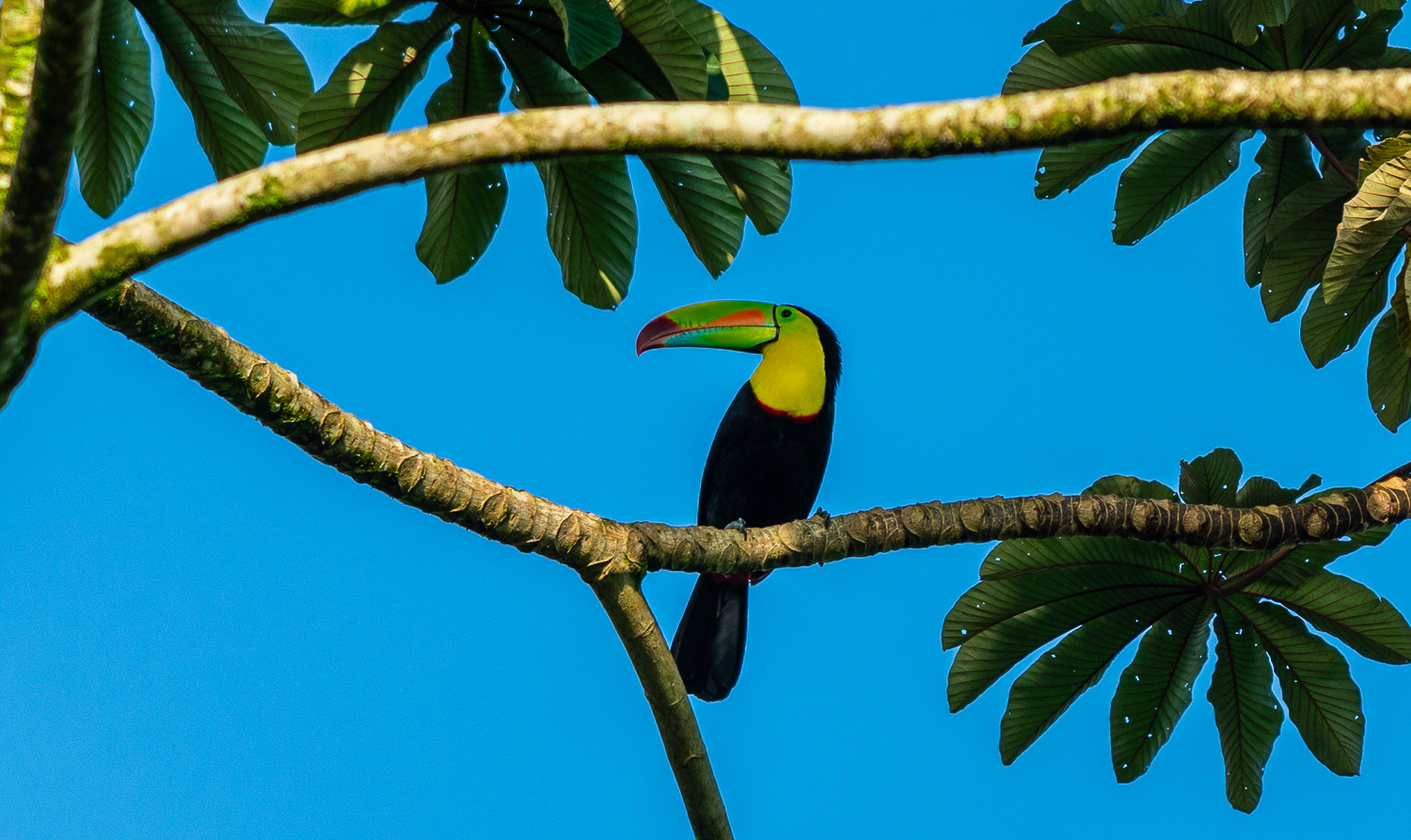 The Toucan is one of the iconic birds of Costa Rica, and is nearly always featured on travel brochures and tourist information. This is a Keel-billed Toucan, which is one of the five species found in Costa Rica.
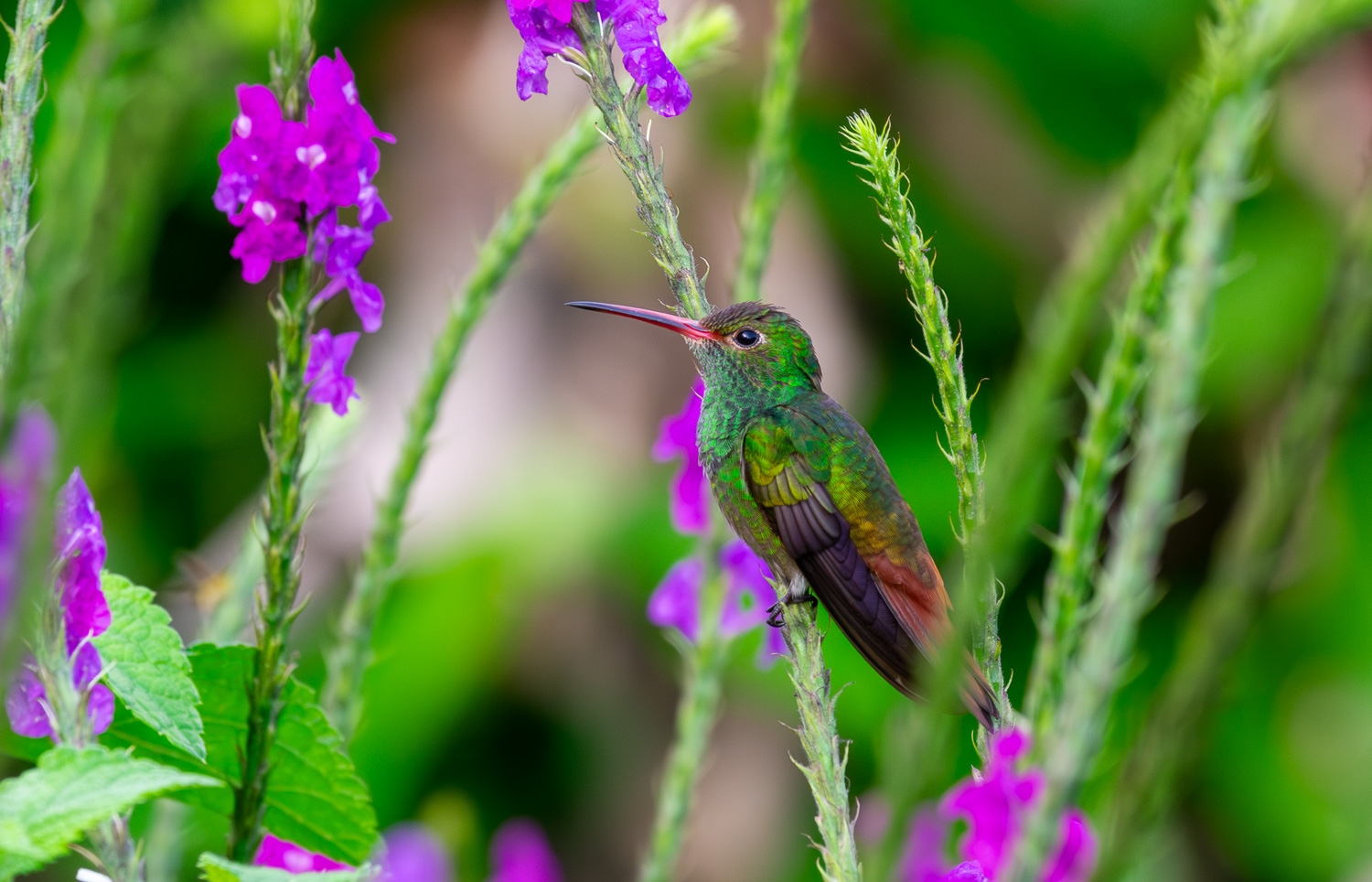 Rufous-tailed Hummingbird – This stunningly colourful, small, 4 inch long bird is one of the 51 species of hummingbird found in Costa Rica
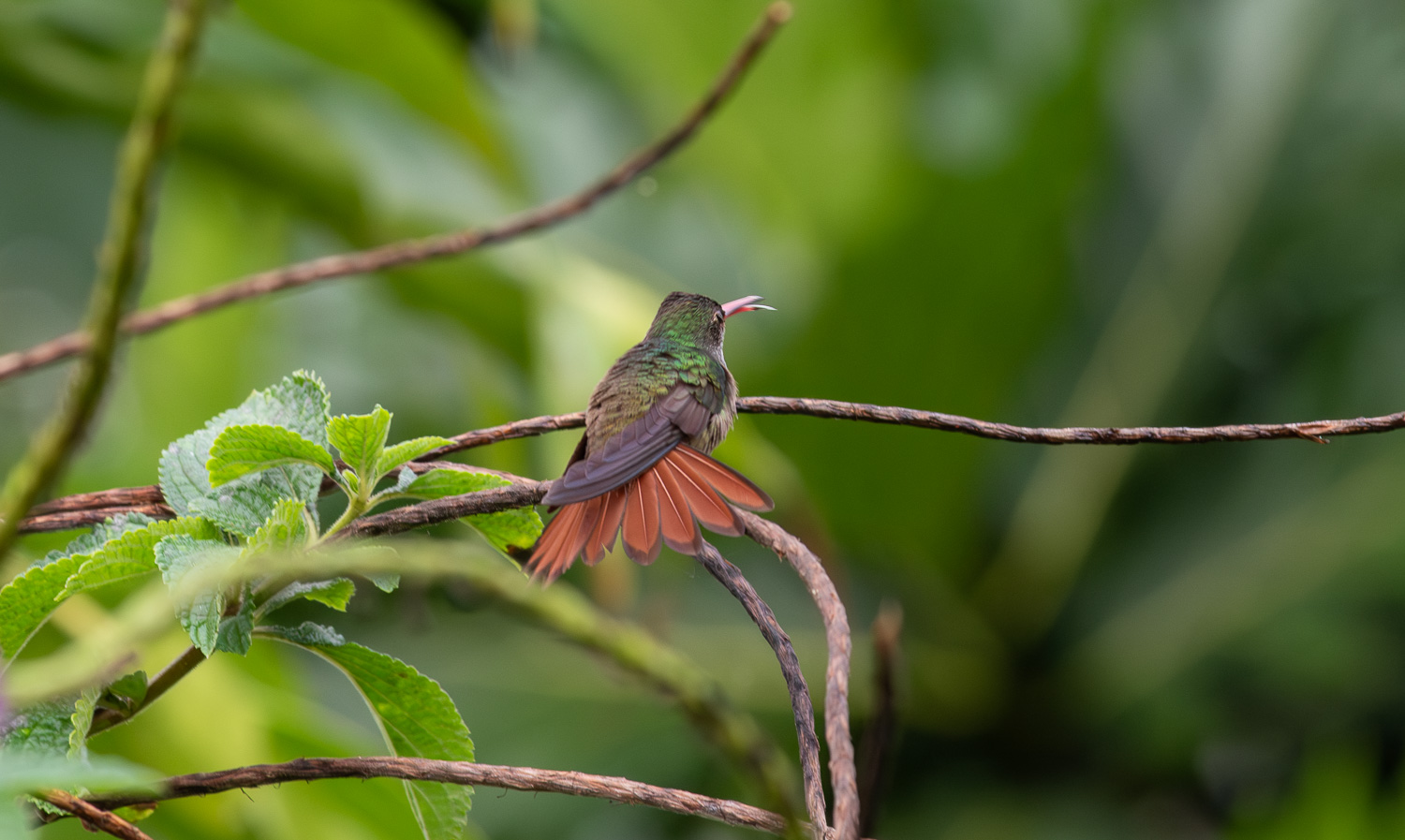 Green-breasted Mango Hummingbird – Hummingbirds are known to have long, hollow tongues that they use to lap up nectar from flowers.
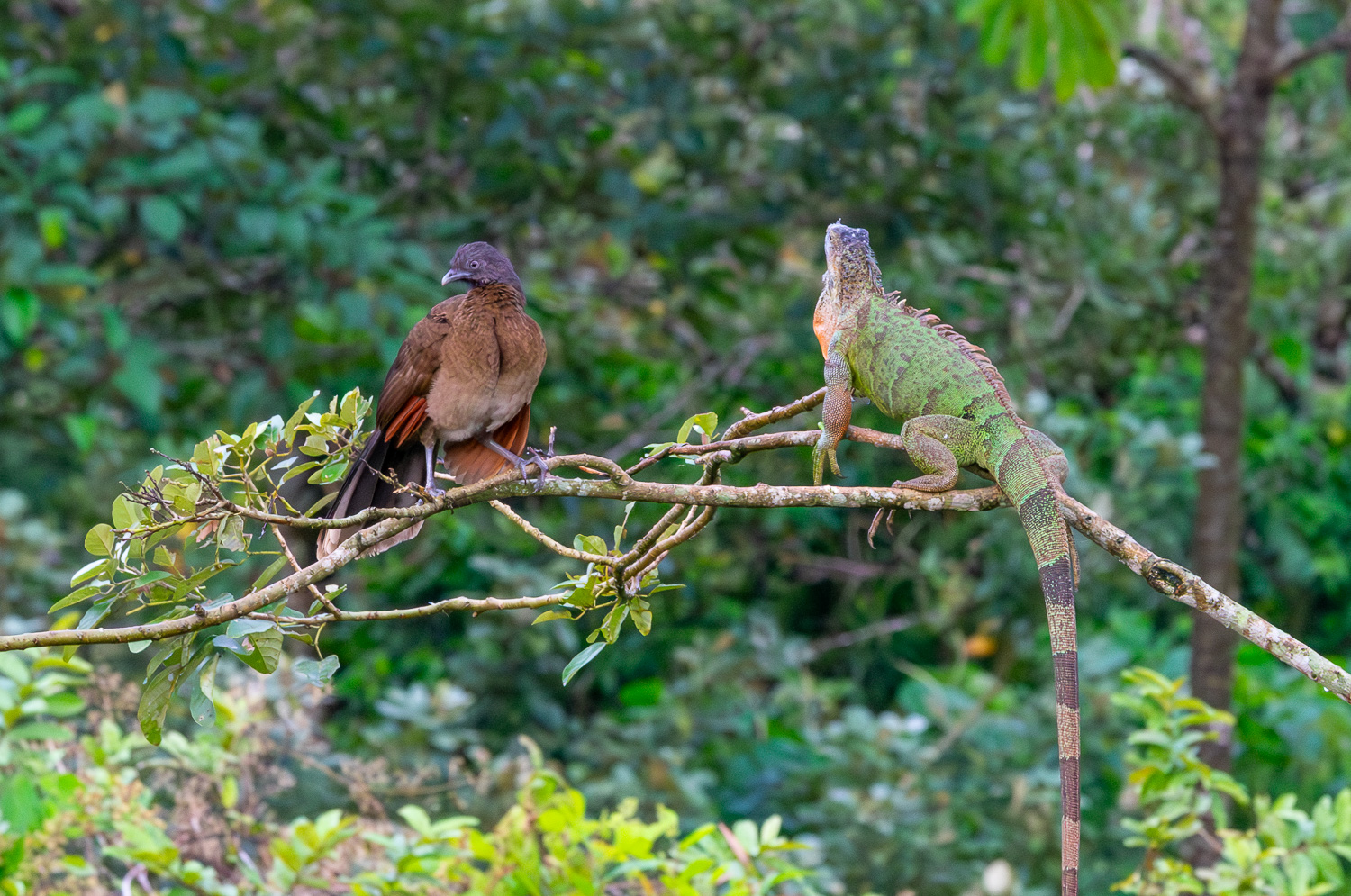 A female Iguana is not impressed with the arrival of a Ruddy Ground Dove
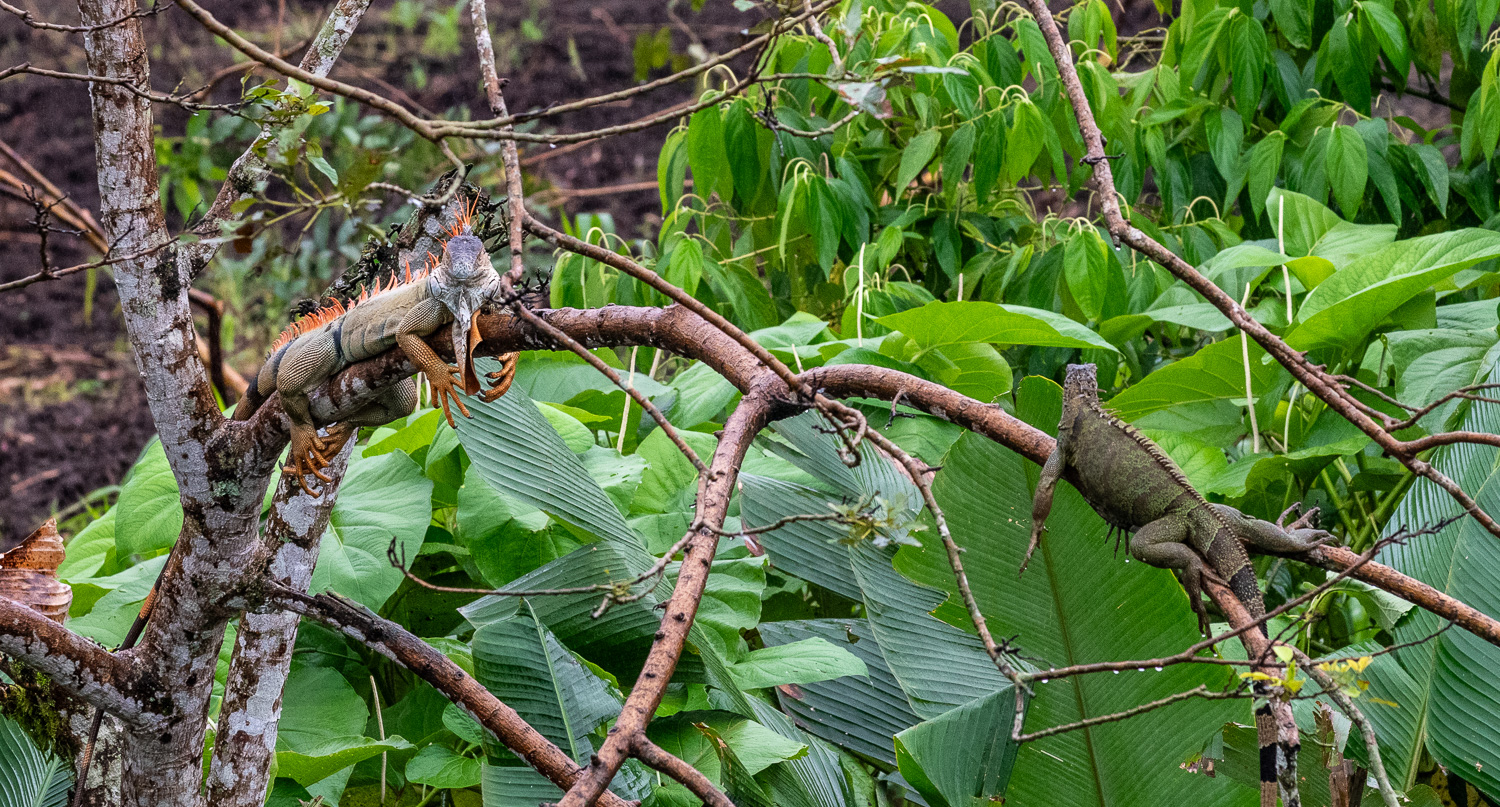 Male Green Iguana, with his orange mating plumage, puts on a show for the onlooking female
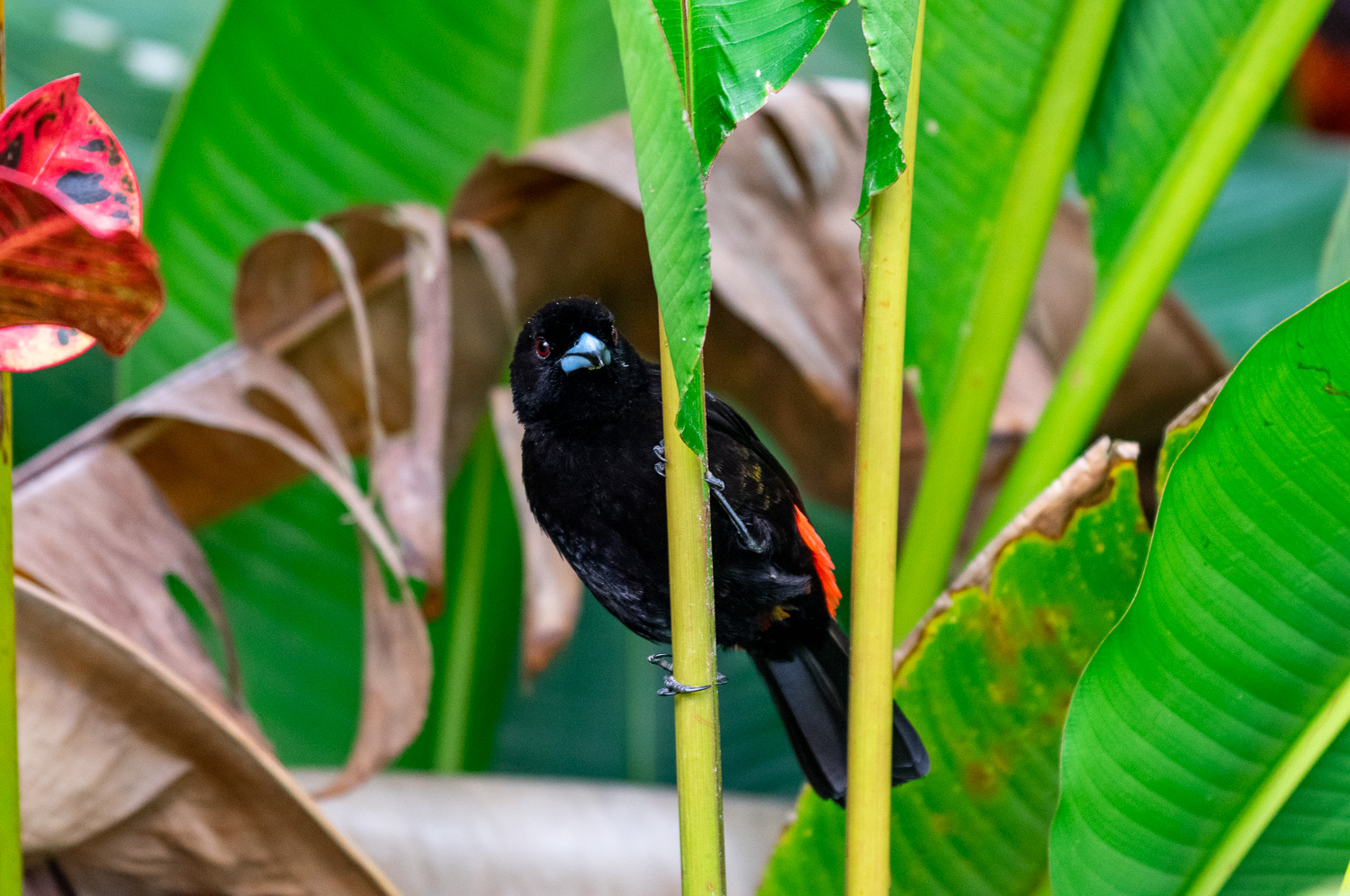 Male Scarlet-rumped Tanager
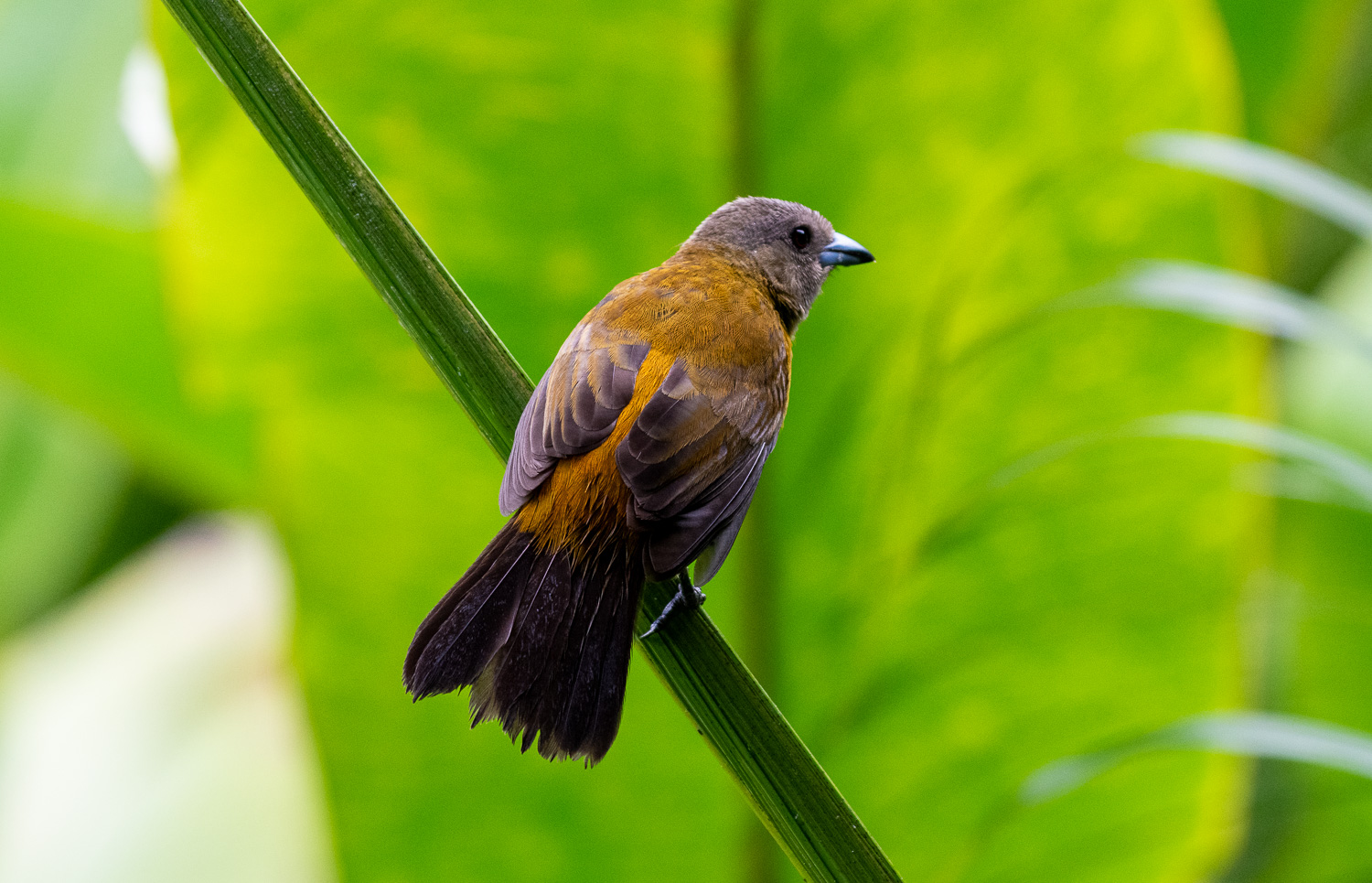 Female Scarlet-rumped Tanager
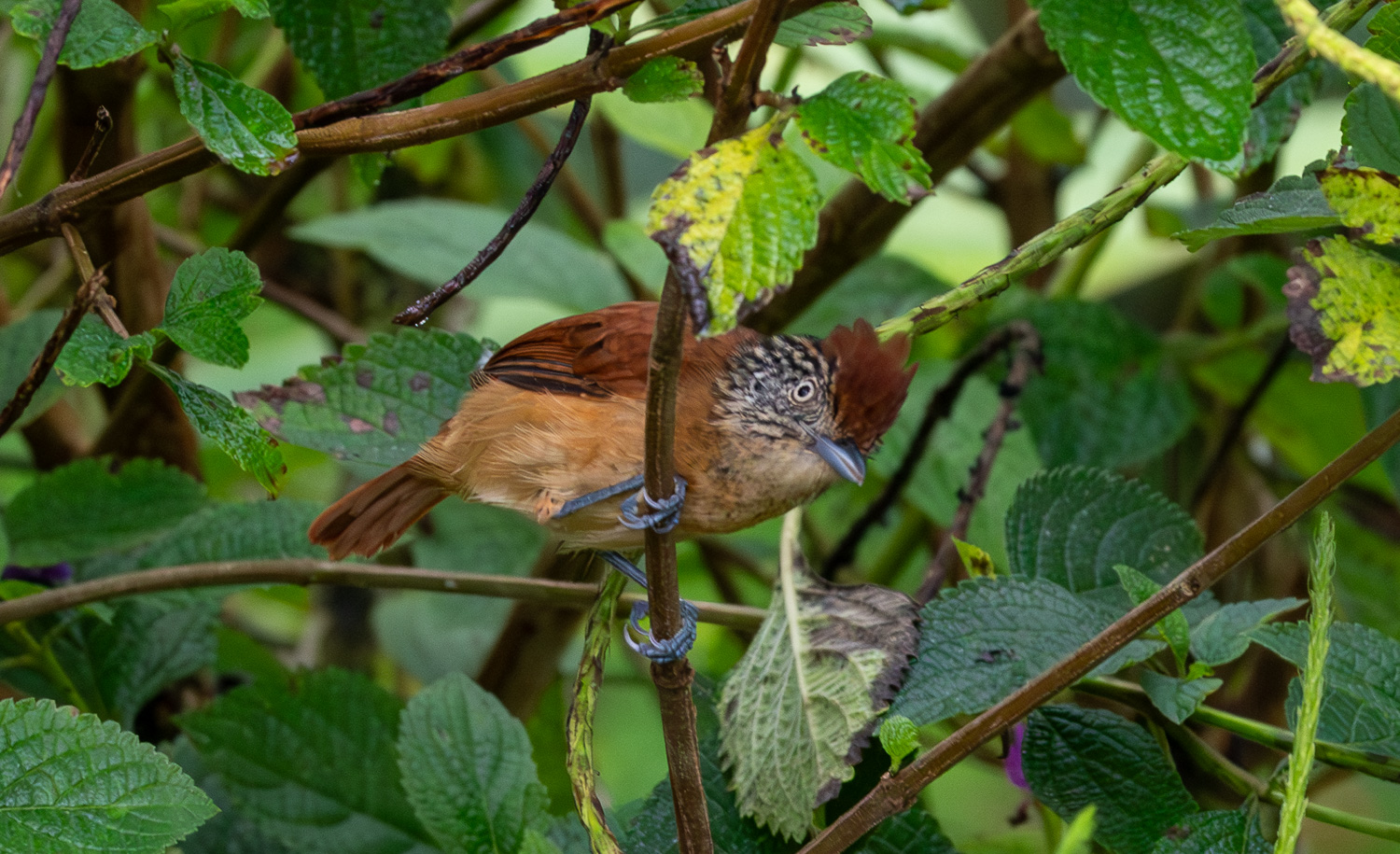 Female Barred Antshrike
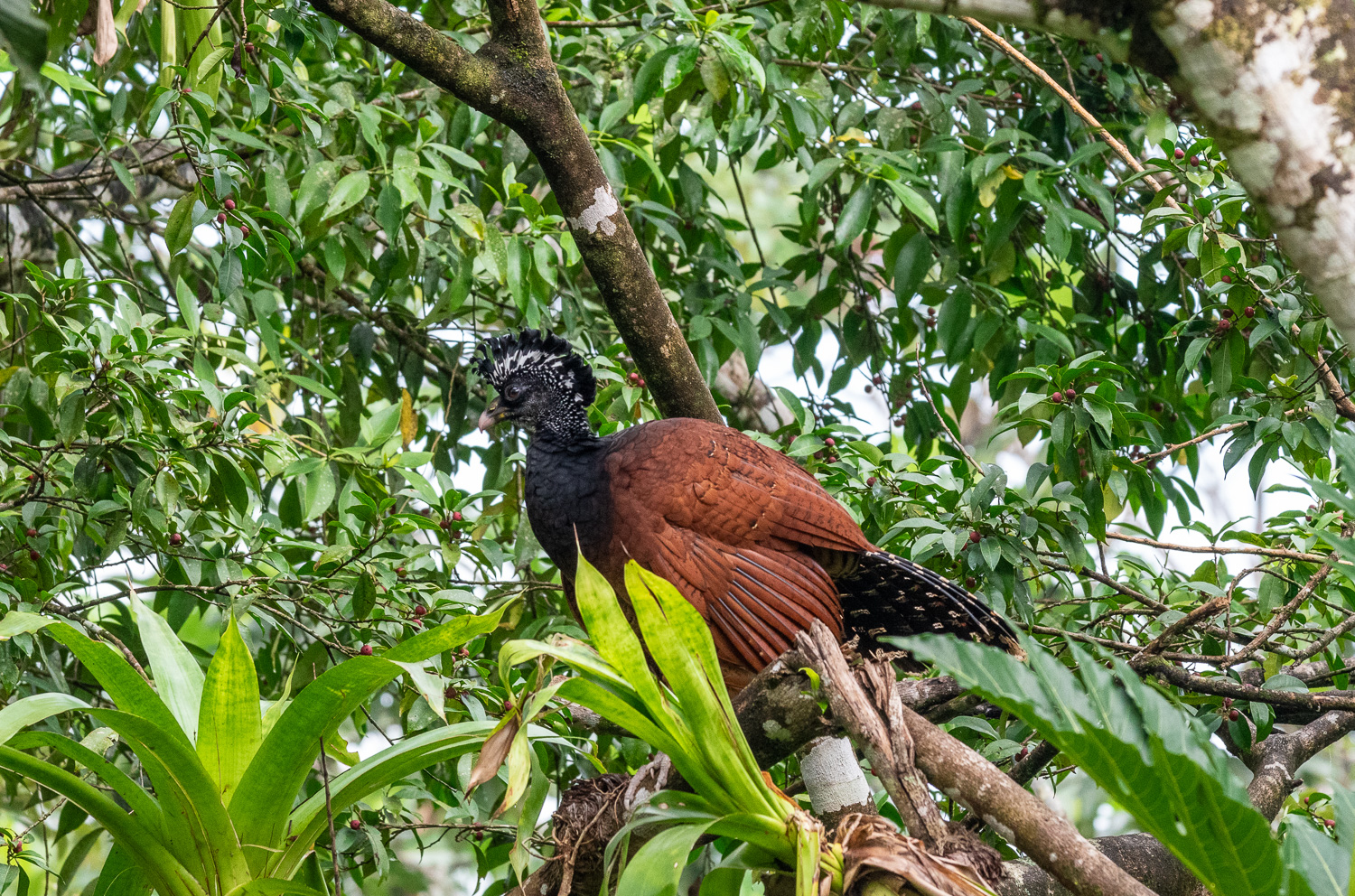 The female Great Curassow is a large pheasant-like bird that can weight up to 10 pounds.
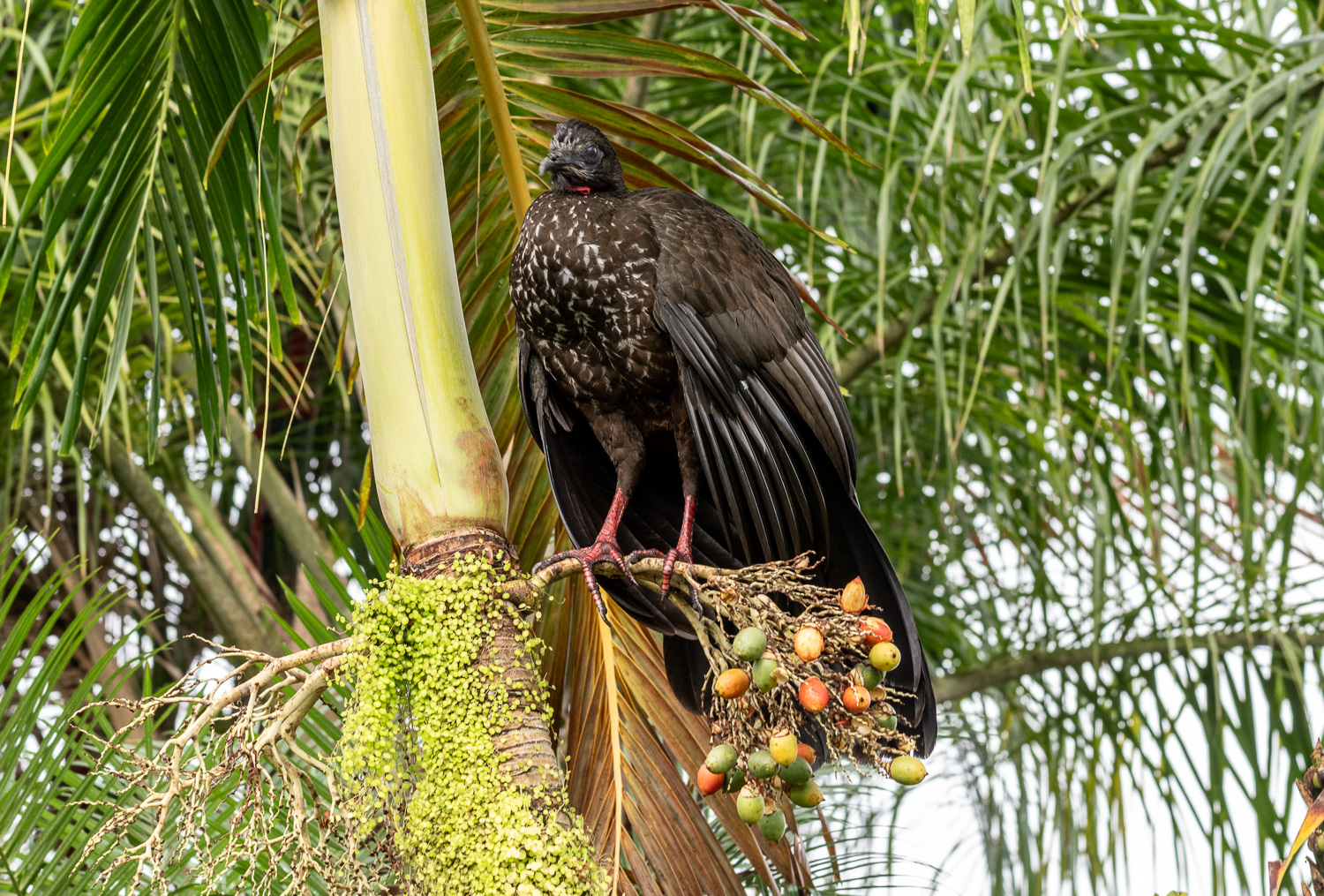 The Crested Guan is a big bird, known in Spanish as a turkey, even though they are not related!
To explore the rainforest from a different perspective we visited the Arenal Hanging Bridges. These are a series of suspension bridges in the Arenal Volcano National Park, offering views of Lake Arenal and the volcano. The bridges form part of a 2-mile trail through a private rainforest reserve, with 15 bridges, 6 of which are hanging.
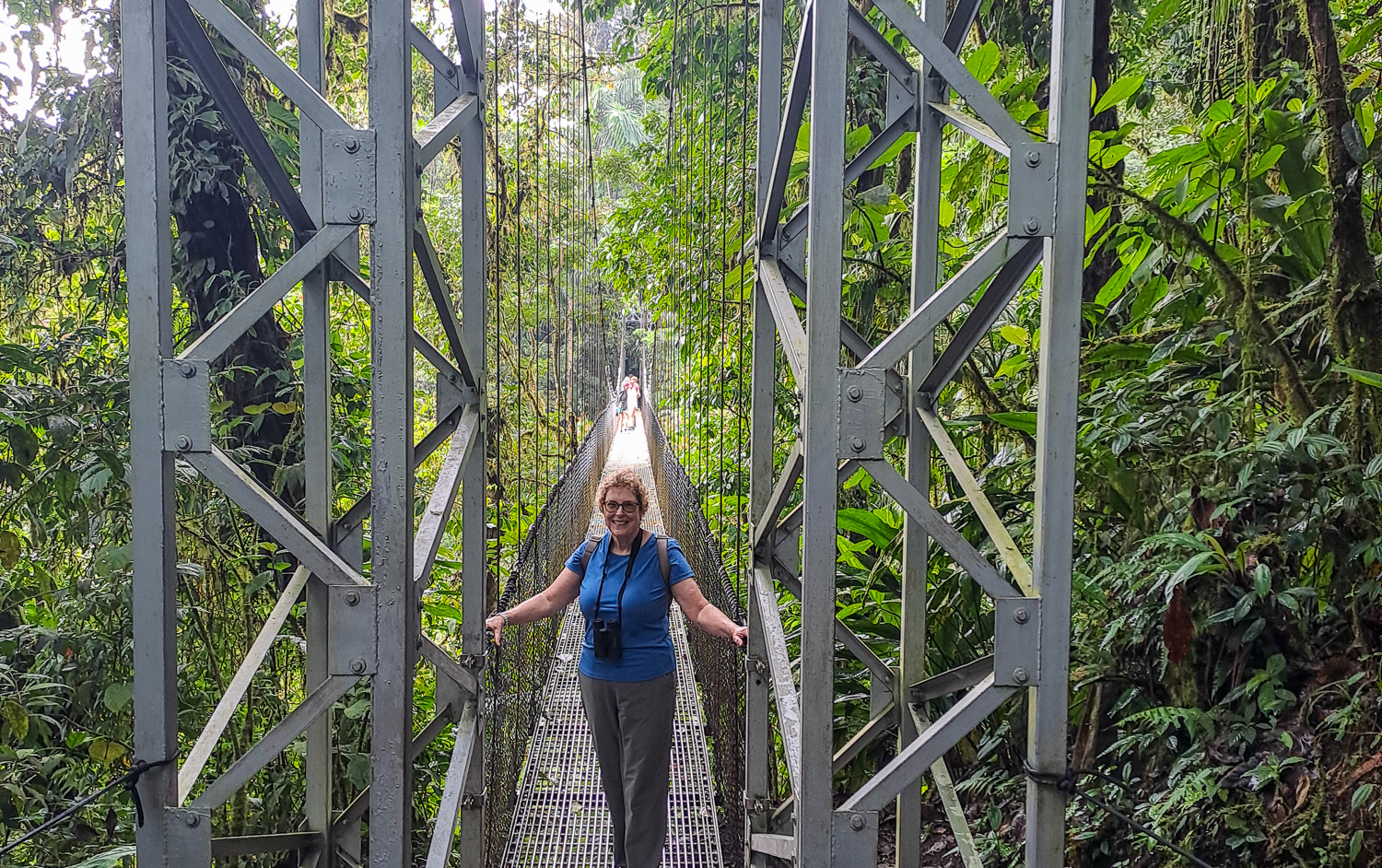 Charlotte looking confident at the start of the longest hanging bridge!
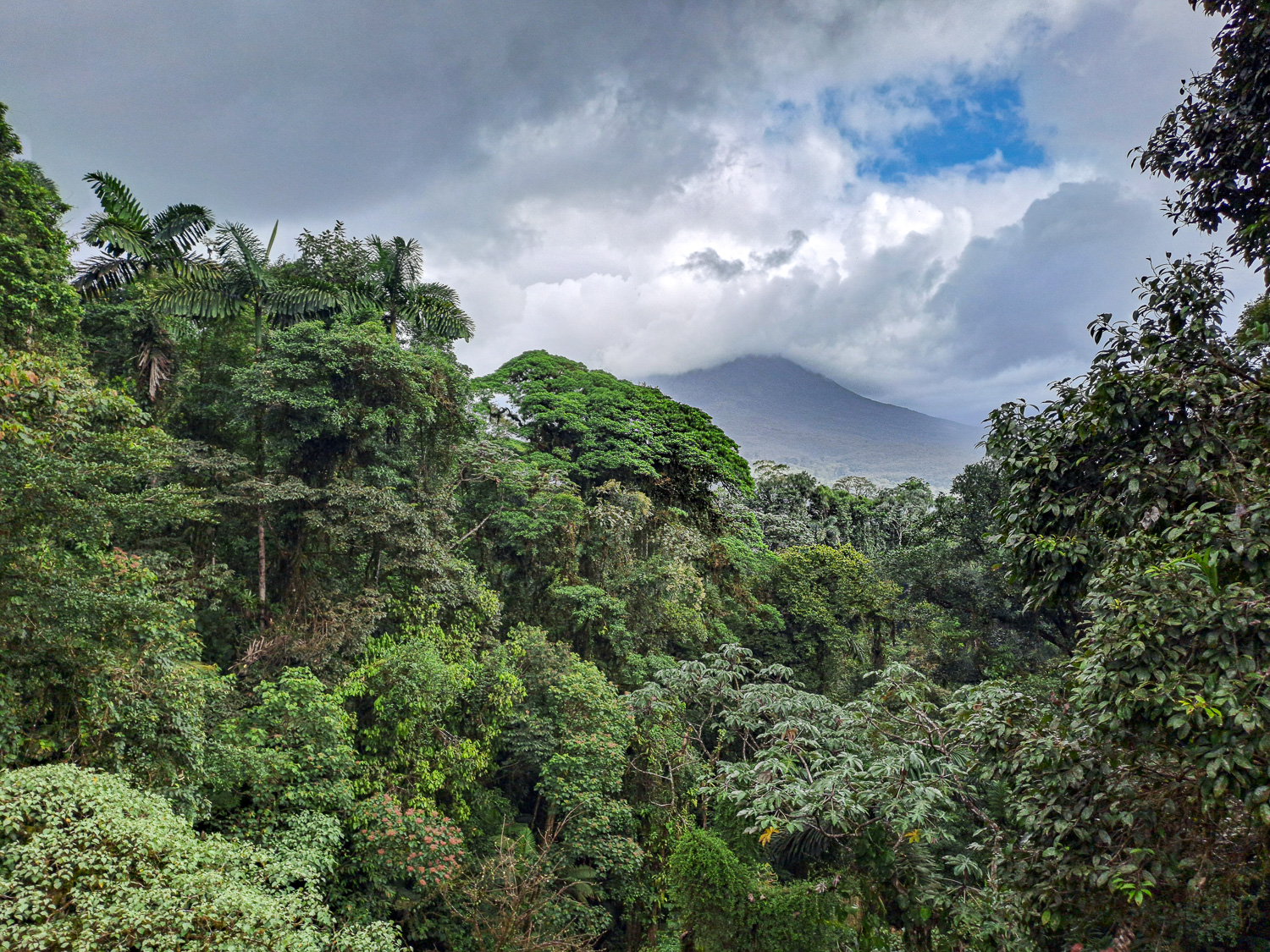 View across the rainforest canopy to the Arenal Volcano
The trail wasn’t just about the bridges; there was also some interesting wildlife.
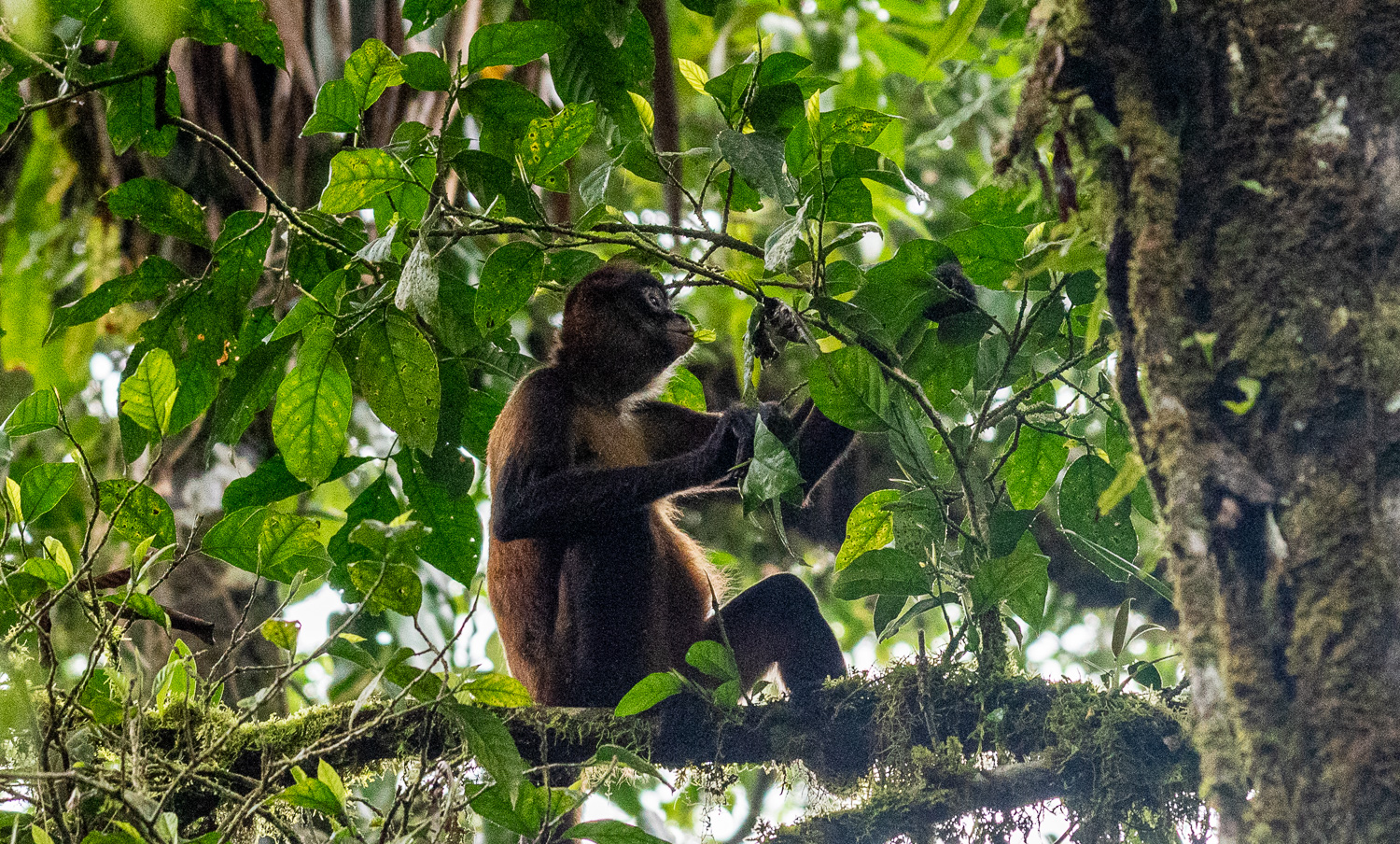 Howler Monkey
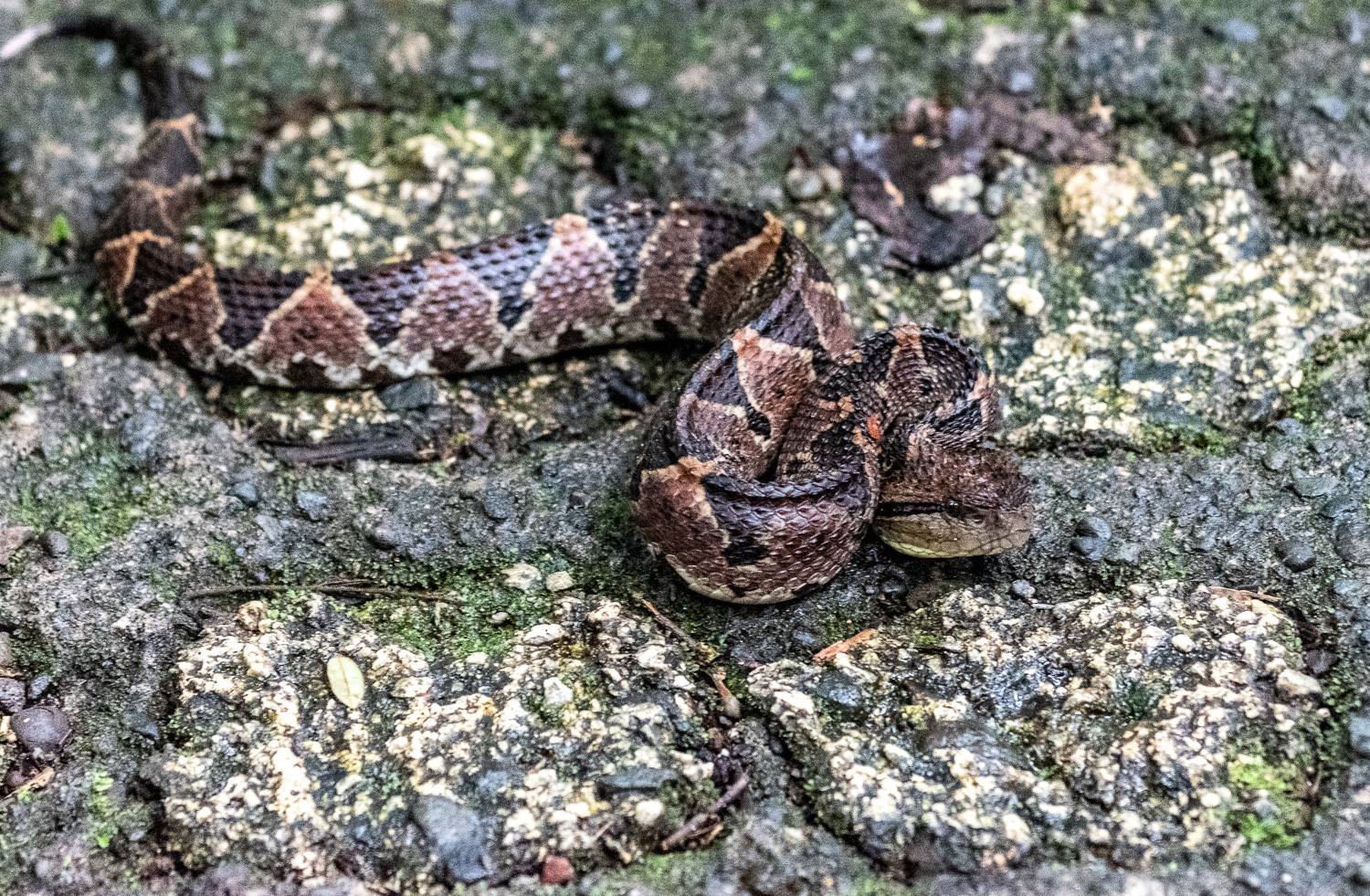 Jumping Pitviper, is venomous and one of the most dangerous snakes in Costa Rica. It measures approx 25 inches in length and is usually found under fallen leaves on the ground, so hikers need to take when walking through forest. This example was found on the trail path and was soon removed by a ranger.
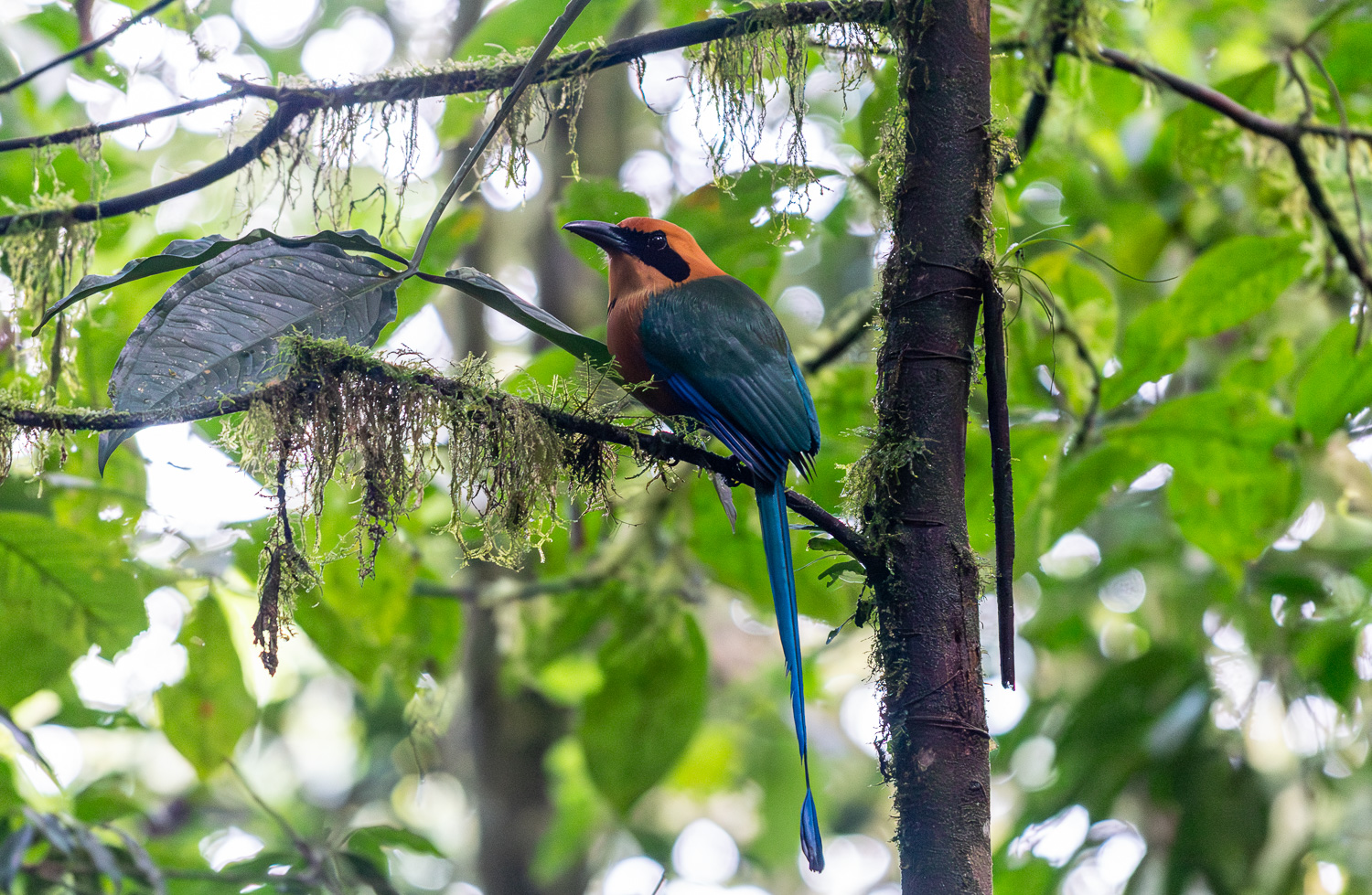 Broadmill MotMot
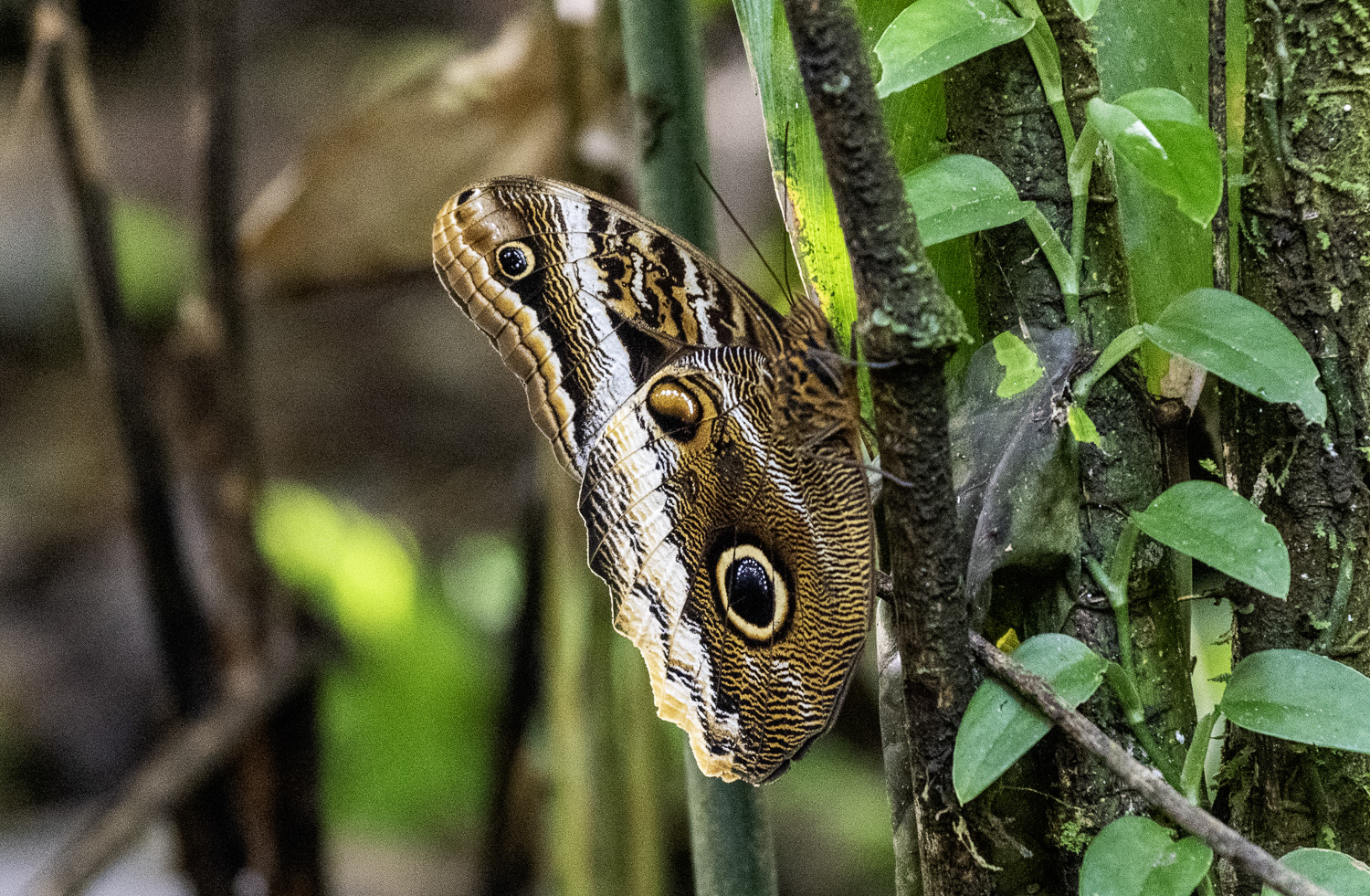 The Owl Butterfly can have a wingspan of up to 8 inches
 Charlotte & Graham's Travels